


European HRC market quiet as buyers await clarity with Q2 import volumes
Sluggish demand and the recent downtrend in iron ore and coking coal prices have been fueling bearish expectations, Fastmarkets understands.
But European mills were reluctant to cut prices further, Fastmarkets heard.
“Mills expected [HRC import] quotas to be exceeded for key suppliers from Asia and India and [presumed that] safeguard duties will be applied, making imports less competitive. Therefore, those who need [HRC] with shorter lead times will have no other choice but to book with EU mills,” a buyer in Germany said.
Current offers from integrated mills in Northern Europe were still around €700 ($763) per tonne ex-works, with €680-690 per tonne ex-works achievable on a firm bid, sources said.
Buyers’ estimations of workable prices were reported in the range of €660-690 per tonne ex-works, but transactions were rare.
“European mills officially offer €700 [per tonne ex-works], but this price can be negotiated. Mills are looking for orders, so €670-680 can be reached,” a buyer in the Benelux region said.
“Demand [from end users] is poor and weaker than expected, so stock-holders and steel service centers are confronted with stocks [that are too high] relative to demand,” the buyer added.
As a result, Fastmarkets calculated its daily steel hot-rolled coil index domestic, exw Northern Europe at €680.38 ($741.43) per tonne on Friday, down by €0.25 per tonne day on day from €680.63 per tonne.
The index was down by €12.12 per tonne week on week and by €42.75 per tonne month on month.
In Southern Europe, Fastmarkets’ corresponding daily steel hot-rolled coil index domestic, exw Italy was calculated at €662.50 per tonne on Friday, down by €1.00 per tonne day on day from €663.75 per tonne.
The index was down by €9.17 per tonne week on week and by €58.13 per tonne month on month.
Official HRC offers from the sole Italian supplier for May-delivery material were heard at €680-690 per tonne delivered, which nets back to about €670-680 per tonne ex-works.
But buyers’ ideas of workable prices were no higher than €660-670 per tonne delivered (equivalent to €650-660 per tonne ex-works).
The Italian market was also quiet. Sources expected some limited restocking after the Easter holiday in early April, when it should become clear how many imported tonnes will enter the EU market in the second quarter.
“Looks like the Indian [HRC] quota and the ‘other countries’ quota will be exceeded for [the second quarter]. We need to see what duty rates will be applied on this material and consequently see the realistic [price] gap between domestic and import HRC,” a steel service center source in Italy said.
HRC offers from Asian suppliers for June-July arrival were reported at €570-600 per tonne CFR; the lowest offers came from Vietnamese suppliers.
An offer from Saudi Arabia was heard at €570 per tonne CFR for May shipment.
Offers from Turkey for June-arrival coil were heard at €620 per tonne CFR, including the anti-dumping duty.
Meanwhile, overall bids for import coil were heard no higher than €550 per tonne CFR.


Polish steel rebar prices dip further, mills reduce output, sources say
Demand for rebar from other sectors remained low, however.
Polish mills were heard offering rebar in the range of 2,700-2,740 zloty ($683-693) per tonne CPT this week, which would net back to about 2,680-2,710 zloty per tonne ex-works.
Offer prices in the previous assessment period were similar, varying between 2,700 zloty per tonne and 2,750 zloty per tonne CPT, equivalent to 2,680-2,730 zloty per tonne ex-works.
Fastmarkets’ sources estimated the tradable market price for rebar at 2,700-2,740 Polish zloty per tonne CPT, which would net back to 2,680-2,710 zloty per tonne ex-works.
As a result, Fastmarkets’ weekly price assessment for steel reinforcing bar (rebar), domestic, exw Poland, was 2,680-2,710 zloty per tonne on Friday, down by 20 zloty per tonne from 2,700-2,730 zloty per tonne on March 15.
Rebar prices in the secondary market varied between 2,730 zloty per tonne and 2,750 zloty per tonne CPT.
A distributor source told Fastmarkets that, in the previous assessment period to March 15, Polish mills had almost sold-out their volumes for March, with the major buyers being cut-and-bend companies.
“The construction sector will start to work more actively in May,” the same source added. “Consequently, many construction firms decided to finalize their contracts with the cut-and-bend companies last week at those prices. But right now, there are no significant quantities available in the market.”
According to the distributor source, except for the cut-and-bend business, trading remained poor.
“Now, Polish mills are only delivering [material on orders they received in previous weeks], and the market is a bit frozen,” a producer source told Fastmarkets.
“[Most market participants] are waiting for the new prices [expected] after Easter,” a seller source told Fastmarkets.
According to the distributor source, one of the Polish mills was expected to announce its prices for April-production rebar at the end of March.
A second distributor source said that the downtrend in Polish rebar prices would not continue for long.
“Demand is not bad, and I do not think that prices will decline significantly in the future,” this second distributor source said. “Maybe in April, the minimum prices from Polish mills will be a bit below 2,700 zloty per tonne CPT.” He believed that prices would then stabilize.
Production cuts were also expected to affect the market. Last week, a mill was heard to adjust output by bringing-in flexible working when energy prices are lower, to decrease production costs.
Market sources have now told Fastmarkets that a second mill would be working only over the weekends in April, to cut production.
“With the higher foreign-exchange rate [between the euro and the zloty], imports can become less attractive,” the second distributor source said.
This week, import offers of rebar from Germany to Poland were heard at €620-625 ($676-681) per tonne CPT, while Italian material was offered to Poland at €640 per tonne CPT.

February global DRI production jumps: worldsteel
February global direct reduced iron (DRI) production was up year-on-year, Kallanish discovers from World Steel Association data.
February worldsteel data show DRI output at 8.6 million tonnes, down 11.2% month-on-month but higher by 7.6% on-year. By far the biggest producer of the 13-country group was India, with DRI production up 17.9% y-o-y to 4.2mt.
World DRI production experienced rapid growth in recent years as the push to decarbonise the steel industry accelerated. Data from worldsteel shows annual DRI production in 2023 of 136.4mt, up 65.3% compared with 2014 levels. The International Energy Association’s Sustainable Development Scenario forecasts 2050 DRI production at 411mt.
Part of the demand push for DRI comes from the goal to reduce CO2 emissions in the steelmaking industry by 80-95% by 2050. More and more companies around the globe are taking action to reduce their carbon footprint and pursuing direct reduction projects.
The current consensus based on industry and science is that DRI in electric arc furnace (EAF) steelmaking can go a long way toward carbon-neutral production. There is also a growing trend of using hydrogen as a reductant in the DRI process.
There is concern in the industry regarding the quality of iron ore supplies. According to a report from the Iron Metallics Association, ore used for DRI production through an EAF needs an iron content of at least 66%. It takes 1.45t of iron ore to produce one tonne of DRI.
For perspective, February world crude steel production totalled 148.8mt, an increase of 3.7% compared with year-ago levels.
John Isaacson USA


SSAB launches emissions-free steel powder
SSAB is advancing its line of steel powders by introducing the emissions-free powder product made from SSAB Zero steel, the company announces in a press release.
This new zero-emissions offering follows SSAB’s 2023 launch of conventional steel powder, Kallanish understands.
“This is a game-changer in the world of 3D-printed steel,” says Johnny Sjöström, executive vice president and head of SSAB special steels. “SSAB has already proven it’s possible to produce steel without carbon dioxide emissions. Now we’re merging emission-free steel with powder technology to enable sustainable 3D-printed design with unlimited imagination.”
According to the company’s statement, SSAB’s Zero product is steel made from recycled scrap using fossil-free energy sources. This, the company explains, results in “virtually zero emissions from the steelmaking process.” Zero was launched at a commercial scale in 2023.
Spain’s car production remains strong in February
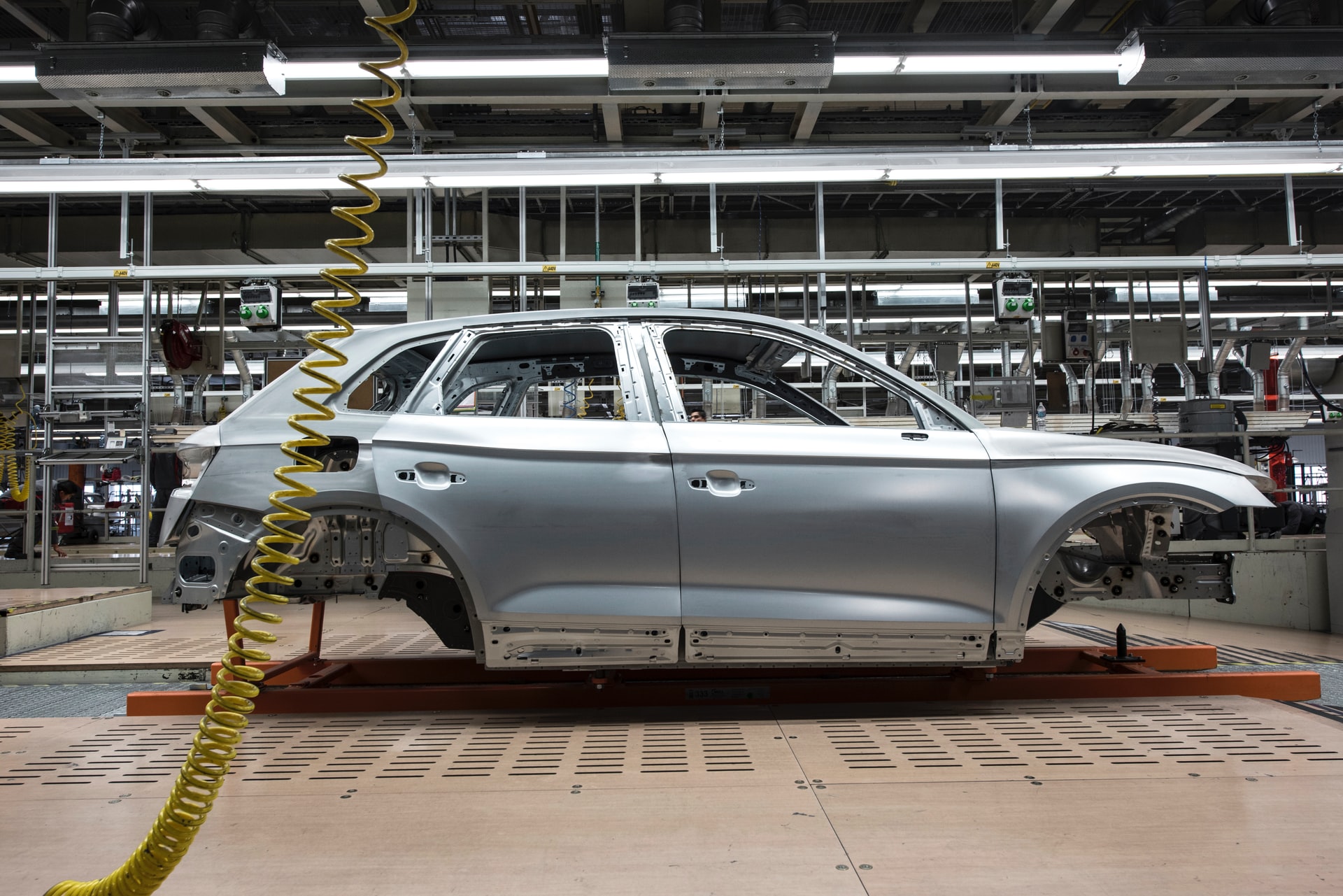
Spanish car production saw its good momentum continue in February, Kallanish notes.
“Flexibility in both the supply chain and production lines, together with the reduction of bottlenecks, has made it possible to stabilise output rates and avoid sudden disruptions as occurred during the microchip crisis,” comments Spanish automotive association Asociación Nacional de Fabricantes de Automóviles y Camiones (Anfac) president José López-Tafall.
Output in February was 227,923 units, an increase of 1% versus the same month in 2023. Two-month production amounted to 458,879 vehicles, up 9% from January-February last year.
Meanwhile, Spanish vehicle exports slipped due to lower demand in markets outside Europe. Supplies were 204,281 units in February, just 0.7% less compared to a year earlier.
European markets had a 93.2% share in Spanish deliveries in February, up 3.2 percentage points on-year. Two-month exports rose 6.3% over the same period in 2023 to 405,735 vehicles, Anfac data show.
Todor Kirkov Bulgaria

CMC Poland performance slumps, foresees construction demand rebound
A combination of improving economic data and government-sponsored investment could bolster Polish long steel demand in the quarters ahead, says CMC. Regional mills’ production cutbacks helped its Polish unit raise selling prices and improve profitability versus the previous two quarters. However, on-year results were down dramatically.
CMC Poland saw steel shipments plummet 37% on-year in the second fiscal quarter through February 2024 to 275,000 short tons. Merchant bar and other product sales fell 17% to 211,000st, while rebar was down a hefty 65% to only 64,000st.
“Conditions in Europe are expected to remain challenging, but adjusted Ebitda is anticipated to approach breakeven levels during the third quarter,” CMC president Peter Matt says in a note seen by Kallanish.
“Business conditions for our Europe Steel Group are slowly improving, and should further benefit from increased residential construction activity as a government programme aimed at first-time homebuyers, and other government sponsored investment programs, begin to impact steel demand,” he adds.
CMC Poland average sales price was down 11% on-year in the February quarter to $673/short ton, with cost of ferrous scrap utilised up 1% to $394/st, resulting in a steel products metal margin of $279/st, down 24% on-year.
Net sales dropped 43% to $192.5 million and the firm slipped to an adjusted Ebitda loss of $8.6m versus positive $11.5m a year earlier.
Although Ebitda in the November-2023 quarter was positive $38.9m, this was thanks only to a $66m energy rebate.
Europe market conditions improved during the February quarter in comparison to recent quarters, but long steel consumption remained below historical levels. Regional long steel producers “took significant actions to rationalise supply”, while inventories across the supply chain were reduced, CMC concludes.
Six-month-through-February sales were down 32% on-year to 618,000st, with net sales down 42% to $417.7m and adjusted Ebitda down 59% to $30.3m.
Adam Smith Poland

Competitive energy, green market remain decarbonisation bottlenecks: Eurofer
EU policymakers still need to provide supply of internationally competitively priced low-carbon energy, establish lead-markets for European green steel, and introduce measures to address massive excess capacity in the global steel market, says Eurofer.
Although the EU has launched a number of initiatives in recent years to support decarbonisation, these issues remain “the real bottlenecks”, Eurofer director general Axel Eggert says in a note sent to Kallanish.
Eurofer delivered this message during this week’s Clean Transition Dialogue on Steel in the presence of the executive vice presidents of the European Commission, Maroš Šefčovič and Margrethe Vestager.
2023 saw the lowest European crude steel production levels ever, with a number of idled plants and dire impact on workers, the association says. The short-term viability of European steel sector decarbonisation must be top of the EU agenda, it adds.
“European economic integration was built with steel, the backbone of Europe’s manufacturing value chains. We firmly believe that also the future of Europe and its cleantech sector can only be forged with European green steel. This EU Dialogue is the first significant initiative going in this direction, and we hope that it will be continued and followed by concrete steps,” Eggert says.
The European steel sector is the frontrunner in decarbonisation at a global level, with about 60 low-carbon projects out of 80 planned worldwide. However, capital investment requirement amounts to €31 billion and operational expenditures to €54 billion, totalling €85 billion ($92 billion).
However, the EU steel industry’s leadership in the race to net-zero is jeopardised by energy prices that are 4-6 times higher than competitor regions, and a global non-market excess capacity of 600 million tonnes, with 150mt more planned in the next three years. Further hurdles are government subsidies, unfair trade practices distorting the international playing field, and uneven climate ambition between regions, Eurofer says.
It advocates streamlining across all policy areas a joint green industrial policy that spurs investments, including by creating lead markets for European green steel; promoting access to affordable fossil-free energy; and enforcing a robust trade policy based on reciprocity against unfair practices. Also important are to secure access to critical raw materials, including scrap, for the transition, and provide adequate training and academic opportunities for young talent.
Adam Smith Poland

Salzgitter talks to Vallourec about HKM stake
The two German stakeholders of Hüttenwerke Krupp-Mannesmann (HKM) – thyssenkrupp Steel and Salzgitter – are negotiating with the third owner, Vallourec, about a transfer of its stake in the big mill in Duisburg.
While Salzgitter’s 30% stake is smaller than thyssenkrupp Steel’s 50%, it could be more serious about taking Vallourec’s 20% shareholding because of its similar activities in tubes. France-based Vallourec shut all its plants in Germany last year and it makes little sense to keep its stake in HKM. A plan to sell the stake has not yet been made official but Salzgitter’s executives expect it will come, they said during a conference call.
“Vallourec is basically out of HKM, and we are talking to them, as we stand behind HKM,” Kallanish heard Salzgitter chief executive Gunnar Groebler say. He noted, however, that thyssenkrupp Steel is the main stakeholder with the main say on the future of HKM.
For its own tubes activities, Salzgitter is more optimistic for large line pipe than for precision pipe. The latter “are mostly for automotive, which was weak in 2023, and remains challenging in 2024, meaning we need to keep an eye on costs,” Groebler said. For large-diameter pipe used in pipelines, the company is banking on improving utilisation in the second half of the year. “There are many projects out there for which we have bid,” Groebler noted.
Tubes are part of Salzgitter’s Steel Processing unit, which also includes heavy plate. The unit’s order intake in 2023 was €2.22 billion ($2.4 billion) versus €2.75 billion in 2022. Shipments fell from 1.57 million tonnes to 1.46mt.
Christian Koehl Germany