

Most LME base metals prices start week higher
Three-month futures prices at 9:15am on Monday, compared with Friday’s 5pm close:
• Copper: $8,933 per tonne, up by 0.75%
• Aluminium: $2,320 per tonne, up by 0.48%
• Nickel: $17,325 per tonne, up by 0.48%
• Zinc: $2,504.50 per tonne, up by 0.83%
• Lead: $2,051.50 per tonne, up by 0.74%
• Tin: $27,725 per tonne, down by 0.01%
Copper rose by 0.75% in morning trading but remains below its intra-month high of $9,164.50 per tonne set on Monday March 18.
The red metal is being affected by demand struggles and supply issues.
“Copper ended [the week to Friday March 22] lower as optimism over demand in China faded,” ANZ commodity strategist Daniel Hynes said.
“Ongoing supply risks boosted sentiment earlier in the week,” Hynes added.
Copper supply has been hit by multiple challenges facing mine production. Weak copper concentrate production has caused Fastmarkets’ copper concentrates index to collapse in recent months, currently down 93% since November 2023.
Fastmarkets’ weekly copper concentrates TC index, cif Asia Pacific was calculated at $5.90 per tonne on Friday, down by $3.50 per tonne from $9.40 per tonne one week prior, and down from $79.40 at the start of November.
Zinc gained 0.8% on Monday morning, with Fastmarkets analyst James Moore suggesting this could be due to positive seasonality.
“The galvanized steel market is on a seasonal uptick, which should provide a supportive background for zinc prices,” Moore said.
Zinc is also down from recent highs. On March 15, zinc hit an intra-month high of $2,591 per tonne, but prices have since come off amid China’s construction challenges among other factors pressuring the metal.
“Other zinc-related factors, such as headwinds in China’s construction sectors and reports that Glencore is in the process of restarting production at its Nordenham smelter in Germany, are also creating mixed sentiment,” Moore said.
Published by: Albert Mackenzie


HRC prices in Northern Europe decrease further amid prevailing bearish sentiment among buyers
Meanwhile, HRC prices in Italy were unchanged day on day.
Fastmarkets calculated its daily steel hot-rolled coil index domestic, exw Northern Europe at €675.00 per tonne ($729.46) on Monday, down by €5.38 per tonne from €680.38 per tonne on Friday.
The index was also down by €14.00 per tonne week on week and by €47.13 per tonne month on month.
Integrated mills in Northern Europe continued to offer HRC at €700 per tonne ex-works, but they were ready to grant discounts of €10-20 per tonne on firm bids, sources said.
Trading in the region remained limited, and no major deals were heard in the market.
Fastmarkets’ sources estimated workable prices in the range of €660-680 per tonne ex-works.
Falling prices of iron ore and coking coal, as well as weak demand for HRC, contributed to the downtrend in hot band prices, sources told Fastmarkets.
In addition, Asian suppliers were still heard offering more competitive prices.
“Many buyers are waiting for the period after the Easter holiday, when there will be more clarity on import volumes for the second quarter,” a buyer source told Fastmarkets.
The buyer source said domestic HRC prices had not reached “rock bottom” yet and could drop below €650 per tonne.
No one wanted to sign contracts amid falling prices, the buyer source added, implying that customers would continue to refrain from buying.
“No one is really ready to buy at the moment,” a second buyer source said.
Due to slow demand, only limited restocking could be expected in April, a third buyer source said, adding that some mills were considering output cuts but had not decided on it yet.
In Southern Europe, Fastmarkets’ daily steel hot-rolled coil index domestic, exw Italy was calculated at €662.50 per tonne on Monday, unchanged from Friday.
The index was down by €7.50 per tonne week on week and by €52.50 per tonne month on month.
HRC offers in Italy for May delivery were heard at €680-690 per tonne delivered, which nets back to around €670-680 per tonne ex-works.
Market participants estimated tradable prices in the range of €665-675 per tonne ex-works.
Deals for small volumes were heard at €655 per tonne ex-works.
“Import offers of HRC from Asia are still available on the market at €560-580 per tonne CFR to Italy, and tradable [prices] could drop by €5-10 per tonne,” the first buyer source told Fastmarkets.
HRC offers from Turkey were heard at €600-620 per tonne CFR, including the anti-dumping duty.
Published by: Darina Kahramanova
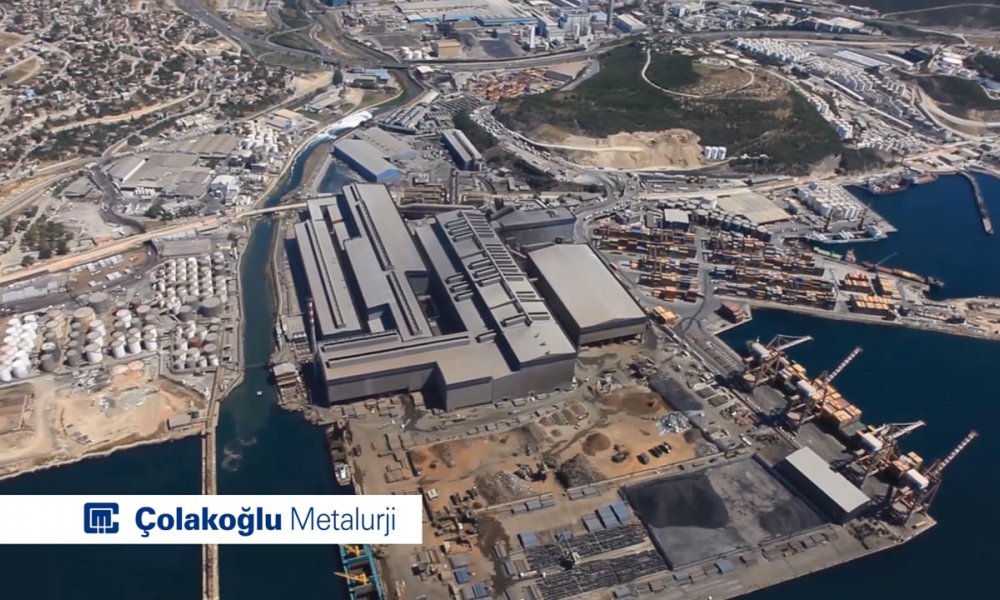
Çolakoğlu pursues zero emissions through renewable energy investments
Turkish steelmaker Çolakoğlu Metalürji is prioritising the transition to “green” energy sources and increasing its renewable energy generation capacity, according to Turkish local media.
“We will forward our Climate Action Plan, which includes our carbon reduction targets and roadmap, to our stakeholders as soon as possible,” Kazım Selim Özkan, human resources, corporate communication, and sustainability director, is quoted as saying by the Dunya newspaper.
Çolakoğlu also intends to improve processes aimed at reducing the carbon footprint of raw material inputs, digitalisation, and the integration of artificial intelligence to enhance production efficiency. Additionally, the company has implemented various projects to minimise by-products and waste formation, it says.
SMS recently said it has completed the upgrade of the compact hot strip mill originally supplied to Çolakoğlu Metalurji in 2011 for its site in Kocaeli (see Kallanish passim).
Elina Virchenko UAE


Waelzholz sources Tata’s ‘Zeremis’ HRC
Waelzholz and Tata Steel Nederland have signed an agreement for the supply of Tata’s Zeremis Carbon Lite brand of low-emission hot-rolled steel strip.
In order to achieve its climate targets, German cold-roller Waelzholz signed agreements last year with Salzgitter, ArcelorMittal and thyssenkrupp Steel to procure carbon-reduced strip.
“Initially, we will receive material with a carbon footprint that is up to 30% lower,” says Waelzholz head of purchasing Marcus Englberger. “The first deliveries of the low-emission hot-rolled steel strip are already planned for the current year.”
According to Waelzholz manager Matthias Gierse, 90% of the product carbon footprint is attributable to Scope 3 emissions that come from the upstream supply chain. “That’s why the procurement of low-emission hot-rolled steel strip and partnerships like this are extremely important to us,” he says.
Waelzholz has been able to offer products with a reduced carbon footprint, compared to the reference year 2018, since the end of 2023. Customers can freely scale the level of emissions reduction in absolute or percentage terms, Kallanish hears from the German company.
Christian Koehl Germany
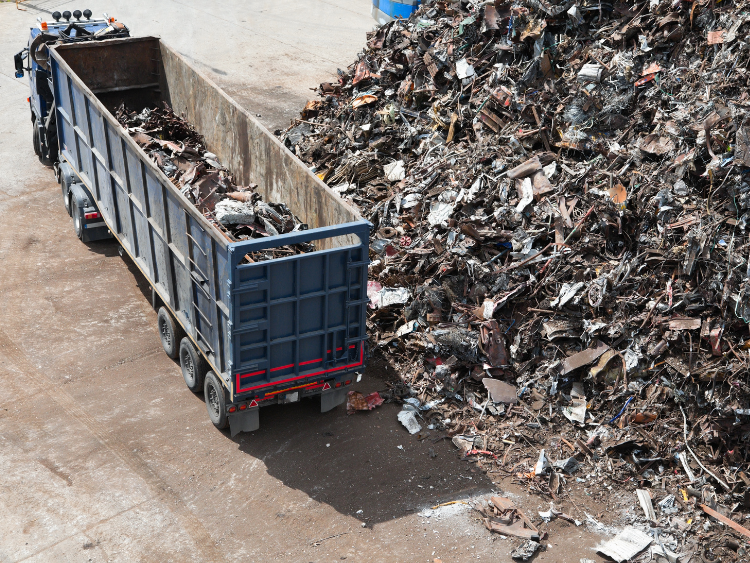
Tata International expands scrap business to Greece
Although Tata declined to comment, Kallanish learns that Tata International has entered a long-term agreement with a port in Thessaloniki to export steel scrap.
Vida Metal’s shredding facility will work exclusively for Tata International to supply shredded scrap mainly to Turkey, while also eyeing the Indian market, Kallanish understands.
Tata’s new hub in Lithuania is meanwhile expected to collect scrap, mainly HMS, shredded, and bonus quality, from the Baltic countries and Scandinavia, and ship at least one cargo per month, mainly to Turkey.
Tata International currently sells scrap from the UK and the EU to Turkey, India and North Africa.
Burcak Alpman Turkey