


Mood in the EU HRC market remains bearish on weak demand
Sentiment in the European hot-rolled coil market was bearish on April 4 due to weak demand and oversupply.
On April 4 Northwest European HRC prices remained stable after a Eur25/mt drop a day earlier.
The decline was driven by lower offers from the mills that have been struggling to fill May order books.
“The offers drop shows that the mills are desperate to fill order books and they are willing to drop the prices,” a German service center said. “They should have reduced production.”
Majority of market sources agreed that the production cuts and blast furnace stoppages are the only solution to prevent the price collapse.
Market participants believe that the domestic HRC prices would reach Eur600/mt ex-works by the end of April.
Platts assessed domestic prices for hot-rolled coil in Northwest Europe unchanged on day at Eur640/mt ex-works Ruhr on April 4.
Tradable values were reported at Eur630-640/mt ex-works Ruhr with majority of data heard at Eur640/mt ex-works Ruhr.
Offers from integrated mills have been heard at Eur650-670/mt ex-works Ruhr.
Platts assessed domestic prices for hot-rolled coil in South Europe down by Eur15/mt on the day to Eur620/mt ex-works Italy on April 4.
The assessment was based on tradable values heard at Eur615-625/mt ex-works Italy.


Tubos Reunidos 2023 performance improves, outlook positive
Spanish seamless tube supplier Tubos Reunidos (TR) saw most of its main indicators grow in 2023 compared to the previous year, Kallanish notes.
“The year was characterised by an outstanding performance in the first half, based on the high prices seen in the seamless pipe market, and by weaker demand in H2 due to the high level of stocks held by distributors and end customers, which resulted in a slowdown in incoming orders,” TR comments.
The positive sales performance was supported by a reduction in costs and efficiency measures as part of its Strategic Plan, the company notes.
TR anticipates a normalisation of sales volumes and prices in 2024, with lower activity in H1 and a gradual recovery in demand throughout the year. The company however says it will be difficult for values to recover to levels seen in 2023.
“The year [2024] started with a high degree of uncertainty, a macroeconomic environment with relatively high inflation and interest rates that remain high for longer than expected. Moreover, the significant inflow of pipes imported at low prices is a factor that must be taken into account, insofar as it adds additional pressure to a sluggish market situation in Europe,” TR observes.
In the US, the company sees as positive the extension until December 2025 of quota allowances for EU steel and aluminium. “Demand for pipes is expected to recover as current stock surpluses held by distributors and end customers are reduced,” TR adds.
The tube supplier confirms a significant part of its activity in 2024 will focus on low-emission production. This will strengthen a segment that will be one of the key areas of its growth and value generation.
The group’s revenue in 2023 grew 3.7% versus 2022 to €532.9 million ($577.7m). The North American market represented 46% or €245m of revenue compared to 54% in 2022. The remaining markets where TR operates also performed positively, especially in Europe due to high price levels.
The company posted an Ebitda of €106.8m last year, an improvement by €42.3m compared to 2022.
Todor Kirkov Bulgaria


Salzgitter commissions Lindemann and Lybover for new shredder
Salzgitter has commissioned the construction of a new scrap shredder, with Düsseldorf-based machine and plant manufacturer Lindemann and Belgian company Lybover chosen as technology suppliers.
The steelmaker announced the shredder plan during its annual conference call last month (see Kallanish 14 March).
The shredder will be located at the integrated steelworks site in Salzgitter, directly adjacent to the SALCOS plant that is currently under construction. It will cost around €30 million ($33m), will be 189 metres long and 66m wide, and enable the processing of high-quality scrap grades, the company states.
According to Salzgitter, Lindemann and Lybover command many years of expertise in the fields of machine technology and shredding, in addition to processing plants and exhaust air technology.
An existing shredder operating at the site is not fit for the future requirements of the steelmaking process, chief executive Gunnar Groebler said during last month’s conference. The new shredder will have a larger processing capacity and be technically more sophisticated in the separation of impurities, producing purer scrap grades for future steel production, he said.
Christian Koehl Germany
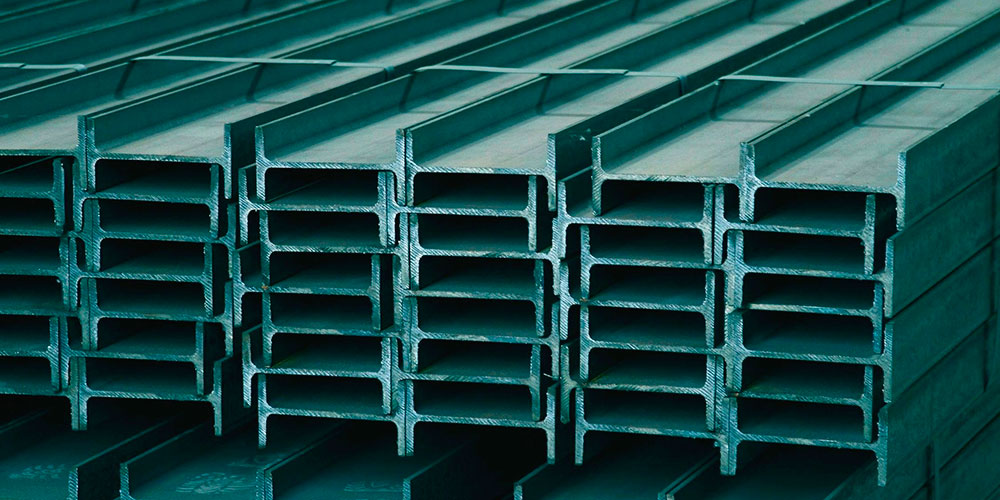
EU quota definitions hinder Swiss merchant bar exports
Swiss mill Stahl Gerlafingen has been affected by EU restrictions against flat-rolled and sheet products, although it does not produce them. However, as a side effect, the subsidiary of Beltrame has lost markets in neighbouring EU countries and, as a consequence, announced last week that it will discontinue production of merchant bar.
In the definition of the products it subjected to safeguard measures in 2019, the European Commission’s Category 1 – tariff quota order number 09.8601 – comprises rolled sheet and strip. In this product group, the EU also includes wide flat steel, sometimes referred to as universal flats. This is essentially merchant bar, which has different production routes and customer sectors than coil/sheet/strip.
It has since been a political issue between Switzerland and the EU, involving the Swiss economy ministry. Unlike some other non-EU countries, there is no bilateral agreement with Switzerland giving it a separate contingency for such products. Instead, wide flat steel competes with any coil imports from overseas countries, against which it does not stand a chance, the ministry says in a dossier sent to Kallanish. “Since summer 2023, the quotas that are allowed per quarter are basically filled in a matter of hours or days by overseas importers,” the ministry writes.
According to a Stahl Gerlafingen spokeswoman, the mill cannot compete with the tonnages sitting in vessels outside EU ports, waiting for clearance on the first day of each quarter. The problem has been aggravated over time, along with increasing shiploads from overseas. Last summer, it came to a head. Since then, Stahl Gerlafingen, with its limited storage capacities, cannot deliver the same volumes in a short time to EU Customs as the vessels at Antwerp or Rotterdam.
Any volume outside the quota limit would require payment of a 25% duty, “which neither the Swiss exporters nor the EU importers can cope with in a profitable way”, the economy ministry writes. “Exports of steel of Product Category 1 have since been de-facto impossible.”
Christian Koehl Germany
Liberty appoints European ceo, locates headquarters in Vienna
Liberty Steel has appointed Thomas Gangl as chief executive of its European business, effective 1 July, and chosen Vienna as the location for its European headquarters.
Gangl is currently ceo and chairman of Vienna-based chemicals company Borealis, previously serving in various management positions at Austrian oil company OMV. He will be focussed on stabilising Liberty’s European units, which employ 17,000 workers, optimising production and delivering the green steel transformation by 2030.
Gangl’s appointment follows progress with Liberty’s European debt restructuring and is part of a broader plan to establish a new European holding company registered in Vienna. The Austrian capital offers a central European location close to Liberty’s major plants with excellent financial and professional service industries, Liberty says.
Liberty interim ceo for European Upstream Theuns Victor will manage a handover to Gangl from July, and will then return to his position leading Industrial Projects & Development to deliver the group’s carbon neutral ambitions. Green Steel EMEA ceo Toker Ozcan will now focus on leading Liberty’s UK operations following the recent agreement with Greensill creditors.
“Thomas’s experience in managing complex business environments and major capital projects will be vital as we stabilise our businesses in Europe, seek to attract fresh capital and transition away from coal-based steel production. The establishment of a new European group headquartered in Vienna will mark a new chapter for our businesses with its core focus on leading the development of green steel in our neighbouring Central and Eastern European locations,” Liberty executive chairman Sanjeev Gupta says in a note sent to Kallanish.
Adam Smith Poland

EU’s ‘other-country’ HRC quota causes stir, Asia benefits
The Q2 allocation of 923,594 tonnes, which only opened on 1 April, has already been filled, with 11t still awaiting allocation as of 4 April, according to EU TARIC system data. In Q1, that same-tonnage “other country” quota was also exhausted by 3 January, while the 933,743t limit in Q4 2023 was fulfilled on 1 October.
The main origins represented in the “other country” category are Japan, Vietnam, Taiwan, Egypt, Brazil and Saudi Arabia. In 2023, all of these countries bar Brazil increased their hot rolled flat products shipments to the EU.
Imports of HS code heading 7208 products – which also include plate, which is classified separately from HRC in the EU’s safeguard quota category system – rose by 13% on-year from Japan to 1.32 million tonnes. Supply from Vietnam soared 181% to 1.13mt and intake from Taiwan grew 24% to 1.05mt, according to Eurostat data.
Although imports from Brazil halved to just over 200,000t, intake from Egypt jumped 41% to 749,665t and from Saudi Arabia by 11% to 103,995t.
The EU’s overall imports of 7208 products rose 10% in 2023 to 10.3mt.
Swiss mill Stahl Gerlafingen has lambasted the EU’s definition of its Category 1 safeguard quota – which covers HRC – for including wide flat steel, sometimes referred to as universal flats. This impacts the merchant bar produced by the mill and means it cannot clear product through EU Customs quickly enough, before the quota is exhausted by major overseas suppliers (see separate story). As a result, the firm is closing its merchant bar mill.
The Swiss government wrote to the EU Commission in February reiterating its request to terminate EU safeguard measures on steel by 30 June. “The measures are restricting traditional trade flows between Switzerland and the EU with the situation having continued to aggravate since summer 2023,” wrote the Mission of Switzerland to the European Union.
“Specifically, the residual tariff-rate quota (TRQ) for product category 1 – Non Alloy and Other Alloy Hot Rolled Sheets and Strips – was exhausted on the very first day in the previous … as well as the current [March-2024] quarter … Faced with a safeguard duty of 25%, a heavy financial burden that neither Swiss exporters nor their EU customers can bear, Swiss exporters have not been able to supply their EU customers. According to information from the Swiss industry, the situation is unlikely to improve over the coming months,” the letter continues.
In case the measure is prolonged, there should be a modification in the allocation and management of tariff-rate quotas to avoid crowding out traditional trade flows between the EU and Switzerland, the Mission adds.
There has been some talk of large Indian HRC tonnages arriving in Europe soon, which could also exhaust that country’s specific quota. Europe has emerged as a crucial market for Indian suppliers in recent years. However, as of 4 April, there were still 229,716t remaining of India’s 294,662t Q2 HRC quota, with 1,704t awaiting allocation. More material is nevertheless en route.
Adam Smith Poland

HRC price declines slow down across Europe; buyers continue to postpone restocking
Buyers continued to avoid big purchases, only booking small tonnages of HRC for immediate needs, Fastmarkets heard.
Muted demand from end-user sectors and lack of clarity on future price direction were limiting activity in the spot market, sources said.
Producers had short order books, and some of them could still offer May-delivery HRC, Fastmarkets heard.
“Some mills are offering June delivery, but May delivery is still widely available,” a steel service center source in Germany said.
Offers from integrated mills in Northern Europe were heard at €660-685 ($713-740) per tonne ex-works on Thursday, but the high end of the range was not considered workable by buyers.
A booking of HRC from Central Europe to Germany was heard at €680 per tonne delivered in the week to Thursday.
Buyer sources estimated achievable HRC prices in Northern Europe at €650-660 per tonne ex-works.
“If you go to a mill and say you want to book 1,000 tonnes of HRC, the price can even be €650 [per tonne] delivered easily,” a buyer source said. “But we don’t see such volumes traded in the spot market — it’s 100-200 tonnes here and there; buyers can live hand-to-mouth with such end-user demand.”
Fastmarkets calculated its daily steel hot-rolled coil index domestic, exw Northern Europe at €660.21 per tonne on Thursday, down by €0.62 per tonne from €660.83 per tonne on Wednesday.
The index was down by €3.54 per tonne week on week and by €54.79 per tonne month on month.
The pace of price declines has slowed down in the past week, sources said, adding that rock bottom could be close.
“It looks like producers are preparing to cut output rather than keep cutting prices and lose money,” a trader in the Benelux area told Fastmarkets. “Nobody has made an official move yet, but I think we can expect some [announcements] in Dusseldorf [at the Tube and Wire trade fair].”
In Southern Europe, Fastmarkets’ daily steel hot-rolled coil index domestic, exw Italy was calculated at €636.67 per tonne on Thursday, down by €4.16 per tonne from €640.83 per tonne on Wednesday.
The index was down by €8.33 per tonne week on week and by €57.33 per tonne month on month.
Quiet conditions prevailed in the Italian market, with no restocking heard.
“Stocks are sufficient, considering demand,” a buyer in Italy said.
HRC with five- to six-week lead times from one local supplier was heard offered at €650-660 per tonne delivered (€640-650 per tonne ex-works).
Buyers estimated achievable prices at €630-640 per tonne ex-works.
Some sources suggested that prices for HRC could bottom out at €620-630 per tonne delivered.
Offers for import coil were rare in the week to Thursday.
HRC offers from Vietnam to Southern Europe were reported around €570-580 per tonne CFR for June shipment.
HRC from one Turkish supplier was offered to Italy at €600 per tonne CFR, including anti-dumping duty, sources said.
No fresh bookings were reported.
Buyers wanted to see how many tonnes of HRC would be cleared by EU customs before making new purchases, Fastmarkets understands.
The EU’s “other countries” import quota for April-June was already filled just two days after the new quota period started, Fastmarkets reported.
India’s HRC quota for the second quarter was filling at a slower pace than expected, with around 20% of the 294,662-tonne allocation for the period filled on Wednesday. This was due to delays in deliveries amid the Suez Canal shipping crisis, sources said.
“Vessels [with HRC] have to go around the Cape of Good Hope, so there are delays,” a source in Italy said. “There is plenty of India-origin HRC en route to Europe.”
Published by: Julia Bolotova
