

US, EU regulators initiate fresh Nippon/USS probes
The proposed acquisition of US Steel by Japan’s Nippon Steel is facing new antitrust reviews on two continents, Kallanish understands.
The US Department of Justice has opened an in-depth review of the proposed merger, Politico reports. The news arrives this week during a visit to the White House by Japanese prime minister Fumio Kishida.
Upon his arrival in Washington, Kishida expressed confidence that the controversial merger is undergoing fair scrutiny.
“We understand that discussions are underway between the parties,” the Japanese leader commented during a press conference on Wednesday. “We hope that these discussions will unfold in directions that would be positive for both sides. Japan believes that appropriate procedures based on law [are] being implemented by the US government.”
At the joint press conference, US president Joe Biden, who has stated his preference that US Steel remain American-owned (see Kallanish passim), repeated his support for the Pittsburgh, Pennsylvania-based company’s employees.
“I stand by my commitment to American workers. I’m a man of my word. I’m going to keep it,” Biden remarked.
One day earlier, Nippon Steel appealed to the EUs European Commission (EC) for clearance on its acquisition of US Steel, which since 2000 has owned steelmaking operations in Slovakia. The commission has set a provisional deadline of 17 May to decide whether the arrangement would be incompatible with any EU regulations. That investigative process is categorised as an “ongoing simplified procedure,” according to the EC’s public notice.
Antitrust regulators are the latest to scrutinise the potential deal. An earlier, rejected takeover bid from Cleveland-Cliffs drew concern from downstream steel consumers who complained that such a merger would be anti-competitive (see Kallanish 2 November). In addition to ongoing criticism from US politicians on both sides of the aisle, organised labour is actively fighting the sale to Nippon (see Kallanish passim). The United Steelworkers union has been outspoken in its disapproval of the deal, contending that the combination would violate its labour agreements with US Steel.
Kristen DiLandro USA

German federation voices concern over worldsteel outlook
Germany’s steel demand will not gain noteworthy momentum before 2025 and will lag the economic recovery of other regions, says national steel federation WV Stahl in a statement seen by Kallanish.
The statement arrives in reaction to the latest short range outlook by the World Steel Association (worldsteel) that was published earlier this week. It forecast a minor recovery this year, mainly owed to the restocking cycle. But even the stronger rebound of demand seen for 2025 will still not surpass the low level in the first year of the Covid pandemic, WV Stahl fears.
“The weak recovery of the EU and especially Germany is in opposition to the USA, where steel consumption is expected to rise by 20% between 2020 and 2025,” says Martin Theuringer of WV Stahl.
The association’s managing director, Kerstin Maria Rippel, concurs that “Germany is not following the global rebound. This is bad news that reaches out beyond the steel sector, given that steel demand is an indicator for the overall manufacturing industry.” She suggests that this could be a political problem. “In Germany as well as in the larger EU we need to respond to the strategies that make other regions strong.”
Some facets of the problem were voiced this week at “The Future of the EU Industry” meeting set up by Eurofer in Brussels. Kurt Vandenberghe of the European Commission’s DG Clima pointed out that Europe needs a “level playing field” that balances the regional ambitions for cleaner industries with the laws of international trade flows. Vandenberghe concedes that in producing steel more sustainably, China and the US have caught up.
“Five years ago, we (Europe) were the first; now, China and the USA are about to overtake us,” he observes.
Christian Koehl Germany

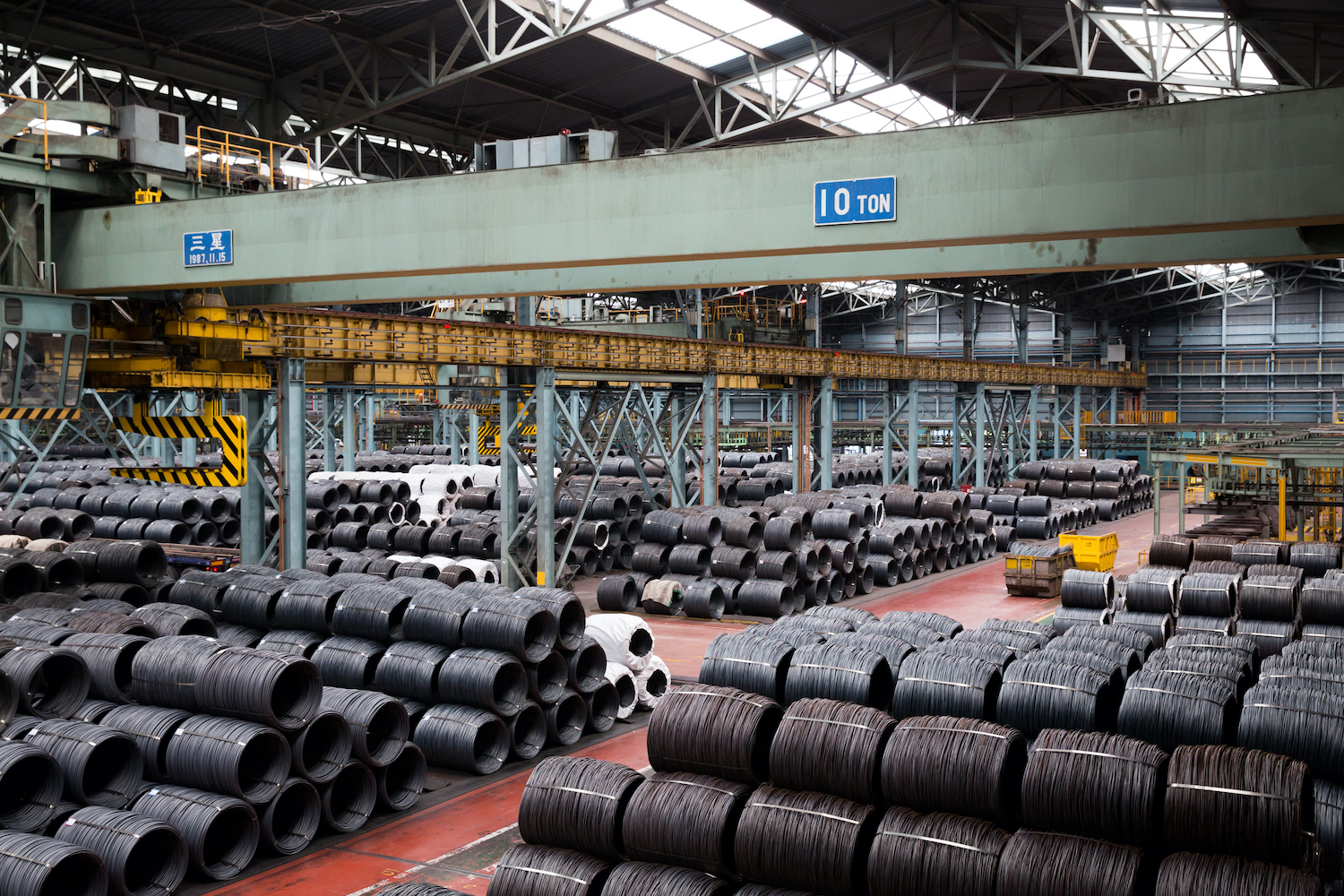
Northern European wire rod prices hold steady
Northern European wire rod prices are stable this week amid low demand, sources say. However, some participants continue to expect more activity in the market this month.
“There was not much activity this week,” one buyer from the Netherlands tells Kallanish.
Domestic transaction prices for drawing-quality wire rod are at €650/tonne ($698/t) ex-works and mesh-grade wire rod is at €630/t.
Producers are asking for €650/t ex-works, on average, for mesh-quality rod.
“Most customers are again in the wait-and-see attitude, but this has to change soon,” another participant in the market notes.
If scrap prices start to increase, that could lift rod prices and demand, he adds.
German old thick scrap sort 3 is at €345/t, while new scrap sort 2/8 is €340/t. E40 shredded scrap is at €350/t. In Austria, scrap prices for new scrap sort 2/8 are €335/t, with old thick scrap sort 3 at €350/t.
Import quotes from outside the EU are having little impact on the European wire rod market. Offers are being heard from outside the bloc at €610-615/t cfr Rotterdam, which is considered uncompetitive by European buyers.
Earlier, ArcelorMittal said it is communicating to European customers its intention to implement a premium for all new orders of high-grade wire rod that require the use of DRI in the production process. According to participants, this will work only if the customer is ready to pay more for a higher wire rod grade.
Italian wire rod prices may increase as producers are considering pushing up their values due to the high production costs and low imports (see Kallanish passim). Domestic values for drawing-quality material are now at €640/t ex-works on average. Domestic mills are considering pushing up their asking prices to €670/t ex-works, sources say.
Svetoslav Abrossimov Bulgaria
Italy offers new procedure to avoid exhaustion of EU steel import quotas
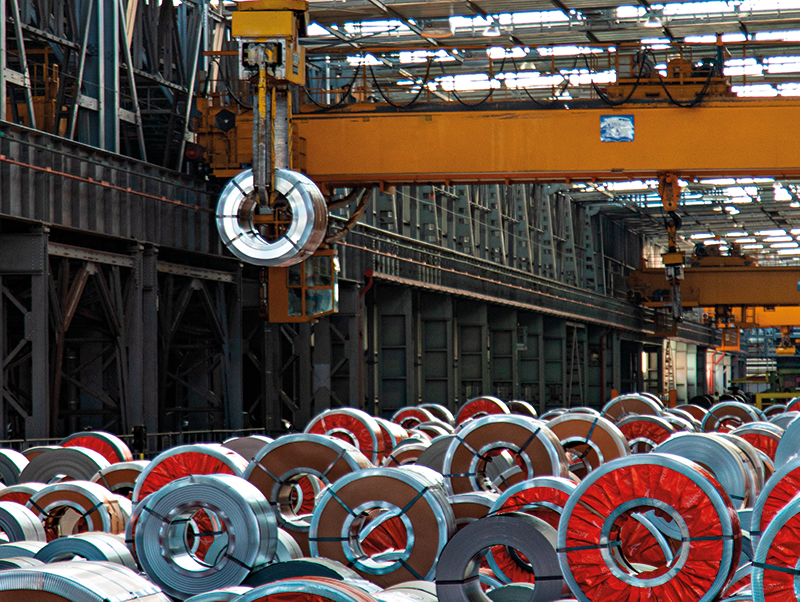
The EU safeguard measures offer country-specific and global quotas for certain steel products and were first introduced in 2018. Quota allowances are given for each quarter, with any material imported in addition to the quota allowance subject to a 25% import duty.
But on March 28, Italy’s customs agency Agenzia delle dogane e dei Monopoli (ADM) published a notice, suggesting that steel buyers can pull back from import operations to avoid exceeding the safeguard quota.
The move follows “numerous requests” of trade associations, Fastmarkets understands.
“Custom clearing steel at the end of the quarter, when quotas for some products and origins gradually get filled, has always been a bit like gambling – with a risk of having to pay the 25% duty,” a trader source in Italy told Fastmarkets.
“The new procedure can help us to use quotas more efficiently,” the source added.
Buyers will now have more flexibility and will be offered several options for clearing imported steel cargoes through customs.
Buyers of imported steel will now be able to withdraw from clearing purchased goods through customs when the quotas are close to exhaustion, according to the ADM document.
Or they might only clear part of a cargo with customs and transfer any excess volumes to the next quarter by keeping the goods in the port.
If material is subsequently required urgently, buyers will be able to proceed with customs clearance and the possibility of facing import duties.
“This [new procedure] is not a new regulation, it is, rather, an interpretation of safeguards use and just [provides another] an option for the buyers,” a second trader in Italy said.
Market participants told Fastmarkets the new mechanism will be particularly useful toward the end of any quota period, when allowances are close to being filled and when clearing import bookings gets increasingly risky – in terms of having to then pay the 25% import duty if the quota is exceeded.
“The new procedure is not very useful at the beginning of the reporting period, but at the end [of the quarter], when few volumes are left, it will help buyers to clear steel imports risk-free,” a buyer in Italy said.
“So, when the quota becomes critical – ie, more than 80-90% used – instead of waiting for the new period, buyers can partially customs clear their cargoes and use quotas more efficiently,” he added.
Another buyer told Fastmarkets: “Buyers can hold goods at ports without customs clearance and no one will know how much goods are sitting at customs.”
The new procedure came into effect on April 1.
So far, the new procedure only applies in Italy, but some market participants said the mechanism could eventually be extended across the EU.
Italy is one of the largest steel importers in the world. In 2023, it imported around 6.5 million tonnes of steel from outside EU, according to European steel association Eurofer.
Vlada Novokreshchenova in Dnipro has contributed to this report


Blastr appoints Mark Bula as CEO
Blastr Green Steel (Blastr) has appointed Mark Bula as its new chief executive officer to lead the development of the greenfield venture, which plans a steelworks in Inkoo, Finland.
Mark Bula will be based in Finland, taking over for Hans Fredrik Wittusen, who has led Blastr through an important project maturation and pre-feasibility stage.
With 35-years of experience in the global steel industry, “Mark has delivered commercial development that has unlocked significant financing for start-up projects. He also developed go-to-market strategies in the Nordics, Europe, the Middle East, and the US,” says Lars-Eric Aaro, chairman and co-founder at Blastr.
Bula will drive Blastr’s strategic development, capital-raising, and project execution, leveraging extensive C-suite and start-up experience, Kallanish hears from Blastr. This includes being first in demonstrating European demand and an attainable price premium for decarbonised steel, the company notes.
Mark Bula previously was one of the people behind the other Nordic green-steel-greenfield venture, H2 Green Steel in Sweden, and used to be with US company Big River Steel as chief commercial officer.
He will assume the position in May and will, together with Hans Fredrik, ensure a seamless transition and continuity and momentum in achieving the Company’s strategic objectives, Blastr says.
Christian Koehl Germany