


SSAB’s Lindqvist joins Swiss Steel’s supervisory board
Following the issuing of new shares, Swiss Steel has announced changes to its supervisory board, which include the proposed appointment of Martin Lindqvist, the outgoing chief executive of Swedish steelmaker SSAB, Kallanish notes.
Besides Lindqvist, nominations for election to the board at the annual general meeting on 23 May will include Alexander Gut and Karl Haider.
Gut would represent BigPoint Holding, which in the wake of the share issue has emerged as Swiss Steel’s majority stakeholder with two thirds of shares (see Kallanish 19 April).
In addition to him, Lindqvist and Haider would be nominated as independent board members. Haider is chief executive of Semperit Holding. His previous involvement with the steel industry included positions at Tata Steel Europe as well as the performance metals division of voestalpine.
According to the announcement, Lindqvist is expected to join the board from 1 October at the latest. SSAB is yet to appoint someone to succeed him as ceo. Of Swiss Steel’s existing board members, Jens Alder, David Metzger, Mario Rossi and Michael Schwarzkopf are standing for re-election, while Emese Weissenbacher is not.
Christian Koehl Germany


Ugitech to decarbonise operations with hydrogen plant
Swiss Steel’s France-based stainless subsidiary Ugitech will build a green hydrogen production plant at its Ugine site in Savoie, in the French Alps, to help decarbonise part of its steelmaking process. The plant will be supplied and installed by local green hydrogen producer Lhyfe.
Ugitech produces around 200,000 tonnes/year of steel. By replacing with green hydrogen the natural gas used in some of its thermoprocessing equipment including burners, reheating furnaces, and heat treatment furnaces, it expects to cut about 16,000t of annual CO2 emissions. The new unit is scheduled to produce up to 12 t/day of hydrogen for a maximum electrolysis capacity of 30 megawatts.
The green gas produced on-site will mostly be consumed by Ugitech. Lhyfe is also considering supplying hydrogen to local mobility and other industry players in the area. It intends to help develop the local hydrogen ecosystem, particularly in the run-up to the 2030 Winter Olympics.
The project is now entering the feasibility study phase, a source close to Lhyfe tells Kallanish. She adds the Ugitech project is still at an early stage of development and there is no date yet for the beginning of construction.
In parallel, Ugitech is coordinating the HYdreams project that kicked off in April 2023 and will end in 2027, supported by EU funds. HYdreams aims to demonstrate the feasibility of replacing natural gas with decarbonised hydrogen in reheating and heat treatment furnaces.
“Using laboratory tests and industrial demonstrators, this project … will verify that hydrogen combustion will have no negative impact on processes and products. The next step is to roll out this new solution to all systems for which direct electrification is not a compatible option,” the steelmaker said.
Natalia Capra France
Imports mirror EU consumption rebound, following consecutive declines
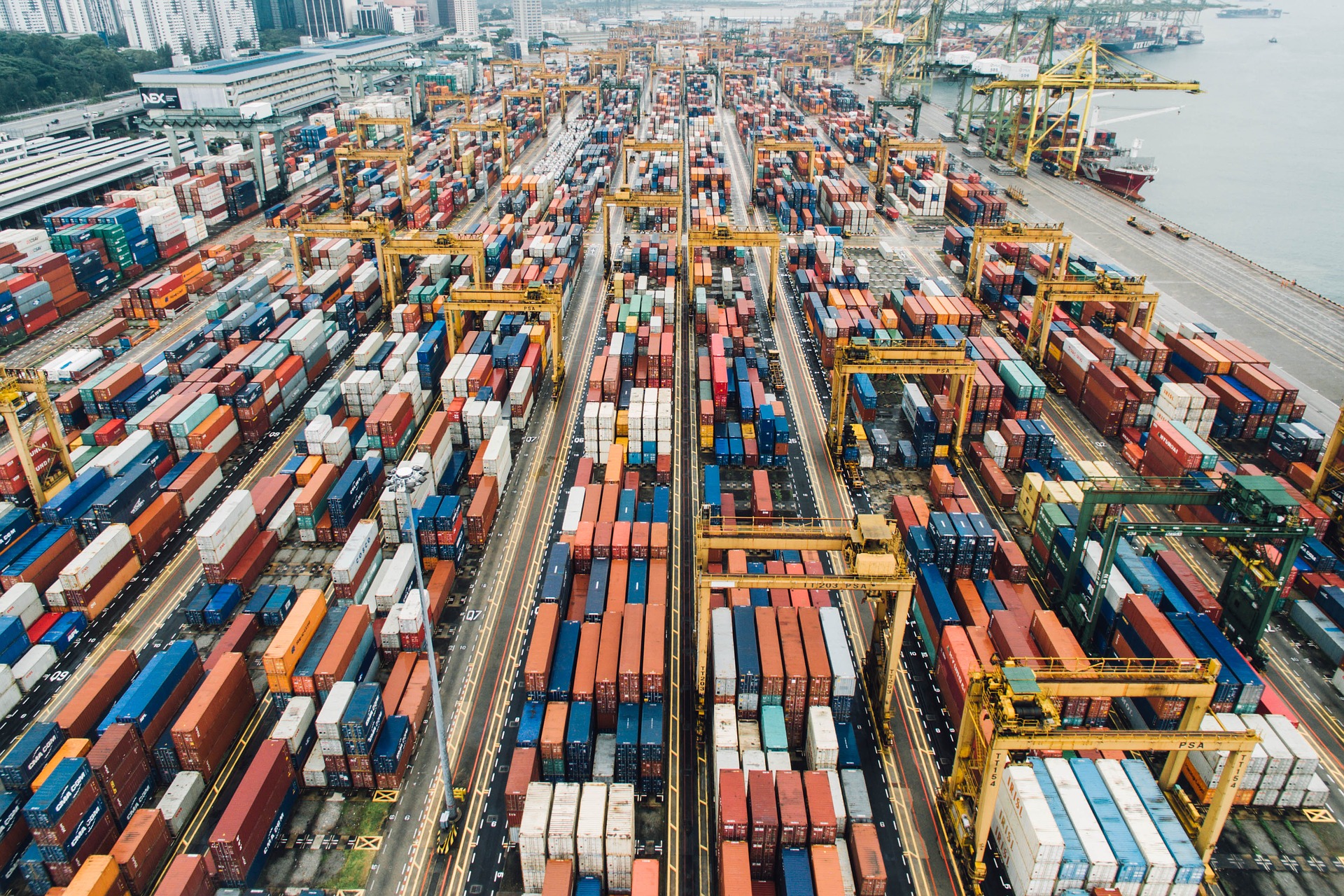
EU apparent steel consumption fell 9% on-year in 2023 to 126 million tonnes, compared to earlier projections of a 6.3% drop. This was despite fourth-quarter demand rising 2.8% on-year, following six consecutive quarters of decline, Eurofer points out.
The Ukraine war impact and high energy costs put steel demand into a downtrend since the second quarter of 2022. This deteriorated until Q4 2023 as a result of growing global economic uncertainty, high interest rates and overall manufacturing weakness.
EU apparent steel consumption is seen rebounding 3.2% in 2024, but this compares to the previous projection of 5.6% growth (see Kallanish passim).
EU domestic deliveries also rebounded in Q4, by 1.3%, after seven consecutive drops, but full-year deliveries remained down 7.9%.
Steel imports into the EU reflected the demand rebound, surging 11% in Q4. They dropped 8.5% over the full year, but so did EU demand, meaning imports’ share of apparent consumption remained high, at 27%, Eurofer says.
In January-February 2024, the growth continued as imports rose a further 4% on-year, with flat steel imports alone surging 33%. For finished steel imports, India had a share of 13.3%, then Turkey with 11.4%, South Korea with 10.6%, Vietnam with 10% and Taiwan with 9.6%.
EU finished steel exports fell 2% in 2023 due to a 7% drop in flats shipments and despite 10% growth in longs. January-February 2024 finished steel exports rose 9%, but overall steel shipments abroad fell 2%.
Two-month finished steel exports surged to United Arab Emirates by 252% and Ukraine by 56%, as well as Egypt and the UK by 24% and 22% respectively. They fell however to the US by 4%.
The EU’s total steel trade deficit narrowed in 2023 to 1.3mt from 1.6mt in 2022.
Adam Smith Poland
Tubos Reunidos eyes fourth-quarter first zero-emissions pipe launch
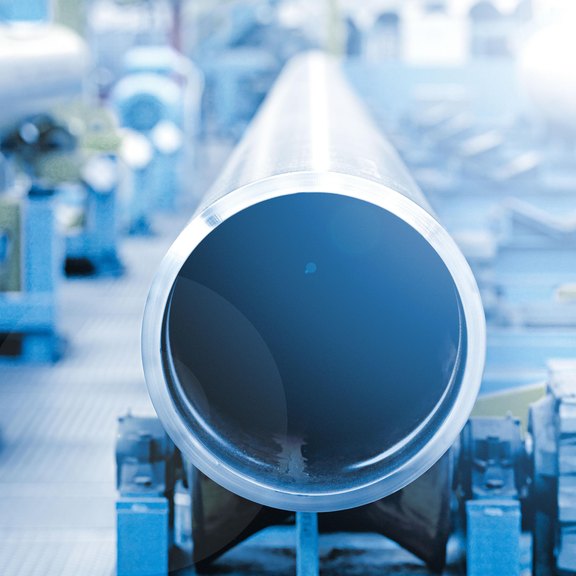
Spanish tube supplier Tubos Reunidos (TR) plans to become the world’s first producer of seamless pipe without emitting CO2 from its operations and energy consumed, Scopes 1 and 2, Kallanish notes.
The tube supplier confirms a significant part of its activity in 2024 will focus on low-emission production. This will strengthen a segment that will be one of the key areas of its growth and value generation.
The company will start producing the so-called O-Next pipe in the fourth quarter, with initial output of 2,000 tonnes. TR says it has already secured its first orders.
“Our commitment to the decarbonisation of the industry will be reflected with the introduction of this kind of new tube to the market,” TR comments. “This range of products responds to the growing market demand for sustainable steel and is the result of the industrial and investment commitment that we carried out within the company’s 2021-2026 Strategic Plan, as well as the measures implemented to advance in energy efficiency, environmental footprint reduction and circularity.”
Tubos Reunidos’ low-emission production is based on electric arc furnaces. The company developed its first zero-emission seamless pipe using recycled raw materials and renewable energy. Electricity is supplied through the installation of more than 30,000 solar panels on the roofs of its plants. This means TR is among the companies in the northern Iberian Peninsula with the largest installed solar capacity for self-consumption.
Todor Kirkov Bulgaria

ArcelorMittal closes coke plant in Zenica but keeps long-steel production
The process started gradually on April 25, with the suspension of the coke battery firing, and ended on the next day, when the plant’s coke ovens were discharged.
“The company has taken all the necessary measures and operations to ensure that the above-mentioned process went safely and with minimum impact on the environment,” the spokesperson said.
The closure of the coke plant was announced at the end of March, with ArcelorMittal Zenica citing rising production costs — particularly of electricity, natural gas and logistics — and reduced demand for finished steel. According to the company, sales in 2023 were historically low.
ArcelorMittal Zenica will continue to produce long steel via blast furnace (BF), purchasing coke from external sources, according to the spokesperson.
“After stopping the coke battery, total emissions of the Zenica plant will go down to the lowest level since the beginning of operation of the steelmaking factory in Zenica, which started 132 years ago,” the spokesperson said.
ArcelorMittal Zenica has a BF with a capacity for 1.10 million tonnes per year and a basic oxygen furnace with a capacity for 1.14 million tpy. According to Fastmarkets’ information, the plant outputs around 800,000 tpy of steel rebar and wire rod, which places it among the largest producers of long-steel products in the Balkans.
ArcelorMittal Zenica operates in long-steel markets, which have been weak across Europe due to slow demand from the construction sector, which is a key end user.
For instance, Fastmarkets’ price assessment for steel wire rod (mesh quality) domestic, delivered Southern Europe averaged €645.63 ($694) per tonne in March, down from an average of €693.00 per tonne in March 2023.
Long-steel producers across Europe have been pushing for higher prices in the past two weeks, Fastmarkets reported.
But buyer sources told Fastmarkets that a strong rebound in prices was unlikely due to ongoing sluggish demand from the construction sector.
According to ArcelorMittal, the coke plant in Zenica produced an average of around 350,000 tpy of coke.
ArcelorMittal Zenica emphasized that it was working on a reassignment plan for about 200 people who were employed in the coke plant.
“Most of these employees will be reassigned to other production facilities, and the possibility of offering 10-15% of employees a transfer to other ArcelorMittal units in Europe is being checked,” the spokesperson said.
Published by: Darina Kahramanova


Eurofer again downgrades European steel demand outlook for 2024
Apparent demand was expected to recover by 3.2%, rising to 130 million tonnes in 2024, Eurofer said in its report, published on April 29. It revised downward its previous, more optimistic forecast in February of a 5.6% recovery to 137 million tonnes for the year.
“The overall evolution of steel demand remains subject to very high uncertainty,” Eurofer said. “Quarterly improvements in apparent steel consumption are expected to continue throughout 2024, albeit resulting in volumes still below pre-pandemic levels.”
For 2023, Eurofer reported apparent steel demand in the bloc to have declined by 8.7% year-on-year, to 126 million tonnes, compared with 138 million tonnes in 2022, marking the fourth annual downturn in the past five years.
Apparent steel consumption in the EU did improve in January-February, however, with flat steel prices recovering, supported by restocking.
Fastmarkets’ daily steel hot-rolled coil index, domestic, exw Northern Europe, averaged €731.73 ($784.15) per tonne in January, sharply up from a monthly average of €688.20 in December 2023. The January average was the highest since May 2023.
In February, however, the situation changed and prices started to decline due to a lack of both apparent and real demand.
In March 2024, Fastmarkets’ Northern Europe HRC index averaged €691.99 per tonne, and the price has continued to decline in April.
“The key problem is lack of end-user demand,” a distributor in Germany said. “In the first quarter of 2024, we saw 15-20% fewer orders from the automotive industry compared with the previous year.”
Since early February 2024, HRC prices in Europe have been going down practically non-stop, hitting rock-bottom in late April.
End-user outlook
Automotive
The automotive industry in Europe was one of the few steel-consuming sectors to perform well in 2023, with data from the European Automotive Manufacturers Association showing that new car registrations rose by almost 14% in 2023, with more than 10.5 million new vehicle sales.
Eurofer said that automotive output in the bloc increased by 8.5% overall in 2023, revised slightly downward from its previous recovery rate prediction of 8.8%.
But overall output levels in the sector remained low in historical terms, with the industry continuing to be exposed to external factors and expected to remain at the levels seen in 2018-19. The sector was expected to decline by 0.4% in 2024 (revised down from 0.1% growth in a previous outlook) and to increase by 0.8% in 2025 (revised up from 0.2% growth).
Market participants said that demand for steel coil from the automotive industry was broadly stable at low levels through 2023 and was not expected to show any significant rebound in 2024.
Market sources said that some mills have already started negotiations for long-term contracts with end-users in the automotive industry for the second half of 2024, with HRC target prices reported around €780 per tonne, compared with around €750-800 per tonne for the first half of 2024.
“Mills want a rollover [in long-term contracts], but end-users are trying to bring [HRC] prices down,” a steel service center said.
Construction
The construction industry, meanwhile, declined by a moderate 1% in 2023, Eurofer said, revised from a 2.1% decline forecast in February, after having grown by 4.8% in 2022.
The construction sector accounts for 35% of steel consumption in the EU
For 2024, Eurofer said that construction activity would continue to decline, falling by 1.9% rather than its previous prediction of a 0.4% decline.
“While overall construction activity is expected to continue benefiting to a limited extent from governmental housing support and public construction schemes,” Eurofer said, “the effect of these publicly funded construction schemes is expected to significantly decrease in 2024 due to multiple downside factors.
“[These include] the shortage of construction materials, their rising prices, as well as reduced fiscal room for construction spending in EU countries,” it added. “These issues have resulted in declining construction confidence.”
Weak construction demand has taken a toll on the European long steel market in recent months, with high interest rates limiting activity, especially in the residential sub-sector.
“Civil engineering is expected to continue to provide the strongest contribution to the construction sector’s performance, but to a lesser extent,” Eurofer said. “This sector will continue to be supported by EU-wide public policies, but their effects have become increasingly uncertain and difficult to quantify due to the recent deterioration of the economic outlook.”
Fastmarkets’ price assessment for steel reinforcing bar (rebar), domestic, delivered Northern Europe, averaged €648.75 per tonne in March 2024, down by €8.75 per tonne from a monthly average of €657.50 per tonne in February 2024. The assessment was sharply down, however, from a monthly average of €720.00 per tonne in March 2023.
Published by: Julia Bolotova

European HRC prices inch up, but still below target offers
Fastmarkets calculated its daily steel hot-rolled coil index domestic, exw Northern Europe at €632.00 ($677) per tonne on Tuesday, up slightly by €2.42 per tonne from €629.58 per tonne on Monday.
The index was up by €6.58 per tonne week on week but down by €31.75 per tonne month on month.
European steelmakers were testing the market with higher offers for June-delivery HRC, but higher prices were not sealed in deals.
Notably, an integrated mill in Benelux area was reportedly planning to increase offers from €640 per tonne ex-works to €660 per tonne ex-works for June-delivery HRC.
Another major producer was aiming for €650-660 per tonne ex-works for June-delivery coil.
At the same time, deals were still reported at lower prices — in Germany, a sale of limited-size tonnage was heard at €630 per tonne ex-works earlier this week.
In general, buyers’ estimates of tradeable values were heard within €620-640 per tonne ex-works, but the lower end of the range was reportedly not accepted by mills.
“Even if you bid for bigger [HRC] tonnage, mills are reluctant to give discounts — they clearly signal to the market that lower prices are not available anymore,” a buyer in Germany said.
Sources noted slightly improved apparent buying in the past couple of weeks due to some limited restocking, but real demand was still subdued, so sources were unconvinced about the sustainability of the uptrend.
In Southern Europe, Fastmarkets’ daily steel hot-rolled coil index domestic, exw Italy was calculated at €627.25 per tonne on Tuesday, increasing by €2.25 per tonne from €625.00 per tonne on Monday.
The index was up by €7.25 per tonne week on week but down by €17.75 per tonne month on month.
Offers for HRC with four-to-five-week lead times from local suppliers were at €660-670 per tonne delivered (€650-660 per tonne ex-works), compared with €640-650 per tonne delivered (€630-640 per tonne ex-works) in early April.
But tradeable values were estimated by buyers at no higher than €630-640 per tonne delivered (€620-630 per tonne ex-works).
A transaction was reported at €630 per tonne delivered (€620 per tonne ex-works) for June-delivery HRC on Tuesday.
“Real demand is still weak, while apparent demand improved a bit due to restocking at rock-bottom prices in the second half of April,” a steel service center in Italy said.
“The recent move to increase [HRC] prices indicates the downtrend is over and helps to stabilize the market, but so far buyers are not ready to pay higher prices,” a distributor in Italy said.
In the secondary market, 4 mm HR sheet was traded at €700-740 per tonne CPT from local suppliers and at €690-700 per tonne CPT from a Central European mill.
Import offers for HRC have increased recently, making overseas coil purchases less attractive for European buyers. This was also supportive for domestic prices to increase.
In general, prices for Asia-origin HRC for June-July shipment were consolidating around €600-620 per tonne CFR.
Published by: Julia Bolotova

European stainless supply chain disruption intensifies
Stainless steel supply disruptions in Europe are expected to persist for the remainder of the second quarter before abating in the summer months.
Supply tightness can occur when end-user demand increases at a faster pace than supply. However, the present challenges are largely the result of strike action and delivery delays from several EU stainless mills. MEPS respondents continue to report no increase in end-user requirements for stainless flat rolled material.
The Spanish steelmaker, Acerinox, has been unable to produce or ship any material from its Cadiz site since February 5, due to ongoing industrial action. Several MEPS respondents suggested that some material was being shipped from its Columbus subsidiary in South Africa to fulfil outstanding end-user orders. Distributors and stockists, however, are having to wait until the strike action ends.
A number of buyers had been informed that the situation at Acerinox may be reaching a conclusion as the workers of the plant may be offered the opportunity to vote on the mediator’s proposal. However, the strike committee opposed this option, and the vote did not take place.
Despite efforts to resolve the conflict at Acerinox Europa, there are “no guarantees that it will be resolved in the short term” the company stated in an April 25 update. The steelmaker also confirmed that its Bahru Stainless site in Malaysia will cease production in the second quarter due to the current market situation.
Political strikes in Finland were suspended on April 7. Many purchasers confirmed that, although they had promptly started receiving material from Outokumpu’s Tornio site, most orders would be delayed by three to four weeks. Buyers remain concerned that if the negotiations fail, and the countrywide strikes are reinstated, their deliveries will be postponed further.
Europe’s other domestic mills are, consequently, under pressure. An increasing number of buyers are experiencing delivery delays and some report having experienced issues with the quality of delivered material.
Very little imported stainless steel is arriving at the European ports to help alleviate the effect of these domestic supply issues, due to the lack of overseas orders placed earlier this year. As a result, inventories across the region are falling and low stocks are being reported in some product lines.
Most respondents commented that activity increased this month but that this due to supply disruptions rather than a rise in end-user demand. Most buyers anticipate that the supply problems will ease in July, when much of the delayed tonnages should have been delivered and recently placed import orders have started to arrive.
Many respondents are concerned that the summer months may bring a rapid turnaround in the market, putting prices back under downward pressure.


Acciaierie d’Italia to target 6 million mt of crude steel coming years
Acciaierie d’Italia’s special commissioners are targeting crude steel production of 6 million mt at the mostly shuttered plant by 2027, union officials told S&P Commodity Insights April 30.
The commissioners told the union officials April 29 they will build two electric arc furnances each with capacities of 2 million mt/year of liquid steel from the second half of 2025 and they forecast that they would come into operation in the second half of 2027.
During the transition period, the union officials said ADI will revamp its No. 2 blast furnace that will restart production this September and BF No. 1 that will restart production in eight-nine months as it needs work in the heart of the furnace, the so-called “crogiolo” and they will run until the new EAFs will start production. BF No. 2 stopped production in January this year, while BF No. 1 suspended its production in August 2023. Both have a capacities of around 1.8 millon-2 million mt of crude steel.
Currently, BF No. 4 is working at 60% of capacity, producing 4,000 mt/d of crude steel. The ADI commissioners plan to increase its production.
Unions officials said they were disappointed with the “relatively new plan,” similar to one presented in 2018, because it does not take into consideration the revamping and modernization of BF No. 5, once the largest European blast furnaces, with a capacity of 4 million mt/year, with also a direct-reduced iron plant. Unions said the company decided to scrap the idea of BF No. 5 as too expensive as it would cost between Eur500 million ($536 million) and Eur600 million. BF5 was shut in 2015.
Unions also reported that Italian economy minister Adolfo Urso said companies interested in buying ADI will start to visit the plant from the second half of May.
The Italian government on Feb. 20 put ADI under special administration following a request from state investment agency Invitalia, despite opposition from ArcelorMittal, ADI’s biggest shareholder. ArcelorMittal bought ADI — formerly Ilva — from the Italian government in 2018 for Eur1.8 billion. The special administrators are also in change to prepare a sale tender with the tender is expected to take place at the end of summer. Among the potential buyers are Ukraine’s Metinvest, Italy’s Arvedi, India’s Vulcan Steel and Steel Mont, an India-based trading and producer steel company that it also has offices in Italy.
