


Biden administration confirms China 25% steel tariff
The Biden administration confirms it will increase the tariff rate on certain China-origin steel and aluminium products under Section 301 from 0-7.5% to 25% in 2024. This follows an in-depth review by the United States Trade Representative.
The move is part of tariff action against multiple Chinese products, designed to encourage China to “eliminate its unfair trade practices regarding technology transfer, intellectual property, and innovation”, a White House statement says.
Besides steel and aluminium, the tariff rate on Chinese semiconductors will increase to 50% by 2025, on electric vehicles under Section 301 to 100% in 2024, on lithium-ion EV batteries to 25% in 2024, and on solar cells (whether or not assembled into modules) to 50% from 2024. Ship-to-shore cranes and medical products are also impacted.
“China’s forced technology transfers and intellectual property theft have contributed to its control of 70, 80, and even 90% of global production for the critical inputs necessary for our technologies, infrastructure, energy, and health care – creating unacceptable risks to America’s supply chains and economic security,” notes the White House statement seen by Kallanish.
“Furthermore, these same non-market policies and practices contribute to China’s growing overcapacity and export surges that threaten to significantly harm American workers, businesses, and communities,” it adds.
“We will continue to work with our partners around the world to strengthen cooperation to address shared concerns about China’s unfair practices – rather than undermining our alliances or applying indiscriminate 10% tariffs that raise prices on all imports from all countries, regardless whether they are engaged in unfair trade,” the note concludes.
Some of the impetus to review trade agreements with China came from Chinese customs data that showed a 30.7% year-on-year increase in steel exports during the first quarter.
The review has received support from US steel industry leaders. Last month, American Iron and Steel Institute president Kevin Dempsey said that while direct Chinese steel shipments have not grown to the US to this extent, Chinese steel exports to third country markets are often further processed into downstream manufactured products that are supplied to the US.


Assofermet Steel Market Note – May 2024
Carbon Flat Steel Service Centers
April was subdued in terms of volumes sold, even though there was greater buying interest from a number of specific buyers.
Although the period was characterized by a slowdown in business due to many holidays in Italy and central European countries, some positive signs came from those very end users who, driven by the rebound in coil purchase quotations, decided to cautiously cover their sheet and strip needs for the coming months.
Service centers were caught in the stranglehold between producers and consumers, in a market characterized by uncertainty. They have continued to operate under declared insufficient operating margins.
The recent increases in purchase quotations, confirmed by both EU and non-EU mills, added to the import limits imposed by the Safeguard Measure, erga omnes duties and the effects of the CBAM, are pushing distribution and pre-processing operators to change pace by following and reinforcing the upward path of their sales quotations, already undertaken in this first decade of May.
Raw material stocks, available at service centers, appear to be slightly above average due to the slowdown in sales estimated at about 10 percent in the first quarter.
The overall situation may not be a problem today since, as mentioned, quotations appear to be on the rise.
Even tough the conflicts in Ukraine and the Middle East are bound to still impact world economies, some signs of optimism are coming from the EU for the long-awaited and announced round of lowering the cost of money, which is expected to finally begin in June.
Stainless Flat Steel Service Centers
April saw improving demand accompanied by low supply caused by strikes at two major European producers in Finland and Spain and limited imports. The strike at the Spanish producer is still ongoing and has now lasted for more than three months.
The month of May opened with lower demand and new demands for increases from producers.
The EU commission, after a nine-month long investigation, has also just published the anti-circumvention regulation regarding cold-rolled imports from Taiwan, Turkey and Vietnam, confirming the exemption of major producers in these countries.
The decision is welcomed and will make the market better balanced, guaranteeing room for imports by producers while blocking duty-evading operations.
Steel Warehouses
In April weakness remains in the downstream market, that does not seem to want to restart on last year’s volumes. Prices, for which the reversal point was supposed to have been reached, also show no signs of recovery.
Both the flats and the longs, while without any collapse or exceptional movement, left a few cents on the ground throughout April.
The much heralded rebound, however, seems to have taken shape in the first days of May, with volumes in line with 2023 and with noteworthy increases on the price side, both in the flat world and, finally, in the long world.
Whether the premises, will solidify into a real recovery will depend, as usual, on numerous endogenous and exogenous factors.
The ECB seems ready to cut the official discount rate next month, but rumors no longer speak of a downward ride, as was feared at the end of last year, and it is likely that the May rebounds are already the result of the announcement of the June reduction.
Of course, the unfolding of the war in Ukraine, the outcome of which seems increasingly uncertain as time goes on, is certainly not helping markets to enter a phase of stability that would do so much good for the macroeconomic situation.
Flat Tinplate Steel Service Centers
Discreet turmoil on demand for ready material, both due to elongations in lead-times of European ironworks reported up to 14 weeks (as opposed to the usual 7-8), and a price increase of several tens of euros, indicating the expected reaching of the bottom. On the import side, a recovery in quotations is also denoted, supported by the further increase in logistics costs.

May 2024 Steel Market Note – Assofermet

Ukraine cuts pig iron exports to retain raw materials for domestic steel: GMK Center
Ukraine’s exports of pig iron plunged to 55,710 mt in April, down almost 40% from March and by a third on the year as the country withheld more iron for domestic production of steel, Kyiv-based iron and steel consultancy GMK Center said May 13.
Over January-April, pig iron exports were 21.7% lower year on year at 418,000 mt. Exports to the US dominated, with sales to the country generating almost 77% of total revenues.
The US does not buy pig iron from Russia, which delivers to Italy, Turkey and even India.
A tight pig iron market recently has pushed up prices, with leading Platts assessing FOB Black Sea pig iron $7.50/mt higher on the week to $400/mt on May 10. Platts is part of S&P Global Commodity Insights.
The market tightness is in part down to Ukraine struggling to maintain exports, according to sources, with the Ukrainian industry having to cope war-induced bottlenecks. While seaport operations remain irregular, it will be impossible to restore pre-war levels of pig iron production and sales, according to GMK Center’s CEO Stanislav Zinchenko.
However, the slump in Ukraine’s pig iron exports is also directly related to recovery in the country’s steel output and exports, he told Commodity Insights.
Over the first four months of 2024, Ukraine doubled its exports of semi-finished steel and grew exports of rolled steel by 120%, according to Zinchenko.
The blast furnaces that have been brought back online were all operating at full rates, and since there are no plans to restart more furnaces, production of finished steel is prioritized over making more pig iron available for sale, said Zinchenko.
In January-April Ukraine’s crude steel output increased 32.8% on the year to 2.4 million mt.
EU becoming more accessible
Last year the country’s pig iron producers — Metinvest-owned mills and ArcelorMittal Kryvyi Rih — utilized their iron smelting capacities at around 65%-75% and 20%-30%, respectively.
Ukraine exported 1.25 million mt of pig iron in the year, only marginally less than in 2022 but down by 61% or 2 million mt compared with 2021, according to GMK Center.
Although they now mostly rely on the US, Ukrainian pig iron producers raised 13% of their export revenue over January-April from sales to Italy and Poland, and they expect the EU market to become more accessible going forward.
The 12th package of sanctions the EU adopted at the end of 2023 imposes a ban on imports of Russian pig iron. This comes in to effect in 2026, but the quotas that are in place until then already provide for a reduction in supplies from Russia.
This year’s quota for imports of pig iron from Russia amounts to 1.14 million mt, of which 300,000 mt or 26.5% had been used by the end of the first quarter, Commodity Insights data shows.


Salzgitter lowers 2024 forecast for steel market
Salzgitter has lowered its 2024 forecast for the steel market as signs of a recovery are weaker than originally anticipated, the German steel producer said during its Q1 2024 earnings call on May 13. The company now expects sales of around Eur10.5 billion ($11.30 billion) for full-year 2024 against the previous guidance of Eur10.5-11 billion.
“Neither a continuation of the slight recovery tendencies discernible at the start of the year, nor the originally anticipated gradual brightening of the market environment have so far materialized,” Chief Financial Officer Birgit Potrafki said. “An economic rebound in Germany and in Europe is only likely to manifest at a later point in time and be weaker than predicted a few months ago,” he added.
“In Germany, our key customer markets of construction, automotive and mechanical engineering in particular experienced a partly pronounced phase of weakness throughout the first quarter. This had, and continues to have, a direct impact first and foremost on the performance of our group’s steel-related companies whose results are not a reason for us to be satisfied,” he said.
In Q1 2024, total crude steel production of the company was 1.68 million mt compared with 1.56 million mt registered over the same period in 2023, with order intakes and shipments down across all of the company’s units. Overall company sales went down to Eur2.7 billion compared with Eur3 billion in Q1 2023.
The results of the companies forming part of the Steel Production Business Unit mirrored the ongoing sluggish economy in the first quarter of 2024 with the company’s crude steel production in Q1 being 1.37 million mt against 1.27 million mt in Q1 2023.
“We anticipate that shipments in the strip steel business will be marginally lower due to the persistently subdued demand from the non-automotive sectors. Crude steel production will be slightly curtailed and run on the basis of three-furnace operation,” the company stated.
In terms of the sections business, the company has forecast that volumes are gradually set to stabilize over the course of 2024 following a muted start to the year. In Q1, the unit produced 324,000 mt of crude steel against 310,00 mt over the same period of 2023, with order intake dropping to 462,000 mt from 702,000 mt a year earlier.
For the Steel Processing Business Unit, the company predicted that the economy will remain weak as it expects heavy plate order intake to range around the low year-earlier level, with prices under intense pressure. Pipe plate production is likely to benefit from the awarding of large-diameter pipes projects in the second half of the year at the earliest.
Gunnar Groebler, Salzgitter AG’s Chief Executive Officer said in the earnings call that the oil and gas sector has been “surprisingly low in the first quarter, some pickup to be seen now but relatively low.” The company noticed delays in infrastructure projects compared with their estimations such as the German hydrogen network, which saw a consequent drop in their sales of pipes as well as a decrease in prices.
The company said that its capital-intensive transformation towards its low carbon production SALCOS projects is on schedule. The CEO also stressed that there was large demand for low steel carbon products, which is key for its customers to cut CO2 emissions. When asked if the delays in the hydrogen network could be a problem to deliver SALCO’S project, he stressed that SALCOS can also work with natural gas until hydrogen becomes available, which would already lead to a 60% CO2 reduction.
Salzgitter’s SALCOS
Platts, part of S&P Global, launched its carbon-accounted price assessments in May 2023 following the market trend of demand for lower-carbon steel.
Platts assessed Northwest European hot-rolled carbon-accounted coil stable on the day at Eur770/mt ($829.213/mt) ex-works Ruhr May 10. The assessment was calculated in line with the sum of the Platts daily carbon-accounted steel premium (CASP) and Platts daily hot-rolled coil price in Northwest Europe.

EU HRC prices remain unchanged on flat demand
Domestic prices for hot-rolled coil remained unchanged in Europe May 13 on limited end-user demand.
“Demand is not good enough,” a trader source said. “But mills are trying to keep prices higher.”
Mills in the EU pushed offers higher, as import offers from Asia became uncompetitive due to longer lead times and risks related to safeguard measures in the EU.
Buyers have been re-stocking in limited volumes, as they avoid building up inventory at high levels, even as public holidays in most European countries further slowed demand.
“Market is challenging,” a service center source said. “Even though our turnover has improved on re-stocking demand, I expect prices to decrease further.”
Platts assessed domestic prices for HRC in Northwest Europe stable on the day at Eur635/mt ex-works Ruhr May 13.
Tradable values were reported at Eur620-640/mt EXW Ruhr. No offers or deals were heard.
Meanwhile, Platts assessed imported HRC in Northwest Europe stable on the day at Eur610/mt CIF Antwerp.
Offers for imported HRC from Taiwan and India were heard at Eur615-630/mt CIF Antwerp, while rejected firm bids for 5,000mt were heard at Eur595/mt CIF Antwerp.
Platts assessed domestic prices for HRC in South Europe stable on day at Eur630/mt EXW Italy May 13.
Import offers from Asia did not support the sentiment in the market. Offers of HRC from Taiwan, India and Japan were heard at Eur620-630/mt CIF Italy for end of July shipment.
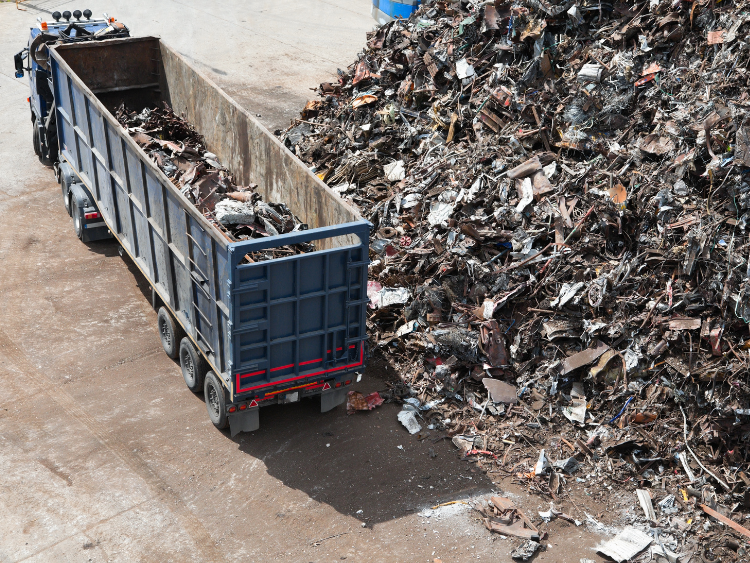
Western Europe scrap rises moderately compared to south
French and Luxembourg scrap prices are rising between €5-10/tonne ($5.3-10.7) for some grades, while other qualities are flattening depending on each mill’s needs.
One steel producer in France is strongly reducing output this month and buying lower scrap tonnages. While finished product order books are far from improving, scrap availability remains short, Kallanish hears from market sources.
Suppliers say export volumes to Turkey continue to stagnate. Last week, however, Benelux exporters were forced to increase their dock prices due to weak inflow, although scrap values in Turkey are under strong downward pressure. On Monday, Benelux dock prices were mostly pegged at around €305-310/t, down €10/t on-week (see separate story).
In western Europe this month, E40 is hovering at €375/t delivered, or slightly more depending on transport costs. E8 new arisings is at €365-375/t, also depending on needs and transport costs. E3 stands at €360-365/t and E1C is at €340-350/t delivered, sources suggest.
Scrap prices this month are feeling upward traction from southern Europe, where material is being lifted significantly by short availability and some degree of speculation on the merchants’ side. While scrap price increases in Spain are more moderate, at about €10-15/t depending on grade, the market in Italy “is completely delirious”, a source says. Offers of mixed E40 grade are at as high as €420/t delivered, with other grades somewhat below €400/t delivered.
Natalia Capra France