


Tata Steel Nederland launches steel with 30% recycled content
Dutch steelmaker Tata Steel Nederland has launched a new steel product with high recycled content called Zeremis Recycled that has an allocated 30% recycled content to help customers to achieve their short-term circularity targets, the company said June 26.
Zeremis Recycled produced at Tata Steel’s IJmuiden steelwork would be available from June 26, a company spokesperson told S&P Global Commodity Insights.
“We are already in talks with customers in different sectors, mainly customers who, like us, have circularity high on their agenda,” the spokesperson said. “We don’t comment on specific tonnages, other than the production is demand-dependent. We are flexible in scaling up Zeremis Recycled.”
Zeremis Recycled offers 30% recycled content, contributing to a reduction of 0.2 mt of CO2 per 1 mt of steel. The increased recycled content was achieved by adding more scrap to the company’s steelmaking process and allocating this increase to a limited amount of steel.
“We believe that together with our customers, we can make meaningful strides towards more sustainable production today,” IJmuiden’s managing director Tom Eussen said in a statement.
“Steel has a very long life cycle in which it remains in use for a long time and is reused for generations. In the quest for improved circularity, it is crucial that steel retains its value with every use,” Eussen added. “We see significant potential to achieve this through our existing asset configuration and, from 2030 onwards, through our DRP-EAF combination, which will ensure that scrap returns as advanced steels meeting the quality standards set by our customers.”
Tata Steel Nederland plans to transform itself into a cleaner, low carbon steelmaker and aims to become completely CO2 neutral by 2045.
Tata Steel will implement its low carbon, or green, steel plan in three stages. The first stage will go into operation by 2030 and consists of one direct reduced iron and one electric arc furnace replacing blast furnace 7 and cokes and gas plant 2, which will reduce CO2 emissions by 40%.
The company also wants to take measures to further reduce emissions and increase scrap use from 17% to 30% in steel production.
In the second phase of its transition, Tata Steel aims to close BF 6 and cokes and gas plant 1, which will result in a total CO2 reduction of approximately 80%. In the following years towards 2045, Tata Steel will become completely CO2 neutral.
The launch of Zeremis Recycled is part of Tata Steel’s sustainability strategy and aims to enable customers to immediately reduce their environmental footprint.
Tata Steel previously introduced Zeremis Carbon Life steel with an allocated carbon footprint reduction of up to 90% and Zeremis Delivered, the option for customers to receive their steel orders through lower-emission transportation methods.
Platts, part of S&P Global Commodity Insights, assessed the daily Northwest Europe HRC carbon-accounted steel price at Eur755/mt on June 25, down 4.4% since the start of 2024.
Annalisa Villa


Germany: May steel sales, stocks decline on year amid economic slowdown
German steel sales in May fell year on year and month on month, as demand remained low amid an economic slowdown, according to data from sales and stockholder association BDS.
Steel product sales in the German distribution and stockholding system in May totaled 770,914 mt, down 4% year on year and down 8.9% from April.
Sales of flat products totaled 469,922 mt in May, down 6.5% year on year and 8.6% lower from April. Sales of long products totaled 238,557 mt in May, falling 0.3% year on year and 7.4% month on month.
Sales of all other products totaled 62,435 mt in May, up 2.2% year on year but 16.4% lower than April.
Steel product stocks fall
Stocks of all steel products in the German stockholding and distribution segment in May totaled about 1.92 million mt, down 3.7% year on year and 5% month on month.
Flat stocks last month totaled 1.24 million, up 2.3% year on year but down 5.3% from April.
Stocks of long products in May fell 13.2% year on year and 4.2% month on month to 633,138 mt.
Stocks of other products totaled 42,589 mt, down 9.7% year on year and 7.4% month on month.
In a broader context, Germany has the largest steel production in Europe, at 35.4 million mt in 2023. Recent data has showed the German market is weak; in May output declined for the first time this year, falling 1.9% year on year to 3.2 million mt, according to data published June 20 by German steel federation WV Stahl.
In the January-May period, Germany produced around 16.2 million mt of liquid steel, up 3.7% compared with the same year-ago period.
Platts, part of S&P Global Commodity Insights, assessed Northwest Europe hot rolled coil prices at Eur630/mt ($674.45/mt) base ex-works Ruhr June 25, down Eur5 on the day.


European coils market steady amid slow trading activity
The European hot-rolled coil market was steady June 27 amid slow trading activity, with market participants expecting low demand for the upcoming summer period and reduced steel production as mills close for maintenance.
“Information is very similar, same levels,” a steel distributor said.
Market sources have said that some eastern European participants were struggling.
In Southern Europe, particularly Italy, some mills were experiencing downtime. Additionally, imports have continued to fall, further contributing to subdued market activity.
“Italian mills are empty,” a service center source said. “Imports totally out.”
The market for imported HRC was stable through the trading day, and buying interest for carbon-accounted HRC remained at previous levels, with European premiums valued at Eur125/mt on June 27, unchanged on the day.
Platts assessed Northwest European HRC at Eur630/mt on June 27, stable on the day. Platts assessed domestic HRC prices in South Europe at Eur625/mt ex-works Italy, stable on the session.
Geraint Moody

UK HRC market sees mild downward pressure amid low demand
In the week ending June 27, domestic prices for hot-rolled coil imported in the UK saw some downward pressure as market sources continue to note that prices are close to the bottom.
The market is facing a combination of lackluster demand and significant stock availability, with prices expected to see a rebound only in the fourth quarter, market sources said.
“A lot of traders have been very nervous,” one trader said. “Prices must be getting close to the bottom.”
“A lot of stock being held by traders and service centers,” one distributor said. “There is no rush really for people to buy anything.”
Market sources also noted that imports were mostly of Turkish origin, with participants favoring their shorter lead times, compared to much later lead times for imports from countries like Vietnam, with deliveries reported for around November.
Much like their relevant European counterparties across the channel, UK market sources have also strongly commented on the impact that will be felt following the UK government’s extension of steel safeguard measures for another two years.
UK Secretary of State for Business and Trade, Kemi Badenoch, extended the steel safeguard measure on all 15 product categories for two years to June 30, 2026, the Department for Business and Trade said June 26.
The UK’s Trade Remedies Authority started an extension review of the steel safeguard measure in September 2023, which looked at whether serious injury would recur to UK steel producers if the measure was removed.
UK-based sources were angry that quotas had not been announced yet, leaving ample room for uncertainty and confusion, particularly at a time where the public is preparing to go to the polls next week for a general election.
“We need to see [the government] announce what the quotas are like,” one distributor said. “With a potential change of government, there will be new people on the job, making it hard to tell when the quotas are coming out.”
Platts assessed UK HRC down GPB5/mt on the week at GBP595/mt basis DDP West Midlands.

Italian HRC prices likely to increase
A coil producer in Italy is temporarily suspending sales this week and considering potential price increases for September delivery.
Price increases for hot rolled coil have been expected since the European Commission proposed in late May to extend the EU safeguard measure on steel by a further two years. This was confirmed this week (see Kallanish passim). It will also introduce a 15% cap per origin over the “other country” HRC tariff-rate quota. The hikes, however, have not yet materialised in contracts due to the poor consumption downstream, Kallanish notes.
Other steelmakers are also considering price increases but have been discouraged by the low consumption seen across end-use sectors and service centres. Interest in importing material is limited. Turkey seems to be the most dependable source but there is a perceived quality issue for service centres.
Quotas for several Asian suppliers have been fully utilised, and the remaining quotas from certain countries are depleting rapidly. Import contracts are few and priced at an average of €600/tonne ($640) cfr Italy, while domestic material remains steady at an average of €620-630/t base ex-works or delivered, sources suggest.
There are expectations in the Italian flat steel market for potential increases in coil, tube and sheet prices, following the renewal of safeguard quotas from 1 July (see separate article).
“There is a sense of unease among buyers and uncertainty among Asian producers when it comes to quotas,” an importer of Asian HRC into Italy says. “Importing is becoming increasingly difficult, which will undoubtedly result in an increase in prices in the medium term. Numerous service centres and re-rollers will not clear material through customs due to its exorbitant cost. Changes in the geography of imports will occur.”
Another source expects Italian HRC values to increase by possibly €20/t. The absence of imports, the volume of HRC that will not be cleared through customs, and the extended domestic mill production stoppages this summer will result in a scarcity of material. Multiple producers have confirmed they are contemplating extended maintenance shutdowns this August in order to maintain a balance between supply and demand.
Natalia Capra France


Italian flats end-users use layoffs amid low demand
There are expectations in the Italian flat steel market for potential increases in coil, tube and sheet prices, following the renewal of EU safeguard quotas from 1 July.
Until now, there has not been any notable increase in coil derivative prices, even though certain hot rolled coil producers and service centres have been raising quotes. Domestic levels for HRC are currently in the range of €620-630/tonne ($662-672), either ex-works or on a delivered basis, depending on the terms of the contract.
Over the past ten days, there has been an average increase of €25/t for welded tube, although sales volumes remain fairly modest. This indicates a tube discount decrease of approximately 1.5 points. Prices continue to be unsustainable, especially considering the additional costs that tube makers will now have to bear when clearing imported HRC through customs in July.
Based on certain sources, these unexpected imported HRC price hikes for tube makers will amount to approximately €60-80/t. Service centres are facing a similar predicament, with several companies expressing uncertainty about their ability to clear all their imported HRC through customs on 1 July. As a result, they may end up leaving some volume at the port, thereby incurring storage costs, Kallanish notes.
Demand for sheet continues to be weak. Service centres’ outlook for consumption in the third quarter is pessimistic. There is no sign of demand picking up, except for a minor technical rebound prior to the August shutdowns. Industries such as crane manufacturers and metalwork factories are going through temporary layoffs.
A buyer at an end-using company mentions his firm is currently working fewer days a week due to the slowdown in the construction sector. Contractors and subcontractors are experiencing a significant decline in sales. Orders from the white goods and automotive industries have also decreased notably compared to last year. Service centres are experiencing financial losses due to the combination of low consumption and low pricing.
According to sources, service centre values for hot re-rolled sheet range from €700-720/t ex-works, while pickled sheet is priced at around €750/t.
Natalia Capra France
Italian merchant bar producers seek increases
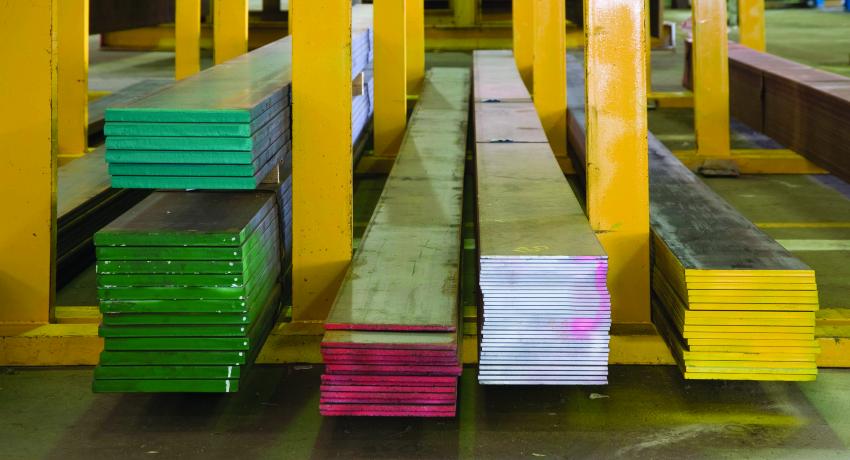
According to sources, producers of Italian merchant bar and beams are looking to secure a €30/tonne ($32) increase for new July contracts. It appears that other long steelmakers are also considering raising prices for July.
According to market participants, energy prices in Italy, already €40/t higher than in other EU countries, are expected to rise next month, leading to a significant increase in steel prices.
Given the exorbitant electricity expenses and weak market conditions, certain mills are projected to extend their shutdown periods in July, in addition to the customary summer maintenance breaks in August. Producers are seen implementing longer maintenance stoppages in August. A large buyer interviewed by Kallanish expresses interest in acquiring long products tonnages before mills halt production, but “only at their current [price] levels”, he comments.
Multiple buyers agree on rejecting any price hike that the sluggish market cannot handle due to low consumption. Longs prices remain relatively stable, with the exception of rebar values, which increased in June. Merchant bar values have not changed and are still at €280-290/t base ex-works or delivered, depending on the contract.
Producers are said to be increasing prices to approximately €300-310/t base ex-works. Including size extras, values are now hovering at about €690-700/t. Meanwhile, sections prices remain stable and are projected to stay so in July. Demand for beams is relatively stronger compared to other long products. However, there is limited availability of material. According to sources, prices for the first category are estimated to be at around €750-760/t delivered.
Natalia Capra France