

Spain prioritises Hydnum Steel’s low-emission steel project
Spain’s Hydnum Steel (HS) has been declared a priority project by the Castilla-La Mancha regional government, Kallanish learns from the company. This will guarantee the investment preferential administrative processing and fast track project implementation.
HS plans to build the first green steel mill on the Iberian Peninsula. The project, a partnership consisting of the Helvella investment company, Siemens, ABEI Energy and Russula Corporation, will be located in Puertollano, in the Castilla-La Mancha region.
“Our project will lead, not only to the decarbonisation of the steel industry, but will also be a great driver for economic activity and employment, attracting auxiliary companies and promoting the service sector and infrastructure development,” says HS chief executive Eva Maneiro.
The Puertollano project’s new status will speed up its implementation, especially in matters of land and urban planning. Among other advantages, it implies economic and financial incentive measures.
The green steel plant is designed to use fossil-free energy throughout the manufacturing process and will gradually incorporate green hydrogen to substantially reduce CO2 emissions.

“Production will be in line with the sustainable development objectives in the steel sector and the circular economy, recycling scrap as raw material, minimising the use of water and valuing the waste and by-products generated during the manufacturing processes,” HS confirms.
The plant will satisfy the growing consumption of low-emission rolled steel in key sectors in Spain, such as automotive and construction.
“Flat steel demand continues to grow above production levels, producing a negative trade balance of 11 million tonnes each year at a European level and around 4-5mt in Spain,” Maneiro observes. “Furthermore, this demand is expected to grow at a steady rate of 1.3% until 2030. Therefore, the market is heading towards a supply deficit of low-emission flat steel which makes this type of project especially important. Added to this is Spain’s potential in terms of volume and price of renewable energy, with the lowest production costs in Europe.”
The project is valued at €1.65 billion ($1.73 billion) and will create more than 1,000 direct jobs. The plant, occupying an area of 1.3 million square metres, is expected to be operational in 2026.
Todor Kirkov Bulgaria

LME rebar contracts sees increases on week, near-term contango persists
Volumes traded for the scrap futures contract on the London Metal Exchange, which settle basis Platts assessments, declined slightly on week as the mills concluded July shipment bookings, and activity in the physical market slowed down.
Spot prices for physical imports of premium heavy melting scrap 1/2 (80:20) were largely rangebound and were assessed at $390/mt CFR July 4, down 25 cents/mt on the week.
The near-term structure over the July-October portion of the forward curve was largely flat on July 4, indicating expectations that spot prices in the physical market would remain firm in the near term.
| Contract month | Platts assessed LME scrap forward curve June 27 ($/mt) | Platts assessed LME scrap forward curve July 4 ($/mt) | Change on week ($/mt) |
| July | 388 | 389.5 | 1.50 |
| August | 385.5 | 390.25 | 4.75 |
| September | 386.5 | 389 | 2.50 |
| October | 390 |
Weekly LME scrap futures trading volumes at 92,770 mt July 4, decreasing from 348,500 mt recorded in June 27 as activity in the physical market slowed down.
Rebar futures contracts on the London Metal Exchange increased in volumes traded despite continued weak demand in the physical market for exports and sustained buyside pressure.
| Contract month | Platts assessed LME rebar forward curve June 27 ($/mt) | Platts assessed LME rebar forward curve July 4 ($/mt) | Change on week ($/mt) |
| July | 581.5 | 583.5 | 2.00 |
| August | 582.5 | 590.25 | 7.75 |
| September | 587.5 | 592.25 | 4.75 |
| October | 594.5 |
The July-October portion of the forward curve for Turkey rebar futures on the London Metal Exchange remained in contango, indicating traders expected Turkish rebar prices in the physical market could follow an upward trend in the near term.
Turkish rebar export prices increased on July 4, as the Turkish mills kept offers firm despite limited export demand. Platts, part of S&P Global Commodity Insights, assessed Turkish exported rebar at $577.50/mt FOB on July 4, up $2.50mt from July 3.
Platts assessed the daily outright spread between Turkish export rebar and import scrap prices at $187.50/mt July 4, well below the target $200/mt scrap-rebar conversion spread.
Weekly LME rebar futures trading volumes in the week to July 4 increased to 25,960 mt, up 8,360 mt from 17,600 mt recorded in the week to June 27.
Semra Ugur


UK HRC market remains unchanged amid low demand, excess supply
Domestic prices for hot-rolled coil in the UK were stable in the week ending July 11, following a prolonged period of low demand and excess supply.
“The market is in a standoff mode basically,” a UK-based trader source said. “Mills don’t want to go lower on prices, and customers don’t want to pay any higher.”
Market sources said that most imports have become unattractive due to the quotas, and some mills, especially in Europe, are using this opportunity to go aggressive.
“Imports from India fall under quotas. Lead times for imports from Vietnam are unattractive,” the source said. “Mills are using this to go aggressive on prices because they’re not making any money at the current levels.”
Lead times on some imports from countries like Vietnam remain particularly long, proving a costly choice for consumers despite the initial discount they may offer. Imports from Turkey remain the only suitable alternative for market participants, sources said.
Platts assessed UK HRC flat on the week at GBP595/mt basis DDP West Midlands.
Devbrat Saha

European Hot-Rolled Coil prices remain stable in slow market
European domestic prices for hot-rolled coil remained stable July 11 as market activity remained low due to summer holidays in most northwest European countries.
“There have been no changes compared to last week,” a service center source said. “Now summer break season started and no movement in the market.”
A trader source said the market was quiet with low demand, and expected there would not be any significant changes any time soon.
Platts assessed Northwest European HRC stable on the day at Eur625/mt ex-works Ruhr on July 11.
A deal for 100-120 mt was heard at Eur620-630/mt exw Ruhr, and tradable values were also heard at the same levels.
Offers were heard at Eur650-670/mt exw Ruhr.
Meanwhile, Platts assessed domestic HRC prices in Southern Europe stable on the day at Eur625/mt exw Italy.
Tradable values were heard at Eur620-625/mt exw Italy.
Buying interest for carbon-accounted HRC was heard still muted as well, with tradable values for premium in a range of Eur100-150/mt for variable CO2 emission levels and scopes. Platts assessed the carbon-accounted premium for HRC in Europe stable on the day at Eur125/mt July 11.
Meanwhile, Platts assessed imported HRC in Northwest Europe stable on the day at Eur595/mt CIF Antwerp.
Offers were reported at Eur595-600/mt CIF Antwerp for material originating from Japan.
Platts assessed imported HRC in South Europe stable at Eur600/mt CIF Italy, down Eur5 on the day.
Offers were reported at Eur600/mt CIF Italy for material originating from Indonesia and at Eur610/mt CIF Italy, including anti-dumping duties, for material originating from Turkey.
Platts is part of S&P Global Commodity Insights.
Devbrat Saha
Spain: May steel production rises 9% on year
Spain’s crude steel production in May increased 9% year on year to 1.1 million mt, a 14-month high, data from steel group Unesid showed July 11.
In terms of underlying volume, trailing 12-month output was 11.6 million mt in May, rising 5% year on year, up from a 2% increase in April and from a previous 20-month stretch of decreases.
Spain is Europe’s fourth-largest steel producer, behind Germany, Italy and France, with a maximum capacity of nearly 23 million mt.
In terms of scrap recycling, the May volume was 884,000 mt, up 1% year on year, but down 2.5% from April.
The trailing 12-month figure was 9.2 million mt, increasing 1% year on year.
At the end of May, a strike was averted in the Asturias region following a negotiated pay agreement, while in June, Acerinox workers at the 1 million mt/year Los Barrios plant, halted in February, agreed to new labor conditions.
Platts, part of S&P Global Commodity Insights, assessed hot-rolled coil CIF Antwerp at a midpoint $644.15/mt July 10, down 1% from a month prior.
Gianluca Baratti

Trinecke Zelezarny increases Czech output share
Trinecke Zelezarny (TZ)’s crude steel production was more or less flat on-year in 2023 at 2.42 million tonnes, raising its share in Czech output to 71%, the firm says.
This was despite global steel consumption falling for a fourth time in five years and steeply rising energy prices impacting competitiveness.
TZ’s revenue dropped 14% in 2023 to CZK 49.7 billion ($2.13 billion) but the firm still closed with a CZK 44 million profit.
Deliveries of wire rod rose 4% in 2023 to 937,500t, but sales of bars and sections, mainly to the automotive industry, declined 5% to 487,000t. Rail and railway accessories sales were 250,000t, of which 89% was exported, Kallanish notes.
Capital expenditure last year was CZK 1.4 billion, allocated to automation, energy savings, increasing the efficiency of operations, and, most notably, dedusting both blast furnaces.
The firm is working towards the production of low-emission steel, which mainly involves the installation of an electric arc furnace. However, according to TZ supervisory board vice chairman Ján Moder, sufficient clean energy at competitive prices and scrap supply in the European market, as well as effective EU protection measures against imports will be essential for successful decarbonisation. Subsidies will also be crucial, he adds.
Adam Smith Poland

Badische Stahlwerke tests flexible use of hydrogen in EAFs
Badische Stahlwerke (BSW) has launched a research project on the development of a new burner technology in electric arc furnace mills, Kallanish hears from the German rebar maker.
The burners used today for heating of the ladles are not enabled for operation with hydrogen, BSW explains. Those developed and tested in the project will be working on hydrogen, or, alternatively, ammonia. The system will be able to flexibly mix hydrogen and ammonia with natural gas, which will be used as a bridge agent until sufficient hydrogen or ammonia are available.
Project partners are associated engineering company Badische Stahl Engineering GmbH (BSE) and university RWTH Aachen. The project will run over three years, and will be subsidised by Germany’s economy and climate protection ministry to the tune of €2.3 million ($2.5m).
“The project goes beyond the reduction of CO2 emissions in ladle heating. It might be extended over the entire electric arc mill, including the meltshop,” says Sebastian Baumgartner, managing director of BSE. In that case, the technology could be marketed internationally through BSE, he notes.
BSW has set itself the target of becoming climate-neutral by 2045.
Christian Koehl Germany

WTO: Steel decarbonisation requires multilateral approach, dispute avoidance
Decarbonising the steel sector requires – besides new technologies, inputs and value chains – innovative, cooperative governance of world trade, key to which is embracing a multilateral system and reversing de-globalisation, says World Trade Organisation (WTO) deputy director-general Jean-Marie Paugam.
Uncoordinated climate policies could significantly hinder the future of green steel. With more than 70 carbon pricing approaches globally, this fragmentation exacerbates the risks of carbon leakage. While subsidies can accelerate the green transition and reduce carbon emissions, they also risk adversely affecting trade and smaller economies with less fiscal space, according to Paugam.
“We are closely monitoring export restrictions of rare earths, critical minerals, or recyclable materials like steel scrap, as these could slow down the global path toward decarbonisation. Regarding standards and regulations, we are observing the proliferation of incompatible emissions measurement methodologies, which could lead to trade disputes,” he told a conference in Jiangyin this week.
The WTO system can serve as a risk management and cost reduction tool, or “insurance policy”, for investors, Paugam continued. The first job of the WTO is to ease trade tensions in several ways. However, “we need to develop new modalities and platforms to improve coordination of the trade aspects of environmental policies and minimise trade strife,” he added.
China and the US are among those advocating for new lines of multilateral work on the interoperability of trade related climate measures. These efforts could help smooth out the differences between divergent climate policy mixes and foster recognition of equivalences. China and the US have also both called for a specific discussion at the WTO on decarbonisation standards in the steel sector, Kallanish notes.
WTO members are emphasising the importance of common emission measurement. This is a key enabler for both reducing trade frictions and providing certainty for decarbonisation investments, Paugam noted.
The WTO Secretariat and worldsteel have been convening multi-stakeholder discussions on the Steel Standards Principles for decarbonisation. The goal is to pre-empt the unnecessary proliferation of standards and encourage the convergence of methodologies.
“This is pioneering work marking a new approach through direct public-private partnership within a specific sector,” Paugam opined.
The WTO has identified four key areas where steel industry action is necessary. The organisation needs the industry to vocally support the multilateral trading system, especially at a time when tensions are multiplying. It should also encourage governments worldwide to come to the multilateral table and cooperate in making polices more interoperable.
The industry should support the convergence of evaluation methods underpinning the definition of green steel, as well as collaborate with Standards Setting Organisations and regulatory authorities to deliver these goals as soon as possible, Paugam concluded.
Adam Smith Poland
EU should set automotive green steel targets
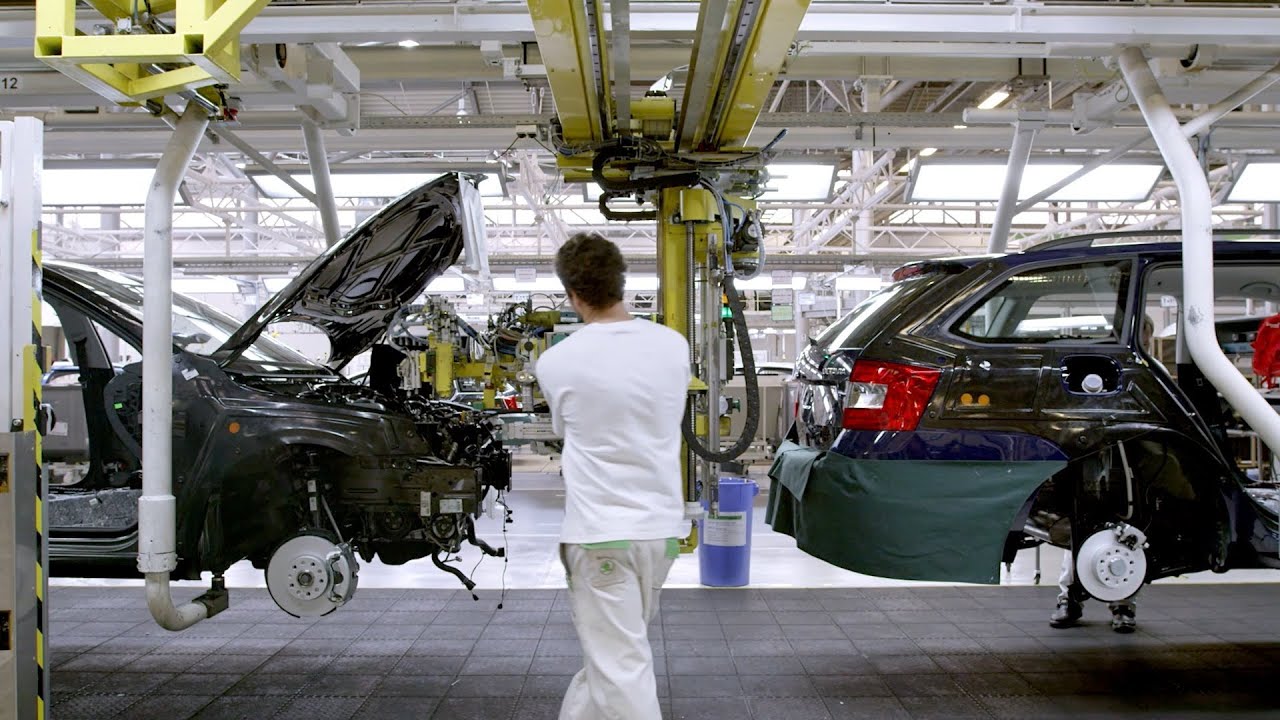
The EU should set low-emission steel requirements for automotive production, helping decarbonise two industries at once, says campaign group Transport & Environment.
Citing a new study by UK consultancy Ricardo, T&E says “green” steel could reduce the carbon footprint of car manufacturing in Europe by 6.9 million tonnes in 2030. This is the equivalent of removing 3.5m internal combustion cars from roads annually, Kallanish understands.
A vehicle’s production emissions are expected to account for around 60% of an electric car’s total lifecycle emissions by 2030, with 16-27% of that coming from steel. As scrutiny increases on the climate impact of electric vehicles (EVs) and steel production, decarbonisation efforts need to be accelerated on all fronts.
T&E says this can be done at a “negligible cost”. It estimates that using 40% green steel in EV production would add just €57 ($62) to a battery electric vehicle sticker price in 2030. Relying 100% on green steel by 2040 would cost only €8 – compared to using conventional steel – due to CO2 pricing and falling costs of green steel production.
“For less than a tyre change, Europe can build a green steel industry,” says Alex Keynes, cars policy manager at T&E. “The extra cost will be negligible and in time it will be cheaper than conventional steel. But we first need lawmakers to kickstart the shift to low-carbon steel in the automotive industry.”
To help steelmakers allocate hefty investments into low-carbon steelmaking, “carmakers should be given an average target that can be met across all their new cars, allowing them to absorb the initial cost via premium models,” T&E says.
The group says this target can be introduced via the EU End-of-life Vehicles (ELV) regulation, which is currently being revised by lawmakers. It recommends a target of at least 40% of green steel content by 2030, rising to 75% in 2035 and 100% in 2040.
With such a policy, steelmakers would have the certainty that customers would pay the premium on low-carbon products.
The study says the automotive sector, which currently accounts for 17% of the EU’s steel demand, could be a lead market for green steel. Based on announced projects, Europe could produce 172mt of green steel by 2030, with the automotive sector consuming 21mt of it, assuming a shift to lightweighting and less steel use in the sector.
CO2 prices and lower renewable energy costs are set to make green steel more competitive in future years. However, regulation will be key to getting those projects across the final investment decision line. “Subsidies alone are not enough,” T&E warns.
Green steel should be defined as having a CO2 intensity of between 50kg and 400kg of CO2 per tonne of steel produced, T&E says. This compares with the 1,800-2,250kg typically associated with producing conventional steel.