


EU long steel prices stay unchanged amid muted activity
The Northwest European market for rebar and medium sections remained unchanged in the week ended July 17, as activity in the market remained limited due to summer holidays in most European countries.
“Market is quiet,” a distributor source said. “A lot of people are away next week due to holidays.”
Sources said that demand from the construction sector has remained stable, however, some delays are expected due to the weather.
“Construction demand is stable,” the source said. “However, there may be some delays due to the weather.”
Platts assessed the price of Northwest European rebar stable on the week at Eur615/mt ex-works.
Tradable values were heard at Eur615/mt EXW Benelux.
Meanwhile, Platts assessed the price of European medium sections stable on the week at Eur750/mt delivered Benelux.
Workable levels were reported at Eur740-750/mt delivered Benelux.


European HRC prices hold largely stable amid weak demand, excess supply
“Demand is very anemic,” a mill source said. “I think we will have to wait two to three weeks for prices [to rise].”
Market sources have also said that in southern Europe, the holiday season is in full effect and will likely be prolonged for more than usual given the struggling nature of the market.
“People are not looking for material,” a trader said.
For imported HRC, while prices from Asia-Pacific remain attractive, sources have noted that when the import quotas and rising freight rates are taken into account, prices are not far off from domestic European prices.
Platts assessed Northwest European HRC at Eur620/mt ex-works Ruhr July 17, down Eur5 on the day.
Meanwhile, Platts assessed domestic HRC prices in Southern Europe stable on the day at Eur625/mt ex-works Italy July 17.
Platts is part of S&P Global Commodity Insights.
Hyundai Steel expands green automotive steel in EU
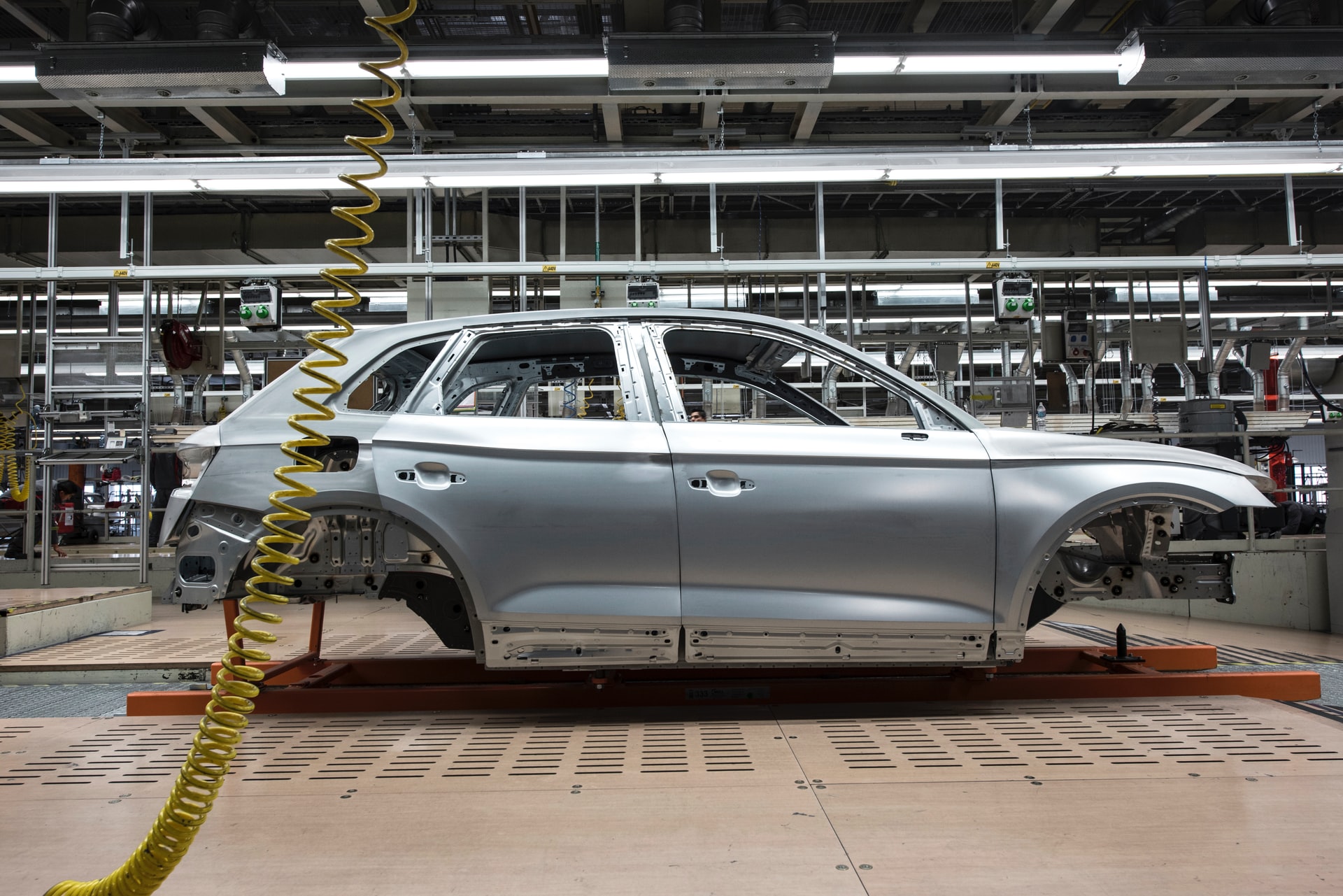
Korean steelmaker Hyundai Steel has signed memoranda of understanding (MOUs) with Czech auto parts producer Tawesco and Italian automotive steel processer Eusider to supply carbon-reduced steel sheets. The steelmaker is expected to start testing lower emission steel parts with these customers this September.
Steel materials suppliers of European automobile makers with carbon neutrality targets, such as Volkswagen and Stellandis, Tawesco and Eusider, need to source low-carbon emission resources to meet clients’ demand. The carbon border adjustment mechanism (CBAM) on imports to EU will be implemented in 2026.
Hyundai Steel is investing in low-carbon steel sheet production facilities at its Dangjin Steel Mill. It plans to build a liquefied natural gas (LNG) power plant at this plant and switch to electric arc furnace (EAF) steelmaking (see Kallanish passim). This company defines its reduced carbon steel sheet as having a 20% carbon emission reduction compared to blast furnace products.
The steelmaker also signed an MOU with the German car parts maker Kirchhoff Automotive this May to sell low-carbon steel products, including cold-rolled and hot-dip galvanized coils. It intends to establish low-carbon emission automobile steel sheets sales network by collaborating with these European car parts makers.

Legal firm confirms Spanish solar components import misdeclaration
Spanish steel association Unesid has received legal support in its complaint against unfair import practices and domestic economy impact from Chinese-origin solar components imports that are being misdeclared as steel welded tube and profiles.
Some suppliers declare these components as having perforations to circumvent EU regulations for steel imports. Duty paid on tubes and profiles amounts to 25% when import quotas are exceeded, Kallanish notes.
“The legal report carried out by the firm Andersen Tax & Legal confirms this breach of current customs regulations, which Unesid has been denouncing for months, as well as the fact that companies engaged in this practice evade the payment of safeguard duties that have been established by the European Commission since 2018,” the association says.
Unesid has already submitted a formal complaint with the results of the report to the Customs Department of the Spanish Tax Agency, as well as informed the Ministry of Trade and Industry, and competent authorities in the European Commission, including the European Anti-Fraud Office (OLAF).
Chinese-origin entries of the products for the photovoltaic energy sector reached 27,000 tonnes in January-April, Spanish Tax Agency trade data show. These entered the country at an average price of €952/tonne, a value more similar to that of steel tubes than to solar power system components, Unesid observes.
Todor Kirkov Bulgaria


Italian wire rod makers consider increasing prices
Despite ongoing subdued consumption, sales in July are reported to have improved compared to the quiet month of June. During the second quarter, some sellers experienced a decrease in volumes by approximately 10-15% compared to the previous year. However, there has been a slight recovery in demand reported this month. Agents and sales executives are confident in their ability to achieve their targets.
Buyers are making regular purchases, but values have decreased in July. Italian mills will be taking longer breaks during the summer months, following production stoppages in July.
Imported material from North Africa does not offer a significant cost advantage compared to domestic options. Drawing-quality rod is being sold at €610-630/t delivered for domestic product, although material from stock that can be delivered quickly is still marketed for €640/t delivered.
Meanwhile, northern European wire rod prices were stable last week amid a quiet market in Europe. The stable trend from past months continues, despite the push from suppliers to increase quotes and the summer construction season being in full swing. Domestic transaction prices for drawing-quality wire rod are at €650/t ex-works and mesh-grade wire rod is at €630/t (see Kallanish passim).
Natalia Capra France

Heine+Beisswenger opens new logistics centre
After 15 months of construction, German steel distributor Heine+Beisswenger has started operating its new logistics centre, for which it spent €7 million ($7.7m), Kallanish learns from the company.
The warehouse is located at the company’s site in Trossingen in the Black Forest, southwestern Germany. Its main feature is a high-bay warehouse of 44 metres in length, 23m width, and 22m height, with 3,500 cartridges. The warehouse has a capacity of 15,000 tonnes, with several processing facilities, to serve customers in automotive, agriculture, mechanical engineering, and medical technology, the company notes.
Heine+Beiswenger handles long products, and is mainly active in special bar qualities, with an annual throughput of 250,000t. It is headquartered in Fellbach and operates seven more sites, most of them in southern Germany, but also in North Rhine-Westphalia and near Berlin. It plans to open a new location in northern Germany near Bremen.
Christian Koehl Germany

HRC buyers in Europe see no room for price rebound
Fastmarkets calculated its daily steel hot-rolled coil index domestic, exw Northern Europe at €627.75 ($683.76) per tonne on Wednesday, down by €3.50 per tonne from €631.25 per tonne on Tuesday.
The index was down by €3.92 per tonne week on week and by €6.00 per tonne month on month.
Mills in the region could offer HRC with lead times of around four to five weeks, indicating weak order books, sources said.
Official offers from suppliers in Germany and the Benelux region were heard at €640-650 per tonne ex-works or delivered, with an aim of €670 per tonne ex-works or delivered for September already voiced by some German suppliers.
Buyer’s estimations of tradeable prices for HRC in the region were €620-630 per tonne ex-works.
Trading in Northern Europe was persistently slow, partially due to the vacation season, sources said.
“In the south of Germany, people have already started vacations,” a buyer in the Benelux area said.
Meanwhile, buyers felt no rush to restock amid insufficient demand from end users.
“The market is dead. Mills are happy if somebody calls [to buy HRC],” a buyer in Germany said.
Despite talk of a potential post-summer price rise, industry sources were largely skeptical about a price rebound, considering slow end-user demand and low order intake from the key end-user sectors.
Meanwhile, in Southern Europe, Fastmarkets calculated its daily steel hot-rolled coil index domestic, exw Italy at €620.63 per tonne on Wednesday, up by €0.63 per tonne from €620.00 per tonne on Tuesday.
The index was down by €8.12 per tonne week on week and by €10 per tonne month on month.
A local integrated supplier was heard offering HRC with lead times of four to five weeks at €640-650 per tonne delivered (€630-640 per tonne ex-works), with transactions heard at €630 per tonne delivered (€620 per tonne ex-works).
Lower bids reported by buyer sources at €610-620 per tonne delivered (€600-610 per tonne ex-works) were said to not be accepted by sellers.
“I imagine that such a low price [€610-620 per tonne delivered for HRC] would be possible for big tonnages, like 5,000 tonnes or more. But nobody is booking such large lots these days,” a buyer in Italy said.
The Italian market for HRC coil was largely quiet.
From Turkey, offers were heard at €600-610 per tonne CFR, including the anti-dumping duty.
From India and Saudi Arabia, offers were heard at €590-605 per tonne CFR.
Two buyers reported an offer at €580 per tonne CFR from Vietnam.
Buyers’ estimations of tradeable prices for imports were heard in the range of €560-580 per tonne CFR.
An Australian cargo of HRC was booked at €580 per tonne CFR to Italy in mid-July, Fastmarkets reported.
Published by: Julia Bolotova


European CRC, HDG prices flat; mills mull post-summer rises
Weak demand from key end-user sectors, especially the automotive and construction industries, kept trading quiet in both CRC and HDG markets across Europe.
Mills have thin order books with September lead times still widely available.
Sources said that some European suppliers were mulling some €20-30 ($22-33) per tonne increases after the summer holidays to reflect higher input costs, but buyers claimed weak demand was unsupportive of higher prices.
In Italy, offers for HDG were heard at €750 per tonne delivered, which nets back to €740 per tonne ex-works.
Buyers’ estimates of achievable prices were heard around €720-730 per tonne ex-works.
Fastmarkets’ price assessment for steel hot-dipped galvanized coil domestic, ex-works Southern Europe was €730-740 per tonne on Wednesday, narrowing downward from €730-750 per tonne seven days ago.
Import offers were rare in the assessment week.
Several sources reported offers from Indian suppliers for 2mm HDG with z120-140 coating at €740-755 per tonne CFR to Italy.
Meanwhile, firm offers of CRC from European mills were rare due to high costs of production and competition with imports in commodity-grade markets.
In Italy, only one supplier was offering CRC, with offers reported at €740 per tonne delivered (€730 per tonne ex-works), and buyers’ estimates of tradeable values heard at €710-730 per tonne delivered at the highest (€700-720 per tonne ex-works).
Fastmarkets’ weekly price assessment for steel cold-rolled coil domestic, ex-works Southern Europe was unchanged at €720-725 per tonne on Wednesday, narrowing downward by €5 per tonne from €720-730 per tonne last week.
Meanwhile, offers from Japan and South Korea for September-shipment CRC to Southern Europe were heard at €670-675 per tonne CFR in the week to Wednesday.
Sources pointed out that the European market for commodity-grade CRC was dominated by imports due to price disparity.
Published by: Julia Bolotova

CBAM to hit China steel industry hard if it fails to go green: industry expert
At an industry conference in eastern China’s Shandong province on July 9, Chen Yu, director of the Low Carbon Research Department of the China Steel Development Research Institute, urged Chinese steelmakers to step up their efforts to face the challenges from the evolution of international trade regulations.
Additionally, Chen noted increasing carbon emissions costs for goods entering the EU starting in 2026, with a nine-year phase-out period of the free allowances under the EU Emissions Trading System.
With EU carbon prices at €100 ($109) per tonne, a Carbon Border Adjustment Mechanism (CBAM) certificate is estimated to be €155 per one tonne of steel with 1.55 tonnes of carbon emissions in 2034, up from €23 per one tonne of steel in 2026, according to Chen.
Fastmarkets’ assessment of green steel domestic, flat-rolled, differential to HRC index, exw Northern Europe was €180-250 per tonne on July 11, unchanged since May 30.
Carbon-related regulations to reshape global trade landscape
The emergence of carbon emission-related trade regulations led by the EU’s CBAM will reshape the competitive trade landscape across the world, Chen said.
While in its current transitional phase from October 2023 to December 2025, CBAM will apply in its definitive system from 2026. Under this mechanism, the EU will put a price on carbon emitted during the production of carbon-intensive goods that enter the bloc, and will encourage cleaner industrial production in non-EU countries, according to the European Commission’s website.
In June 2022, the US introduced its version of the CBAM — the Clean Competition Act — which also imposes charges on energy-intensive imports and incentivizes decarbonization of domestic manufacturing.
In addition, there are global coalitions like the Clean Energy Ministerial Industrial Deep Decarbonization Initiative – which works to stimulate demand for low-carbon industrial materials.
Products that are green and produced with low emissions will become core characteristics to differentiate between competition, Chen said.
China a major supplier of steel imports to EU
At the conference, Chen presented data that indicated that China is a major supplier of direct and indirect steel imported to the EU.
Steel and steel-containing products accounted for $71.2 billion, or 58.4%, of the $122 billion in imports to the EU that were subject to CBAM in 2023, with imports from China accounting for $14.4 billion, or 11.8%.
While EU import volumes of steel-containing products from China are much lower than steel product imports, the trading value of steel-containing goods is double that of direct steel imports.
Additionally, in terms of import volumes, Chinese steel-containing goods accounted for 35.19% of those imports in 2023, which is much higher than the 9.12% rate for direct steel imports.
This means that steel-containing product sectors are set to have a greater impact from CBAM, forcing steel producers to be greener and adapt to CBAM, Chen said.
Chen’s recommendations
At the conference, Chen recommended that Chinese steelmakers should have a mastery of CBAM rules and should clarify their roles across the trade chain to offer accurate and effective data.
Chen also suggested that it’s important to build a green industrial chain.
In response to the expansion of a carbon trading market in China and carbon border taxes internationally, steelmakers as well as downstream steel-containing producers should upgrade their green technologies to develop low carbon-emission products, sell green products and buy green raw materials to collaborate with both upstream and downstream sectors, he said.
The sharing of carbon data should also be promoted, Chen added. With third-party supervision and cost-sharing, Chinese enterprises should standardize the use of data, build local carbon emission datasets and help local certification bodies to obtain the recognition from the EU to achieve mutual international recognition.
Chen also recommended that Chinese steelmakers should strengthen their disclosure of carbon data. Enterprises can disclose necessary information for CBAM products when launching environmental, social and governance and Environmental Product Declarations (EPD) reports. Bodies that can develop Life Cycle Assessment datasets and certify EPD reports should also develop CBAM-compatible datasets and promote the mutual recognition with CBAM certification bodies.
Chinese mills’ efforts
Major Chinese steel mill HBIS has actively promoted the integration with foreign green steel and low-carbon steel standards, as well as the increasing low-carbon emission production, according to the speech delivered at the conference by Haitao Miao, executive vice president of Beijing Ying Tan Technology Development, a subsidiary of the leading Chinese steel group.
HBIS’s hot-rolled, cold-rolled and galvanized flat steel has received the compliance assessment report for CBAM.
The mill plans to produce 5.5 million tonnes per year of low-carbon steel by 2024, accounting for 14% of total steel production, with a reduction in carbon emissions of 5.5 million tonnes.
By 2025, HBIS aims to produce 6.1 million tonnes of low-carbon steel and 7.41 million tonnes by 2026, with a reduction in emissions of 6.02 million tonnes in 2025 and 7.76 million tonnes in 2026.
Published by: Jessica Zong, Zihuan Pan