


European HRC prices hold largely steady amid lackluster demand, low restocking levels
European domestic hot-rolled coil prices remained largely steady July 24 amid limited re-stocking activity and a pessimistic market sentiment.
“Market has been slow,” one service center source said. “There has been no serious restocking.”
“Europeans will have a tough time,” another service center source said. “No increase in demand is expected in the next six to eight weeks.”
Market sources also said that import interest remains weak due to large quantities of material already waiting at ports, as well as higher prices caused by rising freight rates and the impact of the new EU safeguard measures.
“Increase in freight [prices] is eating margins,” a service center source said.
As a result, market participants are currently prioritizing domestic material over imports, sources said.
Platts assessed Northwest European HRC at Eur630/mt ex-works Ruhr July 24, up Eur5 on the day.
Tradable values were reported at Eur620-630/mt EXW Ruhr, and offers were heard at Eur650-660/mt delivered Germany July 24.
Meanwhile, Platts assessed domestic HRC prices in Southern Europe stable on the day at Eur625/mt EXW Italy July 24.
Tradable values were reported at Eur620-640/mt.
Geraint Moody | Devbrat Saha


Thyssenkrupp forms joint venture with Duisburg port
Following approval from the German cartel office, the logistics joint venture between thyssenkrupp Steel Logistics GmbH and Duisburg port operator Duisburg Hafen AG (Duisport) is close to being finalised.
The steelmaker will hold 51% of the joint venture, with Duisport holding 49%. The JV’s goal is to pool expertise, making optimum use of existing capacities and, as partners, further developing Europe’s largest steel and logistics location.
According to Markus Micken, responsible for logistics at tk Steel, Duisburg has the world’s largest inland port, together handling over 60 million tonnes/year of raw materials and bulk goods. The two companies, therefore, “are natural partners for the ongoing development of logistics and the transformation in Duisburg and the Rhine-Ruhr region,” Kallanish hears him say.
Thyssenkrupp Steel Logistics GmbH was established in 2022, and has a workforce of around 300 employees. Duisport contributes extensive logistics expertise, for example with crane control software in its portfolio, that thyssenkrupp Steel has been buying in to date. Conversely, tk Steel Logistics contributes its expertise in bulk goods handling, and the use of push boats and lighters. Its own landing port in the Schwelgern district currently handles around 20m t/y of raw materials such as ores, sintered fuels and coking coal.
Christian Koehl Germany


Marubeni-Itochu Steel acquires stake in Spain’s Network Steel
Spanish coil processing company Network Steel (NS) says Japan-based Marubeni-Itochu Steel Inc. (MISI) has become a shareholder. The deal was sealed on 22 June.
The size of the shareholding acquired by MISI has not been revealed, although NSR confirms it is a minority stake, Kallanish notes. The company’s share capital has hitherto been divided into three packages. The most significant is owned by the president of the company, Oscar Heckh, with a 63.8% stake. The remaining participation is distributed between the company Equipos de Oficina Norte de España (8.18%) and treasury stock (28%).
“The transaction consolidates the commercial partnership between NSR and MISI,” NSR says. “This strategic agreement is motivated by a joint project to achieve a new stage of growth, driven by a diversification of products, markets, creation of synergies and know-how shared by both groups.”
MISI confirms it has agreed to acquire shares in Network Steel and make it an equity-method affiliate. “Through this investment, our company aims to expand its business presence in Europe, where stable economic growth is expected, and contribute to the enhancement of NSR’s corporate value by leveraging our stakeholders and business infrastructure,” MISI explains.
NSR is an independent manufacturer and distributor of steel in the Iberian Peninsula. The company has seven production plants and processing facilities with annual sales volume exceeding 1 million tonnes.
NSR is the parent company of a group of enterprises operating the production, processing and trading of flat steel products. It began operations in 2002 and is currently structured into two business segments. The commercial unit covers the company’s import activities, mainly from non-EU countries, with offices in Spain, Switzerland, China and Morocco. The industrial unit, meanwhile, includes seven flat steel production and processing centres in Spain and Portugal.
Todor Kirkov Bulgaria

French longs prices flatten
Long steel prices in France have remained stable over the past week. At the start of July, there was a modest, €10/tonne ($10.8) uptick in values due to a rebound in apparent demand and a technical restocking ahead of the August holiday break, Kallanish notes.
The average transaction value for domestic rebar remains unchanged at €625-630/t delivered. Merchant bar prices have also remained stable this week, following a slight increase in deal prices compared to last month. Currently, prices are averaging at around €670/t delivered.
Sections are experiencing a resurgence in apparent demand, leading to a boost in prices. Values have been successfully increased by approximately €20/t since the start of June. The estimated range for the first category of sections is at approximately €760-770/t delivered.
According to national construction federation Fédération Française du Bâtiment (FFB), construction volumes remain low and there is no indication of any improvement. During the first quarter, there was a 4.6% year-on-year decline in production within the construction sector. There was a 7% y-o-y decline in new housing starts over the three-month period ending in May, while new building permits experienced a 11.4% decrease.
Natalia Capra France
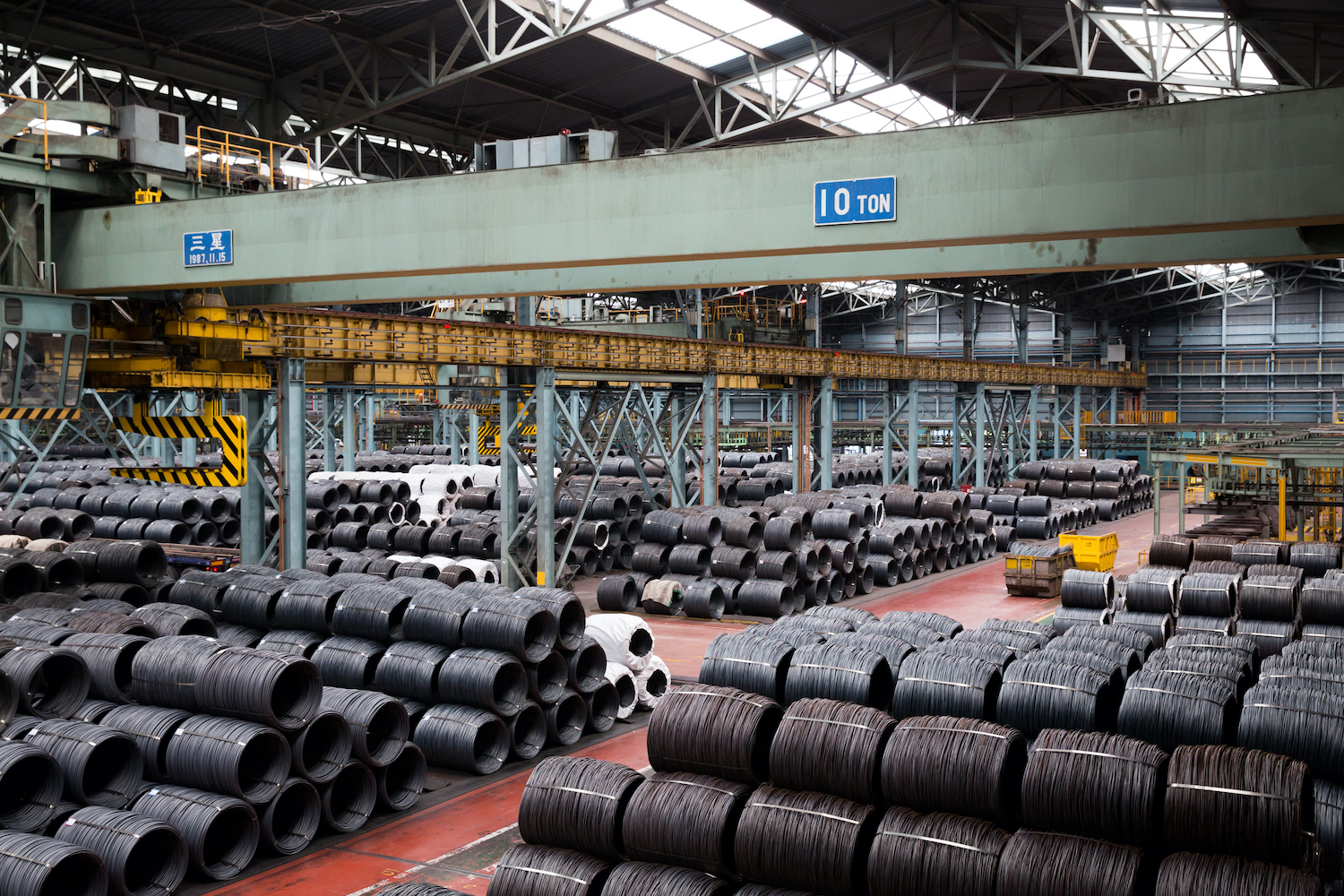
Italian rod producers seek increases amid competitiveness concerns
Italian wire rod producers are increasing prices by €20/tonne ($21) from June, Kallanish notes. As summer approaches, mills and their customers are preparing for August shutdowns, which are expected to be longer this year.
The increases could become more apparent in September contracts as buying activity has significantly decreased. Despite the continued low consumption, July sales have improved compared to the slow activity seen in June. This is attributed to a technical restocking before the August shutdown of the entire value chain. According to sources, the latest contracts did not include the €20 hike.
Imported material has no substantial cost advantage compared to domestic product. Domestic drawing-quality rod is currently at €620-630/t delivered. However, there is also material available from stock that can be delivered quickly, which is being marketed at €640/t delivered. Based on sources, the new prices for drawing-quality material are expected to be at around €650/t delivered.
Buyers are sceptical price hikes can succeed while consumption remains subdued. According to one source, there is no recovery expected in September due to reduced activity at drawing mills and worker layoffs at several customers. The latter have resulted in production being limited to five days a week.
Another source expresses concern about the declining competitiveness of the entire industry. Italy’s stagnating birth rate and reliance on low-skilled immigrants to work in factories mean mills and drawing mills are having difficulty filling positions.
“This is not a temporary crisis; we have entered a new phase of decreased consumption. Our competitiveness in Europe is declining. Wire rod derivatives from Asia, especially China, are available at highly competitive prices. The EU process of applying dumping regulations can be quite lengthy and bureaucratic. Brussels appears to be primarily focused on the industry’s shift towards sustainability, while European steel production has experienced a significant decline over the past 15 years,” the source asserts.
The construction sector is experiencing a crisis in a number of European countries. Buyers are purchasing around three cargoes per month to meet their immediate needs. Price increases will not be well received downstream, the source points out, adding that consumption downstream remains stable at lower levels. European mechanical engineering sector activity is currently stable, while the automotive and white goods sectors are in a slowdown.
A service centre that relies heavily on exports is reporting positive results and consistent demand from its export sales channels. However, local service centres, smaller drawing mills and metalworking companies in Italy are facing significant challenges.
Natalia Capra France

European mills hope to achieve higher price for Q4-delivery HRC; buyers remain on sidelines: sources
European hot-rolled coil prices were stable to slightly weaker on Wednesday July 24 amid low demand, but mills are looking to increase prices for fourth-quarter deliveries, sources told Fastmarkets.
Fastmarkets calculated its daily steel HRC index domestic, exw Northern Europe at €626.25 ($680.53) per tonne on Wednesday, down by €2.00 per tonne from €628.25 per tonne on Tuesday July 23.
The index was down by €1.50 per tonne week on week and by €5.75 per tonne month on month.
Buying in the region was seasonally slow. Sources said that most buyers have already secured the necessary volumes for September-delivery coil so were not active in the market.
“Trading is very dull. Buyers are not looking for volumes, but mills still have a lot [of HRC] to sell for September delivery,” one buyer in the Benelux area told Fastmarkets.
Most sources confirmed that European producers still have September-delivery HRC available.
Offers from integrated mills in the region for HRC with lead times of four to five weeks were still heard at €625-650 per tonne ex-works. But deals were mainly done at the lower end of the range, or even below that.
In Germany, transactions for September-delivery HRC were heard done at €620-625 per tonne ex-works from local suppliers, according to sources. One mill was said to be accepting €610 per tonne ex-works for bigger tonnages.
In the Benelux area, one supplier was heard to be selling September-delivery HRC at €600-620 per tonne ex-works.
Another mill in the Benelux area was selling September-delivery HRC at €630-640 per tonne ex-works. For October delivery, the supplier’s offer was heard at €660 per tonne ex-works. But buyers have so far deemed this offer unworkable.
In general, most suppliers in the region were looking to achieve some €20-30 per tonne ex-works for HRC with lead times in the fourth quarter, expecting apparent demand to pick up in September and support the increase.
Buyer sources were skeptical about the possibility of a price rebound, considering the lack of demand and oversupply in the market
“September-delivery [HRC] purchases have already been finalized by most buyers. There is very little activity in the market. Even if demand picks up in September, there will be plenty of [HRC] volumes to accommodate it,” a buyer in Germany told Fastmarkets.
Meanwhile, in Southern Europe, Fastmarkets calculated its daily steel HRC index domestic, exw Italy at €621.25 per tonne on Wednesday, stable day on day.
The index was up by €0.62 per tonne week on week, but down by €6.25 per tonne month on month.
September-delivery HRC from a local mill was heard offered at €640-650 per tonne delivered (€630-640 per tonne ex-works).
Buyer estimates of tradable prices were around €610-620 per tonne ex-works.
In the secondary market, 3-6mm HR sheet was still heard to be trading in the range of €710-730 per tonne CPT, broadly stable over the past seven days.
Import offers from Asia were limited, source said.
Vietnam-origin coil was heard offered at €620 per tonne FCA Antwerp, but lead times were reported to be in January 2025.
To Italy, HRC from Vietnam and Taiwan was offered at €570 per tonne CFR.
But sources said that interest in Asia-origin coil was quite low due to quota-related risks.
Offers of HRC from Turkey were available at €590-610 per tonne CFR, including the anti-dumping duty.
Overseas suppliers were offering September- or early-October-shipment HRC to Europe.
Published by: Julia Bolotova
