


German steel industry to become major green hydrogen offtaker
Europe’s steel industry is set to be a significant consumer of renewable hydrogen and German steelmakers in particular have some of the most advanced plans in the region to tap the new green energy source.
Potential future demand from the German steel sectorcould amount to 850,000 metric tons per year by 2030, according to German steel association WV Stahl, with producers planning to connect to a national hydrogen pipeline network now under construction, as well as producing their own green hydrogen from electrolyzers onsite, saving 28 t of CO2 per metric ton of hydrogen.
The German government expects total hydrogen demand of 95-130 TWh (2.85 million-3.90 million t/y) by 2030, with 40-75 TWh from new demand.
Carbon-accounted hot-rolled coil steel commanded a $120/t premium to the Platts conventional HRC assessment of $615/t ex-Ruhr on Aug. 7.
Platts, part of S&P Global Commodity Insights, assessed the cost of green hydrogen production via alkaline electrolysis in Germany, backed by renewable power purchase agreements, at an average of Eur7.98/kg ($8.71/kg) in July.
“The steel industry offers one of the most encouraging new use cases for low-carbon hydrogen due to the amount of CO2 that can be abated per kilogram of hydrogen,” Commodity Insights senior hydrogen analyst Matthew Hodgkinson said. “However, switching to low-carbon steel production is expensive, with ETS prices of at least Eur150-200/t required to make it comparable to current production methods.”
Platts assessed nearest December EU ETS prices at Eur71.04/t Aug. 7.
Complete decarbonization of EU crude steel production would require around 6 million to 8 million t/y of low-carbon hydrogen, comparable with current total hydrogen demand, Hodgkinson said.
German steel producers, backed by national and EU government policies, aim for climate neutrality by 2045, targeting a 30-50% reduction in greenhouse gas emissions by 2030.

Greening steel
Steel production accounts for around 5% of European CO2 emissions, and 8% globally. Germany is Europe’s largest steel producer and seventh biggest in the world, and the sector accounts for around 30% of the country’s industrial emissions.
Steel is produced through two main production routes that both emit CO2 — the blast furnace/basic oxygen furnace (BF/BOF), and the direct reduction iron/electric arc furnace (DRI/EAF) routes.
The predominant BF/BOF route removes oxygen from iron ore using a carbon reducing agent, such as coking coal, leading to around 1.6-2 t of CO2 emissions per metric ton of crude steel produced. The basic oxygen furnace then converts molten iron from the BF into steel.
Meanwhile, DRI plants can use natural gas, hydrogen or a mixture to remove oxygen from iron ore. Using only renewable hydrogen produces zero greenhouse gases. The EAF melts scrap steel or DRI to produce steel using electric arcs.
Around 60% of European steel production is via BF and around 40% via EAF, according to industry association Eurofer. Germany produced about 35.4 million metric tons of steel in 2023, down 4% year on year, of which 9.8 MMt was produced via EAF and 25.63 MMt via BF.
Steelmakers plan to replace BFs with hydrogen-based DRI, with most DRI plants in Germany to be paired with an EAF (see map).
Salzgitter, Stahl-Holding-Saar and Thyssenkrupp have all issued tenders to source large volumes of low-carbon hydrogen for their steel production from later in the decade.
These companies, along with ArcelorMittal, received state funding commitments in 2023 and 2024 under the EU’s Important Projects of Common European Interest program on hydrogen and low-carbon technologies.
Powering up
The switch will see a huge leap in renewable power demand.
The German steel industry’s current electricity demand from the grid is 12 TWh, according to WV Stahl. This could double by 2030 to 24 TWh, with crude steel production estimated around 42 MMt/y. Further green electricity will be required to power electrolysis, of around 28-29 TWh.
While being a large increase, those figures are a relatively small fraction of German power demand of around 500 TWh in 2023, forecast to rise to 649 TWh in 2030, according to Commodity Insights data.
European steelmakers are already marketing low-carbon steel products. Platts launched its daily carbon-accounted steel premium assessment in May 2023, which reflects any differential achieved for spot sales of hot-rolled coil on an ex-works basis, with total accounted carbon emissions of 2.1 t of CO2, or less, for every metric ton of steel produced.
HRC: a very weak summer of 2024
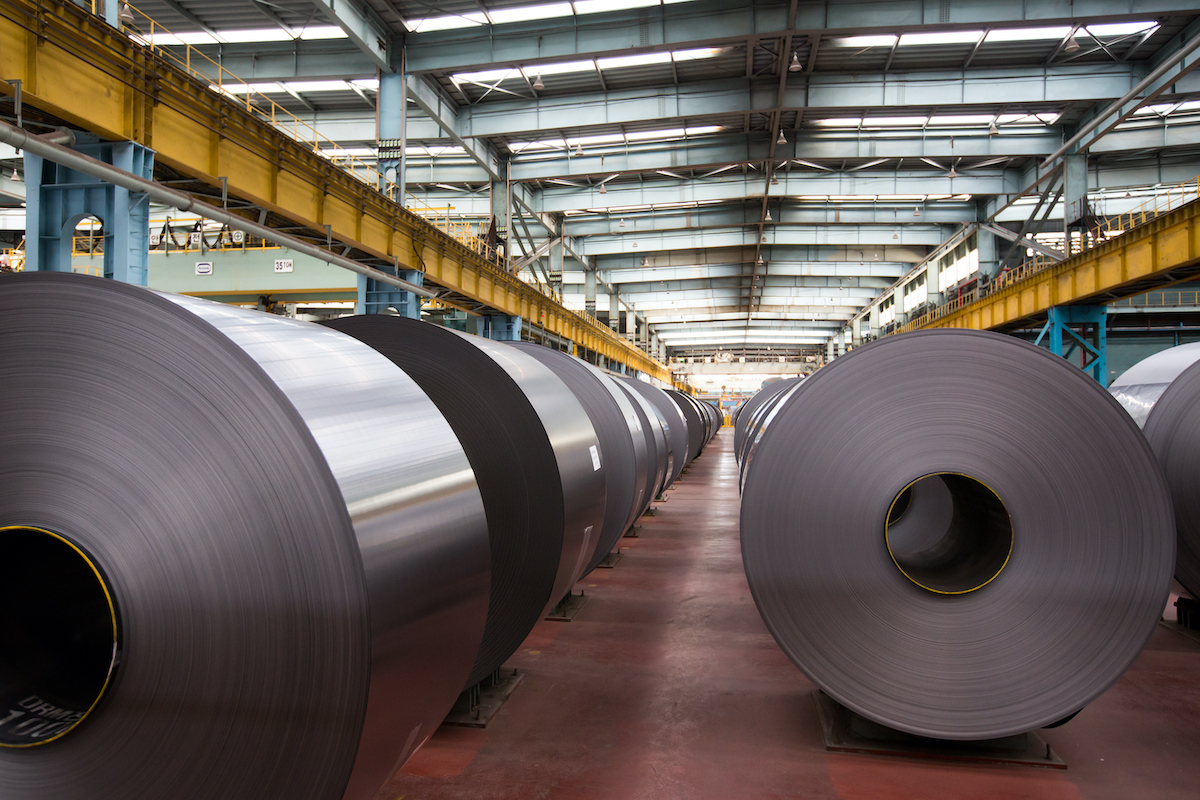
Domestic prices for European hot-rolled coil remained largely stable in a weak market, with buyers avoiding building inventory amid low end-user demand.
“Demand is low,” a service center source said. “I hope there will be an increase [in prices], but it is unlikely.”
“This is a very weak summer,” another service center source said. “We haven’t seen this for many years.”
Sources also mentioned that mills are attempting to further cut prices to entice any level of demand, hoping to fill order books. If mills are not able to find orders by the time market players return from summer holidays, they may encounter financial difficulties, market sources said.
“At the moment mills are getting desperate to get orders,” a service center said. “I am not convinced mills can make money.”
“Demand and supply just not there.” another service center source said. “Mills’ orderbooks for September and October don’t look very good at the moment.”
Platts assessed Northwest European HRC at Eur605/mt ex-works Ruhr Aug. 14, stable on the day.
Tradable values were reported at Eur595-620/mt.
Meanwhile, Platts assessed domestic HRC prices in Southern Europe at Eur605/mt ex-works Italy Aug. 14, down Eur5/mt on the day.
Tradable values were reported at Eur595-610/mt, with larger tonnages reported at Eur600/mt.
Geraint Moody | Devbrat Saha

EU medium sections prices rise on higher offers
The domestic European prices for medium sections rose slightly in the week ended Aug. 14, as some mills pushed offers higher just as the holiday season is ending across most European countries.
“Mills announced increases,” a distributor source said. “The increase is mainly due to higher energy costs in light of heightened geopolitical tensions.”
Sources also noted that whether the price increases are accepted by buyers remains to be seen. Demand remains low, and market participants are negotiating to get better prices, sources said.
Platts assessed the price of European medium sections at Eur770/mt delivered Benelux, up Eur10/mt on the week.
A deal for 1,000 mt was reported at Eur780/mt delivered Benelux.
Offers for a few hundred mt were reported at Eur780/mt delivered Benelux, while tradable values were reported at Eur765-770/mt delivered Benelux.
Meanwhile, Platts assessed the price of Northwest European rebar stable on the week at Eur615/mt ex-works.
A deal for 500mt was reported at Eur610-615/mt ex-works Benelux.
Devbrat Saha

HRC market seasonally quiet in Europe; prices slightly down
Summer holiday season is in full swing across Europe, so trading was close to nil in the HRC market, sources said.
“It’s difficult to say what the actual market price [for HRC] is since there’s hardly any activity in the market,” a buyer source said.
Summer holidays in Nordic countries, Northern Germany and the Netherlands were coming to an end, but they have only just started in the south of Germany and Southern Europe.
Buyer sources estimated achievable prices for HRC in Northern Europe at €600-620 ($657-679) per tonne ex-works, but several sources said that it was possible to obtain €590 per tonne ex-works for large volumes.
Buyer sources also reported a large-sized transaction from a Northern European supplier to Southern Europe done at €590 per tonne delivered.
As a result, Fastmarkets calculated its daily steel hot-rolled coil index domestic, exw Northern Europe at €612.50 per tonne on Wednesday, down by €3.75 per tonne from €616.25 per tonne on the previous day.
The index was down by €7.50 per tonne week on week and by €19.63 per tonne month on month.
Sources were uncertain about post-summer price direction amid ongoing weak consumption, but they expected that restocking and the pending EU anti-dumping probe against certain suppliers might help European mills gain some price upticks.
“Restocking must be done to avoid having an empty floor in the warehouse. Then, following the announced [anti-dumping] investigation, more buyers will go for purchasing from domestic mills,” a second buyer source said.
In Southern Europe, meanwhile, Fastmarkets calculated its corresponding daily steel hot-rolled coil index domestic, exw Italy at €612.50 per tonne on Wednesday, down by €2.50 from €615.00 per tonne on the previous day.
The index was down by €7.50 per tonne week on week and by €13.50 per tonne month on month.
“The market is close to dead,” a trading source told Fastmarkets.
Producers in Italy have started summer maintenance work and were expected to come back to the market with fresh offers at the end of August, Fastmarkets heard.
The most recent offers heard at the end of July were at €640-650 per tonne delivered, which would net back to €630-640 per tonne ex-works.
But buyer sources estimated current workable prices at €590-620 per tonne ex-works.
The market for overseas coil was also quiet, with offers broadly flat over the past week, sources said.
October-shipment HRC from Turkish mills was heard offered at €570-590 per tonne CFR, including the anti-dumping duty.
A Japanese offer for October-shipment HRC was heard at €580 per tonne CFR to Southern Europe.
Vietnamese HRC was heard offered at €560-570 per tonne CFR; for large volumes, offers were heard at €540 per tonne CFR to some parts of Southern Europe.
And from India, an offer was heard at €575 per tonne CFR.
“Import prices are stable at the moment; [there is] no or hardly any change compared with last week,” the trading source said.
“Due to new safeguard rules [and the] new anti-dumping probe, the big suppliers will not be able to export any more big volumes. New exporters such as Saudi Arabia and Australia won’t have a big impact on the price level in the short run,” they added.


Sluggish demand drags on European CRC, HDG prices
Weak demand from key end-user sectors, especially the automotive and construction industries, resulted in quiet trading in the European CRC and HDG markets this past week.
“The markets for CRC and HDG coil are dead because of the holiday season and weak automotive industry,” a buyer source said.
Firm offers were said to be rare, and mills were conducting business on a “case-by-case” basis.
Buyers’ estimates of tradable prices were reported at €700-710 ($767-778) per tonne ex-works for CRC, with transactions reported within that range. Some buyers estimated an even lower achievable price of €695 per tonne ex-works, but this was not widely confirmed by industry sources.
Mills have short order books, with September lead times still said to be available at some sellers.
“Automotive is taking less [steel] than expected, therefore, extra tonnages are available for the spot trades,” a buyer source said.
Fastmarkets’ price assessment for steel hot-dipped galvanized coil domestic, ex-works Southern Europe was €700-710 per tonne on Wednesday, narrowing downward from €700-720 per tonne seven days ago.
For HDG, offers from integrated suppliers in Northern Europe were heard at €740-750 per tonne ex-works, but transactions were reported at lower prices – €720-725 per tonne ex-works, and even €715 per tonne ex-works for bigger lots.
“Demand [for HDG] has been disappointing this year, and on top of that, we have too much capacity,” a supplier in Europe said
Fastmarkets’ weekly price assessment for steel hot-dipped galvanized coil domestic, exw Northern Europe was €715-725 per tonne on Wednesday, down by €5 per tonne from €720-730 per tonne on August 7.
Sources said that European suppliers were mulling price increases of around €20-30 per tonne after the summer holidays, citing squeezed margins.
It remains to be seen whether demand will be strong enough in September to support a rebound in prices.
Imports
The market for imported CRC and HDG coil was quiet during the assessment week with offers seen as being broadly flat.
Vietnamese suppliers of 0.5 mm HDG with Z100-120 coating were said to be aiming for $810 per tonne CFR to Southern Europe, Fastmarkets heard. Bids for such material were heard below $800 per tonne CFR.
CRC offers from Taiwan, India and South Korea were heard at €665-680 per tonne CFR to Antwerp.

US green steel premium faces continued inertia
US steel consumers are resisting paying a premium for green steel, Wade Wright, a steel consultant told participants at a green steel webinar held by Jefferies Equity Research on Monday August 12, highlighting the pushback from automakers.
“Auto companies are [not] willing to pay a premium for [material with] a little lower carbon footprint than what [they] had last year or the year before that,” Wright said.
Steel production via electric arc furnaces (EAFs) accounts for over 70% of production in the US, according to the American and Iron Institute, compared with a 26% global average.
EAFs have a lower carbon footprint due to its use of electricity, compared to blast furnaces (BFs), which rely on coal, leading to higher carbon dioxide and other pollutant emissions.
Since buyers in the US are already paying for relatively cleaner steel, they are simply not willing to pay more for the same steel.
“I wouldn’t pay extra for green steel. I think most of our mills have the best manufacturing processes to keep the carbon emissions at the lower levels. I have no interest in paying a premium for what a mill now claims as green steel,” a distributor, who typically purchases from an EAF mill, told Fastmarkets.
They added: “I think lot of companies are greenwashing their mill’s operations to add some kind of perceived value to the same products they’ve always produced.”
A second distributor said that no one is talking about green steel.
“I think what is hindering it is the same reason that I have for not promoting it — until the rest of the world matches our level of carbon reduction, what is the use? Does the world get to pollute and only the US has to conform?” the second distributor said.
Due to the large aversion to paying a premium for green steel, it’s probable that the US market is not going to see acceptance for “a while,” Wright said on Monday, with the only thing likely to spur any acceptance is “federal intervention.”
In March, the Department of Energy’s (DOE) invested $6 billion in decarbonization projects to reduce industrial greenhouse gas emissions, which was funded by President Biden’s Bipartisan Infrastructure Law (BIL) and Inflation Reduction Act (IRA).
Integrated steelmaker Cleveland-Cliffs was awarded $500 million to replace its blast furnace (BF) at its Middletown Works facility in Ohio with a hydrogen-ready direct reduced-iron (DRI) plant and two electric-melting furnaces.
SSAB Americas has also been selected for award negotiations for the potential construction of a HYBRIT manufacturing facility, which can produce fossil-free iron by using green hydrogen instead of fossil fuels.
Fastmarkets’ weekly green steel domestic, differential to US HRC, fob mill was flat at $0 per short ton on August 14.
Fastmarkets’ domestic green steel base price, hot-rolled coil fob US mill stands at $678.30 per ton. The price is the average of the most recent US Midwest and South HRC prices plus the US green steel differential.
Fastmarkets defines US green hot-rolled as having emitted carbon at or below 0.7 tonnes CO2e per 1 tonne of steel. This can be reached via native production, mass balancing, or renewable energy credits. Carbon offset credits are explicitly barred. The full methodology can be found here.
Fastmarkets’ domestic green steel, flat-rolled, differential to HRC index, exw Northern Europe was unchanged at €170-250 per tonne on August 8.
Meanwhile, Fastmarkets’ green steel import, differential to HRC index, cfr Vietnam was also unchanged at $150-200 per tonne on August 8.
Hüttenwerke Krupp Mannesmann owners prefer sale over stake increase
Salzgitter and thyssenkrupp Steel, co-owners of Hüttenwerke Krupp Mannesmann (HKM), have no interest in taking over the 20% stake in the Duisburg mill still owned by Vallourec.
In fact, thyssenkrupp Steel, the largest owner with 50%, has now made it clear that it also wants to divest its stake. “We are aiming for a sale of [our stake in] HKM,” thyssenkrupp chief financial officer Jens Schulte told Kallanish during a conference call on Wednesday. He referred to a statement to that effect made last week by Sigmar Gabriel, the supervisory board chairman at tk Steel.
The decision makes sense from the view of thyssenkrupp, given the company recently decided to reduce its capacity and intends to sell 50% of its tk Steel division to EPCG. The Czech energy group recently bought an initial 20% and continues negotiations to take another 30%. While thyssenkrupp and EPCG did not disclose details of the transfer, Manager Magazin writes that EPCG paid €140 million ($155m) for its 20%, citing inside sources.
As far as Salzgitter is concerned, its chief executive, Gunnar Groebler, said on Monday the company does not intend to increase its 30% shareholding in HKM, although it earlier expressed an interest in doing so. Salzgitter has not specified if it wants to divest or keep it stake.
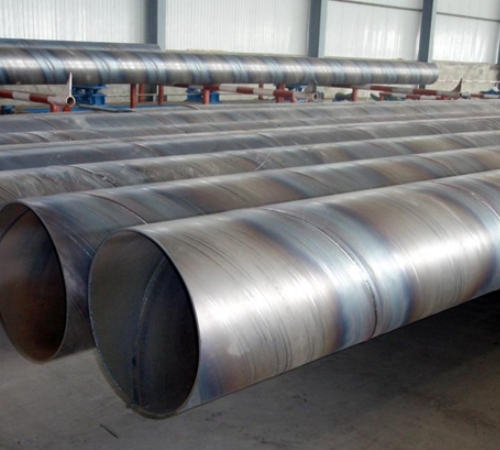
Pipemaker Vallourec has long kept its stake because HKM’s slab is ideal for making tube. It was however reported last year to be seeking to divest its interest. Retaining the stake would be a reasonable path for Salzgitter, too, considering its Mannesmann Tubes business, in addition to the obvious kinship of roots in the traditional Mannesmann company.
Christian Koehl Germany

Metinvest confirms interest in Polish plate mill
Metinvest is among the parties interested in acquiring insolvent Polish plate maker Liberty Huta Czestochowa, says the Ukrainian steelmaker’s commercial director, Dmitriy Nikolayenko.
Huta Czestochowa was declared insolvent by the Czestochowa regional court and appointed an administrator last month after hitting financial difficulties amid challenging European market conditions, including high import penetration.
The firm’s administrator, Adrian Dzwonek, has since been looking to rapidly secure a firm to lease the plant in order to restart production, with that firm then later potentially acquiring the works in full. The same model was used in 2019/20 when Huta Czestochowa was last separated from its previous owner, ISD, and eventually acquired by Liberty. Metinvest was also said to be interested in Huta Czestochowa back then.
“We can confirm that we have been invited to consider leasing the steelworks’ assets, with the possibility of acquiring them later,” Nikolayenko says in a note seen by Kallanish. “At this time, we do not yet know in what state the previous owner left the plant. We have to conduct a thorough assessment, including a comprehensive due diligence study, which would determine the date of the steelworks’ launch.”
Were the Ukrainian firm to acquire the Polish plate mill, it would plan for its long-term development, serving all available markets including Ukraine and the EU. Ukraine will need significant steel for its post-war reconstruction, providing a strong potential market for Czestochowa’s products. Metinvest could also supply the plate mill with feedstock given its proximity to and existing rail connection with Ukraine.
According to media reports, Sunningwell International, which leased Czestochowa in 2019 but missed out on acquiring it, is also in the running this time and is conducting due diligence. The firm is however this time acting on behalf of a special purpose vehicle created by a large unnamed North American steel investor. Sunningwell did not respond to request for comment before deadline.
Another potential suitor is Polish state-owned coal exporter and steel fabricator Weglokoks. The firm’s chief executive, Tomasz Slezak, made no secret of its interest at an industry event attended by Kallanish in May when he said Weglokoks would consider acquiring Czestochowa if the opportunity arose.
Liberty Czestochowa has a 700,000 tonnes/year EAF and 1.2 million t/y heavy plate capacity.
Adam Smith Poland

Turkey accelerates EU HRC supply, feels China pressure
As of 14 August, Turkey has used 58% of its EU tariff-rate quota (TRQ) for hot rolled coil in the third quarter, with 7,879 tonnes awaiting allocation. This means Turkey can still supply 199,381t from its total 475,174t TRQ by 30 September, Kallanish notes from the EU Taric portal.
Last week, prior to the EU’s anti-dumping investigation initiation, unverified reports suggested that Turkish HRC was available at $550/tonne fob Turkey. However, following news of the probe, Turkish mills were reevaluating the market, particularly in the export sector, hoping to regain market share lost to Asian and North African suppliers in the EU. October shipments were traded, but the market remained in a holiday-induced lull across the bloc.
Domestically, Turkish HRC prices were reported in a wide range of $575-610/t ex-works. Although the AD proceedings were seen as favourable, they were overshadowed by aggressive offers from China, which are nearing the psychological barrier of $500/t cfr Turkey.
Current offers of HRC from China are at $505/t cfr for September shipments, with October arrival in Turkey, and some believe that $495-500/t cfr is also achievable. However, with prices falling and holidays ongoing, many in Turkey believe there will be little interest in purchasing until the market bottoms out.
Elina Virchenko UAE