


Southern European long steel prices unchanged on sluggish construction sector
Fastmarkets’ weekly price assessment for steel reinforcing bar (rebar) domestic, exw Italy was €590-610 ($657-680) per tonne on Wednesday, unchanged since September 11.
Demand was reported to be weak due to slow consumption in the construction sector and cheap imports.
“Imports from China, Indonesia and Algeria [put further pressure on] demand for domestic rebar,” a rebar producer said. “With high costs, Europe cannot compete cost-wise with exporting countries in Asia and North Africa.”
Offer prices were reported at €600-610 per tonne ex-works, but most sources reported workable prices at €590-600 per tonne ex-works.
“Mills are trying to put prices up, but the market is so calm, so customers don’t believe so much in price increases,” a trader source said. “Demand is low, and we fight for every single order.”
Scrap prices edged down week on week because of competitive billet prices from Asia, sources said.
China’s exports of steel billet (Harmonized System code 72071100) totaled 349,285 tonnes in August, up by 127% from 153,570 tonnes a year earlier and up by 53% from 228,983 tonnes in July.
Turkey was the biggest buyer of China’s billet in August, taking 204,411 tonnes, or 59%, of China’s total exports.
Fastmarkets calculated its daily iron ore 62% Fe fines, cfr Qingdao index at $96.07 per tonne on Wednesday, up by 6.67% from $90.06 per tonne a week earlier.
Fastmarkets’ calculation of its daily index for steel scrap HMS 1&2 (80:20 mix) North Europe origin, cfr Turkey was $360 per tonne on Wednesday, down by $5.19 per tonne week on week.
And Fastmarkets’ price assessment for steel reinforcing bar (rebar), domestic, delivered, Spain was €620-625 per tonne on Wednesday, up by €5-20 per tonne week on week from €600-620 per tonne.
Market participants reported weak consumption and a silent export market.
Southern European wire rod
Meanwhile, Fastmarkets’ price assessment for steel wire rod (mesh quality), domestic, delivered Southern Europe was €620-630 per tonne on Wednesday, stable week on week.
Weak demand and high feedstock costs continued to weigh on European mills, sources said.
Published by: India-Inés Levy


Uncertainty, pessimism limits trading across Northern Europe steel long market
There were few signs in the short to medium term of the very depressed construction industry picking up due to high interest rates, high input costs, high labor costs and a constantly changing regulatory environment.
Demand remained low, with Chinese, Indonesian and Algerian imports weakening demand further.
With depressed market conditions in Europe, high feedstock costs and global steel oversupply, there was little expectation of demand improvement in the coming six months to a year, Fastmarkets heard.
Prices remained unchanged across the steel long market during the assessed week, with market participants reporting slow demand and unchanged market conditions.
Fastmarkets’ weekly price assessment of steel reinforcing bar (rebar), domestic, delivered Northern Europe was €630-645 ($704-721) per tonne on Wednesday, stable week on week.
Meanwhile, scrap prices edged downward week on week.
Fastmarkets’ calculation of its daily index for steel scrap HMS 1&2 (80:20 mix) North Europe origin, cfr Turkey was $360.00 per tonne on Wednesday, down by $5.19 per tonne from $365.19 per tonne a week earlier.
Fastmarkets’ weekly price assessment for steel wire rod (mesh quality), domestic, delivered Northern Europe was €605-630 per tonne, stable week on week.
Prices and market conditions remained stable in the wire rod market, Fastmarkets heard.

European HRC prices decrease further; market fundamentals remain weak
Demand from the main steel-consuming sectors remained low, with poor prospects for the near term, Fastmarkets understands.
The oversupply of HRC in Europe continued to put additional downward pressure on prices, with trading in the region remaining limited as a result.
Fastmarkets calculated its daily steel HRC index, domestic, exw Northern Europe at €545.63 ($609.45) per tonne on Thursday, down by €4.25 per tonne from €549.88 per tonne the previous day.
The index was down by €13.98 per tonne week on week and by €56.20 per tonne month on month.
Mills in Northern Europe were heard offering HRC at €570-580 per tonne ex-works, while buyers estimated the workable market level lower at €530-560 per tonne ex-works.
In Southern Europe, Fastmarkets’ daily steel HRC index, domestic, exw Italy was €542.50 per tonne on Thursday, down by €1.88 per tonne from €544.38 per tonne the previous day.
The Italian index was down by €15.00 per tonne week on week and by €57.50 per tonne month on month.
One Italian supplier was heard offering HRC at €560 per tonne delivered, which nets back to €550 per tonne ex-works.
Buyers estimated the tradeable market level at €530-550 per tonne ex-works, depending on the customer and traded tonnage.
A buyer source based in Italy told Fastmarkets that prices for HRC were close to the cost of production and would probably stabilize in the coming weeks.
“There is no more room [for prices] to go down, but there is not even one reason [for prices] to go up,” the source said.
Asia-origin HRC was heard offered to Italy at €525-535 per tonne CFR, for shipment at the end of October or November.
Buyers’ interest in the material remained low however, due to the trade safeguard measures, the European anti-dumping investigation against HRC from several origins and the small gap to domestic prices, Fastmarkets understands.
Green Steel
The spot market for green steel in Europe was also very quiet, with no new transactions reported during the week to Thursday.
Major suppliers in Europe maintained offers for steel with Scope 1, 2 and upstream Scope 3 emissions below 0.8 tonnes of carbon dioxide (CO2) per tonne of steel at €200-350 per tonne.
Estimates of tradeable values for the same material came in at €80-150 per tonne during the assessment week.
A mill source pointed out that for steel with CO2 emissions content below 500 kg per tonne of steel, “premiums below €200 per tonne would not be possible.”
Fastmarkets’ weekly assessment of the green steel domestic, flat-rolled, differential to HRC index, exw Northern Europe was stable at €100-200 per tonne on Thursday.
Sources suggested that low liquidity in the green steel market was connected to the global downturn in the European steel sector and slow consumption.
Once again, sources also said that the lack of a common standard for the industry remained an issue.
“We still have no formal definition for green steel; there is no clarity on how downstream Scope 3 emission should be calculated,” a buyer source in Germany told Fastmarkets.
“We absolutely need an industry definition of what steel is green. It doesn’t exist today. We are all talking about same thing, but slightly differently,” a mill source in Northern Europe said.
Buyer and seller sources agreed that the green steel definition needs to specify how many tonnes of CO2 emissions are embedded in one tonne of steel.
Fastmarkets methodology definition for green steel in Europe is the following:
“Steel produced with scope 1,2 & 3 emissions of maximum 0.8 tonnes of CO2 per tonne of steel”
Published by: Julia Bolotova, Darina Kahramanova

Italy in prime position to lead on low carbon steel but faces energy cost challenge: Federacciai
Italy is in a strong position to become a world leader in green steel but needs to deal with the country’s higher electricity prices that put its steel companies at a disadvantage, Federacciai President Antonio Gozzi said at the Italian steel association’s conference in Vicenza Sept. 26.
“The world of steel is changing rapidly,” Gozzi said. “As usual in situations of radical change, there are threats but also opportunities. The two great issues, scrap and energy, both impacted by decarbonization policies, are central to the survival of our companies.”
Italy is the second-largest steel producer in Europe after Germany, and 85% of its steel output is from electric furnaces.
Italian companies continue to pay higher electricity prices than their European competitors, Gozzi said. In 2023, energy-intensive German companies paid an average of Eur65/MWh, while in Italy the costs exceeded Eur110/MWh, he said. The reasons include the national energy mix, state incentives and the lack of an interconnected European electricity market.
Unified approach to power urged
Federacciai has suggested a unified approach to the use of emissions trading system auction proceeds, noting that countries such as Germany and France have allocated much more than Italy to support industrial decarbonization. A single European price for energy-intensive sectors could reduce these differences.
“The Italian EAF based steel industry, as far as Scope 1 is concerned, is in fact close to carbon neutrality” Gozzi said. “We are committed to solving the residual problems related to small emissions still present in electric furnaces and those, albeit limited, deriving from the use of natural gas in the reheating furnaces of rolling mills. To this end, we are working on solutions such as biomethane and hydrogen.”
“To reach the goal of net zero or even be carbon negative, we need a further third of electricity with zero carbon emissions,” Gozzi said. “Many of our companies have already invested, and continue to invest, in plants for the production of renewable energy.
“We are evaluating, as individual companies or in consortiums, participating in tenders for the renewal of hydroelectric concessions, which we hope will be announced as soon as possible in accordance with European directives.”
For this reason, Federacciai recently signed a memorandum of understanding with Edison-Edf and Ansaldo Nucleare to support future installations of small modular reactors and micro modular reactors in Italy and to lead to a long term nuclear power purchase agreement that will act as a bridge to new generation nuclear energy.
“We already have a connection cable with France, built by Interconnector, which could support the feasibility of the project,” Gozzi said. “If we could stipulate this contract under economically balanced conditions, starting from 2025-26, we could realize our dream of world leadership in the production of green steel.
“Being the first in the world in the production of totally green steel would radically change the history of our companies and their prospects, strengthening their relationships with customers, with institutions, including financial ones, increasing their sustainability and therefore their value.”
Renewable energy link to Tunisia
The second project Gozzi cited is the 600 MW cable with Tunisia and the investment in renewable energy in that country.
“After years of work, we are close to signing an intergovernmental agreement between Italy and Tunisia that could allow Italian energy-intensive companies, within the framework of the Interconnector obligations, to participate in the financing of the cable and the construction, in Tunisia, of photovoltaic and wind power plants whose energy could, at least partially, be reimported into Italy through the new cable.”
Gozzi said the cable could be ready in 2028.
Gozzi cited also another project that Federacciai launched: the CEIP Consortium, which practically all the Italian steel companies that use electric arc furnaces have joined and which is looking at the feasibility of one or more direct-reduced iron plants in Italy or abroad to serve Italian companies.
Gozzi told reporters that the scouting for the DRI is focusing on North Africa, but also Brazil or even with Vale in Brazil, with a long-term offtake agreement to deal with the shortage of scrap that is expected as many European blast furnace steelmakers go the EAF route.
In 2023, the Italian steel industry produced 21.1 MMt of steel, a reduction of 2.5% compared with 2022. Gozzi said Federacciai expects that 2024 production will be slightly less than in 2023 as Acciaierie d’Italia weighs on national output.
Platts, part of S&P Global Commodity Insights, assessed HRC Italy Sept. 26 at Eur540/mt base ex-works, down Eur5/mt on the day.


Tata Steel Nederland cuts costs amid market weakness
Tata Steel Nederland says it is “tightening the belt” by means of cost-cutting measures to cope with current deteriorating market conditions. It is the first northwestern European steelmaker to publicly announce such measures in reaction to the ongoing economic weakness.
European industry is experiencing tough times and this is directly affecting the steel market. Steel prices are low and customers are taking a wait-and-see approach, the company says in a statement. It concludes that the steel market will not recover after the summer.
The firm is therefore adopting cost-saving measures that directly save money, including measures in procurement, sales and inventory management. In addition, a partial hiring freeze has been implemented, as well as a significant reduction in training and business trips.
The company underlines it will keep its eyes on the transition to clean, green and circular steel, and that the cost-cutting measures will also serve to stick to that long-term plan.
Notably, the firm does not speak of reducing production. In fact, it states that “Tata Steel Nederland continues its steel production unabated in order to supply customers directly when the market recovers.”
According to a Dutch buyer of coil products made by Tata Steel Nederland, it is likely that European steelmakers will temporarily shut down blast furnaces to cope with the lack of demand. “Cutting production would be the best solution to get a better balance in supply and demand, but who will start?” he wonders.
Earlier this week, Kallanish contacted all the main coil-making producers in northwestern Europe to ask about plans to reduce production. None of the mills replied, including Tata Steel Europe.
Christian Koehl Germany

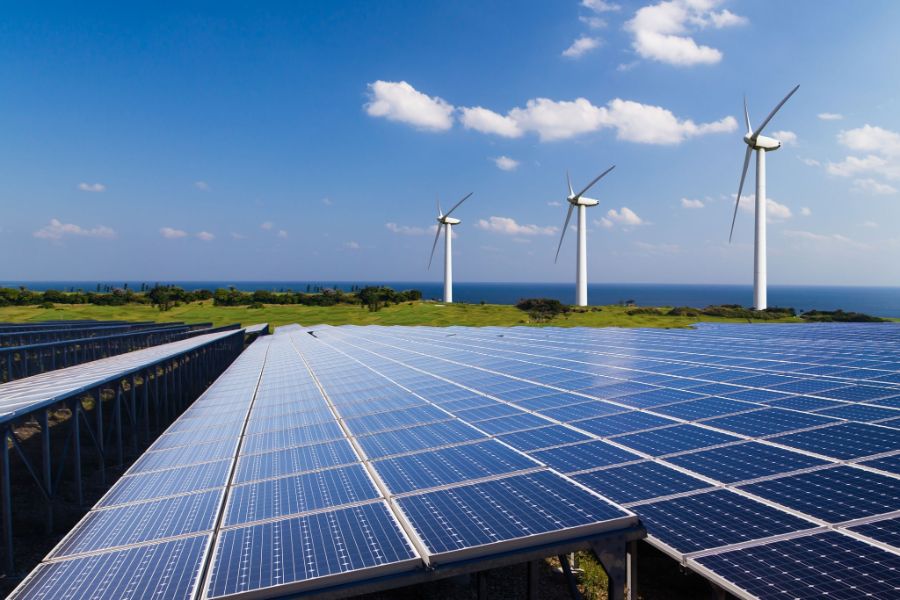
Deindustrialisation threatens European renewable energy buildout
The expected reduction in production in some sectors, such as iron and steel, amid deindustrialisation in Europe, could contribute to electricity demand not materialising. Grids, permitting and revenue certainty are meanwhile obstacles to deploying the renewable energy capacity needed by industry.
Europe finds itself in a chicken and egg scenario, where steelmakers need clean, competitively-priced energy to sustain operations, but deindustrialisation is hampering energy project spending. “The lack of clarity in how demand will unfold could dampen the appetite to invest in next-generation clean energy projects, potentially stalling or slowing the energy transition,” McKinsey notes.
“One major cross-cutting bottleneck facing the energy transition is a lack of firm commitment to project pipelines – not helped by concerns surrounding project economics and long-term returns, and much less by the fact there is no precedent for the global energy transition,” it continues in a report seen by Kallanish.
It can take 4-12 years to develop a solar or onshore wind project in Europe, and over 12 years for offshore wind. This leads to major development uncertainty, financing challenges and cost overruns, points out BloombergNEF.
Governments have fast-tracked some projects, with 2024-26 spending plans seen increasing by 28% from 2023 levels in Germany, Great Britain, France, Italy and Spain. Challenges around affordability for end users, regulated equity returns and availability of government funding still pose risks to the buildout, BloombergNEF continues.
“Longer development timelines due to permitting and grid challenges, and rising interest rates are putting pressure on the expected returns for renewable energy investment. This is exacerbated by elevated equipment costs for wind … as well as increased negative power prices and zero-priced hours as renewable energy levels rise, especially during daytime hours for solar,” it adds. The electrification of industry will be essential to support renewables expansion.
On offshore wind, some governments, like in Germany and the Netherlands, have moved away from providing revenue support. This means developers must find an alternative route to market, usually through corporate PPAs. Reducing such revenue risks through two-way contracts for difference, supporting permitting and accelerated auction schedules could boost project deployment in offshore wind, BloombergNEF concludes.
Adam Smith Poland

French longs buyers anticipate price reduction
Long steel prices in France are declining only slightly as producers have refused to give in to buyers’ demands for price reductions. However, coil derivatives, including welded tube and sheet, have experienced a significant price decline in the country so far.
Longs values remained relatively stable throughout the summer. A buyer has expressed concern that “panic is now spreading” as a result of numerous market participants claiming that September has not seen an appropriate resumption of activity following the summer break, Kallanish notes.
Distributors, who are witnessing a significant decline in flats prices, fear that longs values will also begin to decline in the coming weeks. In anticipation of a prolonged drop, distributors and construction companies are adopting a wait-and-see approach and refraining from making volume purchases.
In comparison to the end of July, prior to the start of the summer break, the average transaction value for domestic rebar has decreased by an estimated €10-15/tonne ($11.1-16.7), and hovers at approximately at €600-610/t delivered. A major buyer talks about the construction sector’s persistent poor performance and the nearly complete cessation of single-family home construction in France. Demand is currently reliant on infrastructure projects.
Meanwhile, merchant bar prices have also slightly decreased compared to August, currently standing at approximately €260/t delivered, sources suggest. Amid low-priced Chinese long product offers into Europe, buyers are reportedly considering offers from Asia for beams scheduled to arrive in November at a price of some €100/t less than domestic material. Nevertheless, the gap between imported and domestic prices should be significantly greater in order to attract buyers.
Domestic transactions for the first category of beams in France are also experiencing a modest decline, pegged in a range of €760-770/t delivered, dependent upon the client and volume. Prices of sections are expected to decrease in the coming weeks due to slow domestic consumption and lower import prices. Scrap is also anticipated to suffer another decline in October.
Natalia Capra France

siderweb FORUM: prices at their lowest, cautious optimism for 2025
Steel prices are expected to have bottomed out and a turning point now seems close. Participants at the round table ‘Steel in Italy and the World’ held during the siderweb FORUM appeared to agree on this.
‘The steel market is cyclical by nature,’ said Yuryi Rizhenkov, CEO of the Ukrainian Metinvest Group. The current bearish trend in the sector is the longest in the last 20 years. This alone leads me to be cautiously optimistic for 2025. Of course there are many uncertainty factors, such as the war that unfortunately continues in Ukraine and the crisis in the Middle East. However, we also see that governments, such as the one in China just now, are taking steps to stimulate the economy,’ he says.

“We only hope that the effects of the latest stimulus packages from China will have a lasting effect,” remarked Fernando Espada, president of EUROMETAL, noting how, on the European side, we are instead looking closely at the ECB’s upcoming moves.
‘I believe that prices are near the bottom, because flat steel producers around the world are suffering right now,’ said Antonio Marcegaglia, president and CEO of Marcegaglia Steel. ‘Moreover, I do not see any possibility of significant reductions in raw material and labour costs given the inflation levels. We need higher prices both to cover these costs and to address investments in decarbonisation’.
Despite a weak economy and geopolitical tensions, Alessandro Brussi, chairman and CFO of Danieli, described demand for steel plants worldwide as good. “Demand for steel,” he said, “is still growing in some areas and part of this growth is due to the availability of raw materials and factors such as gas, as in North Africa. In some areas, such as Europe, demand is driven by decarbonisation and the efficient use of resources such as scrap, energy and electrodes; in others, such as India, it is driven by the need to increase tonnes produced. ”
We have an interesting pipeline of orders,’ concluded Bruschi. “The main obstacle is the need for capital, for funding, for contributions from different governments to drive technological change within the sector.”
Asked what are the main challenges facing the steel market, Marcegaglia replied that ‘structurally high costs are undermining the competitiveness of European players’ and that in order not to succumb it is necessary ‘to focus on innovation in materials, processes, performance; to remain very lean in terms of organisation, flexible in adapting production levels to fluctuations in demand, and to move more towards services and value creation’.
At the same time, both Marcegaglia and Espada stated that although protection from unfair and aggressive imports is desirable, raising walls too high risks becoming ‘a boomerang’. According to Espada, the latest EU trade measures ‘are only protecting one part of the supply chain. On the one hand it is difficult to import certain products, but on the other hand we allow the import of products with higher added value. I think the Commission should focus on initiatives to increase steel consumption. Doing so would defend the entire supply chain’.
The CBAM, the Border Carbon Adjustment Mechanism, is according to Marcegaglia ‘a good objective, but with wrong and badly applied instruments, it risks being not only ineffective but even dangerous’. The chairman and CEO of Marcegaglia Steel added that so far, in its transitional phase, the CBAM has been more “a burden from an administrative point of view”, but has not brought about much change; however, all steel players are preparing to move towards more sustainable resources and making investments to supply green steel. Marcegaglia said he hoped that the CBAM would undergo changes, but was not very optimistic about it.
Despite the EU safeguard, duties and ongoing anti-dumping investigations,Italy remains the largest importer of flat steel in Europe. This was one of the main reasons for Metinvest to evaluate Italy for its investment project in partnership with Danieli. A project that was initially intended to be for the rolling of semi-finished products from Ukraine but which, with the loss of Azovstal due to the war, became that of a full-fledged steel mill. ‘Building a domestic production of this type of product would make the Italian economy more resilient and stable,’ he said. Moreover, the project ‘aims to revitalise the area’. ‘I believe we will finalise the Programme Agreement within the next two months,’ he remarked. The Metinvest-Danieli steel plant in Piombino will use raw materials largely from Ukraine, as well as both European and imported scrap. In this regard, Ryzhenkov emphasised that ‘at European level, there will be a big increase in the availability of scrap in the coming years. In fact, the export of this raw material is expected to grow in the next five years. So there should not be a supply problem’.
On the subject of investments, Marcegaglia said that his group’s investments are mainly driven by cost efficiency and innovation and the need for value chain integration in production. These were the drivers behind the acquisitions of Outokumpu’s stainless steel long products division and Ascometal’s Fos-sur-Mer site.

Stefano Gennari
