


KRUDO Industrial to sell a fully operational seamless pipe mill in Poland
KRUDO Industrial, a global industrial asset monetization firm, is selling a fully operational seamless pipe mill in Poland. The mill, owned by Alchemia Group, produces high-quality, hot-rolled, small-diameter steel tubes used in various industries, including transportation, construction, and shipbuilding. The equipment is state-of-the-art and certified to meet international standards.
Alchemia is selling the mill as part of its restructuring efforts to adapt to changing market conditions. KRUDO will handle the global marketing and sale of the assets, as well as project management during the relocation process. The sale presents a unique opportunity for buyers looking to acquire advanced seamless pipe manufacturing capabilities for their operations.
Source: projects-krudoind.com

EU support needed for emergency trade measures and steel industry: ArcelorMittal
ArcelorMittal Europe CEO Geert Van Poelvoorde has called for the EU to support emergency trade measures, as well as for a firm action plan to support steelmaking in Europe
Van Poelvoorde, speaking Sept. 30 at the 20th anniversary of ArcelorMittal Poland, said European steelmakers were under pressure from high costs and the volume of subsidized, cheap imports flooding the market.
“As a result, the European steel industry will continue to shrink. But with the right policies in place to support us, we can thrive — and our industry can continue to be the foundation of European industry — in a new era,” he said.
Van Poelvoorde called on Poland for its support as it prepared to hold the Presidency of the European Council in the first half of 2025, saying it would be a critical time for determining the future of European steel as the Carbon Border Adjustment Mechanism legislation was finalized.
CBAM would determine European steelmakers’ ability to continue to produce steel competitively, while also being able to make the investments needed to decarbonize, Van Poelvoorde said.
“I am sure that we can count on Poland’s support to translate the Commission’s ambitions into an effective policy to support the industry’s decarbonization, and to introduce much-needed emergency trade measures for the steel sector.”
H1 2025 would be “crucial to define the European Commission’s steel and metals action plan, the Clean Industrial Deal and to decide on the measures necessary to create a level playing field needed in Europe.
“It is not an exaggeration to say that the decisions that Europe and its member states will take next year, will decide on the future size of European industry and the steel industry,” he said.
Van Poelvoorde said there had never before been a mission by a proposed Commissioner for Prosperity and Industrial Policy, Stephane Sejourne, that included the development of a steel and metals action plan and ArcelorMittal looked forward to seeing the detailed plan to understand how it would support steelmaking in Europe.
“I am happy to hear that our cries for a new Industrial Deal for Europe seem to have been listened to and I will continue to advocate for strong, faster action to safeguard our industry against the threats it faces,” he said.
Van Poelvoorde said Europe had to define which role it wanted to play in the future, as it was impossible to remain an economic powerhouse without a strong industry and specifically, a strong steel industry.
“Decarbonizing by deindustrializing is not a solution for Europe, not for the world and certainly not for the climate and our planet,” he said.
ArcelorMittal Poland is the biggest steel producer in the Polish market, accounting for almost 50% of production capacity in the country.
The company consists of five steel plants located in Krakow, Dabrowa Gornicza, Sosnowiec, Swietochlowice and Chorzow.
Platts, part of S&P Global Commodity Insights, assessed domestic HRC prices in Northern Europe at Eur545 ($605) per metric ton ex-works Ruhr on Sept. 30, down 21% since the start of 2024.


HRC prices in Europe keep sliding on weak fundamentals
Fastmarkets calculated its daily steel hot-rolled coil index domestic, exw Northern Europe at €536.99 ($599.29) per tonne on Tuesday, down by €4.68 per tonne from €541.67 on Monday September 30.
The index was down by €15.72 per tonne week on week and by €54.26 per tonne month on month.
Offer prices from integrated steelmakers in Germany were reported at €540-550 per tonne base delivered, which nets back to €525-540 per tonne ex-works.
One supplier in the Benelux area was heard offering HRC at €510 per tonne ex-works, but this information could not be widely confirmed at the time of publication.
Another Benelux-based mill was offering HRC at €560 per tonne ex-works.
Lead times for HRC in the region were said to remain at four to five weeks, or even shorter in some cases, which indicates weak order books at suppliers.
“The market is oversupplied, and the most obvious and logical way to balance [supply and demand] would have been production cuts. However, mills need to keep furnaces on to make sure they have their free carbon credits for the next year,” a buyer source in the region said.
Buyers’ estimations of tradeable values were €520-550 per tonne ex-works.
Even though those numbers were very close or even in line with actual offers, trading remained subdued.
Slow demand from end-user sectors, especially the automotive sector, and sufficient inventories kept buyers from restocking.
Sources suggested, however, that current HRC prices in Europe were already very close to rock bottom.
“Mills are in red — they are selling [HRC] close or below costs,” a buyer in Germany said.
In Southern Europe, Fastmarkets’ corresponding daily steel hot-rolled coil index domestic, exw Italy was €533.00 per tonne on Tuesday, down by €6.00 per tonne from €539.00 per tonne on the previous day.
The Italian index was down by €19.50 per tonne week on week and by €58.25 per tonne month on month.
In Italy, one transaction was reported at €520 per tonne ex-works and another at €530 per tonne ex-wors for locally-produced coil.
This was below the official offers level from a domestic supplier — at €550 per tonne delivered. This would be equivalent to €535-540 per tonne ex-works, according to sources.
Lead times were four to five weeks, sources said.
The market for overseas coil was “dead,” according to sources, and limited import availability because of trade restrictions was expected to support domestic HRC prices in the longer term, Fastmarkets understands.
“After new safeguards [effective July 1], followed August 8 [when the EU opened an anti-dumping probe against HRC from India, Egypt, Japan and Vietnam] importing HRC became increasingly inconvenient,” a buyer in Europe said.
“We expect the pipeline for import [HRC] deliveries will be cleared before year end, and new deliveries [from imports] will be limited. It is already cheaper and faster to book HRC in Europe, so hopefully in the first quarter of 2025, we will see some positive effects [of trade restrictions],” the buyer added.
In the week to September 27, HRC offers to Italy from Asia were about €520-535 per tonne CFR for end-October/early November shipment, Fastmarkets heard.
Sources expected new offers to be announced when the Golden Week public holiday in China is over.
Just before the holiday, however, Chinese exporters increased offers for HRC after the introduction of a raft of stimulus measures from the Chinese government.
As a result, sources expect higher offers from Asia. They noted, however, that imports will most likely remain uncompetitive in Europe.
For example, buyers’ prices idea for imported HRC did not exceed €480-510 per tonne CFR, although no offers at that level have been heard.
Published by: Julia Bolotova


UK investigates tin mill products from China
The UK’s Trade Remedies Authority (TRA) has initiated an investigation into the alleged dumping of tin mill products from China, based on a complaint lodged by Tata Steel UK Ltd, Kallanish notes.
The investigation focuses on flat-rolled products made of iron or non-alloy steel, coated or plated with tin, whether or not coated with a plastic material and/or varnished, also called tinplate. It is also probing flat-rolled products of iron or non-alloy steel coated with chromium oxides or with chromium and chromium oxides, also known as electrolytic chromium coated steel or ECCS.
These tin mill products are currently classifiable under the following commodity codes: 7210 11 00 10, 7210 70 80 20, 7212 10 10 00, 7212 40 20 99, 7210 11 00 90, 7210 70 80 25, 7212 10 90 11, 7212 40 80 12, 7210 12 20 10, 7210 70 80 92, 7212 10 90 19, 7212 40 80 15, 7210 12 20 90, 7210 70 80 95, 7212 10 90 90, 7212 40 80 30, 7210 12 80 10, 7210 90 30 00, 7212 30 00 20, 7212 40 80 35, 7210 12 80 90, 7210 90 40 10, 7212 30 00 30, 7212 40 80 80, 7210 50 00 10, 7210 90 40 90, 7212 30 00 80, 7212 40 80 82, 7210 50 00 90, 7210 90 80 20, 7212 40 20 10, 7212 40 80 85, 7210 70 10 15, 7210 90 80 91, 7212 40 20 91, 7212 40 80 87, 7210 70 10 91, 7210 90 80 99, 7212 40 20 93, 7212 50 20 11, 7212 50 20 19 and 7212 50 20 90.
The investigation period is from 1 April 2023 to 31 March 2024. To assess injury, TRA will examine the time frame from 1 April 2020 to 31 March 2024.
Elina Virchenko UAE


Interest rates becoming less restrictive, providing opportunity: Yueh
Falling interest rates will become less restrictive for markets, and provide an opportunity as the economy picks up, Linda Yueh, adjunct professor of economics at the London Business School, said at the LME Metals Seminar this week, attended by Kallanish.
“We are looking at a movement of interest rates away from being restrictive. Right now, interest rates in major economies are increasing the cost of capital, and they are at a restrictive level,” she noted.
As rate cuts continue, this should support domestic demand, she added, suggesting the rate cutting cycle will continue for the next 1-2 years. However, when rates start to move, it is a source of uncertainty.
Yueh sees the economy at “a turning point in the business cycle”. She noted: “As the cost of capital comes down and we begin to see a pick-up in economic activity next year, this is actually a time full of opportunities.”
“In terms of economic trends, there’s a lot of reasons to think about risk mitigation but there’s also a huge amount of opportunities … over the longer term to really focus on,” she added.
Yueh noted that the US Federal Reserve was accused of being too slow to cut rates, with it being seen as “very unusual” for the Fed to be the last mover.
“Growth is going to slow for the rest of the year in most major economies,” she predicted. “The [Federal Reserve] has doubled down … It’s sending a signal that we are now heading towards an easing cycle.”
The US Federal Reserve recently dropped its interest rate by 50bps to 4.75-5%, its first cut in four years.
The ECB already eased rates in June, and with a third rate cut the eurozone would have more monetary support which can help kickstart growth.
However, it is unclear how long it will take for the global economy to turn the corner.
Yueh also warned there are various factors which could derail the forecasts, with an emphasis on supply chain pressure. “Covid-19 was a massive supply chain disruption globally, and inflation followed with a lag,” Yueh said.
“Supply chain disruption, from Covid-19, to the Russian invasion of Ukraine, to the outbreak of the Israel-Hamas conflict, these are all sources of uncertainty that have perhaps delayed the rate cutting cycle that was expected,” she added.
The Middle East also continues to be a source of uncertainty, while current conflicts are having an impact on supply chains due to the re-routing of shipping lanes. “What you see is longer transit times, because there is now more risk in going through key passages in the Middle East … This has changed shipping patterns,” she said.
“However, if you look at shipping costs, they have ticked up but they haven’t gone up to the same levels that we saw during Covid-19, which really impacted the global supply side cost which translated into higher inflation,” Yueh continued.
Further trade friction is coming from the global regulatory regime. “Another source of friction is a trend of diverging regulation around the green transition,” she said. “Having a fragmented global regulatory regime does introduce friction into how we think about planning or investing for the green transition.”
However, she sees transformative momentum as various global carbon taxes are being proposed and introduced as part of green transition plans.
Carrie Bone UK
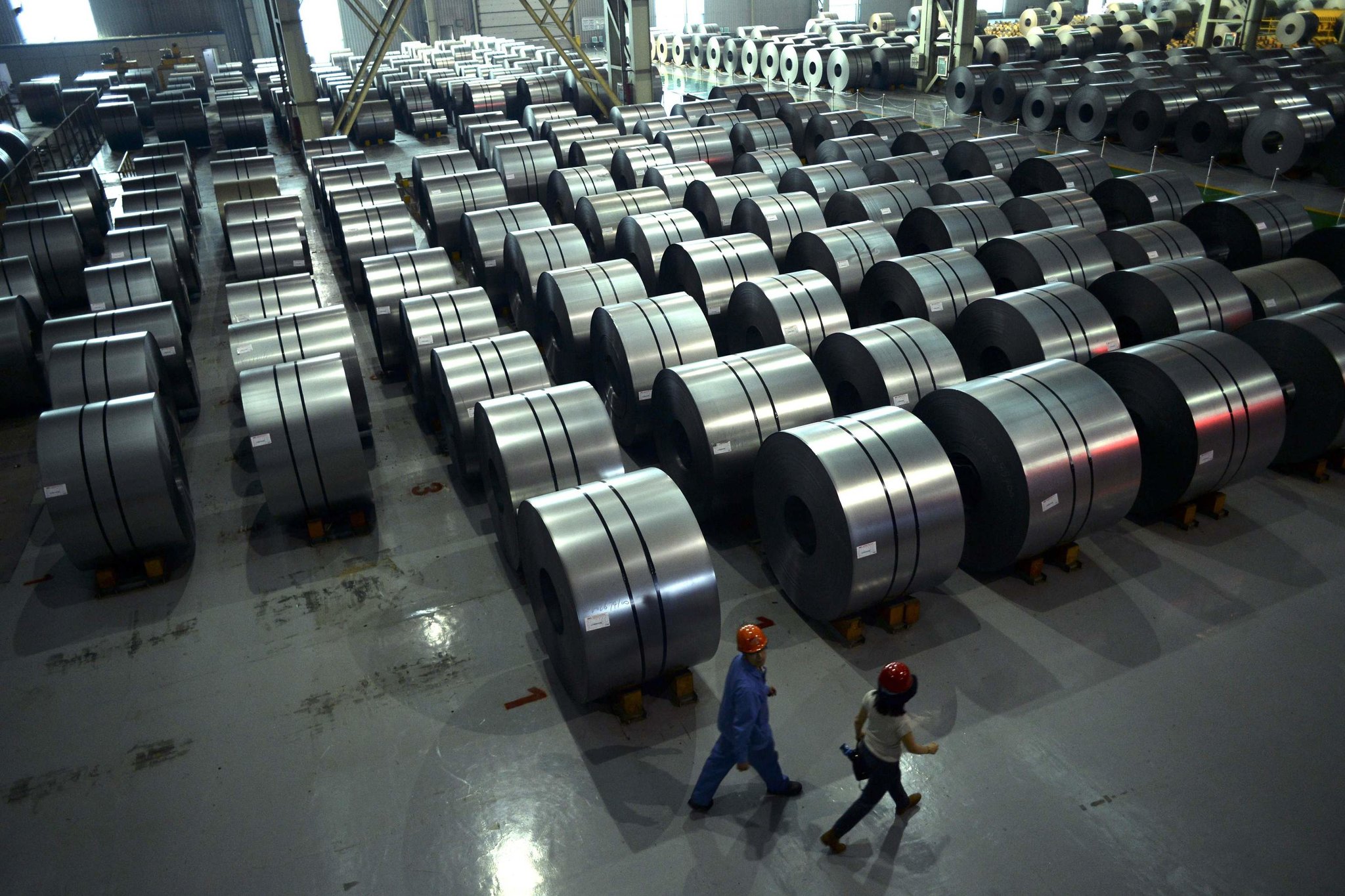
Italian distribution faces slow market, financial hurdles
Multiple Italian distribution sources indicate demand for both long and flat steel in September did not recover adequately following the August pause. They report to Kallanish they are experiencing reduced customer activity and facing significantly low margins.
End users are executing weekly production halts and purchasing from the import market when prices are notably reduced compared to domestic values. A purchasing group notes the underwhelming performance of coil derivatives, including sheets and tubes. The increase in tube discounts in Italy has skyrocketed to approximately 47 points, resulting in a standard 40x40x3 tube being priced, unsustainably, at below €700/tonne ($776.4), while hot rolled sheet prices have fallen below €650/t ex-works.
Sheet and tube prices are experiencing weekly declines, consistent with the downward trend observed in coil prices across both domestic and international markets.
An important distributor indicates he is evaluating attractive offers from China for long products as well as from Turkey. The prevailing sentiment within the distribution sector indicates a strategy of buying low volumes, with the anticipation that longs prices will begin to decrease. Similar trends are emerging in other EU nations, including France and Germany, where purchasers expect a forthcoming decrease in prices (see Kallanish 27 September).
Currently, longs prices in Italy, similar to those in neighbouring countries, are predominantly stable, with rebar priced at €540-560/t ex-works and merchant bar at around €700/t delivered. Drawing quality wire rod pricing, which has been impacted by subdued demand, remains steady at €610-630/t ex-works, according to industry sources.
Distributors are seeing a portion of their inventory depreciate in value, specifically in the flats segment. “There is currently a growing apprehension regarding the financial outcomes of distribution companies,” the purchasing group source says and warns of challenges on the horizon.
Market participants do not foresee a rebound in demand before year-end, with scrap appearing to be the sole factor that could sustain elevated long prices. Mill sources are indicating fiscal difficulties and narrowed profit margins.
Natalia Capra France