


Low demand drags on long steel prices across Northern Europe but New Year could bring renewed activity, sources say
Sources in Germany reported persistent weak demand and little hope of a recovery in the near-term. But market participants in the Netherlands and Belgium reported orders for small tonnages and renewed hope of a pick-up in construction activity in the New Year, Fastmarkets heard.
Fastmarkets’ weekly price assessment for steel reinforcing bar (rebar), domestic, delivered Northern Europe, was €600-620 ($663-686) per tonne on Wednesday, down week on week by €25-30 per tonne from €630-645 per tonne.
Depressed demand and high feedstock costs continued to weigh on trading activity, with the German steel sector particularly affected by minimal appetite among key end-user sectors.
“Demand is still very poor. Some orders [have been received but] not large volumes. Germany is in a very bad situation, in terms of demand,” a buyer source said.
Steel scrap prices have increased week on week, which has put further pressure on producers’ margins, market sources said.
The upturn in scrap prices was largely supported by a strengthening Chinese market, according to market sources. Sentiment in the steel market improved following the Chinese government’s recent stimulus efforts, prompting an increase in iron ore and steel prices.
Fastmarkets’ daily index for iron ore 62% Fe fines, cfr Qingdao, was $108.18 per tonne on Wednesday, compared with $96.07 per tonne on September 25. It rose further on Thursday, to $108.75 per tonne.
Fastmarkets’ calculation of its daily index for steel scrap, HMS 1&2 (80:20 mix), North Europe origin, cfr Turkey, was $373.32 per tonne on Wednesday, up by $13.32 per tonne week on week.
The removal of the National Rural Area Programme (NLPG) in the Netherlands will help to stimulate the construction sector, and support the restarting of delayed projects, market sources said.
The NPLG was initiated by the country’s previous government as part of its stringent environmental regulatory program. It was designed to encourage the country’s provinces to meet environmental targets, including the cutting of nitrogen emissions.
This resulted in many construction projects, viewed as key emitters of nitrogen, being cancelled or postponed, market sources said.
The previous government made it more difficult to get construction permits, in turn limiting developers and reducing investment in the sector.
But the new, recently formed coalition government’s removal of the NPLG will help to remove these barriers and support construction activity, market sources said.
The NPLG will be replaced with a different program, the new government said, but it has made it clear that economic concerns will be given priority over stringent environmental regulations, market sources said.
“The new coalition government has put in place new regulations around nitrogen taxes and construction licenses which will help to support new construction activity,” a trader source from the region said. “In the Netherlands, we really need housing, and the government has said that it will build houses and will help to support the construction sector. We will start to see the results of these decisions after the [year-end] holidays.”
Fastmarkets’ weekly price assessment for steel wire rod (mesh quality), domestic, delivered Northern Europe, was €600-620 per tonne, down week on week by €5-10 per tonne from €605-630 per tonne.
Published by: India-Inés Levy


Weak demand inhibits trading in Southern European long steel market
Fastmarkets price assessment for steel reinforcing bar (rebar) domestic, exw Italy was €580-600 ($641-664) per tonne down by €10 per tonne from €590-610 per tonne on September 25.
Prices edged further down due to the weak demand, cheap imports and the depressed outlook, sources said.
“The rebar price is falling a little, but mills intend to put the price up [and] this is colliding with weak demand and an uncertain outlook in the building sector,” a buyer source said.
“Customers don’t believe in a price increase and sentiment is negative, so they’re in wait and see mode,” the source added.
A second buyer source told Fastmarkets: “This week, the producers tried to move prices up, but buyers are still waiting.”
Scrap prices, meanwhile, edged higher, mainly because of the stronger Chinese market, market participants said.
Fastmarkets’ calculation of its daily index for steel scrap HMS 1&2 (80:20 mix) North Europe origin, cfr Turkey, was $373.32 per tonne on Wednesday, up by $8.13 per tonne week on week.
Sentiment in the steel market improved following the Chinese government’s recent stimulus measures, prompting an increase in iron ore and steel prices.
And Fastmarkets’ daily iron ore index for 62% Fe fines, cfr Qingdao was $108.18 per tonne on Wednesday, up from $96.07 per tonne on September 25.
In the long steel market, Fastmarkets’ weekly price assessment for steel reinforcing bar (rebar), domestic, delivered, Spain was €585-600 per tonne down by €25-35 per tonne from €620-625 per tonne.
Sources reported ongoing weak demand and a near-zero appetite for exported stock.
Southern Europe wire rod
In Southern Europe, meanwhile, Fastmarkets’ price assessment for steel wire rod (mesh quality), domestic, delivered Southern Europe, was €600-620 per tonne on Wednesday down by €10-20 per tonne from €620-630 per tonne on September 25.
Weak demand and high feedstock costs continued to weigh on European mills, sources said, which therefore lowered their offer prices.
“There is low demand because of the coming winter holiday [season, when] customers don’t want to buy big quantities,” a producer source told Fastmarkets.
Published by: India-Inés Levy
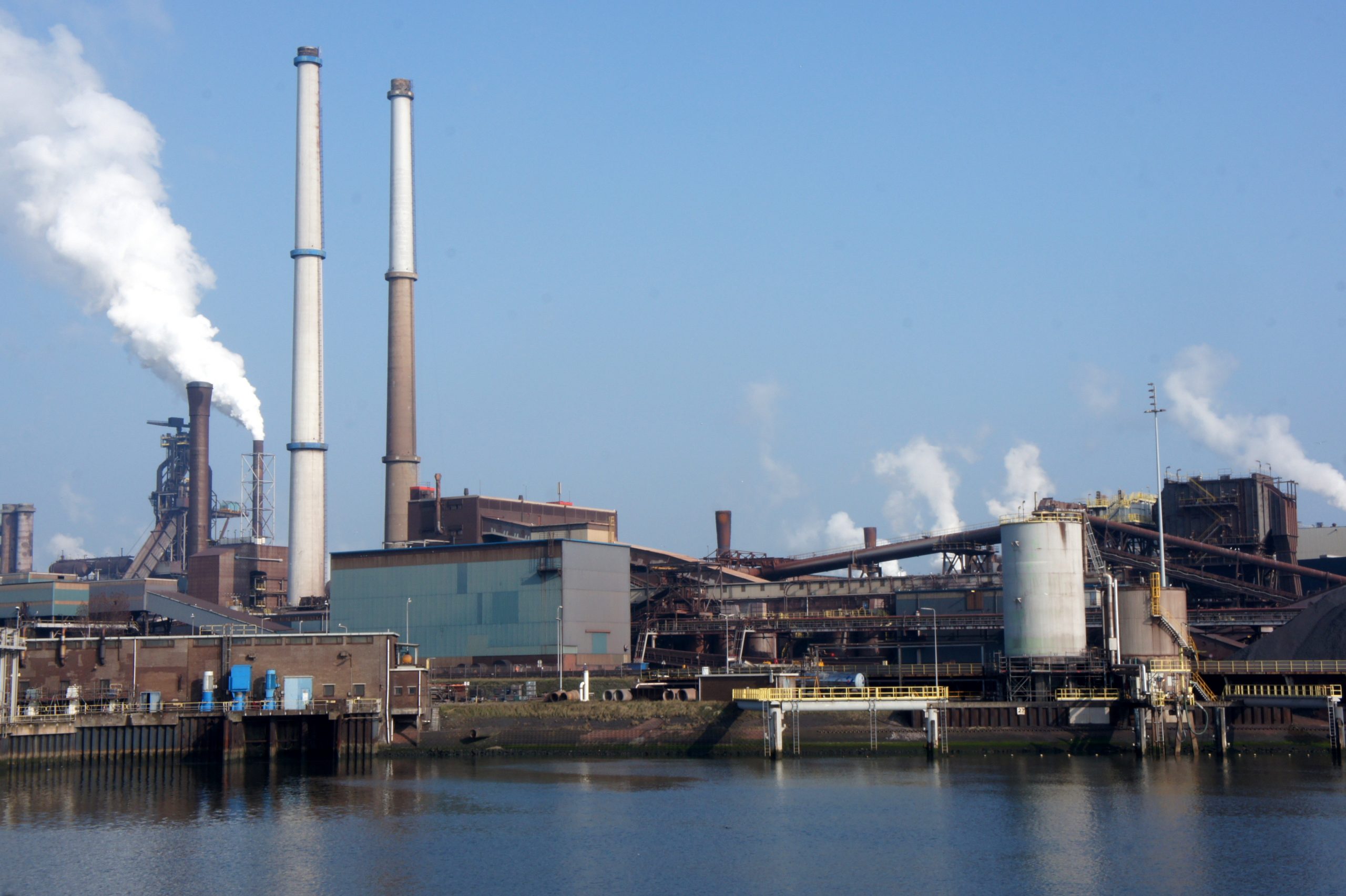
Tata Steel Nederland advances downstream climate neutrality
Tata Steel Nederland says it has achieved CO2 neutrality in the production of steel roof and facade panels at its SAB-profiel unit in Geldermalsen, making this its sixth climate neutral location.
The site is part of the steelmaker’s Tata Steel Downstream Europe business unit, within which the Naantali (Finland), Halmstad (Sweden), Gelsenkirchen (Germany), and Maastricht (Feijen and MultiSteel) locations have also achieved CO2 neutrality on scope 1 & 2. Downstream Europe processes steel from the Ijmuiden works.
“In addition to mega projects, such as the transformation to green steel production in IJmuiden, we are also working in other areas to make our company more sustainable. Our commitment to sustainability in our downstream businesses has great potential. Almost a third of our downstream locations are now climate neutral, and we continue to work hard to be fully CO2-neutral,” Tata Steel Nederland board member responsible for downstream activities Gunilla Saltin says in a note seen by Kallanish.
Tata Steel Nederland said last month it is “tightening the belt” by means of cost-cutting measures to cope with current deteriorating market conditions (see Kallanish passim).
Adam Smith Poland


Hydnum Steel, Siemens digitalise Puertollano green steel mill
Spain’s Hydnum Steel (HS) says it is advancing with its plan to build the first green steel mill on the Iberian Peninsula, Kallanish notes. The project, a partnership between the Helvella investment company, Siemens, ABEI Energy and Russula Corporation, will be located in Puertollano, in the Castilla-La Mancha region.
HS and Siemens have opted for an innovative digital concept for the plant. After passing the technological definition phase, the basis of the project has been established in integrating the use of the Digital Twin in all the production stages, from the design to the complete start-up of the facility.
The aim is to reduce the carbon footprint, and improve energy efficiency and competitiveness, while strictly complying with environmental and sustainability regulations, HS observes.
“It’s not just about producing steel but doing it in a way that is fully aligned with global sustainability goals,” says HS chief executive Eva Maneiro. “By integrating advanced Siemens technologies, we ensure that every stage of our production process is efficient and, at the same time, actively contributes to the fight against climate change. Our commitment is to demonstrate that decarbonisation and competitiveness cannot only coexist but represent the future of the industry,” the ceo adds.
Siemens technology provides different simulation tools. During the engineering phase, NX software will be used to create a complete digital model of the plant, enabling manufacturing process optimisation.
The project also includes the integration of both information technology (IT) and operational technology (OT), to immediately capture all valuable data generated by the plant to monitor, analyse and make footprint-reducing decisions, Hydnum observes.
Todor Kirkov Bulgaria

Italian re-rollers to increase coil derivative prices
Coil derivative prices are poised for a price increase, Italian re-rollers and service centres tell Kallanish.
Tube and sheet prices in Italy, along with other EU nations like France and Germany, have declined to “unsustainable” levels, say sources, jeopardising the financial stability of re-rollers and service centres. The upcoming derivatives price increases align with this week’s announcement from ArcelorMittal of a €40/tonne ($44.1) hike in European coil prices (see Kallanish 3 October).
According to multiple sources, similar price announcements for tube and sheet are expected in the coming days, after values have fallen below cost. “I believe we are at a pivotal moment. The coil increase is essential for restoring tube and sheets prices to a profitable level. October will see a gradual restoration of prices to sustainability. Values of coils have hit a significant low, while inventory levels of flat and re-rolled products are currently at a relative low point,” a tube producer says. He indicates apparent demand should recover this month.
According to a different source, end-users have been affected by the high financial costs of their stocks in 2024 and, as a result, they have concentrated on maintaining low inventories. Lower interest rates should boost end-user activity and reduce the pressure to maintain low inventory levels, while potentially higher steel prices could boost pricing lower down the value chain. Re-rollers indicate additional production rate reduction in the fourth quarter.
In September, demand for coil derivatives experienced a notable decline, with tube discounts peaking at 45-47 points. Buyers, including end-users and distributors, were careful in their purchasing decisions, fearing prices may continue to decline.
The announcement of ArcelorMittal’s coil price increase has been positively received downstream, as it presents an opportunity to strengthen prices downstream. Nonetheless, a number of coil buyers argue that any price increases will need corresponding production cuts to sustain them.
Currently, coil producers in Europe are not reducing output due to the potential loss of CO2 certificates. Beginning in the first quarter of 2025, EU producers will likely reduce their output, sources say. As of Monday this week, before the hike announcement, hot rolled coil prices in Europe averaged at €530-550/t, base ex-works, Kallanish notes.
Natalia Capra France