


Denecke-Arnold becomes chairwoman of Salzgitter Flachstahl
Heike Denecke-Arnoldhas has been appointed as the new chair of the management board of Salzgitter Flachstahl, the strip-making unit of Salzgitter AG, Kallanish learns from the group.
She will assume the position in January, succeeding Ulrich Grethe, who will leave the company to enter retirement.
Heike Denecke-Arnold has many years of leadership and management experience in the steel industry and holds extensive expertise in the fields of sales, production, quality, and logistics, Salzgitter notes. She studied metallurgy and materials engineering at RWTH Aachen University where she completed her Ph.D.
“We are currently engaged in transitioning to low-carbon production processes. With her extensive know-how, Dr. Denecke-Arnold will integrate and drive forward the further implementation of SALCOS (Salzgitter Low CO2 Steelmaking),” says Gunnar Groebler, chief executive of Salzgitter AG. On the departure of Ulrich Grethe, he says that “his journey from trainee to chairman is a testament to what can be achieved with verve, expertise and personal integrity.”
SALCOS will also be Salzgitter’s key theme at the Euroblech trade fair in Hanover this week. At the stand of the group, a hydrogen model will provide visitors with a comprehensive overview of the individual components and progress of the transformation programme.
The group will be represented by all units concerned with coil/strip and plate. These are Salzgitter Flachstahl, Salzgitter Mannesmann Stahlservice, Ilsenburger Grobblech, Salzgitter Automotive Engineering, Salzgitter Mannesmann Handel, Salzgitter Mannesmann Stahlhandel, Salzgitter Mannesmann International, Universal Eisen und Stahl.
Christian Koehl Germany


Italian demand could improve amid coil uptick: Assofermet
Demand could improve in the coming weeks, driven by the recent uptick in coil prices, despite the expectation that consumption will not recover until early 2025, Italian trade association Assofermet says in a market note seen by Kallanish.
The market may have been shaken in the early days of October when ArcelorMittal announced a sharp increase in the price of coils. Although it is still too soon to predict a response, the cautiously optimistic stimulus announcement from the Chinese government indicates that the long-awaited price increases may not be far off, the association believes.
However, the note says that “the persistent weakness in demand is leading to challenges for service centres, which are struggling to manage volumes that are considerably below their production capacity.”
It continues that the significant import pressure experienced in recent months in Europe from steel producers in the Far East has been mitigated by the stringent restrictions of the safeguard quotas and a new anti-dumping investigation.
“Indeed, numerous [import] negotiations remained unresolved primarily due to concerns over the potential obligation to pay costly duties,” it adds.
Distributors and service centres report price stability for long products and all coil derivatives.
October started amid the heightened tensions of the conflict in the Middle East, coupled with concerning projections from major European automotive manufacturers, including Volkswagen group and Stellantis.
These developments suggest “a less than favourable outlook for our sector in the immediate future,” Assofermet says.
The prevailing sentiment of uncertainty, absence of a long-term strategy, and a wait-and-see attitude are likely to persist in the upcoming quarter, the association forecasts.
Earlier this month, Assofermet expressed concern regarding potential EU anti-dumping duties on hot rolled coil from Japan, Vietnam, Egypt and India, which could result in a material shortage on the domestic market.
Paolo Sangoi, president of Assofermet’s distribution segment, told Kallanish in a previous interview that a shortage may occur, potentially resembling the events of 2021 and 2022, if demand increases and consumption improves.
Natalia Capra France

Large projects to support UK steel demand
Improving UK steel demand in 2025 is likely to be supported by new construction projects as interest rates start to trend lower, market participants said at last week’s joint NEASS & ISTA meeting attended by Kallanish.
“I think 2025 will be slightly better than 2024, but I don’t think it’s going to be what we want or need,” said Tom McDougall, commercial director at All Steels Trading. “I think we’re waiting for 2026 before the cost of finance comes down and there are some bigger projects looking to take shape – data centres, infrastructure projects.”
He noted for the recently announced price increase by ArcelorMittal to be successful, certain factors would have to happen, aside from increased demand, which remained lacking.
“The influence that will potentially have some impact is the British Steel situation; they are potentially looking at shutting the blast furnace down and introducing importing slabs and billets for the re-rolling production. We believe there’s a shortage in stocks, and part of the reason for that, to some extent, is the British Steel situation,” he noted. He added the firm is “usually able to infill off stock levels [from their own warehouses].”
“From an outside perspective, it appears their warehouse space is being used up for rail stock … They [may] think there will be a transitional period between getting the re-rolling lines up to speed and shutting the blast furnace, and therefore might need some contingency stock in place on the rail,” McDougall continued.
He is currently seeing holes in stock levels for some long products, especially sections.
Mike Astbury, head of UK sales at ArcelorMittal Distribution, also noted a current lack of product availability from British Steel.
“There is a big question mark with regards to the future of British Steel, what will happen either way and what kind of timescale will there be for any transition,” he added.
He also foresees 2025 being an improvement on 2024, which he said has been “worse than anticipated”.
“There are several significant projects which have got the go ahead. London seems to be coming back to the market,” he continued. “Data centres are now going to be the bedrock and saviour for sections for the next 2-3 years,” he said, adding that Amazon was also building significantly sized distribution centres.
Rob Ridge, strategic business development director at Barrett Steel, additionally saw that there were some reasonably sized projects.
“Going into 2025 we are seeing some very large projects coming through … It’s a step in the right direction; cash is now being released to fund these large projects,” he said.
Julian Thompson, managing director at Salzgitter Mannesmann UK, concurred on more positivity for 2025, amid a return of London high rise projects, and new data centres. However, he also had concerns over the future of British Steel.
“The British Steel question marks hangs over everybody, and that could be quite significant for next year’s demand,” he said. “If there’s more trouble to their production and it gets worse, then there will be more imports required.”
Sentiment was mixed during the meeting, with other participants noting some projects were more than a year away and were not seeing the funds being released. Falling interest rates would take time to filter through during 2025 and would not return to the very low levels previously seen.
The demand picture remains unclear, with many customers not in a hurry to buy, limiting growth, while others saw demand stabilising across the various steel product groups.
Approached by Kallanish on Friday for comment about the blast furnace shutdown reports, British Steel said: “We are in ongoing discussions with the government about our decarbonisation plans and the future operations of our UK business. While progress continues, no final decisions have been made.”
Carrie Bone UK
ArcelorMittal idles Gijón steelworks, wire rod plant
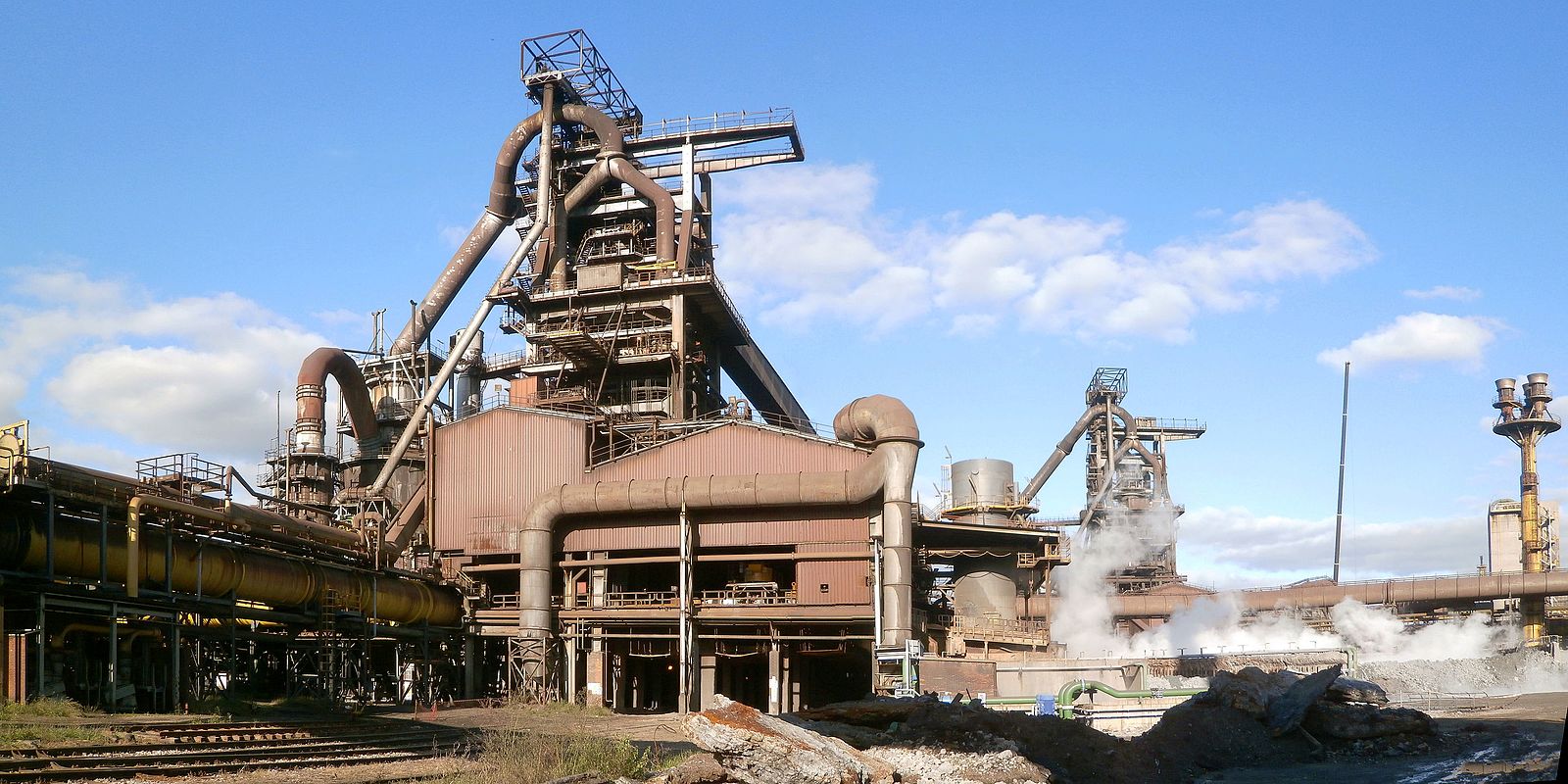
ArcelorMittal has temporarily halted part of its long steel production in northern Spain, the company tells Kallanish. The situation is a consequence of weak demand and the struggle to compete with low-priced imports.
ArcelorMittal decided on Friday to halt the Gijón steelworks and wire rod plant until 27 October.
“Wire rod is one of the products that is being most affected by the enormous volume of imports from outside Europe,” the company’s spokesperson explains. The wire rod plant has had to stop several times this year due to the worsening market situation.
The stoppage of the steelworks and wire rod plant is expected to affect more than 400 workers.
ArcelorMittal, however, indicates that the temporary lay-off plan will not affect all employees, as many of them will be offered holidays or undergo medical examinations.
Todor Kirkov Bulgaria