


European HRC prices remain largely unchanged amid slow trading
Fastmarkets calculated its daily steel HRC index domestic, exw Northern Europe at €558.33 ($598.39) per tonne on Monday, down by just €0.42 per tonne from €558.75 per tonne on November 8.
The index was up by €0.83 per tonne week on week and by €8.75 per tonne month on month.
Offers for the first quarter of 2025 were heard at €600-620 per tonne ex-works.
But according to Fastmarkets’ sources, even lower levels could be negotiated for this period at €570 per tonne ex-works.
Some small volumes with December lead times were booked at €530 per tonne ex-works, Fastmarkets understands.
Buyer estimations for the workable market level were at €550-560 per tonne ex-works.
“Demand remains very weak,” a buyer source told Fastmarkets.
“Currently, bookings are very limited. People have already purchased what they need for the first quarter of 2025 and the market is quiet again,” a second buyer source said.
Prices could even decrease slightly if bookings do not increase, according to the second buyer.
In Southern Europe, Fastmarkets calculated its daily steel HRC index domestic, exw Italy at €552.00 per tonne on Monday, down by €0.50 per tonne from €552.50 per tonne on Friday.
The Italian index was down by €3.00 per tonne week on week, but up by €7.00 per tonne month on month.
Italian suppliers offered HRC with lead times of five to six weeks at €570-580 per tonne delivered, which nets back to €560-570 per tonne ex-works, according to sources.
Buyer estimations were lower, at €540-550 per tonne ex-works.
For first-quarter delivery HRC, price ideas were around €620 per tonne delivered (€610 per tonne ex-works), but no deals have been reported at these levels yet.
Import HRC offers remain uncompetitive in Europe, Fastmarkets heard.
HRC from Turkey was on offer at €580-600 per tonne CFR to Italy, including the anti-dumping duty, while offers from Asia came in at €550-570 per tonne CFR.
Producers hope that limited imports and a stronger reliance on domestic suppliers will support a price rebound in the first quarter of the next year, but low demand remains a main concern, Fastmarkets understands.

Liberty Steel announces restructuring plan for Speciality Steel UK division
Liberty Steel has announced a transformative restructuring plan for its Speciality Steel UK (SSUK) division, marking a significant milestone in the company’s recovery strategy. This initiative aims to alleviate the company’s debt burden and position SSUK for future growth.
The plan has garnered support from major customers, ensuring stability in SSUK’s order book during the transition. Notably, the restructuring will not affect employment levels within the division.
Jeffrey Kabel, Liberty Steel’s Chief Transformation Officer, emphasized that the plan is essential for creating a robust specialty business, allowing the company to focus on high-value products for the aerospace, defense, and energy sectors.
“After making significant progress to stabilize the business and refocus it on high value specialist products, we’re now addressing the debt position of the company to create a stronger specialty business going forward.”
Jeffrey Kabel, Chief Transformation Officer of Liberty Steel Group, said: “Our plan, which is backed by customers, is the best route forward for all stakeholders and we’re confident in winning the support of our creditors for the essential actions required to complete SSUK’s recovery.”
The proposed changes will be presented to creditors through a court process, offering them a chance to vote on the plan, which is critical for avoiding insolvency and fostering long-term viability.
The SSUK division operates across sites including Rotherham, Stocksbridge and Brinsworth and it produces high value steel.
The company, part of Sanjeev Gupta’s GFG Alliance, was hit by the collapse of Greensill, that was the principal financial backer of GFG Alliance with the company that at the end of March signed a framework with its major creditors to consolidate its UK steel businesses under a new entity.
Platts, part of S&P Global Commodity Insights, assessed UK HRC at GBP520/mt basis DDP West Midlands Nov. 7, up GBP5/mt on the week.


SSAB calls on policymakers for common emission standards
Swedish steelmaker SSAB is to call on policymakers to implement common emission measurement rules during the upcoming United Nations Climate Change Conference, COP29 in Baku, Azerbaijan, Kallanish notes.
The company says in a statement there are several promising proposals for establishing a common standard on near zero-emission steel. It is now calling for policymakers to take the next step and enact common emission measurement rules.
“Trade rules also need to focus on the sustainability aspects of the material rather than blanket tariffs,” the company adds.
It says it supports the Steel Standard Principles which were previously launched at COP28.
“SSAB believes that ambition and speed in the climate transition must increase. We need to phase out fossil fuels and it must cost to emit. Global carbon pricing mechanisms and common emission standards are needed to set the foundation for faster industrial decarbonisation,” says Martin Pei, chief technology officer at SSAB.
“Creating internationally accepted trade rules for near zero-emission steel products would allow for significant global CO2 emissions reductions by incentivising the roll-out of clean steel production technologies,” Pei adds.
The firm adds that policymakers should commit to Nationally Determined Contributions (NDCs) that provide clarity on the path away from fossil fuels and that enable investments in green technology.
SSAB is seeking to decarbonise its steel production in Sweden via the Hybrit project, which it established with mining company LKAB and energy company Vattenfall to produce fossil-free sponge iron.
Carrie Bone UK

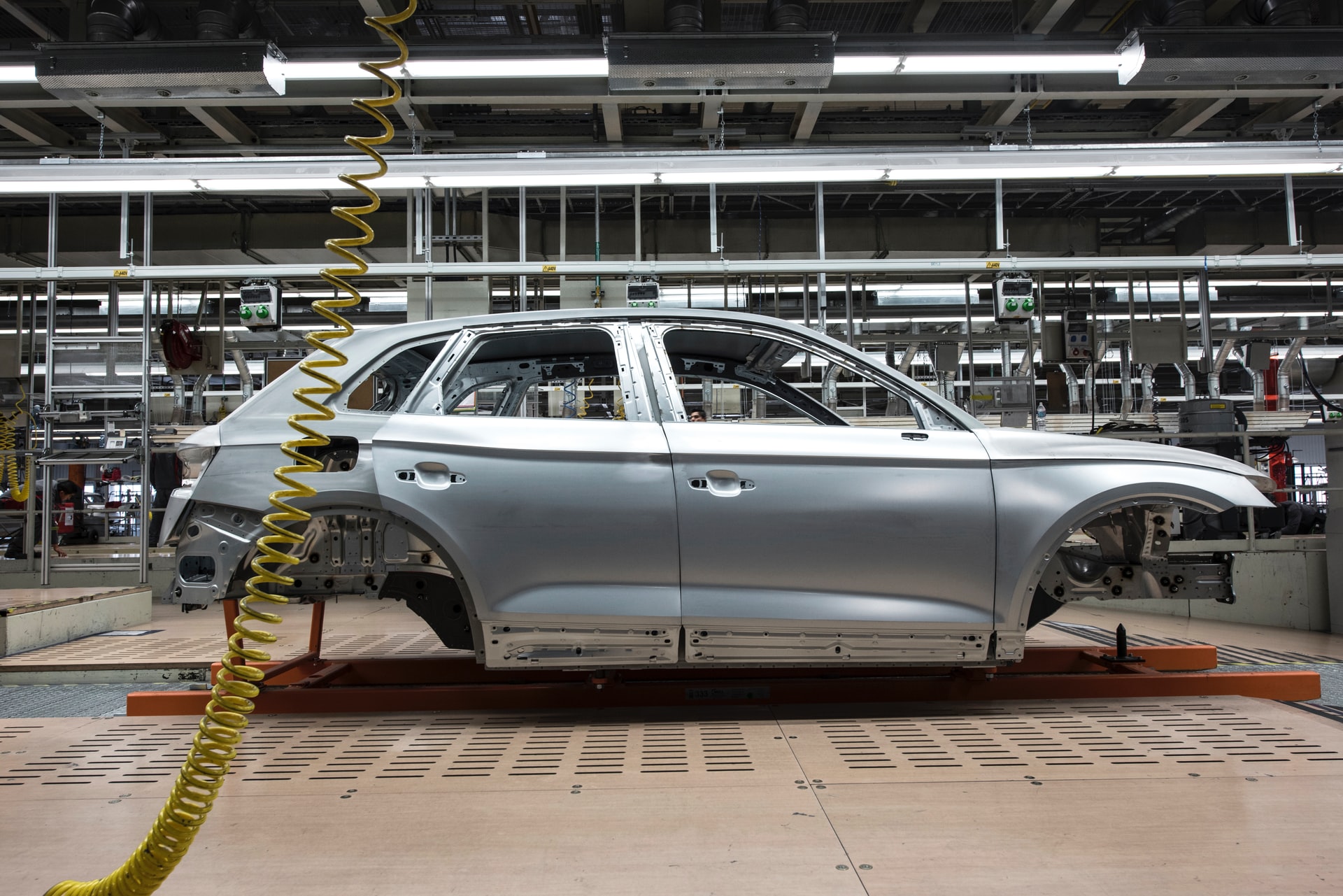
Costs, competition hamper European carmakers; eye new launches
European carmakers have been struggling amid high production costs, severe competition, and stagnating electric vehicle (EV) demand in major EV markets.
In September, Volkswagen lowered its 2024 outlook, citing a “challenging market environment and developments that have fallen short of original expectations.” Later, VW confirmed it is planning to close at least three plants in Germany as part of cost-cutting measures, the first domestic plant closure in Volkswagen’s 87-year history.
“Our nine-month results reflect a challenging market environment and underline the importance of delivering on the performance programmes we have launched across the company,” said the group’s financial officer, Arno Anlitz. “A significantly improved order intake in Western Europe in Q3 year-on-year is testament to our strengthened product line-up, from combustion engine cars to hybrids and full-electric vehicles, and provides tailwind for the final quarter.”
The Volkswagen Group expects deliveries to customers to be around 9 million vehicles this year compared to 9.24 million in 2023. Revenue is projected at around €320 billion compared to €322.3 billion last year.
Audi Group, part of VW, does not provide any forecasts regarding market demand. However, it notes its production is flexibly based on the market demand of the respective model.
“Regarding the supply situation, we can see that the supply situation on semiconductors will stabilise over the course of 2024, both in terms of the number of critical semiconductor types and the quantity available,” it tells Kallanish. “Nevertheless, we must continue to prepare for demand peaks and see the risk of a broader undersupply as early as the end of 2025. An easing of the supply situation depends largely on the semiconductor industry.”
Audi adds it has been working in partnership with its steel suppliers for many years and has concluded framework agreements with them. “Both the direct procurement of steel and the indirect purchase by the suppliers are guaranteed by longer-term contracts with the steel mills,” it adds.
Skoda Auto is meanwhile bucking the trend, outpacing the overall European market. Deliveries to customers in the first nine months of 2024 increased to 671,300 vehicles, up by 4.5% on-year. This growth was supported by a strong third quarter, with 222,700 vehicles delivered, up 6% on-year.
Mercedes-Benz Group generated solid sales in Q3 despite product transitions, a challenging market environment and fierce competition, particularly in China.
“The assumptions regarding the economic situation and the development of automotive markets continue to be characterised by a degree of uncertainty,” Mercedes said. “In addition to unexpected macroeconomic developments, uncertainties for the global economy and the business development of the Mercedes-Benz Group may arise in particular from geopolitical events and trade policy. The outlook regarding the growth of the world economy continues to be rather modest with regional differences.”
The US economy remains robust, while economic growth in the eurozone is expected to stay below average. However, in China, the recently announced monetary and fiscal stimuli should revive growth somewhat during the rest of the year, Mercedes forecasted.
Stellantis reported Q3 consolidated shipments of 1.14 million units, down 279,000 or 20% on-year. The period saw production gaps in several models as the firm began a global product transition. It also implemented North American inventory reductions and was hit by headwinds from a challenging European market environment.
Net Q3 revenue of €33 billion ($35 billion) fell 27% compared to Q3 2023, primarily due to lower shipments and unfavourable mix, as well as pricing and foreign exchange impacts.
Renault Group’s revenue increased in January-September by 8% on-year to €37.7 billion.
“Our Q3 revenue is starting to benefit from our unprecedented product offensive, with ten new launches this year, representing 18% of our invoices over the quarter,” said company chief financial officer Thierry Pieton. “This trend will continue over the next quarters in line with the gradual introduction of vehicles on their respective markets and will accelerate further with the seven new launches planned for 2025. This appealing and competitive line-up, with both electric and ICE & hybrid vehicles, demonstrates our flexibility to adapt whatever the pace of EV transition and remains a key support for the Group’s performance together with cost reduction.”
Gestamp’s earnings declined on-quarter and year-on-year in Q3 and the nine months through September. The short-term outlook remains extremely challenging due to declines in production volumes, uncertainty and volatility in Europe given the slowdown in electric vehicle penetration, and the negative impact of foreign exchange, it noted.
Most carmakers did not provide details of future production programmes or targets when asked by Kallanish.
Svetoslav Abrossimov Bulgaria