


Spanish auto industry recovers in October
Spain’s car industry began to recover in October after three months of poor performance, Kallanish notes.
According to the country’s automotive association, Asociación Nacional de Fabricantes de Automóviles y Camiones (Anfac), output in October was 227,850 units, compared to 205,418 vehicles in September. This volume was 2.2% more than in the same month in 2023. Of the total, 74.5% were gasoline and diesel-powered automobiles.
Ten-month production amounted to 2.02 million units, a decrease of 1.2% compared to January-October last year.
“Although vehicle production remains stable and we could have similar [annual] levels as last year, if the upward trend continues in the next two months, we are concerned about the drop in the production of electrified vehicles,” says Anfac general director José López-Tafall. “This must see immediate measures to boost sales of EVs. If there is no demand, there is no production.”
Spanish vehicle exports rose in October. Shipments were 200,363 units, compared to 185,327 units in the previous month and 1.2% more than a year ago.
European markets had a 94.1% share in Spanish deliveries in October, 1.4 percentage points more on-month and 5.4pp higher on-year. Ten-month exports slipped 2.4% over the same period in 2023 to 1.79 million vehicles, Anfac data show.
Todor Kirkov Bulgaria


TK Materials fares better in USA than Europe
The distribution unit of thyssenkrup AG, thyssenkrupp Materials Services, saw order intake and revenue decline significantly in the fiscal year from October 2023 to September 2024, the company says in its annual report.
Lower prices in its key product groups and declining demand affected its European trading and service centre units, in particular, whereas the corresponding North American units posted smaller decreases, it says.
Due to the difficult market situation, especially in Germany, consolidated shipments decreased to 8.2 million tonnes, down 8.4% on the prior year. Order intake fell 11% to €12.1 billion ($12.8 billion).
The group notes it achieved higher earnings in its international supply chain business, which led to an increase in adjusted Ebit by 15% to €204 million. At the firm’s annual press conference in Essen on Tuesday, attended by Kallanish, executives said the Materials Services unit will expand its “Materials as a Service” approach. “We are developing from a mere materials distributor to an international supply chain manager,” observed thyssenkrupp chief executive Miguel Angel Lopez.
Tk Materials invested particularly in North American growth projects, with new service centres in Mexico and the USA, and in processing equipment in both North America and Europe to increase vertical integration.
Christian Koehl Germany
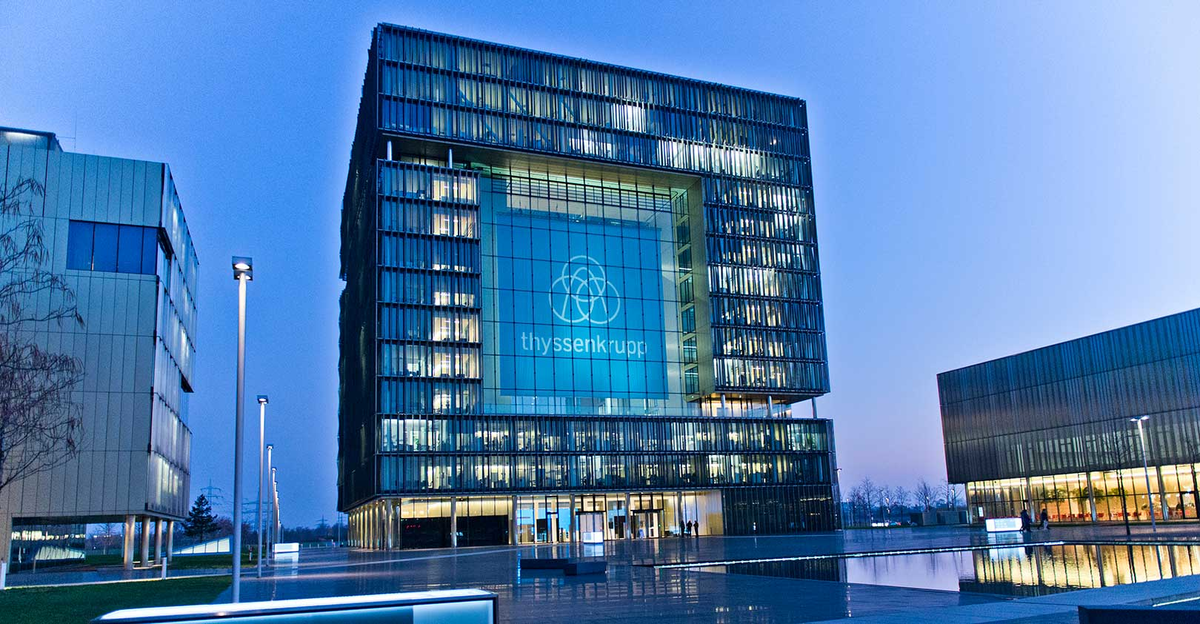
Thyssenkrupp faces ‘year of transition’
Thyssenkrupp does “not expect any tailwinds” from the markets in its 2024/25 business year, which started on 1 October, as the macro-economic environment will remain difficult, company executives said during the firm’s annual press conference.
Thyssenkrupp AG, which comprises tk Steel Europe, tk Materials Services Maritime Systems, Automotive Technology, and Decarbon Technologies, saw order intake fall to €32.8 billion ($34.7 billion) in its fiscal year through September 2024, from €37.1 billion a year earlier. This was mainly attributable to weaker demand and lower prices at tk Materials Services and tk Steel Europe, Kallanish heard during Tuesday’s conference in Essen.
The group’s net loss narrowed to €1.4 billion from €2 billion loss the prior year. The loss was on account of costs related to extensive transformation measures and asset impairments totalling some €1.2 billion, of which €1 billion were incurred at tk Steel Europe.
“In financial terms, the fiscal year 2024/25 will be a year of transition, and one of decisions,” chief executive Miguel Angel Lopez said at the conference. He expects the firm to return to profit of between €100m and €500m next year.
Among other things, the group is in the process of selling a 50% stake in its tk Steel division to Czech group EPCG, which has already acquired 20%. Finance chief Jens Schulte noted that talks with EPCG are proceeding positively, meaning thyssenkrupp will not need a plan B to fall back on, as things stand (see separate story).
Christian Koehl Germany
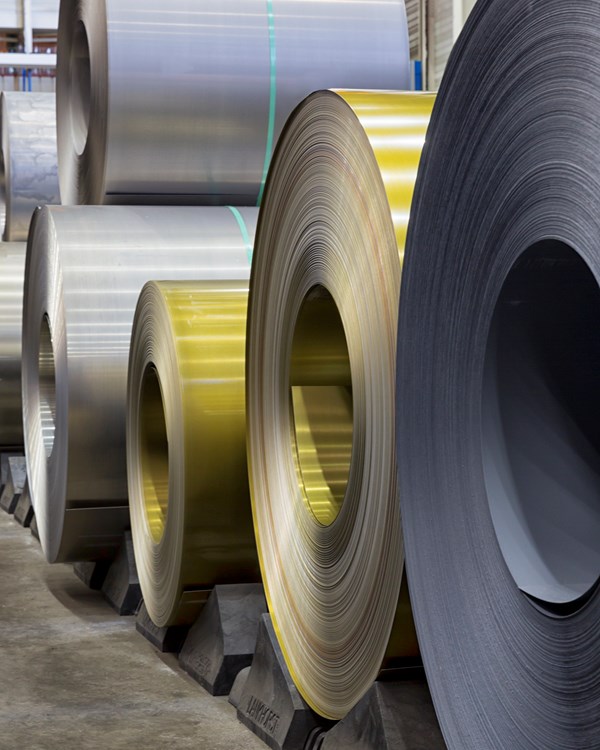
EU steel transformation, renewables need government intervention: report
Government funding remains a key factor in the feasibility not only of low-carbon steel projects in Europe, but also the expansion of renewables to support them, Kallanish learns from a new report.
The report by Reuters Events notes that decarbonisation technologies such as green hydrogen and direct reduced iron are yet to be widely deployed and require massive investments to build out new infrastructure and reach industrial-scale capacities.
Despite 60 low-carbon steel projects underway, the pace of growth will depend on the availability of affordable renewable energy to power EAFs and produce green hydrogen. These projects will double electricity consumption in the EU steel industry to around 75 Terawatt Hours/year and require an additional 90 TWh of renewable energy to produce green hydrogen via water electrolysis.
These projects will require total capital expenditure of around €30 billion ($33.1 billion) and finding the funds will be a huge challenge, says Adolfo Aiello, deputy director general at Eurofer.
Additional funding is needed amid falling revenues and low production rates in recent years, as well as high costs and strong competition from foreign rivals.
“Once they have installed their first DRI, and if everything goes smoothly at a technical level, economic level and energy level, companies would continue replacing their blast furnaces with additional DRIs,” Aiello notes.
However, further regulatory intervention is required to reduce electricity prices, accelerate green hydrogen infrastructure construction and increase demand for decarbonised steel among lead end-user sectors, he adds.
The report notes a lack of grid connection points for new solar and wind farms as a key barrier to renewable energy growth. Slow approvals is a key issue globally, increasing project costs. A new EU renewable energy directive, the grid action plan, requires member states to streamline permitting procedures. This will require around €584 billion of investments by 2030, it says.
Thyssenkrupp Steel says the main challenge for its planned DRI plant will be securing green hydrogen and renewable energy at competitive prices. It has been granted €2 billion by the EU, while Thyssenkrupp will invest €1 billion.
Prices are high because the necessary infrastructure to produce, transport, and store green hydrogen across EU borders has not yet been built, a Thyssenkrupp spokesperson observes.
The enormous investments required to install green steelmaking technology and convert integrated sites mean that governments must support the cost, the company adds.
Time is of the essence because it can take up to six years to convert old natural gas storage facilities, so that they can store hydrogen, and ten years to build new ones.
Policymakers must also implement measures that support the creation of green lead markets, such as quotas for certain products or as part of public procurement, the steelmaker asserts.
This aligns with a recent policy paper by SteelZero seeking enhanced government led procurement.
The report notes that decarbonising Europe’s heavy industries will depend on whether the EU can meet its goal of producing 10 million tonnes/year of renewable hydrogen and importing a further 10m t/y by 2030.
Independent auditors consider these targets unrealistic, largely due to a lack of funding.
Oleksiy Tatarenko, lead hydrogen analyst at RMI, notes the hydrogen industry has flagged that subsidy packages in the EU are underfunded and too slow to help accelerate project investment decisions.
Steelmakers located away from ports could import green iron from outside the EU and transport to site via conventional methods such as rail, which will be “easier to accomplish than new pipelines for hydrogen”, notes Rachel Wilmoth, senior steel analyst at RMI.
“Some steelmakers see importing green iron as an important first step to decarbonising steel production in Europe in a cost-effective way, while also keeping the current steelmaking expertise and jobs in place,” she concludes.
Carrie Bone UK

European HRC prices steady amid mixed sentiment
December-delivery HRC was said to be largely sold out at first-tier suppliers.
Bids for January delivery coil were reported at €560-580 ($591-613) per tonne ex-works, but a mill source told Fastmarkets that “for the first quarter 2025, the minimum HRC price is €600 [per tonne ex-works.”
And HRC offers for first-quarter delivery coil came in at €600-620 per tonne ex-works on Tuesday, sources said.
One booking was heard at €600 per tonne delivered in Germany, and some sources said that price could be effective, but the specification could not be confirmed by the time of publication.
“It’s hard to achieve higher [HRC] prices in a market [with] weak automotive [demand and] fierce competition between steel service centers because of high inventories and cashflow needs,” a buyer in Germany said.
Fastmarkets calculated its daily steel hot-rolled coil index domestic, exw Northern Europe at €562.67 per tonne on Tuesday, down by €0.66 per tonne from €563.33 per tonne on November 18.
The index was, however, up by €3.92 per tonne week on week and by €9.54 per tonne month on month.
In Southern Europe, Fastmarkets calculated its steel hot-rolled coil index domestic, exw Italy at €557.32 per tonne on Tuesday, down by just €0.18 per tonne from €557.50 per tonne on Monday.
But the Italian index was up by €4.94 per tonne week on week and by €6.07 per tonne month on month.
The market in Italy was also mostly quiet, with local mills not yet managing to seal higher offers in any deals, Fastmarkets understands.
HRC with lead times in the first quarter of 2025 was on offer from local suppliers at €600 per tonne delivered, which would net back to €590 per tonne ex-works.
Buyer estimates of the tradable value for such material came in at around €570-580 per tonne delivered (€560-570 per tonne ex-works).
And some buyer estimates were even lower – at closer to €550 per tonne ex-works – with weak demand and fierce competition downstream cited as the main reasons for the low prices.
In the secondary market, cut-to-length HRC was still available at around €620-630 per tonne CPT, sources said – unchanged since mid-October.
“Demand [for steel] is not improving and steel mills have not announced any production cuts. So there will be no strong price rebound [for HRC] despite the mills announcing increased prices for the first quarter of 2025,” a buyer source said.
Other market participants said that import restrictions had only provided limited support to the European market and the lack of real demand was the key obstacle to any HRC price rebound.
“The lack of new imports will start to be visible in the market in March-April [2025]. So far, the ports are still full; stocks are full,” a buyer source in Italy said.
Aside from the trade risks – such as EU safeguards and the pending anti-dumping probe into HRC from certain origins – the current exchange rate between the US dollar and the euro is making imports more expensive.
Turkey-origin HRC was on offer at €610-620 per tonne CFR Italy, including the anti-dumping duty.
Published by: Julia Bolotova
