


European HRC prices remain stable, market sees minimal buying interest
European hot-rolled coil prices remained stable Nov. 25, as sources cited reduced liquidity and buying interest at the outset of the week.
Referring to competition in the market, and the wider offer spread seen in recent weeks, a mill source said that “it is very difficult to sell at these new lower offer prices as they are not workable for us but because market demand is so weak, everyone is fighting for the last tonnage.”
Platts assessed Northwest European HRC at Eur555/mt ex-works Ruhr Nov. 25 stable on the day. Offers were reported in a range of Eur555-600/mt ex-works Ruhr on the day.
“Expectations for higher prices following the Euroblech trade fair have not materialized, and both construction and automotive sectors are not showing signs of improvement,” a distributor said. “Customers have bought all they need for Q1, but consumption has just been restocking activity, so there is a massive imbalance in supply and demand.”
The same source referred to recent volatility in exchange rates and higher domestic stock levels as further reducing the viability of the import market.
Platts assessed imported HRC in Northwest Europe at Eur530/mt CIF Antwerp Nov. 25, unchanged on the day.
“Everyone is in wait-and-see mode and there is no activity. January is sold out for many mills, and nobody is asking for additional quantities,” a German service center source said.
“The need for decarbonized metal has gone to zero and many of our customers have much bigger problems than decarbonization at the moment,” the service center source said when asked about the viability of an additional premium for carbon-accounted metal.
A Southern European trader cited similar variables affecting Italian HRC markets. The trader referred to “way higher prices from Asia” that were unworkable for traders in the market, and that strong domestic availability was adding further downward pressure to prices.
Platts assessed domestic HRC in Southern Europe at Eur550/mt EXW Italy, stable on the day.
Imported HRC in Southern Europe was assessed at Eur525/mt CIF Italy, stable on the day.
Platts is part of S&P Global Commodity Insights.


European governments, business leaders warn of industrial weakness
Both ministers emphasised the importance of a sustainable transition that safeguards strategic production while prioritising employment and the enhancement of industrial supply chains.
“Italy and France should collaborate to reposition Europe at the core of global production networks, establishing the necessary conditions for genuine strategic self-sufficiency that bolsters our essential sectors. The automotive and steel sectors are fundamental to the European industrial landscape; however, strategic measures must be implemented to safeguard and revitalise these industries, all while maintaining sustainability and enhancing competitiveness,” Urso says in a ministry note obtained by Kallanish.
The ministers reached a consensus on the critical need for a coordinated strategy to revitalise the European automotive industry, which is presently grappling with significant challenges in production and employment levels. Among the identified priorities is the need to execute initiatives aimed at stimulating internal demand and enhancing the entire component supply chain.
“It is time to recognise not only that Europe is lagging behind, but that the risk of decline and deindustrialisation in the EU is even greater,” states a document from the French, German and Italian industrialist associations MEDEF, BDI, and Confindustria. The associations also met in Paris for the Trilateral Business Forum. They point out that the European economy has experienced a decline and requires a strategic recovery to regain its competitive position.
Since 2010, the expansion of the US economy has reached 37.5%, while the EU has experienced growth of 20.9%. US GDP per capita has shown an increase from $48,374 to $85,373, whereas the EU has seen a rise from $32,966 to $42,443. The US has demonstrated leadership in innovation and the digital economy, particularly in energy, whereas the EU has lagged in these areas. While the US has become less reliant on other nations, the EU still needs to contend with frequently unfair competition from third countries, the associations point out.
They call upon the EU and its member states to undertake a “Catch-up Test”. They explain: “Within one year, systematically compare our key policy results with the US’ in critical economic domains and adjust policies as necessary … In other words: we need new European ways.”
The associations add the priorities are to boost European industry competitiveness, reduce bureaucratic and compliance costs, review all relevant regulations within one year, accelerate investments in innovation and R&D, and facilitate European investments including unlocking €800 billion ($838 billion) identified in the latest Draghi report. “The coming months present a crucial opportunity for Europe to assert its position on the global stage. The actions proposed here … are not simply aspirational … If these priorities are not implemented, European countries risk losing their voice in the future of the global economy,” the document concludes.
Natalia Capra France

ArcelorMittal suspends major decarbonisation project in France
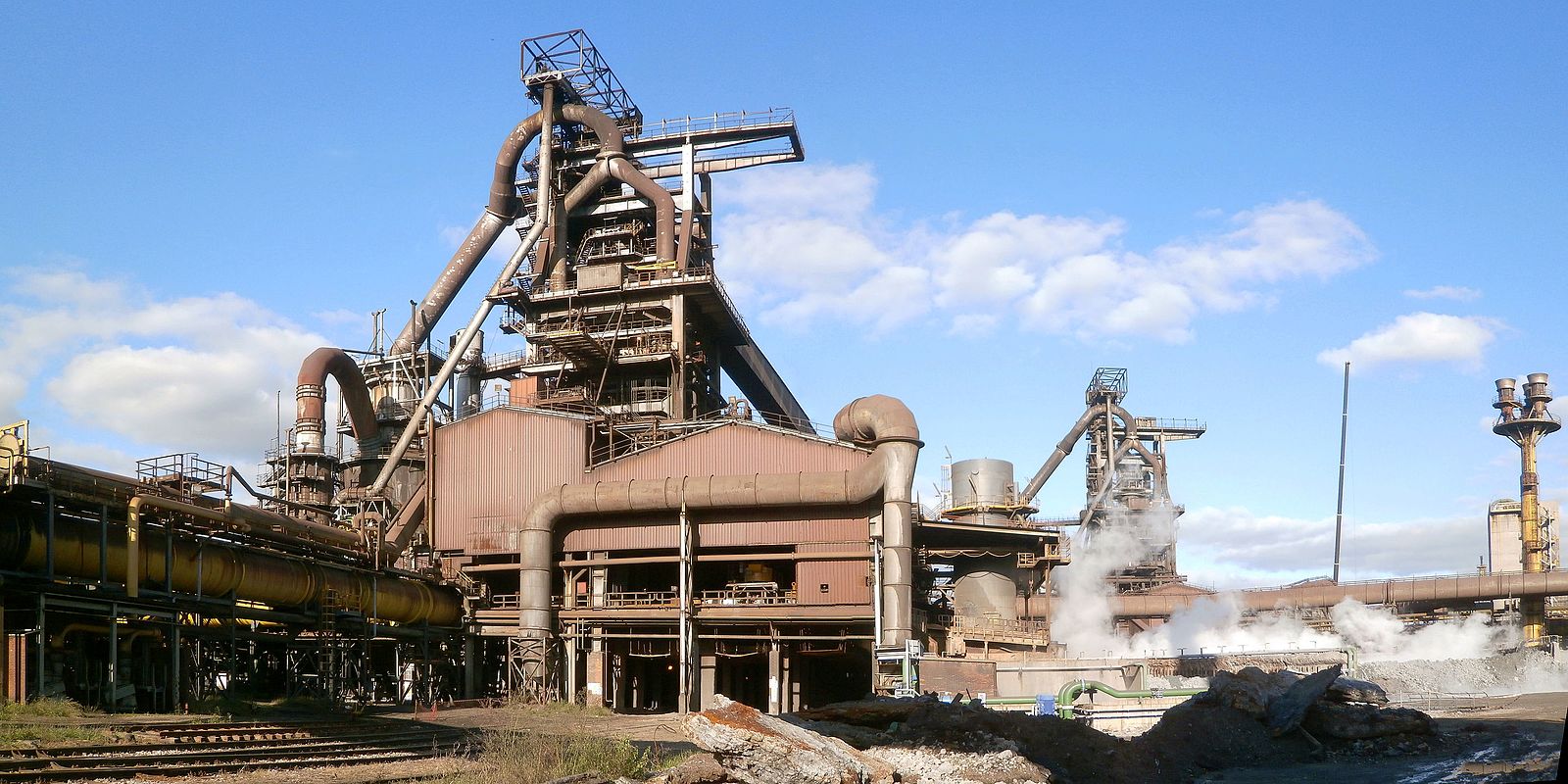
ArcelorMittal is pausing decarbonisation investments at its Dunkirk facility in northern France due to the downturn in the global steel industry, sources close to the matter tell Kallanish.
French industry minister Marc Ferracci confirmed to local press the suspension of the project.
“We remain committed to decarbonising our assets in Europe and continue to fine-tune the engineering studies we have been undertaking this year, but no final investment decisions have yet been taken,” a company spokesperson says. “We are operating in a difficult market, and there are a number of policy uncertainties that are impacting the industry. We need an effective Carbon Border Adjustment Mechanism, as well as more robust trade defence measures, to strengthen the business case.”
“Furthermore, we await the detail of the European Commission’s Steel and Metals Action Plan,” the spokesperson continues. “These are multi-billion-dollar investments that will shape the future of the business for decades to come. It is therefore entirely appropriate that we take great care to ensure that the decisions made are the right ones for our future”.
ArcelorMittal France was awarded €850 million ($890.55m) through a French measure approved by the European Commission to decarbonise the steelmaking process at Dunkirk. A 2.5 million tonnes/year capacity direct reduced iron unit and two electric arc furnaces were supposed to replace two of the three existing blast furnaces and two of the three basic oxygen furnaces by 2026. It remains unclear when this project will now be completed.
ArcelorMittal’s French service centre division is meanwhile undergoing restructuring, which may result in the closure of two service centres in the country – Reims and Denain – amid the downturn in the domestic steel sector (see Kallanish 22 November).
Natalia Capra France

European steel HRC buyers unwilling to accept higher prices for Q1 2025
Fastmarkets calculated its daily steel hot-rolled coil index, domestic, exw Northern Europe, at €563.75 ($587.38) per tonne on November 25, up by only €1.25 per tonne from €562.50 per tonne on Friday.
The index was up by €0.42 per tonne week on week and by €13.75 per tonne month on month.
Spot market trading for HRC in the region remained quiet amid deteriorating end-user demand because of the uncertainty about the first quarter.
Most first-tier integrated steelmakers in Europe have set target offer prices for January-February coil at €600-620 per tonne ex-works, with some suppliers even hoping for €640 per tonne for March-delivery material.
But low consumption was not supportive of the producers’ bullishness, market sources said.
“We can only hope for a price rebound [for HRC] closer to the end of the first quarter or the beginning of the second quarter next year, when a lack of imports will start to be apparent in the market and when, we hope, there will be restocking,” a buyer in Germany said.
Buyers’ estimates of tradeable values for HRC in the region were heard at €550-570 per tonne ex-works, and even as low as €540 per tonne ex-works from some sources.
But producer sources were not confirming €540-550 per tonne ex-works as being workable for first-quarter trades.
“Some discounts were possible for November-December [delivery] material [but] for January €600 [per tonne ex-works] is a minimum,” a mill source said.
At the same time, a buyer source reported a transaction for January delivery material at €560-570 per tonne ex-works from one supplier in the region.
“All [mills] are hunting for volumes,” a second buyer said. “They keep €600 [per tonne ex-works] as an official offer level, and also for pending negotiations with the automotive sector for long term-contacts, but in reality they can step down. The main thing that was achieved with this price increase announcement was a stabilization of [HRC prices].”
Meanwhile, in Southern Europe, Fastmarkets calculated its daily steel hot-rolled coil index, domestic, exw Italy, at €558.75 per tonne on Monday, down by €0.83 per tonne from €559.58 per tonne on Friday.
The Italian index was up by €1.25 per tonne week on week and by €12.50 per tonne month on month.
For HRC with lead times in the first quarter of 2025, offers were heard at €600 per tonne delivered (€590 per tonne ex-works), compared with €570-580 per tonne delivered (€560-570 per tonne ex-works) for December lead times.
No trades have been reported at the new prices, however, Fastmarkets understands.
Buyer estimates of the tradable value were no higher than €550-570 per tonne ex-works.
The HRC import market was also quiet, with offers from Asian mills heard in the range of €555-570 per tonne CFR, and €590-600 per tonne CFR from Turkey.
One source reported an offer from Saudi Arabia at €525 per tonne CFR, for HRC with delivery in February-March. But this could not be confirmed at the time of publication.
“Safeguard quotas and an anti-dumping [AD] probe are keeping import volumes down,” a buyer in Italy said. “Half of all [HRC] imports are under the AD probe. The costs of importing [steel] are high, and lead times are long, which is a big disadvantage, considering the high level of market volatility.”
Published by: Julia Bolotova
