

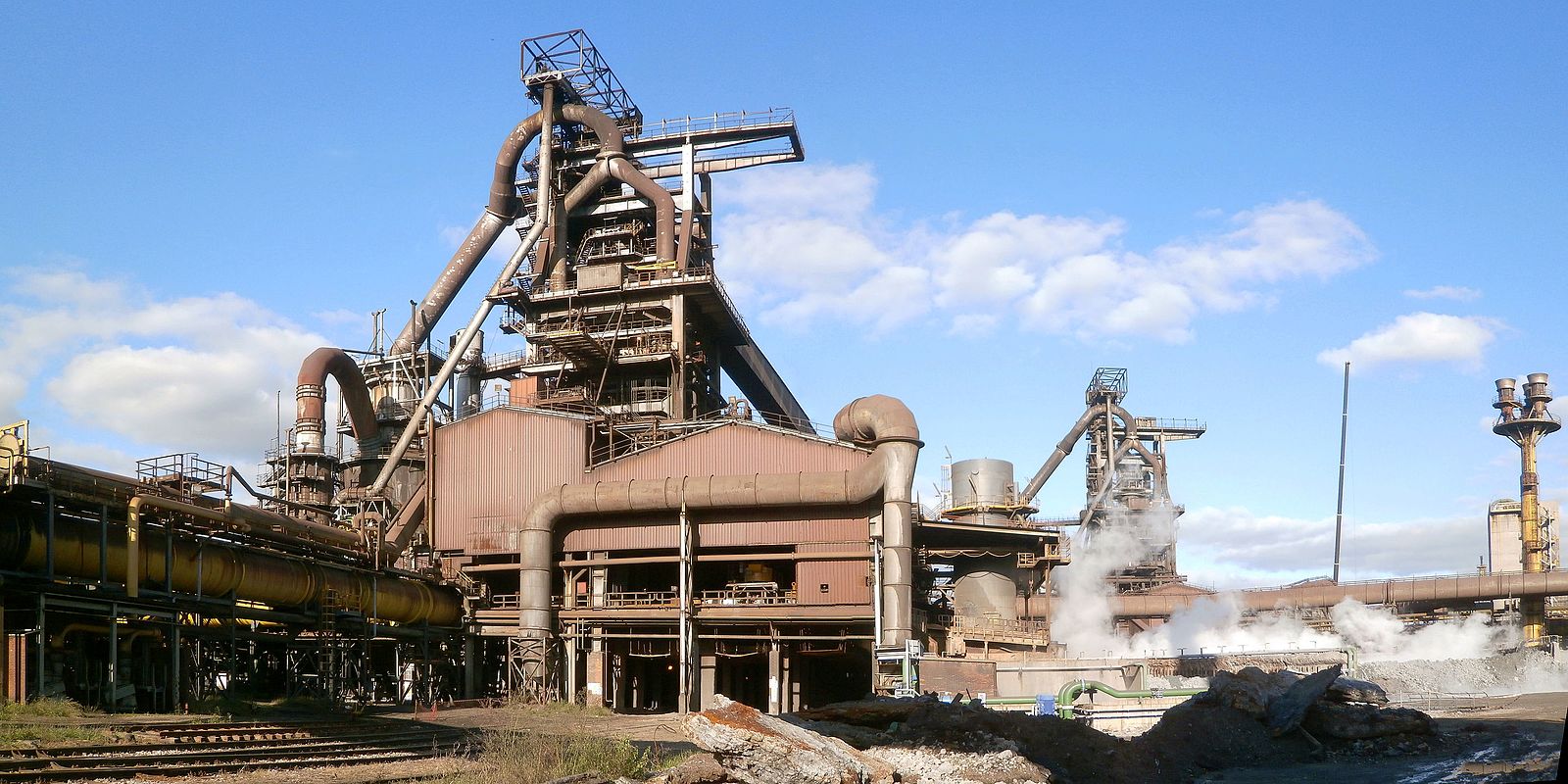
ArcelorMittal suspends final investment decision on Spanish DRI
ArcelorMittal said Nov. 26 it has delayed a final investment decision on a 2.3 million mt/year hydrogen-fed direct reduced iron plant at its Gijon cluster in Spain, citing unfavorable political, market and energy market developments, and a slow evolution of green hydrogen.
“Before taking final investment decisions it is necessary to have full visibility on the policy environment that will ensure higher cost steelmaking can be competitive in Europe without a global carbon price,” the company said.
The statement comes a day after a spokesperson told S&P Global Commodity Insights the company was awaiting guidance from the EU before making final investment decisions on decarbonizing its assets in Europe.
ArcelorMittal did not say when a final investment decision might be taken on the Spanish plant and cited “important deficiencies” in the European Carbon Border Adjustment Mechanism as a main factor, but also noted the absence of a clear domestic framework for green hydrogen as well as slow development of the technology.
“We would have liked to advance quicker, but the reality is that no regulatory framework has been drawn up that would support an economic decision for the investments,” ArcelorMittal CEO Aditya Mittal said in the statement.
Spain’s government in April approved funding from Spain’s Recovery and Resilience funds of Eur450 million ($500 million) for ArcelorMittal’s low carbon steel project at Gijon, which includes an integrated plan for the cluster of four plants.
Overall investment at Gijon was slated at around Eur1 billion, with the bulk earmarked for the DRI unit, which would replace one of the existing blast furnaces and feed a new electric arc furnace, overall reducing the plant’s CO2 emissions by 50%, or 4.8 million mt, over five years.
The DRI would also feed the company’s other EAF at Sestao, for a further 1.6 million mt/year of low carbon steel production.
ArcelorMittal said it would continue with engineering work and analysis, while construction of new EAFs at both sites would not be impacted.
The company said it might expect more clarity on regulation during 2025, citing a Spanish “industrial Green Pact” and an “Action Plan for the Steel and Metallurgic Sector,” among other measures to boost demand.
“While we have clients who want to use low emission steel, only a minority are prepared to buy an additional cost for it,” it said.
ArcelorMittal said its XCarb steel could see sales volume nearly double in 2024 to 400,000 mt.
Platts, part of Commodity Insights, assessed domestic HRC prices in southern Europe at Eur555.71/mt ex-works Italy on Nov. 25, down 19% since the start of 2024.


SSAB to supply fossil-free steel for Amazon data center in Sweden
SSAB will supply Amazon Web Services with fossil-free steel for the construction of a new data center in Malardalen, Sweden, it said in a statement released Nov. 26.
The collaboration will utilize pilot supplies of fossil-free steel produced through SSAB’s HYBRIT technology, while SSAB’s subsidiary Ruukki will supply roof and wall structures for the buildings.
Unlike traditional steelmaking, which relies on coking coal, SSAB’s HYBRIT process uses hydrogen, produced with renewable electricity, to produce sponge iron, which is then processed into steel. According to SSAB, the process emits water vapor instead of CO2 and largely eliminates CO2 emissions from the steelmaking process.
“By choosing steel made with the HYBRIT technology, AWS shows it’s possible to reduce the carbon footprint of data center construction regardless of whether the steel is made from scrap or virgin iron ore,” said Thomas Hornfeldt, VP of Sustainable Business at SSAB.
Meanwhile, SSAB announced separately that it had contracted Germany’s SMS group for the construction of a new 190-ton electric arc furnace for its Oxelosund steel plant in Sweden, which was expected online in fourth-quarter 2026.
The EAF, which according to SMS would be one of the largest and most powerful digital EAFs in the world, was key to SSAB’s transition toward a fossil-free steel producer and would also provide for a 3% reduction in Sweden’s overall carbon emissions.
Powered by a 280 MVA transformer, the installation would be equipped with highly advanced technology — a medium-voltage digital power feeding system – to meet the limitations imposed by the grid authority in terms of flicker, power factor and harmonic distortion.
SSAB said it had tasked SMS with the integration of the modular multilevel converter based direct feed system from GE Vernova’s Power Conversion business to be fitted in the new furnace at Oxelosund, which would ensure the new EAF operates smoothly and efficiently without disrupting the grid, thereby contributing to the reduction of CO2 emissions.
Platts, part of S&P Global Commodity Insights, assessed carbon-accounted steel hot-rolled coil at $580.24/st Northwest Europe spot basis Nov. 25, up 1% on the day.

EU HRC prices largely stable amid supply-demand mismatch
Domestic European hot-rolled coil prices remained largely stable Nov. 26, as market sentiment was unchanged amid depressed market activity.
“Everyone agrees the market is bad at the moment and demand is weak,” as Italian producers and rollers are trying to increase prices, but these increases are not supported by local demand, an Italy-based trader source said.
Several sources expected no improvement to market sentiment or changes in market activity before the end of the fiscal year 2024. A Germany-based distributor summed up the dilemma facing the European Steel market as overproduction and underconsumption, as “end-user demand is sluggish, and distributors are purchasing minimally to manage inventory gaps.”
European mills face oversupply challenges and may need to reduce production further, with no immediate signs of demand recovery.
Platts assessed Northwest European HRC at Eur550/mt ex-works Ruhr Nov. 26, down Eur5 on the day.
Offers were reported at Eur550-600/mt ex-works Ruhr. Bids were reported at Eur520/mt ex-works.
Platts assessed domestic HRC in Southern Europe at Eur550/mt EXW Italy, stable on the day.
Platts assessed imported HRC in Northwest Europe at Eur530/mt CIF Antwerp, stable on the day.
Platts assessed imported HRC in Southern Europe at Eur525/mt CIF Italy, stable on the day.

Germany’s Thyssenkrupp to cut steel output by 2.5 mln tpy, 11,000 jobs likely to go
On Monday November 25, the company said it will adjust steel production levels to match actual steel shipments achieved over the past three years.
Thyssenkrupp’s Duisburg facility has a designed production capacity of around 11.7 million tpy of pig iron from four blast furnaces (BFs) and produces around 11 million tpy of crude steel per year.
But steel shipments from Thyssenkrupp’s steel assets amounted to around 9 million tonnes over the past three years.
Thyssenkrupp therefore plans to reduce production capacity to 8.7-9 million tonnes per year “due to market conditions and thus to adapt it to future market expectations,” the company said.
A central element in the capacity reduction is the separation from German plate and billet producer Hüttenwerke Krupp-Mannesmann (HKM). Hüttenwerke Krupp Mannesmann (HKM).
Thyssenkrupp plans to sell its shares in HKM and if that is not possible, the company said it will hold talks with the other shareholders about closing operations.
And Thyssenkrupp will shut down the steel processing facility at Kreuztal-Eichen, which is focused on coil slitting, coating and pickling operations.
Rising production costs, increased import pressures from Asian countries and ongoing deterioration of the steel demand-supply balance were the key factors undermining the competitiveness of steel produced in Europe, Fastmarkets understands.
“Overcapacity and the resulting increase in cheap imports, particularly from Asia, are placing a significant strain on [our] competitiveness,” the steelmaker said.
The changes will result in the loss of around 5,000 jobs by 2030 through the adjustments to production and administration, with 6,000 additional roles either transferred to external service providers through outsourcing agreements or the direct sale of business activities, the company said.
Market situation in Europe
After a short-lived rebound in apparent steel demand in January and February 2024, mostly related to restocking, the European flat steel market has been deteriorating, with prices contantly under pressure from lower-cost imports.
In September, the average HRC price dropped to €567.22 ($591) per tonne, with the tendency continuing in October, with the daily index for HRC in Northern Europe fell to €549.25 per tonne – its lowest level since the beginning of the year.
HRC prices in Northern Europe started to stabilize at the beginning of October, when ArcelorMittal and other first-tier mills announced increases to their offer prices for HRC of about €40 per tonne.
But buyers refrained from bookings, amid weak real demand from the key consuming industries, with many waiting to see how the market develops in December-January, Fastmarkets understands.
Overcapacity in Europe
According to the Organisation for Economic Co-operation & Development (OECD), the nominal crude steelmaking capacity in Europe is well over 200 million tonnes, but the actual output volumes have been lagging far behind that in recent years.
In 2022, crude steel production across Europe amounted to 136.30 million tonnes, down from 152.60 million tonnes in 2021, according to data from the World Steel Association (worldsteel). The decline was due to massive output cuts that were implemented by European mills in the third and fourth quarters of 2022, due to deteriorating demand and falling steel prices.
In 2023 steel output fell further still, even considering the low comparative base of the previous year, and amounted to 126.30 million tonnes, according to worldsteel.
Steel production in Germany, which is the Europe’s largest steelmaker, fell to its lowest level since 2009 in 2023, to about 35.40 million tonnes – down 3.9% year on year, due to challenging market fundamentals and high production costs.
And several market participants told Fastmarkets that this tendency was likely to prevail in the years to come.
“Steelmaking capacity massively [outweighs] actual production [in Europe and] is representative, in a way, of what needs to be done [more generally] – shutting down redundant capacity,” a trading source told Fastmarkets.
“EU [steelmaking] capacity will be reduced – it’s as simple as that,” the source added.
Commitment to green steel
Despite ongoing challenges, Thyssenkrupp once again reaffirmed that it remains committed to the green steel transformation of its Duisburg site and intends to complete the direct reduction plant already under construction there.
By 2030, two of Duisburg’s four blast furnaces (No8 and No9) will have been replaced by the DR plant and the two planned innovative smelters with a total shipping capacity of 2.2 million tons per year, with another blast furnace expected to be replaced with a modern electric-arc furnace after that.
“A decision on [the EAF] will only be made at a later date and under the economic, technological and political conditions that apply at that time,” the company said.
Published by: Julia Bolotova


Steel industry on edge with Trump threatening new tariffs on Mexico, Canada, China on first day in office
True to the Trump modus operandi, the announcement was made on social media, and ups the ante on the president-elect’s rhetoric on being tough on trade and tariffs.
“On January 20th, as one of my many first Executive Orders, I will sign all necessary documents to charge Mexico and Canada a 25% Tariff on ALL products coming into the United States, and its ridiculous Open Borders,” Donald Trump wrote on Truth Social, asserting that “thousands of people are pouring through Mexico and Canada, bringing Crime and Drugs at levels never seen before.”
Trump said the new tariffs would remain in place “until such time as Drugs, in particular Fentanyl, and all Illegal Aliens stop this Invasion of our Country!”
In a separate post, Trump also critiqued China, saying he has “had many talks with China about the massive amounts of drugs, in particular Fentanyl, being sent into the United States — But to no avail.”
“Until such time as they stop, we will be charging China an additional 10% Tariff, above any additional Tariffs, on all of their many products coming into the United States of America,” Trump wrote.
Some US steel market participants welcomed this news.
“The announcement by president-elect Trump that imports from Canada and Mexico will be subject to new tariffs is welcome news for the US steel construction industry,” a steel fabricator told Fastmarkets on Tuesday November 26. “Fabricated structural steel has been streaming across the borders tariff-free for a decade, undermining the domestic fabrication industry that we need to build secure critical infrastructure projects.”
A second construction steel fabricator similarly said: “Business owners feel much better with Trump leading the country. More opportunities will be created during a Trump presidency than [they would’ve] during a Harris presidency.”
“During his first presidency, Trump needed to figure out how Washington worked. This time, he is going in with a plan and a good team,” the second fabricator said.
Regarding the new tariffs on US’s close trading partners, the second fabricator said, “I am still [fully] determining [the impact of] Trump’s comments [on tariffs]. [The new Trump administration] are telling other countries they better tighten up, or there will be changes.”
Samir Kapadia, principal and chief operating officer at the Vogel Group, a bipartisan government affairs and consulting firm based in Washington DC, told Fastmarkets that under Trump, US “trade policy can be determined by nearly anything at this point.”
“It’s not just limited to trade disparity arithmetic, forced labor concerns or national security,” Kapadia said on Tuesday.
“I don’t find it surprising at all that Mexico is being targeted in this announcement,” Kapadia said. “Mexico has gone well over historical averages in exports of steel to the United States since the signing of USMCA,” Kapadia said, referring to the United States-Mexico-Canada Agreement, the 2020 trade deal signed into law by Trump in 2018 during his first presidency, which replaced the North American Free Trade Agreement, and is up for review in 2026.
Many domestic players in the US have been harsh critics of Mexico’s role in the USMCA and expect the Trump administration to rework the trade deal.
“[Mexican companies] have also ignored concerns around best environmental and labor practices,” Kapadia said. “To add further insult to injury, there has also been a record level of Chinese investment into Mexico, particularly in the automotive industry. That doesn’t please unions or the far right that want to rebuild Detroit. Many in Washington, both Republicans and Democrats, consider Mexico to be a hostile trade partner.”
A Mexican trader said their company was “reviewing and analyzing different alternatives since Trump was elected.”
“We are aware that this might be a big issue at the moment,” the Mexican steel trader said, and added that Mexico and Canada will likely impose tit-for-tat tariffs if Trump carries out his threat.
“Mexico and Canada will be doing the same to the US if this happens, and probably between one to three months there will be negotiations that will be benefit all of us,” the Mexican trader said on Tuesday.
The Mexican trader said while those negotiations are ongoing, their company will likely stop exporting steel products to the US, or pass on the extra cost to the final customer in the US.
“During those three months we might stop shipping, or negotiate the additional tariffs to the final customers, and steel prices in US might go up,” the Mexican trader said.
“Trump also has to manage inflation, and this can push prices up as well,” the Mexican trader said, repeating a common concern that Trump’s tariffs will ultimately push up costs for US consumers.
The first fabricator also speculated about the legality of imposing tariffs on a trade partner such as Mexico.
“It sounds great, but I’m not sure what the legal basis is,” the first fabricator said. “You have tariffs under Section 301 with China. I’m not sure what the legal basis is within the framework of the USMCA. And Section 232 tariffs only cover steel.”
The US Trade Representative (USTR) Katherine Tai under current President Joe Biden increased tariffs on Chinese imports under Section 301, with the tariff rate on certain steel and aluminium products increasing from 0-7.5% to 25% in 2024.
The tariff increases under Section 301 on steel and aluminum imports from China were finalized on September 27.
Additionally, the Biden administration levied a 25% tariff under Section 232 on steel and aluminium shipped from Mexico that is melted and poured outside of North America as an addendum to the USMCA, and this came into effect on July 10.
A second trader source questioned the relation between illegal immigration and trade tariffs.
“Tariffs and illegal immigration — I don’t see how these two things are connected,” the second trader said. “I’m a little skeptical about this. I can understand that it is a good thing to end illegal immigration. Tariffs, however, will increase prices. People think it is Mexico and Canada who are paying. It is not. The American consumer will be paying.”
The second trader told Fastmarkets that Trump’s love for tariffs is a “negotiating tactic.”
The first fabricator source noted that under Trump, additional tariffs can be levied by the executive branch of the government.
“Under the incoming administration, tariffs can be done more directly by the executive branch than by an act of Congress,” the first fabricator said. “This is an easier policy tool to manipulate than trade agreements. The President has a lot of authority under law to impose tariffs. It’s more of an executive action and he’s more likely to use those tools.”
The first fabricator noted that currently “Canada and Mexico are exempt from Section 232 tariffs, but the USMCA provides for surge protection [through exemptions]. If there is a surge [from Canada or Mexico], it could be expanded to cover them.”
Notably, Trump’s nominee for treasury secretary Scott Bessent has lauded tariffs as a powerful tool for trade negotiations.
Bessent wrote in a Fox News op-ed on November 15 that tariffs are “a useful tool for achieving the president’s foreign policy objectives. Whether it is getting allies to spend more on their own defense, opening foreign markets to US exports, securing cooperation on ending illegal immigration and interdicting fentanyl trafficking, or deterring military aggression, tariffs can play a central role.”
Reaction from Mexico, Canada and China
This is not the first time that Donald Trump has singled out Mexico, which was often a rally point during his campaigning days.
“I’m going to inform her, on day one or sooner, that if they don’t stop this onslaught of criminals and drugs coming into our country, I am going to immediately impose a 25% tariff on everything they send into the United States of America,” Trump said on November 4, the final day of campaigning at a rally in North Carolina, referring to Mexican President Claudia Sheinbaum.
The Mexican president said she is going to send a letter to Trump in response, and held a press conference on Tuesday morning, where she floated the idea of retaliatory tariffs, and pointed out that many US automakers have manufacturing plants in Mexico, and that retaliatory tariffs will only raise prices for the average American consumer.
“I am convinced that we will find an agreement with President Trump,” Sheinbaum said during the press conference.
“What we want to say in the letter is that raising tariffs […] on Mexico, which would mean that this side could also raise tariffs, will ultimately harm companies that work in Mexico and the US,” she said.
“If tariffs are raised here, they will harm General Motors [for example], that are some of the main exporters from Mexico to US,” the Mexican president said.
“But the main ones affected will be consumers in the United States, who buy vehicles from General Motors, because raising tariffs will increase prices. This will make them [United States] less competitive compared with other economies, to other economic blocs in North America.”
“What is the point of “tariffs with tariffs with tariffs” if in the end it will only lead to a loss of competitiveness in North America?” Sheinbaum said on Tuesday.
Canadian Prime Minister Justin Trudeau reportedly had a phone call with Trump shortly after the president-elect’s social media posts, which the Canadian premier confirmed on Tuesday.
“We talked about some of the challenges that we can work on together and it was a good call,” Trudeau said in media reports. “It’s something that we can do laying out the facts moving forward in constructive ways.”
The Chinese Embassy in Washington posted on social media on Monday that there are no winners in a trade war.
“China-US economic and trade cooperation is mutually beneficial in nature,” embassy spokesperson Liu Pengyu wrote on X [previously known as Twitter]. “No one will win a trade war or a #tariff war.”
German government collapse heaps further pressure on construction
Germany’s construction industry federation says the collapse of the German government means urgent project decisions will be postponed by at least six months, heaping further pressure on the already beleaguered sector.
Hauptverband der Deutschen Bauindustrie gives little hope for a recovery in activity in the near term. Only once a new government is in place will the agenda for residential construction become clear.
Performance in the year so far has not made for pleasant reading. “Looking at the first three quarters of the year, the summary is a bitter one,” the federation notes in its latest statement on residential construction.
Approvals for new-building of houses and apartments in the first nine months of the year were 20% below the figure of the corresponding 2023 period, according to latest data from the federal statistics office. For September, it gives the number of 15,300 approvals, and that includes conversions of existing housing space in addition to new buildings.
Federation managing director Tim-Oliver Müller notes the demands issued to policymakers are not primarily for financial incentives, but for a radical reduction in the regulations that impair construction activity and drive up costs.
The concerns are echoed by suppliers to the construction sector, such as rebar benders. “This year we have a fraction of the activity of the year before,” one German rebar bender manager tells Kallanish. “And we have to fiercely compete for every job.”
Christian Koehl Germany


ArcelorMittal monitors policy before deciding on European decarbonisation
ArcelorMittal plans to monitor various developments in 2025 before reaching a conclusive decision on the feasibility of its decarbonisation investments in Europe, Kallanish learns from a company representative.
These developments include the planned review of the Carbon Border Adjustment Mechanism (CBAM), a forthcoming assessment of EU steel safeguards, and the release of the Steel and Metals Action Plan. Upon completion, these initiatives will establish the parameters ArcelorMittal will use to formulate the business case for decarbonisation investments in Europe.
The steelmaker previously announced its intention to develop lower-emission, hydrogen-ready DRI-EAF facilities to replace multiple blast furnaces within its European operations.
“These projects were premised on a favourable combination of policy, technology and market developments that would facilitate decarbonisation investment … However, European policy, energy and market environments have not moved in a favourable direction. Green hydrogen is evolving very slowly towards being a viable fuel source and natural gas-based DRI production in Europe is not yet competitive as an interim solution,” the firm says.
“Furthermore, there are significant weaknesses in the Carbon Border Adjustment Mechanism (CBAM), trade protection measures need strengthening in response to increasing imports due to China overcapacity, and there is limited willingness among customers to pay premiums for low-carbon emissions steel. Before taking final investment decisions, it is necessary to have full visibility on the policy environment that will ensure higher cost steelmaking can be competitive in Europe without a global carbon price,” it adds.
ArcelorMittal remains committed to achieving net-zero by 2050 but the magnitude of the decarbonisation project requires increased investment, it continues. “We would have liked to move faster, but the reality is the regulatory environment required to support the business case for investments is not yet in place … The Green Deal Industrial Plan and the Steel and Metals Action Plan, and the legislation flowing from them, will be important, as well as regulation to stimulate the demand signal,” comments chief executive Aditya Mittal.
“While we do have customers that want low-carbon steel, those that do and are willing to pay a premium are still very much in the minority,” he adds.
The steelmaker said earlier this week it is suspending decarbonisation investments at its Dunkirk facility in northern France due to the downturn in the global steel industry (see Kallanish passim). According to rumours, the decarbonisation investments at the firm’s Gent plant are also in doubt. However, the firm has not confirmed this.
The company has not disclosed any details regarding the progress of its sustainability investments at Gent or Dunkirk. However, it has shared an update on its decarbonisation investment in Spain, where engineering works are ongoing for the construction of a 1.1 million tonne EAF at its long products facility in Gijón. It also reports significant advancements in its initiatives aimed at boosting production to 1.6mt by 2026 at the flat products facility in Sestao.
Natalia Capra France

UK government procurement could transform steel sector: report
The UK government should prioritise domestic steel in its infrastructure projects to boost the sector and capitalise on the opportunities brought by growth in offshore wind, a new report commissioned by industry association UK steel says.
Kallanish notes from report, titled Public Procurement of Steel: Time for New Thinking for a Thriving Industry, contains proposals aimed at improving the uptake of UK-made steel in taxpayer-funded projects and stopping that money being spent on importing foreign steel.
It highlights the opportunity for the government, as the single biggest purchaser of steel in the UK, to further support the sector by increasing its procurement domestically. Data shows that one third of the steel it procures is imported, costing UK taxpayers £1.5 billion annually.
Over the next decade, government steel requirements will exceed £4.3 billion without accounting for major initiatives such as carbon capture and storage, hydrogen infrastructure, nuclear energy, and offshore wind.
The UK Steel-commissioned report by Offshore wind experts LumenEE identifies the total steel needed for the rapid expansion of the UK’s offshore wind sector, out to 2025. It estimates up to 25 million tonnes of steel will be needed in the next 25 years for offshore wind investment around the coast of Britain. This single opportunity alone is worth approximately £21 billion in steel purchases.
UK Steel director-general, Gareth Stace, said, “The LumenEE findings on offshore wind alone illustrate what’s at stake: £21 billion in steel purchases that could drive a major upturn in UK production. Without decisive action, we risk losing this opportunity and continuing to fund foreign competitors instead of our own economy.”
The report’s key recommendations include utilising public procurement contracts, with government mandating or incentivising the use of domestic steel. This should be done where possible, for projects of energy, defence, and related infrastructure via domestic content stipulations in contracts where public funding or subsidy is involved utilising World Trade Organisation (WTO) opt-outs.
It also suggests using contracts for difference to evaluate the bidders’ contributions to sustainability, resilience, and local content, with these criteria applying to at least 30% of the volume auctioned annually. While nationally significant infrastructure projects should be required to adhere fully to the procurement policy note (PPN) for steel and be subject to local content requirements of not below 30%.
Additionally, a public-private partnership should drive investment into steel supply chains, which will attract inward investment, create jobs, drive economic growth.
Dan McGrail, chief executive of RenewableUK noted that this was the first time that the offshore wind sector’s technical steel requirements have been laid out for government, the renewable industry and suppliers to see.
“If the Government and steel industry carefully invests the £2.5bn steel fund in response to this huge growth area, then the wind industry’s Industrial Growth Plan, UK steel production, fabrication and national supply chains can all fall into step as a huge economic boon for the UK,” he said.
Community assistant general secretary Alasdair McDiarmid said: “The recommendations put forward to reform processes for awarding public contracts, maximising the use of locally-sourced steel and updating national procurement guidance, are all common-sense measures which the government could adopt swiftly.
McDiarmid endorsed the report and added, “this is the kind of transformational investment we have been calling for over many years and has enormous potential to strengthen UK supply chains.”
“This is a massive opportunity to create a prosperous end-to-end green domestic supply chain, and to harness the capabilities that already exist in UK steelmaking.”
Carrie Bone UK

German rebar prices inch upward as December approaches
Sources on the rebar market tell Kallanish of price hike announcements by one German mill, and indicate that the other producers will follow.
After months of inertia on the market with virtually no price moves, despite some failed attempts, the latest announcement seems a bit more promising, one buyer comments. Base prices have been little above €350/tonne ($367) for a long time, plus €265 size extra, equalling a delivered price of €615+/t. The new offer brings the price up by €20-25/t, and another hike of that size could follow in December.
According to the buyer, orders have been placed by benders last week in a buying wave for delivery in January/February. Those who come later would have to accept a higher price, he says.
This is not unusual towards year-end, when mills try to fill their capacities for January, and benders want to place orders for replenishment at friendly prices. Once the order books are full, mills would then ask for much higher prices. For example, tardy buyers now may be looking at €400/t base, for those in late need to fill gaps, another buyer explains.
“Customarily, we have had a price surge in November/December for decades,” he says. Still, that buyer finds the hike attempts so far to appear “rather blurry.”
The move this year seems to come earlier than in other years, and other observers have not yet registered that any movement is taking place.
Apart from the seasonal influence, arguments differ with regard to costs as a factor to bring up prices. According to the above buyer, the mills have to cope with higher wages, CO2 taxation, and massive losses. They badly need to catch up.
Against that, MBI Infosource forecast models predict a drop of 3% by early December, on the basis of lower production costs and softening scrap prices.
Christian Koehl Germany