


EU domestic HRC prices climb; 2025 outlook remains mixed
Domestic European hot-rolled coil prices climbed Dec. 10, while market fundamentals remained largely unchanged, as sources focused on the wider uncertainty and discussed the need for domestic production cuts.
“Business is dead quiet, we don’t expect much of an increase in requests now,” a service center source said. “There is a lot of uncertainty ahead beyond steel with Trump and now for Germany, everyone is waiting for a new government, so we don’t expect much of a price change until the elections in February.”
The same source referred to an oversupplied market while sharing expectations for potential mill capacity cuts across Northern Europe.
“It is impacting all types of steel, despite the market being oversupplied and margins being so poor, mills are still producing, with a large amount of output being green as they try to keep their carbon certificates,” the service center source said.
“European steelmakers are struggling with low HRC demand and low prices while imports are limited due to the risk on quotas and domestic rates are comparable. The green steel market is growing slowly, but we are expecting a weak first quarter in 2025,” a German distributor said, referring to both Northern and Southern European markets.
Platts assessed imported HRC in Northwest Europe at Eur540/mt CIF Antwerp, stable on the day.
Platts assessed imported HRC in Southern Europe at Eur540/mt CIF Italy, unchanged on the day.
Market participants in both regions continued to refer to higher mill offers but cited the wider and more competitive price levels that continued to be heard in the market, adding pressure to potential price increases.
However, a mill source argued this was due to higher stock levels and limited demand opportunities further down the value chain.
“Service centers are so aggressive in getting rid of their high volume, that they can’t afford to buy material at the new higher prices — so it’s creating a squeeze,” the mill source said. “The market cannot continue without capacity cuts, we need higher prices, especially if we are looking to decarbonize further.”
Platts assessed Northwest European HRC at Eur557.50/mt ex-works Ruhr Dec. 10, up Eur7.50 on the day.
Platts assessed domestic HRC in Southern Europe at Eur560/mt ex-works Italy, up Eur5 on the day.
Platts is part of S&P Global Commodity Insights.


Outokumpu says its low-carbon steel slashes emissions for its users
European and Asian companies using Outokumpu’s low-carbon stainless steel have collectively reduced carbon emissions by more than 50,000 mt, it said Dec. 10.
The Finnish company launched its Outokumpu Circle Green low-carbon stainless steel two years ago. The product has a carbon footprint equivalent to 7% of the global average, according to the company.
“Our efforts on achieving 95% recycling rate in our production, using low-emission electricity and producing our own ferrochrome underline the leadership position in sustainability,” Jorg Müller, head of sales for Stainless Europe at Outokumpu said. “The frontrunner companies have seen the business value of offering Circle Green to their customers through their solutions … We are confident that the growth will continue, and we are currently working on extending our low-emission stainless steel portfolio to be available early next year.”
Outokumpu’s public reference customers for Circle Green are Fiskars, Fissler, Zwilling, Siemens, Alfa Laval, Stahl Krebs, Purem, Boysen, Klockner, thyssenkrupp Materials Processing Europe, Lemvigh-Müller, Sermeta, Tetra Pak, Roba Metals, Schmidt Edelstahl, Meiller Aufzugsturen GmbH, Edilcam, Nordic Steel, Sverdrup Steel, OSTP, Ormazabal, Stala Tube, V-ZUG, Norder Band, Jye Chi, HH Stainless and Mori2A.
Outokumpu anticipates a substantial increase in demand for green steel in the coming years but says the global transition to greener practices must accelerate to mitigate the industry’s climate impact.
This surge in demand is fueled by several key factors: more stringent environmental regulations such as carbon pricing, advancements in green steel production technologies, and an increasing interest in low-emission solutions across various industries driven by ambitious climate goals. Notably, the automotive, heavy industry, energy and consumer goods sectors are particularly significant for stainless steel in this context.
“Challenges still remain in scaling up green steel production, such as the high initial investment costs, the availability of renewable energy sources, and the sufficiency of recycled steel as raw material,” Muller said. “We are eager to further develop the demand for green steel together with our stakeholders.”
Platts, part of S&P Global Commodity Insights, European 18-8 stainless steel scrap solids at Eur1,240/mt on Dec. 6 on a CIF Rotterdam basis, stable week on week.

HRC buyers in Europe focus on destocking; prices hold
Trading in the European HRC market was still limited, sources said.
“Restocking still didn’t gain pace. Destocking still not completed and there is a competition between mills and distributors downstream,” a buyer in Germany said.
January-delivery HRC was offered by an integrated mill in Central Europe at €580 ($612) per tonne ex-works.
A buyer source said that a supplier was not usually actively offering HRC to the spot market, so the move indicated weak order books.
A re-roller in the Benelux area was offering HRC with January lead times at €570 per tonne ex-works.
First-tier integrated mills maintained offers for January-February delivery coil at €600 per tonne ex-works, however, buyers deemed such prices unworkable, considering weak consumption and oversupply.
Several sources said that it was possible to get lower prices for tonnages of 1,000 tonnes and above.
Notably, achievable prices were estimated by buyers at €550-570 per tonne ex-works, Fastmarkets heard.
As a result, Fastmarkets calculated its daily steel HRC index, domestic, exw Northern Europe at €560.83 per tonne on December 10, down by just €2.65 per tonne from €563.48 per tonne on Monday December 9.
The index was down by €0.42 per tonne week on week, but up by €2.08 per tonne month on month.
Meanwhile, negotiations for long-term contracts with original equipment manufacturers (OEMs) in the automotive sector were still underway.
One major supplier in the region reportedly sealed a contract with an automaker “with only a double digit decrease,” Fastmarkets heard.
However, in general progress was slow, sources said.
“Negotiations [with OEMs] are ongoing, no relevant closing at the moment,” a second trader said.
“Automotive negotiations might extend into January,” a mill source said.
Buyers were hoping to achieve a discount of around €100-150 per tonne for first-half and full-year 2025 contracts, while mills were hoping for a more minor reduction of some €50-70 per tonne, or even a price rollover in some cases, sources said.
In Southern Europe, Fastmarkets calculated its daily steel hot-rolled coil index, domestic, exw Italy at €559.00 per tonne on Tuesday, down by €1.42 per tonne from €560.42 per tonne a day before.
The Italian index was also down by €1.00 per tonne week on week but up by €6.50 per tonne month on month.
One integrated mill in Italy was maintaining official offers for first-quarter delivery HRC at €600 per tonne delivered (€590 per tonne ex-works), with bids for such material coming in at €570-580 per tonne delivered (€560-570 per tonne ex-works).
No sales at target offer levels have been reported so far.
Another supplier was heard accepting around €550 per tonne ex-works for January-delivery material.
The market for import HRC in Italy, meanwhile, has been mostly quiet recently due to trade defense measures, as well as uncompetitive prices, sources said.
Offers of HRC for February shipment from Taiwan and South Korea to Italy were heard at €580 per tonne CFR on Tuesday.

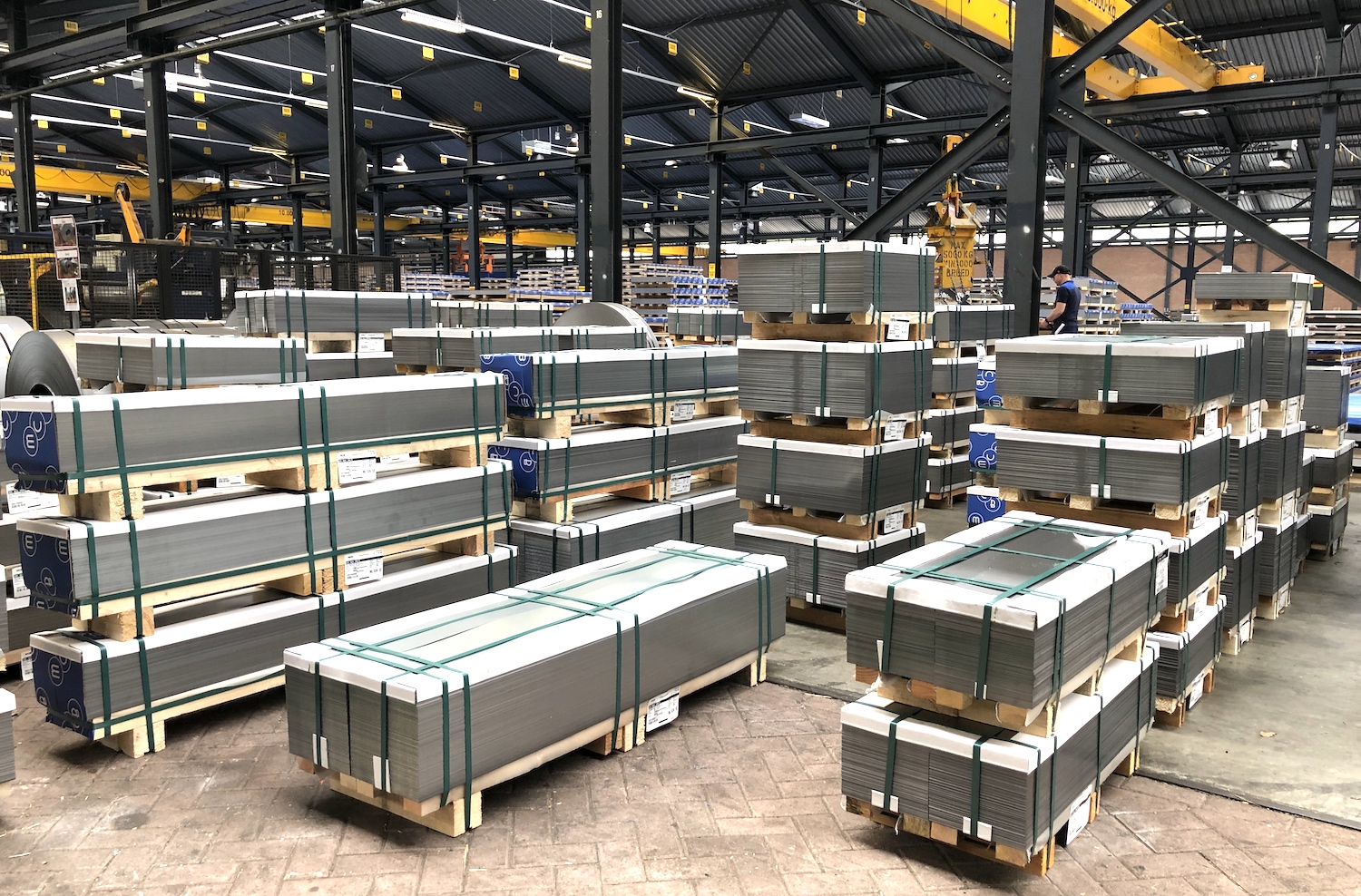
Italian coil holds, service centres attempt sheet increases
Producers of hot rolled coil in Italy and Europe are attempting to elevate prices to €600-610/tonne ($631.4-641.9) delivered. However, the market remains stagnant, with no transactions occurring at these prices, Kallanish hears.
Contract prices remain stable compared to mid-November, and demand subdued, resulting in sales of only limited quantities. There is a tug-of-war going on between service centres, who are willing to pay €550-560/t base delivered, and producers, who think they can obtain some price improvements before year-end. Transaction prices in Italy, along with other EU nations like Germany and France, are holding steady at €550-560/t base delivered.
Multiple buyers suggest there are no available import options. Material from the Far East is being quoted at €580/t cfr Italy. Turkish HRC is available at €580/t cfr duty paid. None of the service centres who spoke to Kallanish are contemplating purchases from the import market.
One buyer anticipates that European producers could achieve €570-580/t base delivered or ex-works depending on volumes. “Currently, there are no ongoing negotiations, and the subdued demand in downstream markets is expected to continue,” another source remarks.
Service centre customers who recognise there is no more space for sheet price reductions are meanwhile making some purchases. Italy’s service centres are raising their sheet values but finding it difficult to transmit the increases. Hot rolled sheet transaction prices are currently at €640-650/t delivered, with an additional €30/t for pickled sheet. Service centres are now increasing rates for hot rolled sheet to €670/t and €700/t for pickled material.
The outlook for downstream demand appears unfavourable. Countries like Austria and Germany are registering poor demand compared to Italy. One service centre indicates that demand is unlikely to rebound in the coming months, noting that all products are experiencing challenges.
Prices for cold rolled and hot-dipped galvanised coil continue to show stability, ranging from €640-650/t delivered. Sales of HDG to the automotive sector are experiencing a substantial decline in the fourth quarter, sources suggest.
Natalia Capra France


UK’s All Steels sees ‘transformative structural changes’ looming
Transformative structural changes are on the horizon which could rapidly invigorate UK steel demand and drive steel prices upwards, says UK-based trader All Steels’ managing director, Laurence McDougall.
The comments were made in the firm’s UK steel market evaluation sent to customers and shared on social media earlier this week, Kallanish learns.
It notes this year has been one of the most challenging in recent memory, with a “perfect storm of weak demand, plunging prices, soaring operating costs, and a wave of business failures across the supply chain.”
Pessimism lingers looking ahead to early 2025, although long product prices seem to have plateaued, as inventory levels are very low.
The company adds it is closely monitoring several key developments which it believes could have a profound impact on the industry’s future.
These include planned UK infrastructure spending, as indicted in a recent speech by UK Prime Minister Keir Starmer, who expressed deep frustration with current planning laws and obstructions which delay major projects. He plans to streamline approvals processes and triple the number of major infrastructure projects during this parliamentary term.
McDougall notes the introduction of the EU’s Carbon Border Adjustment Mechanism (CBAM) on 1 January 2026, followed by the UK’s on 1 January 2027 marks one of the most significant structural shifts in the industry, with substantial pricing implications.
“Logically, we can anticipate a surge in steel purchases ahead of the steep tax on imported steel,” he observes. “Domestic producers are likely to capitalise on this opportunity, increasing prices as imported steel becomes significantly more expensive under the new tax regime.”
He also notes there is a CBAM administration cost to be recovered, with only accredited verifiers allowed to authorise figures in the EU transitional phase, requiring all manufacturers to go through a full auditing process, adding an expense. This is in addition to importers into the EU having to declare reports via authorised CBAM declarants.
“The substantial impact of CBAM will likely trigger a buying surge well before its implementation dates, requiring the entire supply chain to stay attuned to the onset of the price rally. For those holding healthy pre-CBAM stock prior to implementation, this presents a once-in-a-lifetime windfall opportunity,” McDougall says.
Elsewhere, the high cost of borrowing is pinpointed as a major factor in slowing down the economy. However, as borrowing becomes more affordable, it is expected to stimulate spending, boost construction activity, and drive higher demand for steel.
McDougall concludes there are clearly many factors that should drive increased demand and influence steel price rises moving forward. While it is unlikely the market will see any immediate changes at the start of the new year, the positive changes outlined are expected to take shape in 2025.
Carrie Bone UK

ArcelorMittal Hunedoara reduces production amid lack of orders
Romania-based ArcelorMittal Hunedoara has reduced production from 9 December until the end of the year due to a lack of orders, the firm says in a statement filed with the Bucharest Stock Exchange.
“In accordance with the provisions of law and regulation, we inform you of the temporary reduction of the company’s activity,” the message says. “This has been made considering the economic difficulties faced by the company caused by the lack of orders.”
Employees affected by the move will be paid 75% of their base salaries during this period, it adds.
ArcelorMittal did not reply to Kallanish request for comment.
The Romanian firm took similar measures in 2022, also due to a lack of orders.
In 2020, it also stopped production temporarily due to the Covid pandemic.
Electric arc furnace-based Hunedoara, part of the ArcelorMittal Europe – Long Products division, produces sections, billet and merchant bar, employing 584 people and some contractors. The firm produces 200,000-300,000 tonnes/year of crude steel.
Hunedoara remained part of ArcelorMittal after the steelmaking group sold its flagship Romanian Galati steelworks to Liberty Steel in 2019.
Svetoslav Abrossimov Bulgaria

Wuppermann announces change of chief executive
Wuppermann chief executive Johannes Nonn will retire after 31 March 2025. He will be replaced by Oliver Alexander Rechtsprecher.
Rechtsprecher will join the management board of the German processor company on 1 January 2025, initially as chief operating officer. From April 2025, he will also assume all of Nonn’s other responsibilities as spokesman of the management board, Kallanish hears.
Rechtsprecher began his career at thyssenkrupp Steel Europe in 2005 and moved to the management of Benteler Distribution in 2014. Since 2018, he has been with Brenntag and Stockmeier Chemie.
Arndt Lassmann will remain a member of Wuppermann’s management board with responsibility for controlling, finance and accounting, as well as IT and legal affairs.
Christian Koehl Germany