


Countries should tackle overcapacity with US: UK Steel
Industry association UK Steel says its home country should work with the US to tackle overproduction, despite the UK not being granted an exemption from the latest additional 25% US tariffs on steel imports.
In a statement seen by Kallanish, UK Steel says the newly announced tariffs cancel out previous quota arrangements and exemptions. Product-specific exemptions for steel not made in the US have also been scrapped. Tariffs now extend to derivative products, with only steel “melted and poured” in the US but processed elsewhere remaining exempt.
The new rules take effect on 12 March.
UK Steel notes Trump has cited rising global excess capacity, which is forecast to hit 630 million tonnes in 2026, and concerns over steel transhipment from China. These blanket measures aim to block such routes.
The association however rejects Trump’s claims that US imports from the UK rose, along with other countries, rendering quotas ineffective, noting UK steel exports to the US were actually 14% lower in 2024 than in 2018 when tariffs were first introduced.
The UK exported 300,000 tonnes/year of steel to the US in 2017 before the 2018 Section 232 tariffs. Exports averaged 200,000 t/y over 2018-2021. The UK and the US agreed a system of tariff-rate quotas in 2022 with exports recovering to 235,000t. In 2023, exports to the US dipped to 165,000t, UK Steel notes.
Trump has criticised trading partners for not tackling non-market excess capacity, mainly from China, and lacking cooperation on trade remedies and steel monitoring. UK Steel says this could open the door for negotiations, with reports suggesting Australia may already be in line for an exemption.
UK Steel director general Gareth Stace says: “UK steel poses no threat to US national security. Our high-quality products serve key US industries, many of which cannot source these domestically. This is a moment where our countries should work together to tackle global steel overproduction, not to be at loggerheads. The UK stands with the US on tackling global excess steel capacity and unfair trade, and our industry urges the UK Government to take stronger action on these issues.”
“President Trump has taken a sledgehammer to free trade with huge ramifications for the steel sector in the UK and across the world. This will not only hinder UK exports to the US, but it will also have hugely distortive effects on international trade flows, adding further import pressure to our own market,” Stace concludes.
Carrie Bone UK


US tariffs concern Germany industry
US steel tariffs will be a blow to steelmakers in Germany and the wider European Union, says German steel federation WV Stahl.
The measure, if implemented, “will hit on various levels, and at a time that has been hard enough already,” says Gunnar Groebler, the federation’s president and chief executive of Salzgitter AG.
According to WV Stahl, the US is Europe’s biggest single overseas market for steel, taking 20% of the Union’s imports. Germany alone accounts for a volume of 1 million tonnes/year of mostly specialised steel products, Kallanish learns.
“The EU must now act quickly and systematically,” Groebler says. He highlights measures needed by the EU to protect the domestic market against trade flows that will now be redirected from North America to Europe, which is already hurting from excessive imports. Groebler also proposes talks with the USA to establish a bilateral agreement on steel and aluminium between the two regions.
Germany’s largest steelmaker, thyssenkrupp, is playing down the immediate threat of US measures on its own business, according to press reports. The group’s steelmaking division, tk Steel, operates largely in Europe, while trading division tk Materials Services, as well as its automotive activities, have locations in the USA.
The largest German sector that is dependent on imports into the US is mechanical engineering, itself a big user sector for steel. Its association VDMA already warned of grave consequences when initial tariffs were announced against Canada and Mexico.
“Many companies have built up their value chains within the USMCA free trade zone and have made considerable investments in the production of machinery and equipment in both the USA and Mexico,” VDMA says. It points out that the US “is the largest investment location for our industry outside the European Union.” VDMA member company investments are responsible for more than 100,000 American jobs, it says.
Christian Koehl Germany
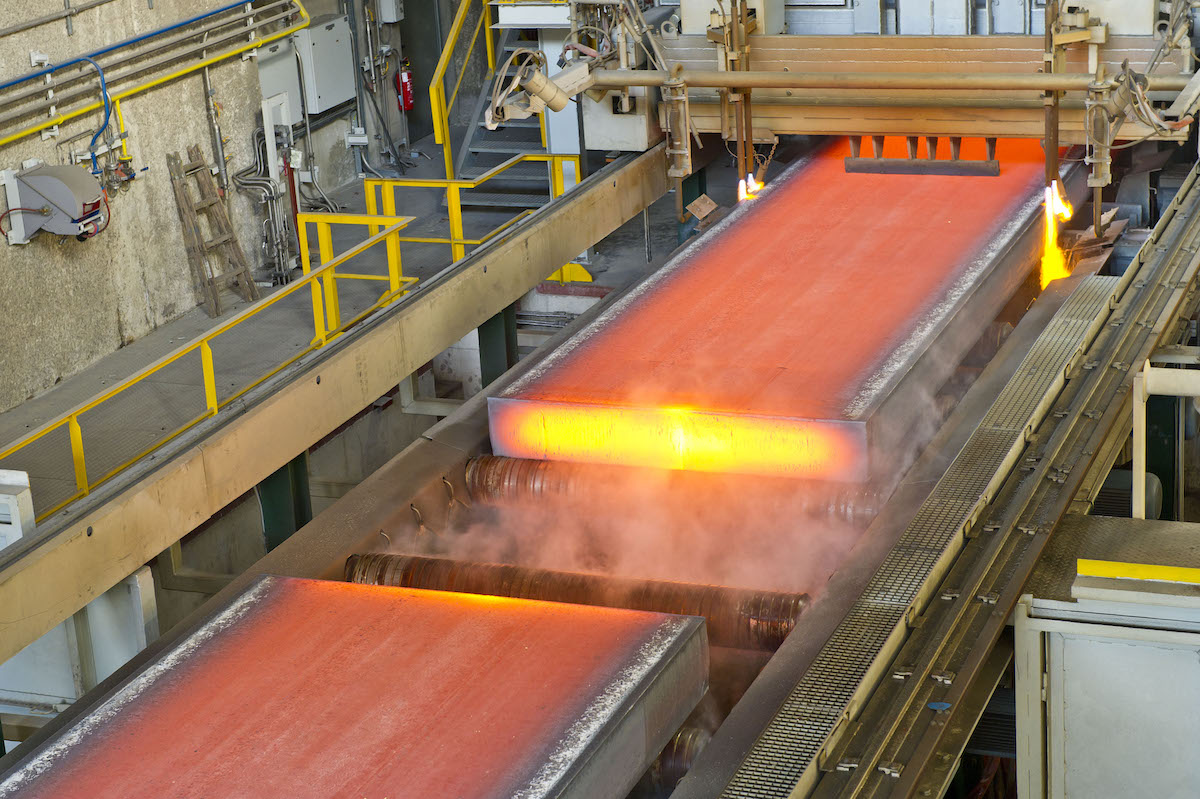
US steel, aluminum producers back Trump tariffs, but experts warn of negative impact
A new round of tariffs from the Trump administration has garnered support from US steel and aluminum producers, although the latter have cautioned about their reliance on imports, while some experts warned the duties could be troublesome for manufacturers and the broader economy.
US President Donald Trump is implementing new 25% tariffs on all steel and aluminum imports starting March 12, amid ongoing trade tensions with major suppliers, including the country’s top trading partners. While US steelmakers and aluminum producers were supportive of the tariffs, several supply chain experts said there could be negative impacts from the measures, from which there are no exclusions — unlike the now-delayed executive order that would have placed tariffs on goods from Canada and Mexico.
“Depending upon where the demand increases for steel, and the new trade alliances that are forming and will be formed due to the political and economic realignment taking place already, my sense is that producers and users of steel will see a negative impact due to the tariff,” said Sunderesh Heragu, president-elect of the Institute of Industrial and Systems Engineers.
The top importers of steel and aluminum to the US are Canada, Brazil, Mexico, South Korea and China, according to S&P Global Market Intelligence data. In 2018, during his first term in the White House, Trump imposed Section 232 tariffs of 25% on steel imports and 10% on aluminum imports but ultimately granted concessions to several large steel-exporting countries. Some world leaders are already hoping for the same with the new round of tariffs or are preparing retaliatory measures.
Previously, Trump announced a 10% tariff on imports from China and energy imports from Canada as well as 25% tariffs on other imports from Canada and Mexico. Those were set to begin on Feb. 3, but the tariffs on imports from Canada and Mexico were stalled following promises from both countries to enact policies related to drugs and illegal immigration.
Trump’s tariffs will likely add to the already bearish sentiment around the iron and steel sector, John Hamming, an associate director at ICAP, a markets operator and provider of post-trade risk mitigation and information services.
“Should Trump follow through, US domestic steel prices will go up as domestic producers will face less competition, whereas other steel-exporting countries like China, the EU and Canada may retaliate with their own trade barriers leading to a broader trade war affecting global steel supply and pricing structures negatively,” Hamming said. “Whatever the outcome, any effects are likely to take time depending on how long the tariffs will last and how other countries respond/retaliate.”
Aluminum industry seeks exemptions
The steel industry welcomed the news as they awaited the particulars of the tariffs.
A “robust and reinvigorated trade agenda” is needed to address market-distorting policies that leave US steelmakers at a disadvantage, said Kevin Dempsey, president and CEO of the trade organization American Iron and Steel Institute.
United Steelworkers International President David McCall also applauded the potential tariffs for their potential to curb imports but called for a more surgical policy approach as opposed to blanket tariffs.
“We must distinguish between trusted trade partners, like Canada, and those who are seeking to undercut our industries as they work to dominate the global market,” McCall said. “Canada is not the problem. Indeed, Canada has taken steps to coordinate their trade policies with the US to respond to unfair foreign trade, and applying across-the-board tariffs ultimately hurts workers on both sides of the border.”
The US steel imports accounted for about 22% of steel supply between 2019 and 2023, “with recent years more elevated than the average,” Martin Englert, a senior analyst with Seaport Research Partners, wrote in a Feb. 10 note.
“Given the potential for price increases, we have a positive bias toward steel and advise investors to watch fundamentals closely and consider increasing exposure to steel equities,” Englert wrote.
After Trump issued his initial executive order announcing 25% tariffs on Canadian and Mexican imports, the Aluminum Association immediately called for exemptions on aluminum imports. The US industry sources about two-thirds of its primary aluminum from Canada and about 90% of its scrap imports come from either Canada or Mexico, according to the association.
Charles Johnson, president and CEO of the Aluminum Association, again alluded to the US aluminum sector’s reliance on outside supply in a Feb. 10 statement on Trump’s latest tariff proposals.
“We look forward to reviewing the president’s action and appreciate his continued focus on strong trade actions to support the aluminum industry in the United States,” Johnson said. “President Trump has previously ensured the supply of input materials for domestic aluminum manufacturers, resulting in $10 billion in US industry investment since 2016.”
During a Feb. 10 earnings call, Devinder Ahuja, executive vice president and CFO of Virginia-based aluminum rolling and recycling company Novelis Inc., said there was not enough of the metal in the US and that the company’s shipments between Canada and the US deserved exemptions from tariffs on aluminum.
“Our historical experience is that we get [tariff] exemptions when we apply. So, we are pretty confident that while there will be some short-term noise around it; exemptions are granted in all the deserving cases,” Ahuja said.
Platts, part of S&P Global Commodity Insights, assessed the daily TSI US HRC index at $770/st on an ex-works basis Feb. 10, up $25 from Feb. 7.
This article was published by S&P Global Market Intelligence and not by S&P Global Ratings, which is a separately managed division of S&P Global.


EU could lose up to 3.7 mil mt of steel exports to US as it imposes blanket tariffs
The ramifications of the new US tariffs are alarming with the EU could lose up to 3.7 million mt of steel exports to the U.S. if all product exemptions and TRQs are now removed, Henrik Adam, Eurofer President said issuing a stark warning regarding the impact President Donald Trump’s decision to impose tariffs on all steel and aluminum imports.
The new US duties will be enforced “without exceptions or exemptions”, Trump declared on Feb. 10 and they are expecting to come into force after the beginning of March.
According to Eurofer President Henrik Adam the US government’s decision to impose a blanket 25% tariff on all steel imports represents a radical escalation in the trade war that began during his first previous administration. Adam emphasized that this move could worsen an already dire situation for European steel producers. The European Commission secured exemptions and negotiated a Tariff Rate Quota (TRQ) for EU steel imports; however, even with these measures, EU steel exports to the U.S. have decreased by over one million mt per year.

The U.S. is the second biggest export market for EU steel producers, representing 16% of the total EU steel exports in 2024. According to Eurofer aggregate data in 2018, the total exports from EU to US were approximately 3.276 million mt, which peaked at 3.352 million mt in 2022. However, by 2024 year-to-date, exports are projected to be around 2.688 million mt, indicating a decline.
“Losing a significant part of these exports cannot be compensated by EU exports to other markets. Additionally, this move risks causing new, significant trade flow deviations. In 2024, the US imported about 23 million mt of steel products from third countries other than the EU. These volumes are now likely to be massively diverted into the European market.”
During the past safeguard period, the global steel market saw excess capacity increasing by nearly 50 million mt, from 514 million mt in 2019 up to close to 560 million mt in 2023. This volume is four times the total steel demand of the EU. Furthermore, according to the OECD, approximately 158 million mt of new capacity is potentially coming on stream until 2026, while steel demand is currently growing by only around 36 million mt/y. As opposed, the European steel industry has already closed 9 million mt of capacity in 2024, resulting in over 18,000 job losses.
Adam’s statement underscores the urgent need for decisive action from the EU to safeguard the European steel industry. Key measures expected from the EU include a revision of the current safeguard regime and the implementation of a comprehensive tariffication system to address the worsening market conditions.
Without immediate action, the EU steel industry risks further capacity idling and potential closures, exacerbating the challenges posed by the US tariffs.
EC reactions
In the main time, European Commission President Ursula von der Leyen on Tuesday vowed “firm and proportionate countermeasures” in response to Trump’s tariffs on all steel and aluminum imports.
Von der Leyen said in a statement that she deeply regretted the U.S. decision, adding tariffs were taxes that were bad for business and worse for consumers.
“Trump said the new duties are meant to crack down on the efforts of countries like Russia and China to circumvent existing duties, bolster domestic production, and bring more jobs back to the US. However, previous tariffs did not lead to increased domestic aluminum production,” ING Commodities Strategist, Ewa Manthey, and Head of Commodities Strategy, Warren Patterson comment on US President Donald Trump’s announcement underling how in 2024, the output of the US steel industry was 1% lower than it had been in 2017 before the introduction of the first round of tariffs by Trump, while the aluminum industry produced almost 10% less.
“Tariffs would result in higher aluminum prices in the US, representing a significant upside risk to the US Midwest premium this year. However, the effects on LME prices will be minimal. US tariffs previously had little impact on LME prices. Tariffs also risk demand destruction in the US as the extra costs would most likely be passed on to end consumers. The prospect of a global trade war is bearish for the LME aluminum price. Tariffs are bearish for industrial metals in terms of slowing global growth and keeping inflation higher for longer,” they said echoing also other analysts.
The Platts US aluminum Transaction premium hit a fresh nearly two-year high of 29 cents/lb plus LME cash, delivered Midwest, on Feb. 10, as uncertainty around the timing of imminent US tariffs on aluminum from all countries paralyzed trading. That is up from 28.15 cents/lb previously.
According to Platts, part of S&P Global Commodity Insights, the Platts US Hot-rolled coil price has seen a similar trajectory. Since Trump started to talk about tariffs after opening the year at $690/mt on Jan. 2, prices registered a stronger recovery of $60 to Feb. 7 to $750/mt and up by a further $25/mt since the proper announcement closing at $775/mt on Feb.10.
European hot-rolled prices ex-works Ruhr have gradually increased since the outset of 2025, as mills have issued higher offers, despite downstream demand fundamentals remaining largely weaker. Platts assessed the HRC ex-works Ruhr price at Eur592.50/mt on Feb. 10, an increase of Eur32.50 from Jan. 2.
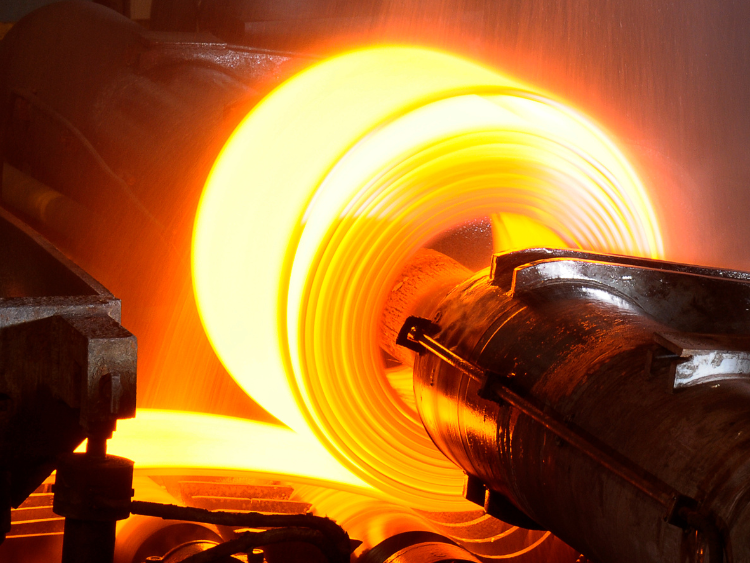
EU domestic HRC prices increase, industry reacts to US tariffs
European domestic hot-rolled coil prices inched higher on Feb. 11, as market participants continued to report higher mill offer levels and discuss the ramifications of the new tariffs on US steel and aluminum imports.
“The last time Trump was President he did this, but then some countries ended up on a quota, so let’s see what will happen,” said one service center source. “Market activity is ok, we are seeing some changes, but many are still waiting, perhaps expecting prices to go up.”
Other sources continued to offer bullish expectations for domestic HRC prices in North Europe, citing higher mill offers for Q2 at as high as Eur660/mt ex-works Ruhr. However, they highlighted some resistance to price increases from mid-stream buyers and the potential for greater European supply due to the new tariffs.
Eurofer described the new tariffs as a “radical escalation of the trade war” that, “will worsen the situation of the European steel industry,” in a press release on Feb. 11.
A second service center source said, “We will see more protectionism from the US and we need to protect ourselves, as Europe and Germany especially have always been a big exporter to the US, at the moment we have to react day by day.”
Talking about wider market dynamics, the same source said, “The lead times for all the mills I have spoken to now extending to April, so there is not much pressure to drop prices, but visibility into Q2 still is not great, and real utilization remains a problem.”
Discussing imports, one source referred to limited interest due to the increased “risk for more taxes and duties.”
A distributor also referred to wider buyer hesitancy in the Italian market due to, “regulatory uncertainty”, and limited interest in imports until the European Commission finalizes the steel safeguards review.
Platts assessed the North European domestic HRC price at Eur595/mt ex-works Ruhr, up Eur2.50 on the day, and the South European domestic HRC price at Eur590/mt ex-works Italy, up by Eur5 on the day.
Platts assessed imported HRC prices in Northwest Europe at Eur545/mt CIF Antwerp and Southern Europe at Eur545/mt CIF Italy, both flat on the day.
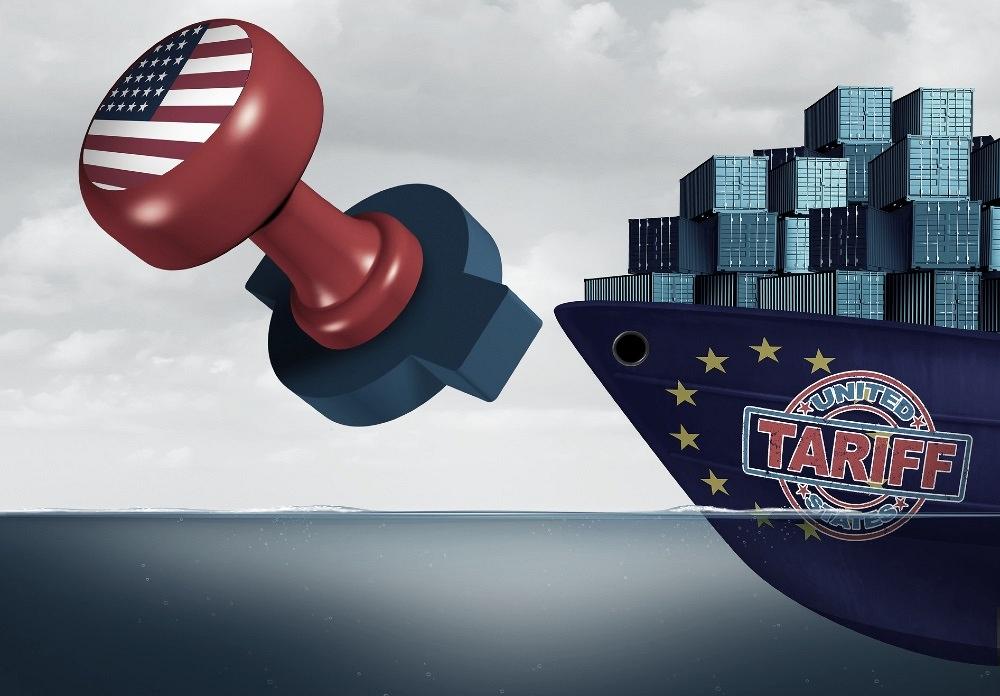
EU, UK respond strongly to US plan to reinstate 25% steel import tariff
On February 10, Trump’s administration announced a decision to impose tariffs on steel imports at a rate of 25%, as was first done in 2018, during Trump’s first term as US president. This would eliminate previous exemptions and tariff-rate quotas for the EU and UK, with the new tariff rate to take effect on March 12.
The US tried to justify the higher tariff by citing rising steel import volumes from the EU and UK, whose share of the US import sector increased to 20.7% in 2024 from 18.6% in 2020.
The US also expressed concerns that alternative trade agreements signed in 2021-22 have failed to address global overcapacity, particularly in China, and have allowed unfairly priced steel to enter the US market through regions such as the EU and the UK. These trade agreements were intended to replace the original 25% tariffs under the US Section 232 trade regulations, with a tariff rate-quota system.
European Commission President Ursula von der Leyen has condemned the US tariff decision, warning that the bloc will respond with “firm and proportionate counter-measures.”
“I deeply regret the US decision to impose tariffs on European steel and aluminium exports,” she said on February 11. “Tariffs are taxes – bad for business, worse for consumers… The EU will act to safeguard its economic interests. We will protect our workers, businesses and consumers.”
The UK steel sector also responded with deep concern, emphasizing the economic damage that could result from the US move. The UK exports around 200,000 tonnes per year of steel to the US, worth more than £400 million ($495 million), and the 25% tariff could severely disrupt that trade flow.
The director-general of industry body UK Steel, Gareth Stace, said that the US action would stifle UK exports and damage the UK’s balance of trade, at a time when global protectionism was on the rise.
“The US is our second-largest export market after the EU, and this move threatens more than £400 million of steel exports [each year],” Stace said. He added that the UK’s high-quality steel products were essential to key US sectors such as defense and aerospace.
Concerns about trade diversion
The imposition of US tariffs at the new higher rates was expected to lead to trade diversion, with steel products flooding toward other markets, including the UK, undermining local steelmakers and distorting competition.
The UK steel industry was especially worried about the scheduled expiration of Steel Safeguard measures in 2026, which have shielded the UK from a surge in cheap imports.
“The UK must act decisively to protect our domestic industry from the fallout of rising global protectionism,” Stace said. He called for an acceleration of the adoption of the UK Carbon Border Adjustment Mechanism (CBAM) to 2026, to provide further protection against unfairly priced steel imports.
European steel association Eurofer expressed similar concerns. “In 2024, the US imported about 23 million tonnes of steel products from third countries other than the EU. These volumes are now likely to be massively diverted into the European market,” Eurofer said on February 11.
The US tariffs will probably lead to greater global trade imbalances, with steel that would have been shipped to the US going instead to European markets. The EU was already contending with cheap steel imports, primarily from Asia, North Africa and the Middle East, and the US decision could exacerbate this situation, further damaging the European steel sector.
At the same time, however, some market sources suggested that the European steel market was better protected against imports from third countries, on account of the steel safeguard measures that were currently under review.
“It’s not 2018 [when import tariffs on steel under Section 232 were first introduced]. And in April, steel safeguards [in the EU] will be even tougher, so I don’t think we need to worry about trade diversion,” a steel service center in Germany said.
The EU’s existing steel safeguard measures were first implemented in 2018 as a response to the unilateral US decision to impose import tariffs of 25% on steel and 10% on aluminium from Canada, Mexico and the EU.
The EU’s measures have been extended several times, and were currently subject to a review that was expected to be concluded by March 31, with any adjustments to the current measures to come into force the following month.
Other market sources, however, expressed concern about the potential wider effects of tariffs and their possible extension to downstream sectors.
“For example,” a mill source said, “if China delivers components for wind towers to the US, those products are subject to duty, because those towers are made of heavy plate, which is subject to duty in the US. If tariffs were to be extended to downstream steel products, there might be more serious consequences for the EU economy.”
Eurofer’s response
The US decision has drawn sharp criticism from Eurofer president Dr Henrik Adam, who called it a “radical escalation” of a trade conflict that was initially sparked under the previous Trump administration.
Adam warned that the new tariffs would have a devastating effect on the European steel industry, potentially leading to the loss of as much as 3.7 million tonnes per year of steel exports to the US. This would have significant consequences for an industry that was already struggling with low demand and rising global steel overcapacity.
“The US is the second-largest export market for EU steel producers, representing 16% of total EU steel exports in 2024,” Adam said on February 11. “Losing such a significant portion of exports cannot be compensated by other markets.”
Total iron and steel exports from the EU in January-November 2024 amounted to 15.88 million tonnes, according to Global Trade Tracker (GTT). Of that amount, deliveries to the US totalled 3.6 million tonnes.
European steel already in crisis
The EU steel industry was already in crisis, having been forced to close 9 million tpy of capacity in 2024, while also announcing 18,000 job cuts.
The effect of the new tariffs would further strain an industry that was already dealing with reduced margins, falling demand and rising costs.
Adam emphasized that the new tariffs would only accelerate the decline of European steel production, potentially leading to the closure of even more steel mills in the foreseeable future.
“The EU safeguard regime needs urgent revision to address these new challenges,” Adam said. “Without tightening the current quota system, the deflection caused by these tariffs will push EU steel capacity into further idling, and ultimately to closures.”
Both the UK and the EU were now pushing for stronger trade protections and immediate negotiations with the US to minimize the effects on their steel industries. EU leaders were prepared to use counter-measures, and the UK government was under pressure to shield its market from the unwelcome results of the new tariffs.


Eurofer calls for revised safeguards amid Trump tariffs
European steelmakers’ association Eurofer says it is expecting the EU to urgently revise the existing safeguard regime in response to recently announced tariffs by the US on steel imports, Kallanish notes.
The association expects “the revision of the current EU safeguard regime with impactful measures as a matter of urgency to reflect the dramatic market and trade conditions,” Eurofer president Henrik Adam notes.
Earlier on Tuesday, European Commission President Ursula von der Leyen said the unjustified tariffs will trigger “firm and proportionate countermeasures”.
The Eurofer statement says the safeguards set up in 2018 in response to Section 232 have lost their effectiveness in the years since due to the increase of quotas despite decreasing demand. This has allowed imports to gain significant market share.
It is also calling for the continuation of a comprehensive tariffication system as an absolute necessity, due to the current EU safeguards ending in June 2026. Global steel excess capacity is meanwhile worsening and steel protectionism is increasing worldwide.
“Without an immediate tightening of the current safeguard quota regime, the deflection provoked by the new US steel tariffs will inevitably push EU steel capacity into additional idling and, ultimately, closure,” says Adam.
Eurofer notes that in 2024 alone, the EU steel industry closed 9 million tonnes/year of capacity.
“The Executive Order by President Trump will inevitably further exacerbate the situation,” Adam adds.
Under the current implementation of Section 232 tariffs, European steel producers have had exemptions and the European Commission negotiated a tariff rate quota (TRQ). Despite exemptions and the TRQ, EU-origin steel imports into the US decreased by over 1 million tonnes/year, Eurofer says.
If all product exemptions and TRQs are now removed, the EU could lose up to 3.7m t/y of steel exports to the US. The US is the second-largest export market for EU steel producers, representing 16% of total EU steel exports in 2024.
The association adds this could risk significant trade flow deviations, with volumes usually sent to the US now likely to be massively diverted into the European market.
“Already today, global steel overcapacity is being off-loaded massively on the vulnerable EU steel market at very cheap prices, mainly from Asia, North Africa and the Middle East. This is leading to the inability to invest in the green transition and ultimately de-industrialisation of Europe,” the association concludes.
Carrie Bone UK

EU plans ‘firm’ countermeasures following US agreement termination
The US imposition of blanket 25% steel import tariffs will also involve the termination effective 12 March of exemption and duty-free quota agreements with trading partners such as Brazil and the EU. The latter says it plans to implement “firm” countermeasures.
The temporary duty exemption for Ukraine will also be terminated from 12 March, Kallanish notes.
The tariffs were announced officially late on Monday.
In a statement, the White House says the “benefits of this temporary [Ukraine] exemption have accrued primarily to producers in EU member countries, which have significantly increased duty-free exports to the US market of steel articles processed from Ukrainian semi-finished steel.”
Since 2021, imports from Ukraine have remained steady at 0.5% of total US imports, while imports from the EU have increased to 14.8%, it adds.
Ukraine has seen its two largest steelworks, Azovstal and Ilyich, taken out of action due to Russia’s invasion. To compensate, main domestic steelmaker Metinvest has been rolling semi-finished steel at its EU facilities in Italy and Bulgaria.
European Commission President Ursula von der Leyen responded by saying she “deeply regrets” the US tariff imposition. “Unjustified tariffs on the EU will not go unanswered – they will trigger firm and proportionate countermeasures,” she notes. “The EU will act to safeguard its economic interests. We will protect our workers, businesses and consumers.”
European steelmakers’ association Eurofer meanwhile says the EU could lose up to 3.7 million tonnes of steel exports to the US as a result of exemptions and quotas being removed (see separate story). Despite these exemptions, EU steel imports into the US decreased by over 1m t/year, the association adds.
The EU exported 3.413mt of HS chapter 72 iron and steel products – which include scrap – to the US in January-November 2024, exceeding the full-year 2023 total of 3.399mt, according to Eurostat. Except for the Covid and Covid rebound years of 2020 and 2021, annual shipments since 2019 have hovered at around 3.4mt and saw no significant impact from the duty free quota agreement, effective 1 January 2022.
Downstream steel derivative products, except those processed from steel articles that were melted and poured in the US, will also be subject to a 25% import duty in the US. For any derivative article not under chapter 73, the duty will apply only to the steel content of the article. The importer must provide customs with any information necessary to identify the steel content used.
Imports of products such as fabricated structural steel and prestressed concrete strand have increased significantly, eroding the US domestic industry’s customer base, the White House notice claims.
Adam Smith Poland