


EU steelmakers eye 2018 to determine US tariffs’ impact
Revisions to the European Commission’s import safeguard measures may result in stricter controls than previously anticipated after President Trump pledged to impose 25% duties on US steel imports.
The United States’ new measures – to be introduced on March 12 – effectively removes any free-trade agreements, exemptions and product exclusions that were applied to Section 232’s tariffs following their introduction in 2018. The Commission will be under increased pressure to defend the European steel industry amid an expectation that additional low-cost material will be redirected from the US.
European Steel Association (Eurofer) president, Dr Henrik Adam, said that around 3.7 million tonnes of EU steel exports would be affected by the new tariffs, along with 23m tonnes of material shipped to the US from other countries. Dr Adam has stated that the EU steel sector can neither afford to lose export sales at a time of such weak domestic demand or absorb an increased volume of imports. “In 2024 alone, the EU steel industry had to close nine million tonnes of capacity with over 18,000 job cuts announced”, he said, adding: “The Executive Order by President Trump will inevitably further exacerbate the situation.”
Defending the EU steel industry’s profitability
Eurofer wants the European Commission to tighten import quotas and extend its current safeguard measures beyond their current July 2026 expiry date.
If it fails to act, any resulting decline in steel prices would harm a European steel industry already suffering the effects of tight profit margins. During February, MEPS respondents across the region expressed concerns about potential business failures in 2025. The low end of MEPS Europe Average hot rolled coil price rose by EUR20 per tonne during February. However, this was the result of increased input costs, and most suppliers were unable to pass on its full value to end-users.
Market participants are divided on the potential imposition of tighter EU import controls. Many rerollers and distributors currently rely on low-cost Asian material to achieve profit margins. These margins have already been eroded by the market’s current low prices and the strength of the US dollar against the euro and pound.
Attempts to assess tariffs’ effect
Many steel buyers are looking back to 2018 to assess the possible effect of the US’s new 25% tariffs. US Section 232’s full influence was felt between its March implementation and the Covid-19 pandemic. Total EU-origin steel imports to the US rose by 1.2% to 4.73m tonnes in 2018, before falling by 17.9% (to 3.89m) in 2019. In Covid-19 affected 2020, US steel imports from the EU fell by a further 35.3%, to 2.52m tonnes.
As steel-consuming sectors sought to meet pent-up demand, however, President Joe Biden agreed to replace 25% tariffs on EU steel with a new tariff rate quota system. EU steel imports into the US rose again, subsequently, exceeding four million tonnes in 2022. Nonetheless, US steel imports from the EU remained 13.8% down in the 2022-2024 period, when compared with pre-tariff 2015-2017.
Now President Trump is seizing the opportunity to fully realise his earlier ambition of restricting steel imports. Germany, Europe’s largest steel producer (up 5.2% to 37.2m tonnes in 2024), stands to lose out most. In recent months, MEPS respondents in the EU have reported German suppliers’ increased activity across the region. This is a result of weak demand in the country’s domestic market. Similarly, German exports to the US rose by 2.8% in 2024 – reaching 974,178 tonnes.
Steelmakers in Germany and the wider EU region are now awaiting the outcome, not only of revisions to the bloc’s own safeguard measures, but developments across the Atlantic.

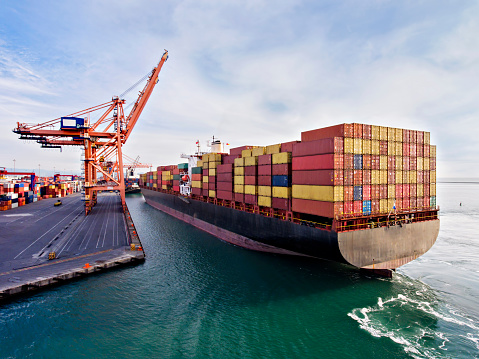
Steelinvest and Delong Steel Group announce joint venture
Belgium trading house Steelinvest Group and Chinese steel producer Delong Steel Group announced a new joint venture company Ziming SG Global in a press release Feb. 19.
Ziming SG Global, based in Dubai, UAE will market and sell steel produced by Delong’s mills, focusing on the export of the Chinese mill group’s products including flat steel, long steel, slabs and billets.
Delong Group has a combined capacity of approximately 30 million mt/year across 11 steel mills, five of which are integrated.
“We shall focus on markets where Chinese steel is welcomed, we shall sell where we can,” said Fred Hayrapet, Managing Director of Ziming SG Global.
“Whilst we are cognitive of the headwinds currently in the international steel markets, I’m sure you are aware of the volume of exports from China last year even while very similar barriers existed.”
China’s exports of semi-finished and finished steel in 2024 hit an all-time high at 117.055 million mt, up 25.1%, or 23.511 million mt, year over year, according to Chinese customs data.
The announcement highlighted that Delong Steel Group ranked 11th in the list of top steel producers for 2023, according to the Worldsteel Association, with an output of 28.26 million mt.
Although China’s domestic steel demand remains mixed, there was a notable uptick in imports of Chinese steel in several locations, with the UAE and Saudi Arabia increasing their inflows by 48% and 42.1%, respectively, according to the CEIC.

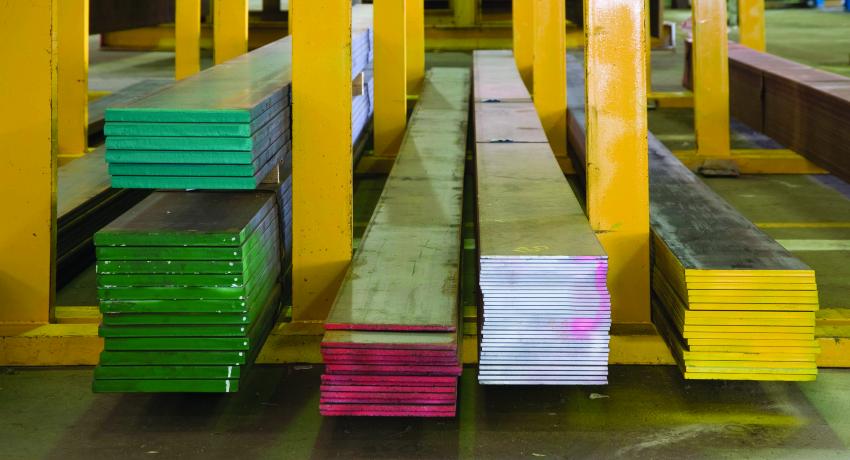
European long steel market stable as buyers return; mills eye higher prices
The European domestic long steel market remained largely steady Feb. 19, as mills continued their attempts to raise prices on higher production costs, while demand showed early signs of improvement.
“When you’re at rock bottom, buyers start placing orders,” said a mill source, noting that while activity had increased in the past 10 days, large-volume transactions remained scarce. Market participants remained in a “wait-and-see” mode, with expectations that real demand would pick up in March.
A trader reported rebar prices in Northwest Europe in the range of Eur625-630/mt delivered Benelux, slightly higher than previous levels, as buyers slowly returned to the market. A mill source confirmed tradable values for rebar at Eur560-570/mt FCA Northwest Europe.
In Southern Europe, the Italian rebar market remained weak despite efforts to raise prices. A distributor reported tradable values at Eur590-595/mt ex-works Italy, while a producer noted that demand remained subdued. Rising raw material costs, particularly for scrap, were expected to exert further upward pressure on prices by late February or early March.
The medium sections market followed a similar pattern, with tradable values reported at Eur735-745/mt ex-works Italy. A distributor reported tradable values for Category 1 sections at Eur790-810/mt delivered Italy. Despite seasonal slowdowns, sources anticipated price increases due to higher production costs, though actual demand remained average.
Concerns over the impact of potential US trade policy shifts and the EU’s Carbon Border Adjustment Mechanism continued to circulate. However, sources downplayed the immediate effects, as EU exports to the US remain limited.
Platts assessed rebar at Eur600/mt ex-works Northwest Europe, stable over the week, while medium sections were assessed at Eur790/mt delivered, also stable over the week.

European HRC price recovery continues, mills push for further increases
The current price recovery was driven mainly by the limited import availability due to the potential trade risks related to the latest steel safeguard review of the European Commission, Fastmarkets understands.
According to market participants, prices were also supported by some restocking, particularly in Northern Europe.
Mills in Germany were largely sold out of April-delivery material, a German distributor source told Fastmarkets, with local mills are now offering May-delivery HRC at €630-650 per tonne delivered – which would net back to €620-640 ($648-669) per tonne ex-works.
According to the source, the mills are unwilling to give significant discounts.
In comparison, at the beginning of February, German mills were heard offering HRC at €600-610 per tonne ex-works.
A major mill in the Benelux area was offering HRC at €630-640 per tonne ex-works on Wednesday, Fastmarkets understands.
And sources estimated the workable level for HRC in Northern Europe at €600-620 per tonne ex-works.
One buyer source said €590 per tonne ex-works would also be workable for larger volumes.
Fastmarkets calculated its daily steel hot-rolled coil index domestic, exw Northern Europe at €608.75 per tonne on Wednesday, up by €2.75 per tonne from €606.00 per tonne on Tuesday.
The Northern European index was up by €6.25 per tonne week on week and by €35.00 per tonne month on month.
Sources said the upward trend would continue, especially until the European Commission announces the results of the current steel safeguard review. This is expected to happen by the end of March, with the new rules expected to come into force some time in April.
However, a major European steel maker was heard withdrawing their HRC offers from the market due to expectations that the results of the review would be announced sooner.
Some sources said they expect a statement on the new measures next week, while others said it was likely to come at the beginning of March – or no later than the middle of March.
For Southern Europe, Fastmarkets’ daily steel hot-rolled coil index domestic, exw Italy was calculated at €600.00 per tonne on Wednesday, up by €2.50 per tonne from €597.50 per tonne on Tuesday.
The index was up by €6.67 per tonne week on week and up by €30.00 per tonne month on month.
Local suppliers in Italy were heard offering April-delivery HRC at €620-640 per tonne delivered, which would equate to €610-630 per tonne ex-works.
These levels were higher than the offers for March-delivery coil at €590-620 per tonne delivered (€580-610 per tonne ex-works).
Fastmarkets’ sources estimated the workable level for HRC in Southern Europe at €590-600 per tonne ex-works.
A source in Italy told Fastmarkets that trading in the Italian market remained comparatively slow, due to a mismatch between buyer and seller views about the workable price.
Italian customers have maintained sufficient stock levels and are in no hurry to buy material at the current prices, Fastmarkets understands, with most of them content to wait and see how the steel safeguard review develops.
The HRC import market was also quiet in Italy on Wednesday.
HRC from Turkey was on offer at €580-590 per tonne CFR, including the anti-dumping duty, sources said, while Indonesian HRC was on offer at €550 per tonne CFR and HRC from South Korea at €560 per tonne CFR.


European heavy plate prices steady, supported by uptick in buying
Italy
Trading in the Italian market started to pick up over the past week, in contrast to the low levels seen through January.
“Buyers are booking March-rolling plate and order books are slowly filling up,” a supplier told Fastmarkets.
And a second supplier said: “Everyone is finally [accepting] that there is no point postponing [plate] bookings – prices are not going to drop.”
Offers for s275 heavy plate were reported by buyers and sellers at €660-670 ($690-701) per tonne ex-works.
Sources put the tradable leval at around €640-650 per tonne ex-works on Wednesday.
Buyers were less optimistic, and said that while activity has improved compared with “complete nil” in January, overall demand is not booming.
“Mills have great expectations about safeguards updates [to the safeguard measures review and potential quota cuts] and therefore expect lower import availability in the second quarter,” one buyer source said.
Bids from stockholders for tonnages above 1,500 tonnes came in at €630-640 per tonne ex-works, sources said.
And Fastmarkets’ weekly price assessment for steel domestic plate 8-40mm, exw Southern Europe remained unchanged at €640-650 per tonne on Wednesday.
A review of European safeguard measures is expected to come into force in April, with tougher measures widely expected, which was tempering buying interest in overseas material, sources said.
Offers of April shipment plate to Italy from South Korea and Indonesia were heard at €580-590 per tonne CFR in the week to Wednesday.
Northern Europe
In Northern Europe, meanwhile, trading in the spot market also started to pick up slightly, although the overall traded volumes remained low, sources said.
“There has been some limited restocking and we have seen more activity [than in] January,” a mill source said.
One German producer, which traditionally focuses on project business, was offering heavy steel plate with lead times of around six weeks at €750-790 per tonne ex-works. But this level was not considered workable for the spot market.
A second German supplier kept its offer price for steel plate at €690-730 per tonne from one location on Wednesday, and at €680-700 from another – both unchanged week on week.
Buyer estimates of the workable level came in at €680-700 per tonne ex-works in the week to Wednesday.
Fastmarkets’ weekly price assessment for steel domestic plate 8-40 mm, exw Northern Europe was unchanged at €680-700 per tonne on Wednesday.

Asonext invests to enhance capacity, quality
Italian stainless steel producer Asonext is investing in its facility in Brescia, aiming for an increase in output and an upgrade in product quality by modernising its 40-tonne argon-oxygen decarburisation (AOD) converter.
Primetals executed the project, overseeing the engineering, mechanical equipment supply, and supervising the construction and implementation phases.
“We are targeting the supply of special stainless steel grades and alloys for highly demanding applications, which requires a specific production process with the AOD converter. Thanks to this converter upgrade, we will be able to meet current and future market demands. Additionally, we are targeting a production increase over the mid- to long-term,” Asonext chief operating officer Federico Curreli says in a note obtained by Kallanish.
Primetals has developed a new, bigger vessel geometry with a 30% increase in inner volume. This enhancement improves vessel lining function and boosts reaction volume. The new strengthened top cone increases equipment life and simplifies maintenance for service technicians.
In the first quarter, Primetals will supply metallurgical consultancy services to improve the newly adopted converter’s production process. As a result of the renovation, Asonext will be able to produce 50,000 tonnes/year of special stainless steel.
Natalia Capra France


Spanish auto industry remains weak despite January recovery
The Spanish automotive sector increased both production and exports sequentially in January, Kallanish notes. Performance, however, remained weaker compared to the beginning of 2023.
“January began with the same downward trend that marked the end of 2024,” comments national automotive association Nacional de Fabricantes de Automóviles y Camiones (Anfac) president José López-Tafall. “While this is partly due to factory adjustments, including changes in work shifts and new model rollouts, we cannot overlook the overall decline in the sector at a critical moment for our industry.”
He emphasises the urgent need to stimulate demand, not just in Spain but across Europe, to safeguard competitiveness. “We must align all stakeholders, establish a short-term action plan, and develop a long-term sustainable strategy to ensure the industry’s competitiveness and drive innovation in electric vehicles, the only true growth driver for the sector,” he adds.
Production in January reached 168,076 units, compared with 139,203 vehicles in December. This volume, however, was down 27.2% on the same month in 2024. Of the total, 61.8% were gasoline and diesel-powered automobiles.
Spanish vehicle exports grew in December. Shipments were 145,170 units, up from 134,813 units in the previous month but 28% down compared to a year ago.
European markets had a 92.2% share in Spanish deliveries in January, 0.9 percentage points less on-month but 1 p.p. higher year-on-year, Anfac data show.
Todor Kirkov Bulgaria

Hydnum Steel joined as Associate Member of EUROMETAL
EUROMETAL is delighted to welcome Hydnum Steel as a new Associate Member company.
Located in Puertollano (Spain), Hydnum Steel is the first green steel plant on the Iberian Peninsula and one of the first to be built worldwide. Its CO₂-free process is based on the use of renewable energy and green hydrogen.
With a production capacity set to reach 2.8 million tons of flat steel annually, the plant will be fully digitalized and will be a pioneer in the regeneration and reuse of urban and industrial waste water, becoming a model of water sustainability.
Hydnum Steel has been declared a Priority Project by the Government of Castilla-La Mancha and recognized by the World Economic Forum as one of the five most innovative projects globally in the race to decarbonize steel production.
Discover the path to green steel > hydnumsteel.com