


UK steelmakers seek greater import protection
UK steelmakers are concerned about potential trade diversion from the US and EU and are pushing for rapid measures to curb imports, sources suggest.
The US is imposing 25pc tariffs on 12 March, while the EU steel safeguard review is expected to meaningfully reduce import volumes. As a result, UK Steel, which represents mills, told Argus current import quotas have been “liberalised year after year when UK steel demand has been shrinking, so there is real concern that the protection offered is not adequate”.
“We are reviewing options for tightening our current safeguards and working on a proposal to government for continued protection from trade diversion following the eventual expiry of steel safeguards,” it added.
One of the potential options could be a blanket tariff on all imports, outside of hot-rolled coil (HRC) for downstream processing. This could be the quickest and most viable solution to the threat of diversion, given the time it can take to adjust quota volumes, according to some sell-side sources.
Atypical HRC suppliers have started offering into the UK recently, potentially because of the uncertainty surrounding the EU safeguard review and the ongoing dumping investigation against Egypt, Japan, India and Vietnam. Japanese HRC has recently been offered at about £500/t ddp West Midlands, when it is not typically seen in the market. Korean HRC has also been offered. Korean cold-rolled coil, and hot-dip galvanised in particular, have been offered at aggressive prices for a number of months.
“This government will not allow the end of steelmaking in the UK, which is why we’ve committed up to £2.5bn of investment to rebuild the industry, while our plant for steel consultation will examine the long-term issues facing the industry,” a Department for Business and Trade spokesperson said.
The business secretary and industry minister continue to meet with the industry to “secure a green steel transition that’s right for the workforce”, the spokesperson added. Any blanket tariff could be justified on the grounds of national security or decarbonisation, sources suggest. In the case of the latter, it is not clear how less pollutant steel should be handled, or how you classify material rolled from blast furnace-based semi-finished steel in other regions.

Source: argusmedia.com
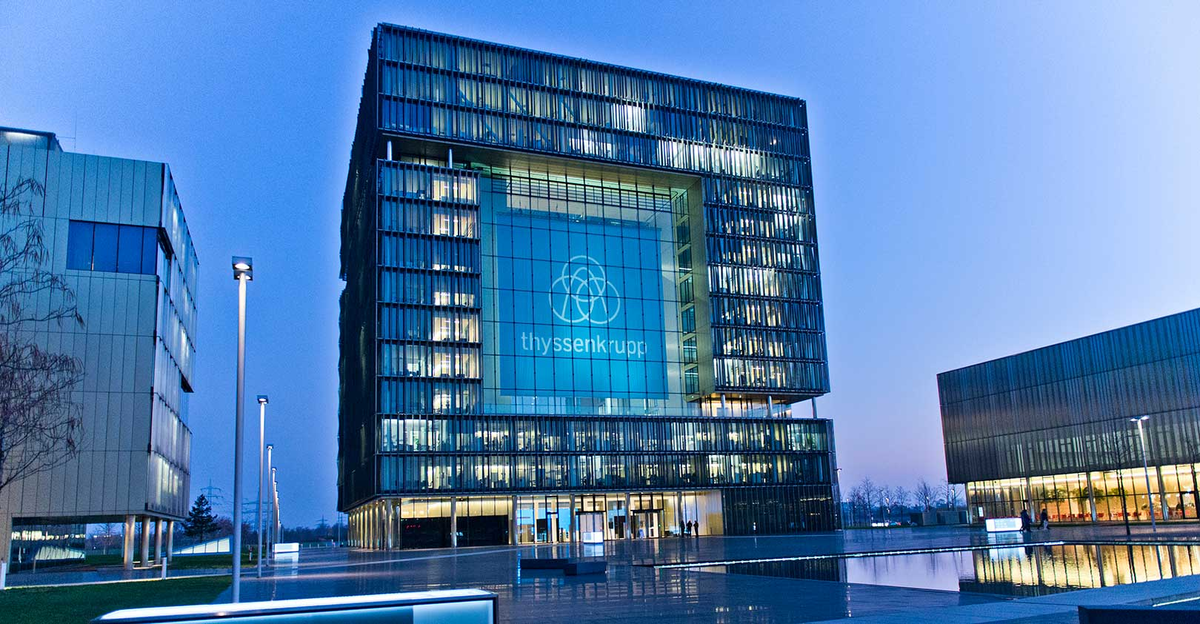
Thyssenkrupp Steel pauses German green hydrogen tender on high prices
German steel producer Thyssenkrupp has put its tender to buy green hydrogen for its Duisburg direct reduction iron plant on hold, as early price indications from bidders are “significantly higher” than the company expected.
Thyssenkrupp Steel launched the tender in February 2024 to purchase up to 151,000 mt/year of renewable and low-carbon hydrogen under 10-year contracts for pipeline delivery to its Duisburg steelworks in Germany, but higher-than-expected prices and slow market development have forced the company to reconsider.
“Our tender for hydrogen procurement is currently on hold because it is becoming clear that the offered prices will be significantly higher than assumed and that other framework parameters of the hydrogen economy, which is developing more slowly than expected, will change considerably,” Thyssenkrupp Steel told Platts, part of S&P Global Commodity Insights, by email March 24.
Platts assessed the cost of green hydrogen production via alkaline electrolysis in Germany, backed by renewable power purchase agreements, at Eur9.35/kg ($10.18/kg) on March 21, down from a peak of over Eur14.50/kg in mid-December.
The assessment reflects one possible pathway for producing EU Renewable Energy Directive-compliant green hydrogen.
“We will continue to use hydrogen as soon as it is technically and economically feasible and possible to do so.”
The company said the development did not affect its plans to construct the DRI plant.
“The construction and operation of the direct reduction plant in Duisburg are not directly affected by these issues because the plant can also be operated with natural gas,” a spokesperson said.
The company said that natural gas-fed DRI would avoid 50% of the CO2 emissions of conventional blast furnace operations.

Green hydrogen delays
Thyssenkrupp originally planned to use natural gas when the DRI plant is commissioned, as sufficient green hydrogen would not be available, with blue hydrogen acting as a bridge before renewable production ramps up.
However, the rollout of the green hydrogen economy in Europe has been pushed back multiple times as developers grapple with first-of-a-kind projects and a lack of existing infrastructure for the renewable energy carrier.
German gas grid operator Gascade is using conventional fossil-derived “gray” hydrogen to fill the first section of its “Flow – Making hydrogen happen” pipeline network under construction, the company told Platts.
Thyssenkrupp will discuss the insights from its tender regarding prices, quantities and conditions with the tender funding agency, the German government and the European Commission, it said.
“We will then intensify our efforts on the procurement concept and contact with suppliers” to take into account possible delays in the hydrogen ramp-up, Thyssenkrupp said.
The steelmaker had originally envisaged ordering 104,000 mt of hydrogen in 2028, rising to 143,000 mt/year over 2029-35 before reaching 151,000 mt/year over 2036-37 as it seeks to decarbonize the plant.
The tendered volumes were to meet the EU’s Renewable Energy Directive requirements for renewable hydrogen and low-carbon hydrogen under current provisions on CO2 emissions reductions.
The company planned to connect its Duisburg steel plant to Germany’s national hydrogen pipeline network at an early stage. The first sections of the national pipeline are under construction.
Thyssenkrupp is to construct a 2.5 million mt/year DRI plant to replace the four blast furnaces at Duisburg, with the first production to start from the end of 2026.
The DRI plant could avoid 3.5 million mt/year of CO2 emissions, Thyssenkrupp said previously. The company aims to complete a transition to carbon-neutral steel production by 2045 at the latest.
German steel decarbonization
The steel industry is one of the most effective applications of clean hydrogen for deep decarbonization.
The EU is targeting 10 million mt/year of domestic green hydrogen production by 2030, which could decarbonize 11% of global steel demand, according to S&P Global Commodity Insights analysts, saving 340 million mt/year of CO2 emissions.
Several other steel companies in Germany have launched tenders to buy green hydrogen volumes to decarbonize operations.
Salzgitter opened a tender to source up to 120,000 mt/year of green hydrogen for its Salcos low-carbon steel production in June, seeking supplies from 2027, subject to connection to the planned German hydrogen pipeline network.
And Stahl-Holding-Saar launched a tender in March 2024 to buy up to 50,000 mt of locally produced renewable hydrogen for its Dillinger and Saarstahl plants in Saarland.
Meanwhile in the refining sector, TotalEnergies has signed a hydrogen supply agreement with German power producer RWE to decarbonize its Leuna refinery in Germany.


Global steel output slides 3.4% Y-O-Y, China production dips
Global crude steel production decreased by 3.4% year-over-year and 4.4% month-over-month to 144.7 million mt in February 2025, according to data published by the World Steel Association on March 25.
China is estimated to have produced 78.9 million mt in February 2025, down 3.3% year over year and 3.67% month over month. It accounts for 54% of total global crude steel output.
The world’s second-largest steel producer, India, saw production jump of 6.3% year year over year but down by 6.62% month over month to 12.7 million mt, followed by Japan at 6.4 million mt, down 8.5% year over year, but not far from the 5.1 million mt produced in January, data showed.
The US produced 6 million mt, down 7.0% year over year and down from the 6.8 million mt produced in January.
Russia, despite the ongoing conflict with Ukraine, is estimated to have produced 5.8 million mt, down 3.4% year over year and slightly below the 5.9 million mt of January output.
South Korea produced 5.2 million mt, up 0.7% year-on-year, with production that was close to 5.4 million mt in January.
Turkiye produced 2.9 million mt, down 5.6% compared to the same period last year and down by 9.8% month over month. Brazil produced 2.7 million mt, down 1.6% and down respect 2.8 million mt in January production.
The largest European steel producer, Germany, produced 2.7 million mt, down 13.5% year over year and stable month over month. The EU as a whole produced 10.1 million mt, a decline of 7.1% year over year.
Platts, part of S&P Global Commodity Insights, assessed domestic HRC prices in Northern Europe at Eur635/mt ex-works Ruhr March 24, stable day over day and up 13% since the start of 2025.
Iran produced 1.7 million mt, down 21.8%, over the year and down respect the 2.2 million mt of January.
Since the beginning of the year, the world has produced 301.95 million mt of crude steel, down by 2.2% from the same period a year ago. In the period January-February, all the continents registered a decrease, with the only exception of Africa.

Developer GravitHy closes Eur60 mil funding round for French ‘green’ steel plant
Hydrogen-based, direct-reduced iron project developer GravitHy has closed a Eur60 million funding round for its French “green” steel plant at Fos-Sur-Mer, the company said March 26, adding that it is targeting a final investment decision on the project in 2026.
The 2 million mt/year hot briquetted iron plant in Fos-Sur-Mer in the south of the country is set to start commercial production in 2029, after a commissioning phase and progressive pre-commercial ramp-up. The project has an overall estimated price tag of Eur2.2 billion.
GravitHy is also building an electrolyzer at the site, with a capacity of approximately 750 MW, to produce low-carbon hydrogen for the plant.
The latest funding round — which brought in a series of new investors, as well as additional investment from existing shareholders Engie New Ventures and InnoEnergy — will help the company to secure key contracts, as well as completing engineering work and obtaining permits, the company said.
“We are thrilled by the confidence our diverse investors have shown in GravitHy,” Chief Executive Jose Noldin said. “Collaboration is key to disrupting the steel value chain, and we are proud to welcome these incredible partners who share our vision, values, and development goals.”
The steel industry contributes around 8% of global carbon emissions and requires new technology, redesigned processes, and new infrastructure to decarbonize, industry sources say.
Platts assessed Northwest European hot-rolled coil at Eur700/mt ex-works Ruhr on March 25, down Eur5/mt on the day.

European HRC prices inch upward on limited supply
Fastmarkets calculated its daily steel hot-rolled coil index domestic, exw Northern Europe at €643.33 ($695.60) per tonne on Tuesday, up by €3.91 per tonne from €639.42 per tonne on Monday March 24.
The Northern European index was up by €5.33 per tonne week on week and by €22.70 per tonne month on month.
One supplier in the Benelux region was heard offering May/June delivery HRC at €640-660 per tonne ex-works.
Higher offer levels were also available in the market, with a leading integrated European mill heard targeting €670-680 per tonne ex-works or delivered for June-delivery coil.
Industry sources told Fastmarkets that some transactions were concluded at €640-650 per tonne ex-works.
Buyers estimated the tradeable market price at €630-650 per tonne ex-works but indicated that it was more difficult now to achieve the lower end of the price range.
“Production in Europe is at a quite low level now. There are a lot of problems with domestic mills. Customers often complain about delay with deliveries,” a distributor source based in Germany told Fastmarkets.
The distributor source added that mills were quite firm on their offers, advising customers to go to another mill if they do not like the offered price. “But there are no many other options where to go,” the source said.
Problems at domestic HRC producers have been limiting availability recently.
For example, German steelmaker Salzgitter announced force majeure on HRC deliveries due to a fire at a hot strip mill late in February. And ArcelorMittal recently said it would stop operations at one blast furnace in Dunkirk for the entire second quarter of 2025 for planned maintenance.
European buyers’ interest in imported HRC has also decreased recently due to the trade risks and the long delivery times.
But a second distributor source told Fastmarkets they were skeptical as to how sustainable the current price increase was due to the persistently low real demand.
In Southern Europe, meanwhile, Fastmarkets’ daily steel hot-rolled coil index, domestic, exw Italy, was calculated at €624.17 per tonne on Tuesday, up by €1.67 per tonne from €622.50 per tonne on Monday.
The index was up by €1.17 per tonne week on week and by €14.17 per tonne month on month.
Offers for May-delivery material in Italy were heard mainly at €650 per tonne ex-works, although one supplier was rumored to offer lower, at €620 per tonne ex-works.
Buyers’ estimations for the tradeable market level were at €610-525 per tonne ex-works.
Trading in the Italian market remained low, and no major deals were heard.
In terms of imports, Asian suppliers were heard offering HRC to Italy at €560-570 per tonne CFR.
Only Indonesia was heard offering lower at €540 per tonne CFR.
Turkish offers of HRC were available in the Italian market at €590-600 per tonne CFR, including the anti-dumping duty, sources said.


Mixed reactions to new EU steel safeguards coming into effect on April 1
Reactions among industry sources were mixed, Fastmarkets heard. Some were satisfied with the measures, while others were disappointed that stronger quota cuts were not introduced.
But market participants expected that the new measures would support domestic steel prices.
The amendments to the current measures resulted from a consecutive steel safeguard review, initiated by the European Commission in December 2024.
The existing measures, in place since 2018, were intended to protect EU steelmakers from a potential surge in imports.
The EU has notified the World Trade Organization (WTO) about the planned adjustments, which focus on decreasing the annual liberalization rate, introducing caps, and changing the tariff rate quota (TRQ) access for certain steel products.
The new regulation was published in the EU’s Official Journal without significant changes from the document submitted to the WTO, Fastmarkets understands.
As initially announced, the annual liberalization rate (the annual increase in the TRQ) will change to just a 0.1% increase from 1%. According to the Commission, this was necessary when considering “the recent negative trend and outlook for steel consumption in the world and the Union steel market.”
Four other targeted adjustments have been implemented by the new regulation, the official document read.
Refining the current mechanism for access to residual quotas
This mechanism allows a larger exporter which has exhausted its country-specific quota to access the residual quota volumes in the final April-June quarter of the safeguard year. This is usually the quarter when unused volumes are at their highest, according to the regulation.
Now, however, the Commission has decided to cancel such access for several categories, including hot-rolled coil (category 1), cold-rolled coil (category 2), hot-dipped galvanized coil (category 4A), rebar (category 13) and wire rod (category 16).
The reason for this was that “import pressure and decreasing consumption” were identified in these categories.
In the notification to the WTO, steel plate was also on this list, but according to the final version of the regulation, this system would not apply to plate.
The Commission also introduced a new 1B quota for HRC, for imports falling under HS code 7212 60 00, to guarantee that some niche products would be able to benefit from the duty-free quota.
Sanctioned steel volumes
Until now, the quotas for sanctioned steel volumes from Russia and Belarus were redistributed to other exporting countries, subject to safeguard measures.
The Commission has decided now to stop this practice for certain categories. For example, the redistribution will be reversed for category 24 (other seamless tubes).
This rule will be partially applied for hot-rolled coil (category 1A), plate (category 7), wire rod (category 16) and hollow sections (category 21). For these categories, 35% of the sanctioned volumes would continue to be redistributed.
“These categories show decreasing consumption in 2024, while imports gain market share,” the Commission said. “However, reversing the redistribution of the full volumes subject to sanctions would risk a shortage of supply for user industries.”
According to a distributor source based in Germany, this would have a significant effect on imported HRC, decreasing annual imported volumes by about 10%.
New caps for the residual TRQ
The caps in the latest version of the regulation complied with the initial intentions reported to the WTO.

Repealing the carry-over of unused quarterly TRQs
The fourth main adjustment was repealing the carry-over of unused quarterly TRQs in the next period for categories under significant import pressure.
This would refer to hot-rolled coil (category 1A), cold-rolled coil (category 2), metallic coated sheets (category 4A), organic coated sheets (category 5), tin mill products (category 6), plate (category 7), stainless bars and light sections (category 14), wire rod (category 16), angles, shapes and sections (category 17), sheet piling (category 18), gas pipes (category 20), hollow sections (category 21), seamless stainless tubes and pipes (category 22), other seamless tubes (category 24) and large welded tubes (category 25B).

Steel buyers’ uncertainty spikes ahead of April US tariff announcements
Brazil, India, Turkey and Vietnam could be most affected by reciprocal import tariffs set to be introduced by the United States from April 2, according to MEPS analysis.
MEPS’s US hot rolled coil prices have increased by 35.6% in three months. However, uncertainty caused by the imminent application of further tariffs is slowing steel procurement. US steel buyers are increasingly adopting a “wait and see” stance as confusion undermines their forward planning.
Following the blanket application of 25% Section 232 tariffs on March 12, reciprocal tariffs are causing fresh concern. These will be applied to all countries where tariffs on US-origin goods exceed those applied by the US to imports from that country. All tariffs will be cumulative. Consequently, the cost of the existing Section 232 and 301 tariffs will be added to that of any other antidumping or countervailing duties.
Growing tariff uncertainty
The implementation of reciprocal tariffs is expected to coincide with that of 25% tariffs on all goods from Canada and Mexico, which were previously paused by President Trump. The preliminary ruling of the Department of Commerce and the US International Trade Commission’s antidumping investigation into corrosion resistant flat rolled steel (CORE) imports from 10 countries, including Canada and Mexico, is also expected in April.
New barriers to international trade are harming the US economic outlook. On March 19, US Federal Reserve (Fed) chair Jerome Powell described economic uncertainty in the US as “remarkably high”. His comments came as the Fed held interest rates – maintaining the key borrowing rate at 4.25-4.5% – and cut its 2025 GDP growth forecast from 2.1% to 1.7%.
Details on April 2’s reciprocal tariffs announcement have been in short supply. However, Treasury Secretary Scott Bessent recently gave insight into how rates would be calculated. An estimate of non-tariff barriers, such as currency manipulation and taxes, would be considered alongside the tariff that the country applied to US exports, he suggested. The resulting tariff rate would be used as the basis of trade negotiations with each country, he said.
Following analysis of tariffs and taxes applied to US exports by its top 20 steel trading partners (excluding China), MEPS places India, Brazil and Turkey at most risk from high tariffs. Because of an average VAT rate of almost 20%, European countries are estimated in the middle reciprocal tariff range. Vietnam is also exposed due to its 10% VAT rate, high average tariffs and its large trade surplus with the US. Other countries, such as South Korea, Taiwan, UAE, Japan and Australia are on the lower range of potential reciprocal tariffs.
EU sharpens its ‘trade defence instruments’
As exports to the US become increasingly challenging, the European Commission this month announced a series of measures to protect its domestic industry from the threat of redirected exports of low-cost steel. On March 11, a draft document submitted to the WTO revealed proposed changes to its import safeguard measures, which will come into force on April 1.
The Commission has proposed the reversal of the redistribution of Russia and Belarus tariff-rate quota volumes. This would reduce the duty-free hot rolled coil quota by around 12%, to 1.9 million tonnes per quarter. Furthermore, caps would be applied to individual countries’ use of the quarterly “other countries” quotas for various steel products, ranging from 13-30%. The hot rolled coil quota cap would be cut from 15% to 13%.
On March 19, the Commission then revealed, in its Steel and Metals Action Plan, that its focus on “sharpening the existing Trade Defence Instruments” would extend to a new “melt and pour” rule for steel imports. The measure would identify an import’s country of origin in order to tackle the avoidance of countervailing duties.
Steel buyers seeking clarity across the regions covered by the International Steel Review may receive some answers in the coming weeks. Nonetheless, uncertainty is likely to subdue market confidence throughout 2025.


EU confirms tighter steel safeguard measures from April
The European Commission has published its confirmed steel safeguard amendments, introducing several changes set to take effect from 1 April, Kallanish notes.
“The European Commission has tightened the steel safeguard measure to shield the EU steel industry from surging imports, delivering on the EU’s Steel and Metals Action Plan,” it says.
New caps ranging from 13-30% have been introduced for 16 product categories’ residual quotas.
The Commission has decided to retain only 35% of the quotas that had been previously fully reallocated across all origins due to sanctions on Russia and Belarus, for categories 1A, 7, 16, and 21. As a result, the new quotas for these categories have been reduced compared to the previous quarter. This reduction affects hot-rolled strip and sheet, plate, wire rod, and hollow sections. But for Category 24 – other seamless tubes – the redistribution of sanctioned volumes will be fully reversed.
Category 1 has been split into two sub-categories. Category 1B now covers niche products under CN code 72126000, while category 1A includes all other hot rolled sheet and strip previously falling under category 1.
Tighter restrictions on residual quotas have been introduced, particularly for products facing high import pressure. In categories grouped under groups 1, 2, and 3, exporters that exhaust their country-specific quotas will no longer be allowed to access residual quotas in the fourth quarter.
Group 1 are products facing very significant import pressure – those under categories 1A, 4A, 7, 21, 24 – group 2 faces significant import pressure and group 3 moderate import pressure. Group 4 products meanwhile face no import pressure.
The regulation also eliminates the carry-over of unused quota volumes between quarters for groups 1 and 2, where import pressure is particularly high. The annual liberalisation rate, which determines how much quotas expand each year, has been reduced from 1% to just 0.1%. These two changes will take effect from 1 July.
“The amendment of the safeguard does not impact its duration – it will legally lapse on 30 June 2026,” the Commission notes in a press statement.
Elina Virchenko Turkey


Marcegaglia increases investment in French coil mill revamp
Italian re-roller and steelmaker Marcegaglia is considering investing about €750 million ($811m) in the relaunch of its For-sur-Mer steel mill, in southern France, formerly known as Ascometal, a source close to the company tells Kallanish.
Since last year’s acquisition, Ascometal Fos-sur-Mer has been renamed Marcegaglia Fos-sur-Mer. It will produce hot rolled coil and retain its electric arc furnace. The current ingot producing equipment will be replaced with a continuous slab caster and a rolling line for HRC, with a capacity exceeding 2 million tonnes/year. Jacques-Yves Floch, a former manager at ArcelorMittal in Dunkirk, has been appointed director of the plant.
The site will be transformed with a focus on sustainability and energy efficiency, producing steel from scrap and low-emission direct reduced iron. HRC production is scheduled to start between the end of 2027 and the beginning of 2028. Groundbreaking following engineering studies is scheduled at the beginning of next year. The technical study is underway and at an advanced state of development.
The plant currently produces bearing and engineering steels, including ingots, billets and blooms, large-diameter rolled round bars and wire rod. The project has been welcomed by the French government for its intention to produce low-emission steel and create jobs. The public debate on the plant’s transformation is expected to take place between April and September.
Marcegaglia is engaging with various stakeholders to assess the potential synergies aimed at fully integrating into the region’s development areas, including the Grand Port Maritime of Marseille for managing steel and raw material flows through rail and sea.
Additionally, there are possible synergies with GravitHy’s prospective low-emission hot-briquetted iron plant for the supply of low-carbon raw materials, as outlined in the project presentation for the national debate commission, Commission nationale du débat public CNDP, obtained by Kallanish.
The Marcegaglia Group will provide direct financing for the project, without seeking external investment sources. There are no plans for public funding. The final investment decision should be reached between May and June, the source confirms. The company previously planned a €600m investment.
Last year, the Strasbourg administrative tribunal awarded insolvent Ascometal’s Fos-sur-Mer site to Marcegaglia. This followed Ascometal being declared insolvent and going into receivership after the proposed sale of its units to Italian long steel producer Acciaierie Venete was terminated.
Natalia Capra France

Italian coil derivative stagnation persists
Italian coil derivative price increases are facing hurdles. Welded tube values are experiencing a gradual increase, whereas the forecast for sheet prices remains ambiguous, Kallanish notes.
Over the previous few days, welded tube discounts have finally dropped, falling from 48 points last month to 46 points. There appears to be a divergence in pricing strategies within the market. The larger re-rollers, who offer a diverse array of products, are backing the price increases. By contrast, smaller tube manufacturers, with a more limited product offering, are compelled to make concessions, continuing to sell at discounts of 47 and 48.
The larger re-rollers anticipate that price increases will be consolidated in the upcoming weeks, with discounts expected to dip below the 45-point threshold in the near term. Two distributors of welded tube have confirmed there is demand, although it has decreased compared to the first quarter of 2024.
In the meantime, sheet prices appear to be declining. Sellers are losing orders at quotes of €710/t delivered for hot rolled sheet, as more competitive pricing in the range of €680-690/t appears to be accessible. A source indicates that at this price, service centres continue to operate at a loss.
A distributor of flat and long products reports sluggish performance so far in 2025. Q1 volumes declined approximately 20% on-year, with a more pronounced decrease in turnover. Another distributor also reports a challenging first quarter, which follows an already subdued performance in Q4 2024.
“My clients are currently experiencing a 50% reduction in workload compared to last year, and their outlook for the next quarter remains pessimistic. The introduction of import quotas [caps] has further complicated an already fragile market. Companies are uncertain about making purchases from imports due to the lack of clarity regarding the ability to clear materials through customs. Some longs mills have attempted to raise prices, but the current market conditions make this effort unfeasible,” the source comments.
He adds that there are days when there is a complete lack of incoming calls. A significant number of distributors are reducing their margins in order to facilitate sales.
Marcegaglia Carbon Steel’s tube division has released a new pricing list reflecting increased values for carbon steel welded tubes derived from black, pickled, polished, and galvanised strips, effective this week.
“The introduction of the price lists for welded tubes takes into account the evolution of raw material prices, partly accelerated by increasingly stringent protectionist measures and the rise in costs that, in recent months, have reshaped the overall production cost structure of welded tubes,” a company note says.
Natalia Capra France