


EC approves Spanish state aid to support renewable hydrogen production
The European Commission has announced that it has approved a €400 million Spanish State aid scheme to support the production of renewable hydrogen through the European Hydrogen Bank’s “Auctions-as-a-Service” tool. This will contribute to the objectives of the Clean Industrial Deal to accelerate the decarbonization of EU industry, while it will reduce dependence on Russian fossil fuels and accelerate the green transition. The aid will be granted for a maximum duration of ten years.
The approved scheme will support construction of up to 345 MW of installed electrolyser capacity, and the production of up to 221,000 tonnes of renewable hydrogen in Spain. The scheme will help Spain achieve its national objective to install 12 GW of electrolyser capacity by 2030, as well as the targets for the share of renewable fuels of non-biological origin consumed in transport and in industry.


ArcelorMittal: Green transition faces technical and economic uncertainties
In its 2024 sustainability report, Luxembourg-headquartered steelmaker ArcelorMittal has stated that the shift towards green hydrogen-based direct reduced iron (DRI) steelmaking and carbon capture, utilization and storage (CCUS) technologies is unlikely to be economically feasible before 2030 due to technical and economic uncertainties.
“Green hydrogen is not yet a viable fuel source, natural gas-based DRI production in Europe is not competitive as an interim solution, and CCS infrastructure is still in the planning stage. The BF-BOF route remains today the dominant primary steelmaking technology due to cost, quality, and efficiency, with DRI-EAF adoption currently limited to regions with cheap electricity and natural gas,” the statement noted.
According to the report, in 2024 ArcelorMittal lowered its Scope 1 and 2 carbon emissions by 46 percent to 102 million mt, compared to 2018. The company sold high carbon footprint assets, bringing the average intensity down to 1.75 mt of carbon per mt of crude steel, compared with the worldsteel global average of 1.92 mt.
The company stated that it will continue its efforts to achieve net-zero by 2050 by investing in lower-emission technologies and infrastructure upgrades.

National security prioritises localised steel over cost: IMF
The fragmentation of the global trading system has increased the spotlight on national security concerns, which prioritise localised production of goods like steel over their cost, says the IMF.
“In a multi-polar world, where things are made may matter more than how much they cost,” IMF managing director Kristalina Georgieva said last Thursday. “The logic of national security says that a broad range of strategic goods, from computer chips to steel, must be made at home, and that this is worth paying for. Self-reliance is staging a comeback.”
“All these concerns, taken together, have now bubbled over, leaving us in a world where industry gets more attention than the service sector; where national interests tower over global concerns; and where assertive actions trigger assertive reactions,” she added.
The IMF is due to release its latest World Economic Outlook this week. This will include notable markdowns, but not recession, Georgieva noted. There will also be markups to the inflation forecasts for some countries, Kallanish notes.
Global trade tensions are “boiling over”, she continued, largely as a result of an erosion of trust in the international system and trust between countries. “Global economic integration has lifted vast numbers of people out of poverty and made the world as a whole better off. But not everyone benefitted,” she commented.
These tensions create costly uncertainty. Imported inputs feed into a broad range of domestic products, and the cost of one item can be affected by tariffs in dozens of countries. “The result? Ships at sea not knowing which port to sail to; investment decisions postponed; financial markets volatile; precautionary savings up. The longer uncertainty persists, the larger the cost,” Georgieva said.
Rising tariffs also hit growth “upfront”. Trading partners do not bear the cost of tariffs alone. Importers pay some part through lower profits, and consumers pay some part through higher prices. Moreover, protectionism erodes productivity over the long run.
In the EU, German defence and infrastructure spending will lift domestic demand, as would EU-wide policies to improve competitiveness by deepening the single market. EU fiscal easing and stronger integration would lift growth, increase resilience, and improve both internal and external balances, Georgieva concluded.
Adam Smith Poland


German sheet formers worry about business, economy
Germany’s sheet forming industry is mostly pessimistic about business this year, according to a survey by its trade association, Industrieverband Blechumformung (IBU).
For 2024, more than 70% of IBU’s member companies report a drop of revenues, whilst only one in four saw an increase, Kallanish hears.
And the outlook on business this year is not very optimistic either, say 60% of the poll participants. The typical customer base, including mechanical engineering, automotive, electrical and construction industries, remains reserved in placing orders. As a consequence, almost 60% are cutting jobs or are working short-time, says IBU director Bernhard Jacobs.
Despite this, 45% of sheet metal forming companies are still willing to invest in their activities. But one-third of them plan to spend money on locations outside Germany, IBU is told.
Jacobs therefore urges that the future government “must give entrepreneurs back confidence and planning security through clear goals and effective measures.” Sheet formers, like many other manufacturing industries, primarily ask for a reduction in bureaucracy and lower electricity costs, followed by tax cuts and infrastructural investments, he says.
Another political issue addressed at the IBU’s members meeting in March in Leipzig was the increase of the minimum wage. Companies are concerned that the gap between minimum and regular wages will be too small, so that employees of the higher-wage groups will ask for increase as well.
Christian Koehl Germany
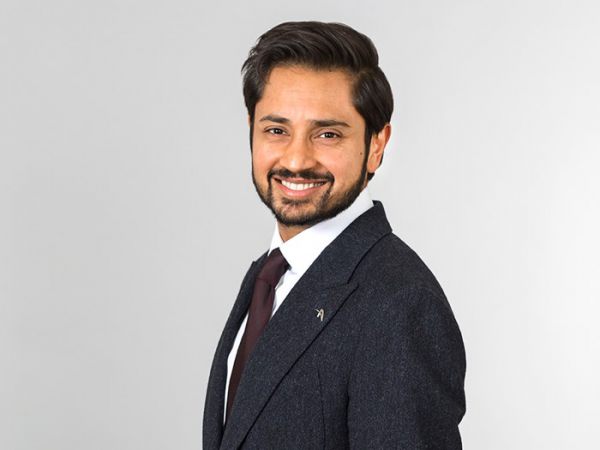
Ironmaking decarbonisation economical only after 2030
It is “becoming increasingly clear” that transformational, low-emission ironmaking investments are only likely to be economical post-2030 and that policies to address the high capital and operational costs involved are required to make that happen, says ArcelorMittal chief executive Aditya Mittal.
What the steelmaking group can achieve by 2030 will “depend critically” on how the regulatory environment evolves this year, particularly in Europe. The EU’s Steel and Metals Action Plan “demonstrates that Europe understands the challenges the industry faces and the seriousness of the situation and is ready to tackle the structural issues required to support the future of steelmaking on the continent,” Mittal says in ArcelorMittal’s 2024 sustainability report.
The ceo hopes the plan “will be translated into swift action,” he adds in the report seen by Kallanish.
“Pending policy clarity, there is simply too much uncertainty at the moment to be able to make useful projections about how rapidly we will be able to bring down our emissions in the next five years,” Mittal continues.
The steelmaker intends to publish revised decarbonisation forecasts when the policy environment becomes more settled. In the meantime, it continues to develop all technologies that support lower emissions iron and steelmaking.
Over the next five years, its decarbonisation efforts will continue to focus on diversifying metallics supply, increasing energy efficiency, securing clean energy, and transforming steelmaking assets through continuing the shift to electric arc furnaces.
In the longer term, it expects to transition to lower emissions ironmaking and add carbon capture and storage.
All decarbonisation-related capital expenditure will be contained within the annual capex budget of $4.5-5 billion.
“The above approach should ensure that we can move swiftly when we reach the tipping point, where the confluence of policy, technology and cost will irreversibly transform the economics of steelmaking in favour of low-carbon methods,” Mittal concludes.
Adam Smith Poland