


ArcelorMittal to invest EUR1.3bn in single Dunkirk EAF
ArcelorMittal will invest EUR1.3bn in installing replacement electric-arc steelmaking capacities at its Dunkirk plant, scheduled for first operations in 2029, the company announced 10 February.
According to the steelmaker, the new 2 mt electric-arc furnace (EAF) will be capable of producing steel with “three times less CO2 than a blast furnace,” at 0.6t CO2e/t, and will operate on a mixture of scrap, direct-reduced iron/hot-briquetted iron (DRI/HBI), and pig iron. Half of the EUR1.3bn investment will be financed publicly with Energy Efficiency Certificates.
France’s President, Emmanuel Macron, was present for the announcement at the French site, accompanied by company leadership.
“I am delighted we are now able to launch this €1.3 billion investment in Dunkirk, which underscores our Group’s long-term commitment in France,” said CEO Aditya Mittal in a press statement. “I must thank President Macron and the French government who – very early on – understood the challenges the European steel industry was facing.”
Mittal’s comments reference steelmakers’ long-cited issues with the competitiveness of the European steel sector against global pressures, which the European Commission is attempting to remedy with new industrial support policies, and regulatory simplification. Policies initially proposed by the Commission in last year’s Steel and Metals Action Plan – such as new long-term steel trade protections, the implementation of the Carbon Border Adjustment Mechanism (CBAM), and the upcoming Industrial Accelerator Act (IAA) – are intended to better support the ‘investment case’ for industrial decarbonisation, which for European steelmaking, is largely characterized by the transition from blast-furnace to basic-oxygen furnace (BF-BOF), to EAF steelmaking fed by scrap and direct-reduced iron (DRI).
In its press release, ArcelorMittal states that it “appreciates the progress made by the European Commission to better protect the European steel industry,” and “expects [proposed measures] to restore fair and competitive conditions in the European steel market, thus securing a sustainable future for steel production within the European Union.”
ArcelorMittal has suspended the majority of its European decarbonisation projects, citing aforementioned burdens on competitiveness, as illustrated in McCloskey’s recent Global Green Steel Profile. Postponement to the renovations at Dunkirk specifically related to the high cost of gas and hydrogen in Europe, as stated by company leadership in the French Parliament last year.
The steelmaker’s latest announcement on its decarbonisation plan appears reduced from its initial scope, confirming the construction of only a single EAF, as opposed to previous commitments to construct two EAFs, and a 2.5 mt/y DRI plant. The two EAFs were originally scheduled for initial operations in 2027.
Secondary steelmaking sources have suggested that this indicates ArcelorMittal is abandoning its DRI investment plans and will instead import DRI/HBI to facilitate decoupled steelmaking.
McCloskey’s recent coverage of the leaked draft of the EU’s upcoming Industrial Accelerator Act (IAA) indicates that the European Commission is planning to introduce a ‘sliding scale’ into its new green steel definition, represented by a voluntary low-carbon label that gives a better ‘green classification’ the lower the share of constituent scrap. This could give DRI-EAF steel an advantage over the EU’s existing scrap-EAF production in achieving equivalent, or even improved classifications, despite the lower emissions profile of high-percentage scrap-fed steels.
The EU’s independent EAF steelmakers have largely opposed the inclusion of the sliding scale, fearing that it will give integrated steelmakers undue access to secondary steelmakers’ core construction sector demand as low-carbon markets become increasingly (and at times inconsistently) regulated by instruments such as the IAA.
Despite the fact that the thrust of the European Commission’s regulatory efforts in the steel sector are to protect the ‘investment case’ for decarbonisation without undermining industrial resilience, some market sources have argued that the current trajectory of steel policy across CBAM, the new permanent steel quotas, and green steel standardisation are instead facilitating the gradual decoupling of iron and steelmaking on the continent.
These sources allege that integrated steelmakers are lobbying for ‘sliding scale’ based green standards of universal scope in order to consolidate their access to future domestic low-carbon demand, supporting a limited transition to decoupled EAF steelmaking, while simultaneously closing the market to downstream imports but retaining access to low-cost DRI/HBI from abroad. If true, this would threaten to off-shore primary steel production, undermining the Commission’s push for industrial resilience, and potentially stimulating domestic steel price inflation beyond what consuming industries can tolerate.
The French Democratic Confederation of Labour (CFDT) – France’s largest trade union by membership – boycotted Macron’s visit to the Dunkirk site on similar factors, describing the announcement as “political staging.”
“This announcement is a smoke screen and will not suffice; we are very far from the initial plan […] while ArcelorMittal has obtained everything it wanted!” stated the union in an associated press release. “Behind the hollow words and the promises, there are thousands of jobs threatened and eliminated, weakened industrial basins, and shattered lives.”
ArcelorMittal released its full-year 2025 results this week, reporting $3.2bn net income, and foreseeing an improved outlook for European steel prices and demand in 2026.

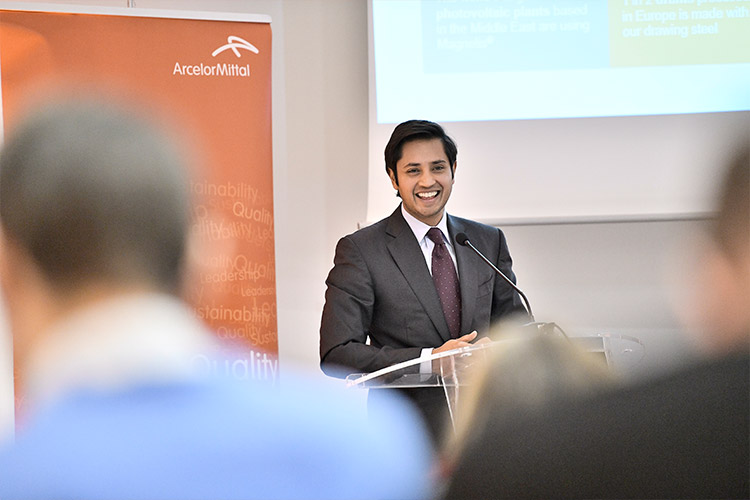
ArcelorMittal forecasts rebounding demand, eyes higher sales globally
Global apparent steel demand excluding China will rebound 2% on-year in 2026, while production and shipments are set to increase across all regions this year, supported by operational improvements and trade measures, ArcelorMittal says.
The group plans to capture medium-to-long-term steel demand driven by investments in the energy transition, new infrastructure and mobility systems, defence security and data centre capacity, Kallanish notes.
ArcelorMittal’s fourth-quarter-2025 consolidated steel shipments fell 4% on-year to 13 million tonnes, while production fell 9% to 12.8mt.
Sales however rose 2% to $14.97 billion and net income adjusted for exceptional items and one-off tax charges rose 62% to $654 million.
Over the past 12 months, the global economy has shifted towards “greater domestic supply resilience” amid widespread tariffs, says ArcelorMittal chief executive Aditya Mittal. “This led to an increasing number of countries finally taking steps to address the competitiveness of their manufacturing industries,” he adds.
“Nowhere was this more necessary than in Europe”, he continues. The proposed new trade regime and CBAM modifications have been critical to levelling the playing field on carbon costs.
“Combined, this will enable European producers to recover to sustainable utilisation levels, and generate healthy returns on capital. And while the full benefits of the changes in the regulatory environment will emerge over time – more visibly in the second half and into 2027 – we are very well positioned to benefit from this direction,” Mittal notes.
The new trade regime is projected to reduce EU steel imports by 10m t/year, according to ArcelorMittal. Existing furnaces can operate at higher utilisation rates, while idled units can be brought back online as demand recovers, the group notes. New capacity is also expected to come online in 2026 with the start-up of the 1m t/y Gijon EAF for long products and the expansion of the Sestao EAF to increase flat steel output.
In full-year 2025 ArcelorMittal shipments fell 1% on-year to 54mt, while crude steel production dropped 4% to 55.6mt. Sales fell 2% to $61.4 billion but adjusted net income rose 26% to $2.94 billion. The latter is attributed to lower foreign exchange and other net financing charges, and reduced tax expense, partially offset by lower Ebitda and higher interest costs.

ArcelorMittal posts USD 1.5 billion EBITDA in Q3
The company achieved an EBITDA margin of USD 111 per tonne, with a net income of USD 0.4 billion and an adjusted net income of USD 0.5 billion (EPS USD 0.62). ArcelorMittal said performance continued to reflect the benefits of asset optimization, regional diversification, and strategic growth investments, including record iron ore production and shipments from Liberia.
Net debt stood at USD 9.1 billion at the end of September, compared to USD 8.3 billion at the end of June, mainly due to working capital and M&A investments. The company expects a strong free cash flow rebound in Q4 2025 as working capital unwinds, supported by a robust liquidity position of USD 11.2 billion.
CEO Aditya Mittal stated, “We delivered resilient results in what is typically a seasonally weak quarter. The European Commission’s proposed trade measures, once enacted, will support the region’s steel sector in improving capacity utilization and profitability. We remain focused on executing our investment plans and positioning the business for long-term value creation.”
ArcelorMittal highlighted that its strategic growth and M&A initiatives are expected to add around USD 2.1 billion to future EBITDA capacity, with USD 0.7 billion targeted for 2025 and USD 0.8 billion for 2026. The company continues to invest in low-carbon and value-added steel markets as part of its transition strategy.
For shareholders, the company confirmed its base dividend of USD 0.55 per share, paid in two installments, and reiterated its policy to return at least 50% of post-dividend annual free cash flow through dividends and share buybacks. So far in 2025, ArcelorMittal has repurchased 8.8 million shares for USD 262 million, with plans to cancel most of its 92.3 million treasury shares before year-end.

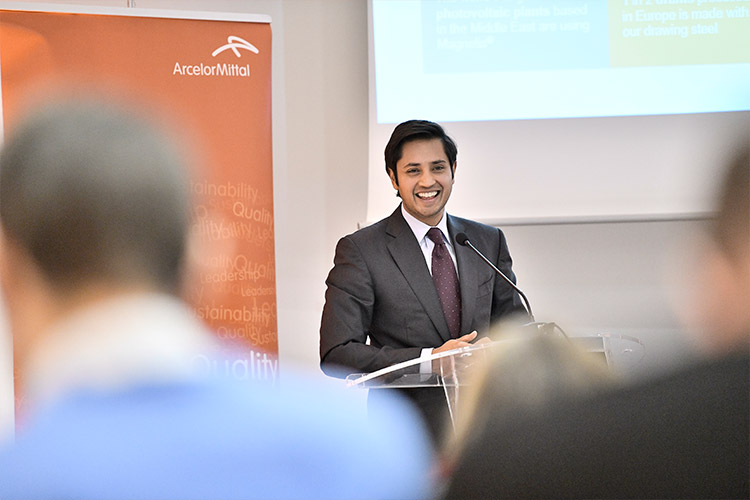
ArcelorMittal: EU’s proposal for stronger trade defense measures crucial for steel industry survival
Global steel giant ArcelorMittal has strongly endorsed the European Commission’s proposal to replace current EU safeguard measures with strengthened tariff quotas on steel imports. The company described the move as critical for the survival of Europe’s steel industry, which is facing mounting pressure from low-priced imports, shrinking demand, and weak economic conditions.
Commenting on the proposal, CEO Aditya Mittal said that he is sincerely relieved by the proposals that have been announced to support the European steel industry. He thanked the European Commission and the member states for understanding the criticality of the situation and acting appropriately and decisively. The European steel industry and manufacturing more broadly can have a much stronger future now and today marks a step in that direction, Mittal added.
Geert Van Poelvoorde, CEO of ArcelorMittal Europe, echoed these sentiments, noting that the proposal has brought a sense of relief across the European steel sector.
“ArcelorMittal and the European steel producers have been heard. Today, we can breathe a sigh of relief, with the European Commission’s announcement of the new, strengthened tariff quota proposal,” Van Poelvoorde stated, adding, “We thank the commissioners for the time and attention they have taken to understand the challenges facing our industry. We will continue to press for a swift introduction of the new tariff quota, in recognition of the severity of the challenges facing the steel industry in Europe.”

Link with CBAM and the Steel Action Plan
ArcelorMittal also stressed the importance of aligning trade defense instruments with climate policy, specifically the Carbon Border Adjustment Mechanism (CBAM), whose revised framework is expected by the end of 2025.
“We hope that the trade proposal unveiled today is an indication that our concerns will be reflected in the further measures to be announced in line with the Steel and Metals Action Plan,” Van Poelvoorde noted.
He said that his company believes that a strong tariff quota regime, combined with an effective CBAM, will be essential to restore a level playing field, curb market distortions, and support Europe’s steel competitiveness globally.

Ironmaking decarbonisation economical only after 2030
It is “becoming increasingly clear” that transformational, low-emission ironmaking investments are only likely to be economical post-2030 and that policies to address the high capital and operational costs involved are required to make that happen, says ArcelorMittal chief executive Aditya Mittal.
What the steelmaking group can achieve by 2030 will “depend critically” on how the regulatory environment evolves this year, particularly in Europe. The EU’s Steel and Metals Action Plan “demonstrates that Europe understands the challenges the industry faces and the seriousness of the situation and is ready to tackle the structural issues required to support the future of steelmaking on the continent,” Mittal says in ArcelorMittal’s 2024 sustainability report.
The ceo hopes the plan “will be translated into swift action,” he adds in the report seen by Kallanish.
“Pending policy clarity, there is simply too much uncertainty at the moment to be able to make useful projections about how rapidly we will be able to bring down our emissions in the next five years,” Mittal continues.
The steelmaker intends to publish revised decarbonisation forecasts when the policy environment becomes more settled. In the meantime, it continues to develop all technologies that support lower emissions iron and steelmaking.
Over the next five years, its decarbonisation efforts will continue to focus on diversifying metallics supply, increasing energy efficiency, securing clean energy, and transforming steelmaking assets through continuing the shift to electric arc furnaces.
In the longer term, it expects to transition to lower emissions ironmaking and add carbon capture and storage.
All decarbonisation-related capital expenditure will be contained within the annual capex budget of $4.5-5 billion.
“The above approach should ensure that we can move swiftly when we reach the tipping point, where the confluence of policy, technology and cost will irreversibly transform the economics of steelmaking in favour of low-carbon methods,” Mittal concludes.
Adam Smith Poland
Policies to accelerate steel decarbonization in Europe ‘critical’ in 2025: ArcelorMittal CEO
“Looking to the year ahead, while [steel] inventory levels are low and apparent demand is expected to improve, our industry continues to be characterized by global overcapacity, and we are supportive of policy to address this in our markets,” ArcelorMittal chief executive officer Aditya Mittal said in a Thursday press release accompanying the company’s fourth-quarter financial results.
“Further action is particularly necessary in Europe, which was impacted by increased imports in 2024, further adding to the pressures on European manufacturing. It is critical that we see progress in 2025 both in providing necessary emergency relief and creating a policy environment that incentivizes the investment required to accelerate decarbonization in Europe,” Mittal added.
In 2025, green steel growth is largely expected to be driven by stricter environmental regulations, increasing pressure from consumers and investors for sustainable products, and the EU’s commitment to achieving carbon neutrality, Fastmarkets reported.
ArcelorMittal provided an update on its decarbonization plans in Europe last November, pointing out that the unfavorable economic situation in Europe and uncertainty around environmental policies slow the transition to green steelmaking.
As a result, the company’s decarbonization investments in Europe are progressing at a slower pace than initially envisioned, ArcelorMittal said.
ArcelorMittal has made significant progress in decarbonizing its operations and remains committed to its green steelmaking goals, the company said in the Thursday release.
For instance, since 2018, ArcelorMittal’s absolute emissions (Scope 1 and 2) have decreased by about 50%, primarily due to footprint and portfolio optimization of some of its most carbon-intensive capacities, the release said.
In addition, electric-arc furnaces (EAFs) comprise 25% of the company’s global production, up from 19% in 2018, ArcelorMittal chief executive officer Aditya Mittal said in the release.
Since 2018, the company has invested $1 billion in decarbonization projects globally. These projects include the decarbonization of steelmaking operations in Gijón and Sestao in Spain, as well as launching ArcelorMittal’s green steel brand XCarb for recycled and renewably produced low-carbon-emission steel.
XCarb sales increased from 0.2 million tonnes in 2023 to 0.4 million tonnes in 2024, the company said.
The market for steel with reduced carbon emissions is still evolving in Europe, and sources expect more uptake of “green steel” across supply chains once environmental regulations — such as the CBAM — are implemented.
ArcelorMittal’s current decarbonization investments are focused on ramping up production of high-quality low-carbon flat products in Sestao and the new EAF construction in Gijón.
Notably, by 2026, flat steel production is targeted to reach 1.6 million tonnes per year at the plant in Sestao, where ArcelorMittal runs two EAFs. After ramp-up is completed, much of Sestao’s portfolio will be XCarb-brand low-carbon-emission steel.
According to market sources, HRC from Sestao has a carbon footprint of 580 kg of CO2 per 1 tonne of steel under Scope 1, 2 and upstream Scope 3.
Fastmarkets’ latest weekly assessment of the green steel domestic, flat-rolled, differential to HRC index, exw Northern Europe was €100-200 per tonne on January 30, stable since December 12.
Fastmarkets’ methodology defines European green steel as “steel produced with Scope 1, 2 & 3 emissions at a maximum of 0.8 tonne of CO2 per tonne of steel.”

Julia Bolotova in Brussels contributed to this report.