


EU HRC prices inch down amid weak demand and holiday lull
European domestic hot-rolled coil prices fell slightly on May 1, reflecting continued pressure from subdued demand and oversupply concerns across the market.
Despite ongoing price reductions from domestic mills, buyer interest remained limited.
“Mills are attempting to secure orders for May by lowering prices, but buyers are only purchasing small quantities to meet immediate needs, ” said a distributor source. “Service centers in Germany suggest that mills should reduce production to prevent a potential price collapse.”
Service centers in Germany remain pessimistic about any short-term demand recovery, especially with the current holiday period dampening activity. Order books at domestic mills are reportedly thin, with no signs of near-term improvement.
“It’s the holiday period so it’s quieter. The demand won’t change next week or after two to three weeks, so it’s a big challenge from domestic mills as well to have a good order book,” said a service center source. “The supply is good, but demand is the real problem, and I hope we see more stable prices up to the summer holidays, but it will be difficult.”
The same source also expects the import market to be more active while the domestic side struggles, particularly as mills show increased flexibility in price negotiations, further eroding the domestic pricing.
While imports are expected to be more active, one trader cited activity only by some of the “big players” and uncompetitive prices coming out of Indonesia around Eur560/mt CIF Italy for 30,000 mt.
Platts assessed HRC ex-works Italy at Eur620/mt and HRC CIF Southern Europe at Eur530/mt, both stable day over day.
Platts assessed HRC in Northwest Europe at Eur650/mt ex-works Ruhr May 1, and imported HRC in Northern Europe at Eur540/mt CIF Antwerp May 1, both down Eur5/mt day over day.
Platts is part of S&P Global Commodity Insights.


Steel industry urged to pursue dual decarbonization for emissions cut by 2050
Policy, investment and incentives in the global steel industry must focus on “dual decarbonization” — cutting the carbon footprint of primary steelmaking that uses iron ore and recycling scrap steel — to accelerate emissions reductions by 2050, according to a report released April 30.
The report, ‘The role of scrap in steel decarbonisation: Key facts and considerations for the construction sector,’ was released by the Institution of Structural Engineers, the British Constructional Steelwork Association and Climate Group’s SteelZero initiative.
It highlighted that the steel industry contributes to 7%-9% of global carbon emissions, with about 2 billion mt/year of steel produced and over two-thirds being primary steel made from iron ore, while the remainder is secondary steel, produced mostly from recycled ferrous scrap.
According to the report, the recovery and recycling rate of ferrous scrap is already close to its maximum limit, making it unlikely to significantly increase to meet future demand. Consequently, primary steelmaking will continue to play a major global role for many decades and will need to be decarbonized for the steelmaking industry to achieve net-zero emissions.
The report emphasized the urgent need to expedite low- and zero-carbon iron production while also decarbonizing electricity grids and improving the sorting of scrap metals to enhance the decarbonization of secondary steelmaking.
It noted that a level global playing field is also needed, steered by clear government policies and action from the construction sector.
To accomplish these goals, the report recommended that designers and specifiers collaborate with clients to adopt a steel procurement and design strategy that minimizes global greenhouse gas emissions and project-specific emissions.
It also proposed procuring steel from producers aligned with dual decarbonization commitments and making low-carbon decisions by “minimizing the use of materials as far as possible through the concepts of material efficiency and the circular economy.”
The report advised policymakers to invest in low-carbon iron and steel production technologies, such as green hydrogen and direct reduced iron, and prioritize policies for the efficient use and reuse of steel.
It said policymakers must “research ways to normalize emissions reporting to account for the limitations of using globally constrained materials, and create simple mechanisms to help industry more easily adopt this approach.”
Steel’s vital role
British Constructional Steelwork Association Sustainability Director Michael Sansom said steel has a “vital role to play” in delivering low-carbon and renewable energy infrastructure. However, as the report set out, the only way to meet this growing demand and achieve net-zero emissions is to follow a dual-decarbonization approach.
“The whole supply chain needs to work together to facilitate this transition, which is a global challenge requiring a fair and equitable global solution,” Sansom said.
Institution of Structural Engineers Head of Climate Will Arnold said in an accompanying statement that 90% of the steel industry’s GHG emissions came from primary steelmaking.
“Because the world will rely on primary steel for many decades to come, it is of utmost importance that this becomes a decarbonization focus,” Arnold said. “All the technical solutions already exist, such as zero-carbon iron production; now the industry must accelerate the transition.”
Sameen Khan, senior manager, SteelZero, Climate Group, said the world cannot “recycle [its] way to net zero.”
“While best practices in circularity, like improved scrap segregation and increased recycling, must continue, they are not enough on their own,” Khan said. “It is crucial we tackle the decarbonization of primary steel to avoid locking in emissions for decades.”
Khan said businesses are ready to demand low-emission steel, but they also need reliable signals from government and industry to shift procurement at scale.

Construction sector needs dual decarbonisation approach: report
Recycling alone will not be enough to decarbonise the steel industry, with a dual approach between primary and secondary needed, according to a new report reviewing the construction sector.
The report has been published by the Institution of Structural Engineers, British Constructional Steelwork Association and Climate Group’s SteelZero initiative to help policymakers and the construction sector achieve decarbonisation and reduce emissions, Kallanish learns.
The construction sector is one of the largest consumers of steel, with consumption accounting for around half of all production
The report notes that whilst 80-85% of steel is recovered and recycled at the end of its life, there is little evidence to suggest a substantial increase on this is achievable. To reduce global emissions, policy, investment and incentives must therefore focus on a dual decarbonisation approach to steelmaking, addressing both the production of new steel and the recycling of scrap.
The authors add that global steel demand is currently three times higher than global ferrous scrap supply. There is a need to increase the supply of low- and zero-carbon iron production, improving the quality of scrap through better sorting, and decarbonising electricity supplies.
Voluntary and mandatory embodied carbon limits are starting to be used on some construction projects across different regions, countries and local areas, the report highlights. These limits are most easily met by increasing the proportion of secondary rather than primary steel, but the paper claims that this is unlikely to result in any significant reduction of global greenhouse gas (GHG) emissions.
Designers should demand steel from producers aligned with the dual decarbonisation approach. They hould further reduce GHG emissions by minimising the total tonnage of steel products specified, rather than just substituting for products with higher recycled content.
British Steel’s commercial director Ben Cunliffe said: “The UK market demand for EAF structural sections has increased dramatically over the past two years, with more and more client project specifications mandating reduced limits on embodied carbon within new building project specifications, which is forcing contractors to import structural sections from overseas.”
He adds that offshoring supply of sections is not the answer to reducing global GHG emissions.
Carrie Bone UK


SSAB secures €2.3bn financing for Luleå mill
SSAB has secured €2.3 billion ($2.6 billion) of green financing for its transformation project to build a mini mill in Luleå, Sweden, Kallanish hears from the steelmaker.
The financing package is covered by the Swedish National Debt Office (Riksgälden), the Italian Export Credit Agency (SACE) and the Nordic Investment Bank. Crédit Agricole CIB structured the transaction.
SSAB last year announced a €4.5 billion investment in the new mill. The company has now signed three green loan facilities.
All facilities have a long-term maturity structured to support the full lifecycle of the project.
This includes a €1.5 billion syndicated loan covered by the Swedish National Debt Office (Riksgälden) under the credit guarantees for green investments programme.
A €808 million syndicated loan backed by the Italian Export Credit Agency, SACE and a €1.15 billion loan from the Nordic Investment Bank (NIB).
The loans are structured under the green loan principles, a set of voluntary guidelines for issuing and investing in green loans.
“The great interest to participate in the financing underscores SSAB’s leading position in the steel industry, as well as our partners’ strong confidence in our transformation plan” says Leena Craelius, cfo of SSAB.
Christian Koehl Germany
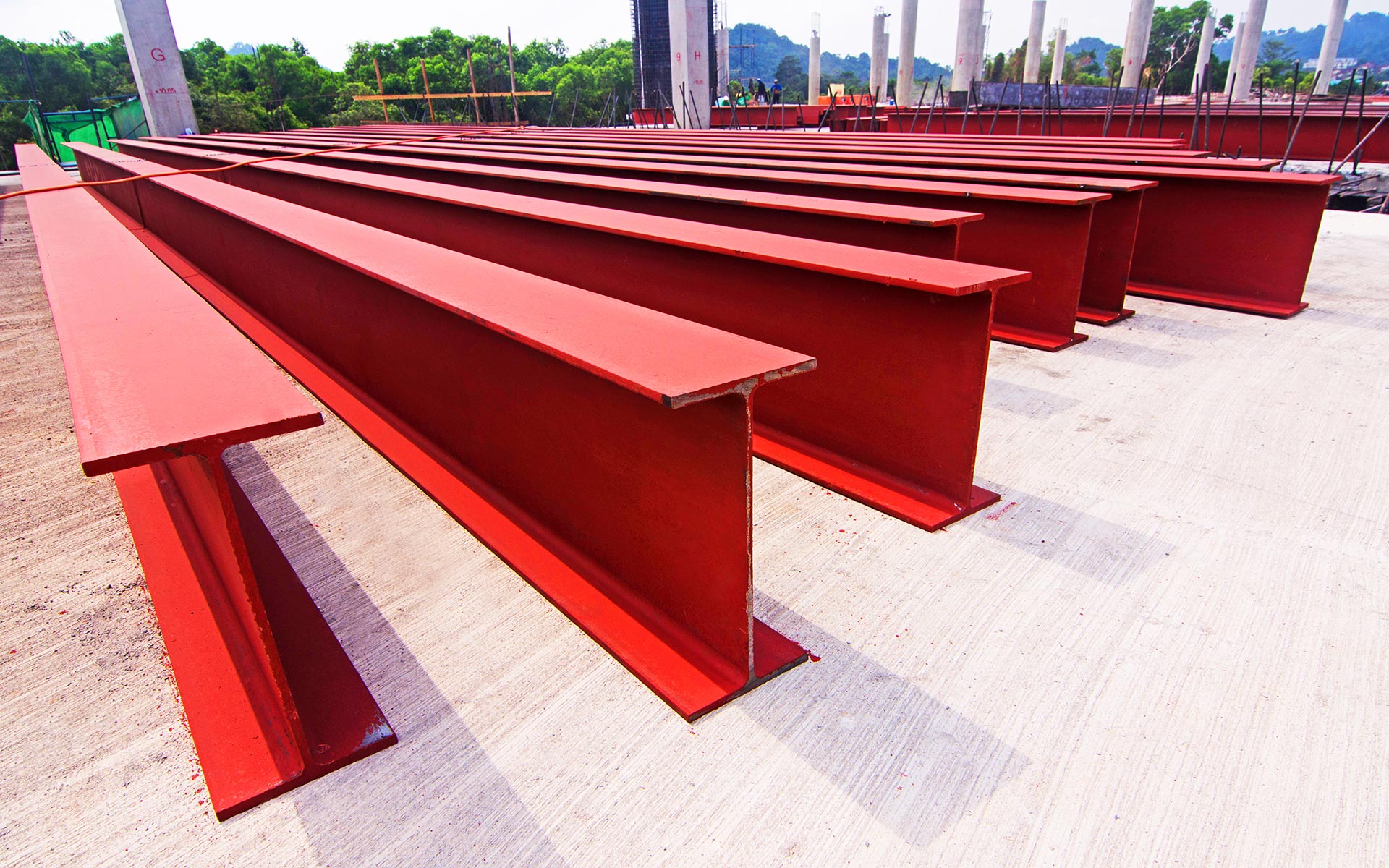
Global long steel markets face unprecedented uncertainty: Irepas
The global long steel market is overwhelmed by unprecedented protectionism and trade barriers, creating deep uncertainty on top of existing challenges, Murat Cebecioglu, chairman of the International Rebar Exporters and Producers Association (IREPAS) said at the association’s 92nd meeting held 27-29 April in Athens.
From the perspective of long steel producers, tariffs are severely disrupting business planning, Kallanish understands. Chinese exports, including billet, continue to pressure global prices due to their low cost. While Turkish mills are increasingly favour billet over scrap for cost efficiency. GCC countries have shifted from importers to exporters amid local overcapacity and uncertain domestic demand.
Raw material suppliers anticipate a challenging year ahead, with market activity expected to slow significantly in the second half of 2025.
Jens Björkman, chairman of the raw material suppliers committee, said that iron ore prices have hovered around $100/tonne cfr, up from $89/mt in September 2024, due to elevated output late last year and earlier this year. He noted that should China reduce its steel production while global iron ore supply increases, prices may decline.
Elsewhere, the new German government may help alleviate some market pressure, potentially boosting steel output.
Scrap demand is currently low in the EU, while proposed export restrictions could further strain the industry and complicate trade between scrap suppliers and steelmakers.
Looking further ahead, EU mills are expected to gradually transition from blast furnace to electric arc furnace technology over the next 5-10 years, resulting in uneven scrap demand. Although EU’s green transition appears to be postponed, with no viable shift expected until at least 2030.
Björkman also expressed confidence that Canada and Mexico are unlikely to impose taxes on steel exports to the US, as such restrictions would damage their own industries given their reliance on US trade.
Traders, for their part, see little hope for tariff relief from the US. The recent expansion of Section 232 tariffs – now covering countries previously exempted – offers limited advantages.
F.D. Baysal, chairman of the traders committee noted, only 18% of US steel imports came from countries paying Section 232 duties, while 82% came from exempted nations. Therefore, despite possible gains for countries such as Turkey and Egypt, the broader market remains constrained by economic uncertainty and weak demand.
In the EU, shrinking import quotas are tightening conditions further. Meanwhile, ASEAN exporters are making inroads into the EU market, supported by free trade agreements. Chinese export levels and resulting pressure, traders believe, will remain strong.
Elina Virchenko Turkey
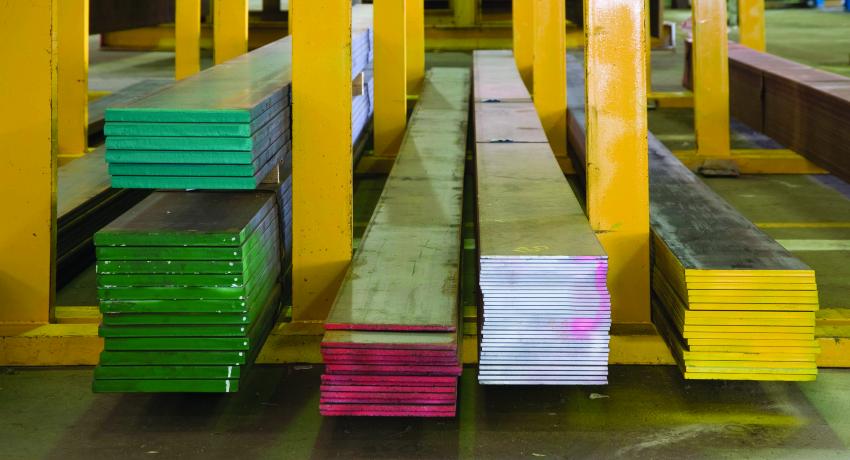
Prices stable in Northern European steel longs market despite falling input costs
As a result, Fastmarkets’ weekly price assessment for steel reinforcing bar (rebar), domestic, delivered Northern Europe was €650-680 ($739-773) per tonne on Wednesday, stable week on week.
Mills in Northern Europe managed to resist a downtrend despite falling scrap and energy costs.
Northern European mills have maintained higher prices since the beginning of the year due to a shrinking supply due to production stoppages.
Some sources reported bearish sentiment in the market regarding future prices.
Scrap costs have dropped since mid-April due to slow consumption for finished steel in the domestic rebar market combined with ongoing uncertainty around US tariff rates.
Fastmarkets’ calculation of its daily index for steel scrap, HMS 1&2 (80:20 mix), North Europe origin, cfr Turkey was $318.00 per tonne per tonne on Wednesday down from $318.14 week on week and down from $375.67 per tonne month on month.
The corresponding Fastmarkets’ weekly price assessment for steel wire rod (mesh quality), domestic, delivered Northern Europe was €620-645 per tonne on Wednesday, stable week on week.
Offers in the region were reported at €620-645 per tonne.
“Prices are currently stable, and outlook remains positive in the Northern European wire rod market,” a producer source said.
Published by: India-Inés Levy


Holiday stretch across Europe keeps green steel demand quiet; mills secure funding for decarbonization projects
Flat steel
A holiday period across Europe has limited further already-slow demand for green flats, sources said.
Sources said that that economic crisis in Europe was slowing down decarbonization and green steel uptake in the market in general.
“Green steel demand should be generated through public procurement — and we only see that in Scandinavia so far,” a mill source in Europe said.
Fastmarkets’ methodology defines European green steel as steel produced with Scope 1, 2 & 3 emissions at a maximum of 0.8 tonne of CO2 per tonne of steel.
Green steel suppliers in Europe maintained premiums for such steel at €200-350 ($226-395) per tonne.
Notably, a premium for steel with carbon emission of under 600 kilograms and Scope 1,2 and 3 upstream was reported at €200 per tonne.
Transactions for such steel were heard at €200 per tonne during the week, but for limited tonnages.
Premiums for steel, carbon neutral under Scopes 1 and 2 were reported at €300 per tonne.
And premiums for green steel, with Scope 1, 2 and upstream Scope 3 carbon emissions of less than 0.8 tonnes per tonne of steel, were reported at €200-250 per tonne.
Buyer sources estimated achievable prices for such material at €150-200 per tonne.
As a result, Fastmarkets calculated its weekly green steel domestic, flat-rolled, differential to HRC index, exw Northern Europe at €150-200 per tonne on Wednesday April 30, stable week on week.
Long steel
Activity in the green long steel segment was typically slower, compared with the flat steel segment, as the production nature of the former is more ecological than than the latter.
Most long steel producers are electric-arc-furnace (EAF) based; therefore, their emissions are much lower than in the flat steel sector, which is mainly equipped with basic oxygen furnaces (BOF).
Most buyers do not see the point in paying premiums for green long steel, as there is not much incentive from local governments to use it in projects, Fastmarkets heard.
The existing modest demand is typically coming from Northern Europe.
Fastmarkets’ methodology defines European green long steel as “steel produced with Scope 1, 2 & 3 emissions at a maximum of 0.5 tonne of CO2 per tonne of steel.” Meanwhile, EAF producers — who use scrap as feed — typically emit around 0.8 tonne of CO2 per tonne of steel.
Premium offers varied within the range of €20-50 per tonne, unchanged week on week, but only low-end figures are accepted, sources said.
Thus, the price assessment for green steel, differential to steel reinforcing bar (rebar), domestic, delivered Northern Europe was €20-30 per tonne on April 30 stable from April 24.
Looking ahead
Despite quiet activity in the spot market in the recent months, industry sources were still largely optimistic regarding green steel uptake in the years ahead.
In general, the market for steel with reduced carbon emissions was still evolving in Europe, and industry sources expected a greater uptake of green steel across supply chains once environmental regulations, such as the Carbon Border Adjustment Mechanism (CBAM), are implemented.
European producers were securing financial support from state and private business to support their decarbonization projects.
Notably, SSAB, one of the leading Nordics steelmakers, has secured a €2.3 billion loan to finance construction of a state-of-the-art fossil-free mini-mill in Luleå, Sweden, the company said on Tuesday April 29.
The financing package is covered by the Swedish National Debt Office (Riksgälden), the Italian Export Credit Agency (SACE) and the Nordic Investment Bank. Crédit Agricole CIB structured the transaction.
The new mill in Luleå will have a capacity of 2.5 million tonnes of steel per year with two EAFs, advanced ladle metallurgy and an integrated rolling mill.
The investment also includes a cold-rolling complex, advanced galvanizing, as well as continuous annealing and is key to re-position SSAB Europe as a maker of premium products.
The facility will be focused on flat steel production with operations scheduled to commence in 2030.
And earlier this month, Spanish future green steel producer Hydnum Steel has been granted €60 million funding from the Spanish government to support the construction of new steel plant.
The Puertollano plant, which is located south of Madrid, is projected to have initial capacity for 1.5 million tpy of hot-rolled coil. After the start-up in 2026, exthe expansion is expected to reach a combined total of 2.6 million tpy of HRC and cold-rolled coil by 2030.
Hydnum Steel has already secured the sale of 75% of its production for the first seven years of operation, through strategic agreements with major sector players such as Gonvarri Industries, Thyssenkrupp Materials Processing Europe and Knauf Interfere, Fastmarkets reported.
Published by: Julia Bolotova, Vlada Novokreshchenova

Italian rebar prices widen downward amid falling input costs; Spanish rebar market on hold due to power cut
In the Southern European wire rod market, offers and assessments were stable.
Fastmarkets price assessment for steel reinforcing bar (rebar) domestic, exw Italy was €580-625 ($659-710) per tonne on Wednesday, widening downward by €10 per tonne from €590-625 per tonne the previous week.
First-hand deals were reported across the Italian rebar market at €580-620 per tonne exw.
Demand was reported to be slow in the market because of the seasonal Easter holidays at the end of April and continuing in the first week of May, Fastmarkets heard.
“Prices have started weakening and there is bearish sentiment regarding future trends as energy costs are down around 25% this month and international scrap prices have also dropped considerably,” one buyer source told Fastmarkets.
“The last week of April was slow because of festive days and this week we will have another long weekend so it is highly probable that the mills will drop their prices further from beginning of next week,” the buyer source added.
“The rebar price is still decreasing. April is a slow month because of too many festival days. Customers’ expectation is for a continuing downtrend next week,” a second buyer source said.
Scrap costs have dropped since mid-April due to slow consumption for finished steel in the domestic rebar market combined with ongoing uncertainty around US tariff rates.
As a result, customers remained in wait-and-see mode.
Fastmarkets’ calculation of its daily index for steel scrap, HMS 1&2 (80:20 mix), North Europe origin, cfr Turkey was $318.00 per tonne on Wednesday, down from $318.14 per tonne a week earlier and down from $375.05 per tonne a month earlier.
Meanwhile, rebar export prices were reported at €580 per tonne.
“Export orders are very low because Turkey rebar prices are more competitive. Cyprus and Greece are the major exporting markets now for Italian rebar producers,” the second buyer source said.
Fastmarkets’ price assessment for steel reinforcing bar (rebar), domestic, delivered Spain was €610-620 per tonne on Wednesday, stable week on week.
The market in Spain was reported to be quiet with zero trade occurring because of a collapse of the electricity grid in the Iberian Peninsula on April 28.
“The Spanish market has been dead this week because of the electricity grid failing. We are still trying to understand what has happened and no one cares about anything going on in the market,” a producer source told Fastmarkets.
Fastmarkets’ price assessment for steel wire rod (mesh quality), domestic, delivered Southern Europe was €605-620 per tonne on Wednesday, stable week on week.
Published by: India-Inés Levy

Scrap-fed EAF revolution is UK steel sector’s last chance for success: comment
The future of the UK’s steel industry has been thrust back into the spotlight over the past couple of weeks amid the dramatic government takeover of British Steel’s sprawling factory in Scunthorpe, northeastern England.
The move attracted almost unanimous support across the UK political spectrum but it is nothing more than sticking plaster on a terminally ill patient.
Britain’s steel producing sector is in a sorry state. The UK has the sixth-largest economy by gross domestic product (GDP) but ranks in a paltry 35th place for steelmaking, with output shrinking to just 4 million tonnes in 2024, down by 29%.
At the same time, the UK imported 6.45 million tonnes of iron and steel products over the year, including 716,374 tonnes of semi-finished steel, 2.16 million tonnes of flat-rolled steel and almost 500,000 tonnes of rebar and rod, according to UK customs data cited by Global Trade Tracker.
British Steel might live to fight on as a producer of virgin steel from basic oxygen furnaces (BOFs) for a time, but its years doing so are surely numbered.
Jingye, the Chinese owner of British Steel, said in late March that it was losing £700,000 ($927,000) per day. That came after India’s Tata Steel claimed that it was losing around £1 million per day in operating its Port Talbot BOF complex in Wales before closing down the blast furnaces (BFs) last year.
Both plants had been importing raw materials such as iron ore and coke from as far afield as Mauritania and Australia, to keep the BFs alight. British Steel is still doing this, albeit now the UK Department for Business and Trade is footing the bill out of its already-stretched budget.
Scrap the clear solution
But there is a solution for UK steelmakers that not only would make the transport of raw materials less expensive, but would also decarbonize the nation’s steelmaking decisively: melting more ferrous scrap in EAFs.
The UK generates 10 million-11 million tonnes per year of ferrous scrap, of which 2.6 million tpy is used in domestic steelmaking and the rest is exported, according to a report published on April 30 by the Institution of Structural Engineers, the British Constructional Steelwork Association, and Climate Group.
UK scrap exports were a huge 7.64 million tonnes in 2024, up from 7.22 million tonnes in 2023, according to UK customs statistics.
Tata Steel is already investing in EAFs to melt scrap in Port Talbot from 2027, but British Steel has so far resisted that path.
Owner Jingye not only shunned a government offer of £500 million to help such a transition in Scunthorpe, it was reported to be asking for a lot more, according to media reports.
A representative from industry body UK Steel said that the group would expect a “managed process” on whether a government-controlled British Steel would opt for EAF technology in future, rather than repeat the sudden and disruptive situation which took place at Tata Steel.
Following the closure of Tata’s BOFs in Wales, the local UK consumer market is taking in less scrap than ever, with UK export dock buyers gaining yet more influence in the domestic market, according to UK scrap sources.
UK dock buyers have been slashing their prices over the past month, in line with a dramatic slump in pricing of the bellwether Turkish market, where most UK scrap is exported.
Fastmarkets’ latest weekly price assessment for steel scrap, HMS 1&2 (80:20 mix), export, fob main port UK was $294-296 per tonne on April 25, down month on month from $358-359 per tonne.
Supply of scrap
Decarbonizing steelmaking across the globe cannot solely rely on the consumption of ferrous scrap because the supply of such material is limited, according to the UK report.
Global scrap consumption in the past few years has been around 650 million tpy, approximately one-third of the level of overall global steel production, the report said. World scrap availability is currently only sufficient to meet around one-third of global steel demand, a figure expected to rise to around 50% by the middle of the century.
Because of the limited supply and already-high utilization of available ferrous scrap around the world, it means that “any increase in the amount of scrap being used in one locality is more likely to result in a decrease in its use elsewhere, rather than a decrease in overall global [greenhouse gas] emissions,” the report said.
Scrap availability is also constrained by export restrictions in the secondary raw materials market, with as many as 48 nations having already restricted their exports of ferrous scrap, according to Ukrainian information provider GMK Center. And 55% of African nations and 24% of Asia have such restrictions in place, according to the research company.
UK scrap supply is also much lower than the country has capacity to process, a major UK processor said last month, with sluggish economic performance dragging down supply while high electricity costs make both processing and steelmaking highly expensive.
But while a greater use of steel scrap in the UK could draw away some supply from major importers in countries such as Turkey, India and Pakistan, this shift could still help to reduce global greenhouse gas emissions.
This is because the UK has a lower-carbon electricity grid to power the melting of its scrap than many of the countries that currently recycle the UK’s material, and because emissions will be avoided by not transporting UK materials over long distances to destinations overseas, the report said.
Influx of EAF-produced imports
The fight for the future of the UK steel industry also comes at a time of higher consciousness surrounding carbon emissions, and a desire for greener steelmaking.
Capturing this wave, Fastmarkets has launched green steel premiums for both flat and long steel in Europe over recent years.
There is now greater demand for lower-emission steel from UK construction customers, with some firms preferring to import EAF steel from abroad rather than continuing to use BOF steel made in the UK, a spokesperson for industry body UK Steel told Fastmarkets on April 14.
British Steel commercial director Ben Cunliffe cited this week’s report when arguing against the case for importing foreign EAF-produced steel sections into the UK market.
“The UK market demand for EAF structural sections has increased dramatically over the past two years, with more and more client project specifications mandating reduced limits on embodied carbon within new building project specifications, which is forcing contractors to import structural sections from overseas,” he said on Wednesday.
“The analysis highlights that ferrous scrap is a constrained resource, with availability only sufficient to meet around one-third of total global steel demand, and it will continue to be constrained for many decades to come,” he said.
“Logically, therefore,” he added, “specifying recycled EAF steel at project level has no effect on global GHG emissions due to this constrained global scrap availability, and is merely a displacement of BOF/EAF from one route to the other.”
Does the UK need primary steelmaking?
Although Cunliffe’s argument is convenient for his BOF-operating employer, it fails to recognize the clear inefficiency of a British plant importing primary raw materials from far afield and making steel products which do not require virgin steel.
British Steel makes rail, sections, special profiles and wire rod. All of these could be produced by a capable EAF operator, from domestic UK ferrous scrap.
Flat automotive-grade steel has long been preferred from BOF operators due to the high qualities needed, but technological advances and work by companies such as US steelmaker Nucor have demonstrated that EAFs can now produce even these grades.
It then begs the question of whether the UK needs primary steelmaking capacity anyway. My view is that no, it does not. Trade unions will prefer the virgin route because it requires much greater manpower than EAFs, but that aside, there are no strategic advantages for the UK in this route.
Even when looking at the prospect for national security purposes, BOFs come up short. Both Sheffield Forgemasters and Liberty Steel, which operate EAFs in the UK, supply the UK with military steel.
In 2016, there was uproar when French steelmaker Industeel was chosen over British rivals to supply steel for the hulls of its new batch of nuclear submarines.
Industeel’s factories produce high-quality steel plates from – you might guess – EAFs.
A British EAF revolution could shore up the UK’s security of supply for pivotal industries such as defense and wind energy.
It would tap into the abundant local supply of ferrous scrap and help stem the tide of steel imports into the country while operating less costly and less labour-intensive steel plants than the BOFs that are traditionally run in Britain – from SSI’s shuttered plant in Redcar, to Tata in Port Talbot, to British Steel in Scunthorpe.
The final question is: Will the UK government now take the final chance to save its steel industry?
Published by: Lee Allen