Assofermet: Italian steel market remains uncertain in May amid growing concerns
The Italian steel market remained disoriented during the month of May, generally marked by a crisis from which it is struggling to recover. Weakness was observed in all steel sectors, from scrap to finished products, according to the monthly market report published by Assofermet Acciai, the steel division of Assofermet, i.e., the association representing Italian distributors of scrap, raw materials, and steel products.
More precisely, the flat carbon steel products segment experienced a sluggish May, with negative sales volumes and a climate of distrust that had already emerged at the beginning of the month. Strong uncertainties and fears were growing among operators, given by ongoing trade and political tensions as well as the economic crisis that China is going through, bringing Far East markets with it. The weakening of sales volumes, and consequently prices, is also due to the CBAM (Carbon Border Adjustment Mechanism) coming into effect in Europe in 2026, which will impose significant cost increases for steel imports from non-EU countries.
On top of this, the European Union’s trade barriers will limit imports, as the note reports, and some steel grades that are available only through imports might become unavailable in Europe.
Demand weakness was also highlighted in the stainless steel flats segment, in the wake of a downward April. The factors influencing this sector are those described, which highlight the lack of “a protectionist policy to defend the entire steel supply chain”, Assofermet pointed out. This climate of uncertainty has been reflected in prices, the drop in which is thinning the margins of distributors who do not hide their concerns.
As for warehouses, sales declined in almost all product categories in May, with the exception of some niche products. Both longs and flats – although the latter were more stable than the former – showed contractions, while tubular prices recovered slightly.
Finally, uncertainty also affected the tin plate segment, which was characterized by a substantial expectation for the beginning of July, “when the impact on the market of customs clearance of the significant volumes of material imported from Turkey and India, currently lying in port terminals, will be clearer,” the note reports. It is also worth mentioning that there was an increase in the supply of European material, which is unusual at this delicate time.


Marcegaglia invests €278 million in Ravenna, logistics, decarbonization and innovation at core of new industrial plan
The Italy-headquartered Marcegaglia Group, one of Europe’s leading players in the processing of carbon and stainless steel – with 36 plants worldwide and a broad portfolio spanning welded tubes, strips, coils, and flat products – has announced a major revitalization plan for its production site in Ravenna.
As part of a development contract submitted to Invitalia and Italy’s Ministry of Enterprises and Made in Italy, the group will invest €278 million in the Romagna-based facility, complemented by over €20 million earmarked for research and development projects. This initiative represents Marcegaglia’s most significant industrial project currently underway in Italy, reaffirming the central role of the Ravenna plant within the group’s production and logistics network.
The plan, worth a total of €364 million, focuses on the digitalization and automation of logistics operations, the implementation of circular economy processes, the use of renewable energy sources, and the development of green hydrogen and carbon capture and storage (CCS) technologies. The project is fully aligned with the “Pact for Labor and Climate” of the Emilia-Romagna Region, which has expressed institutional support for the initiative.
As previously reported by SteelOrbis, Marcegaglia’s commitment to decarbonizing the Ravenna site is part of a broader strategic framework, which also includes support from the European Investment Bank (EIB). In December 2024, the EIB approved a €100 million loan as part of a €170 million plan targeting innovation, digitalization, and sustainability across the group’s facilities in Ravenna, Gazoldo degli Ippoliti, and San Giorgio di Nogaro.
Further demonstrating its integrated European vision, Marcegaglia is also advancing a €750 million investment in its French site in Fos-sur-Mer, where it is upgrading an electric arc furnace (EAF) facility and creating 380 new jobs. The objective is to transform the plant into a European hub for green steel production.
As SteelOrbis previously highlighted, the group’s expansion is part of an industrial strategy focused on vertical integration of the steel supply chain, international market growth, and ecological transition across the entire production cycle.
“Despite a period of great uncertainty, we have decided to carry out a substantial investment plan across three strategic sites – Mantua, Udine, and Ravenna,” said Antonio and Emma Marcegaglia, reaffirming the pivotal role of the Ravenna hub, described as “the group’s largest production site and main logistics platform.”
The new industrial plan further consolidates Marcegaglia’s position as a key player in the European steel sector, committed to an industrial path that combines competitiveness, innovation, and sustainability.
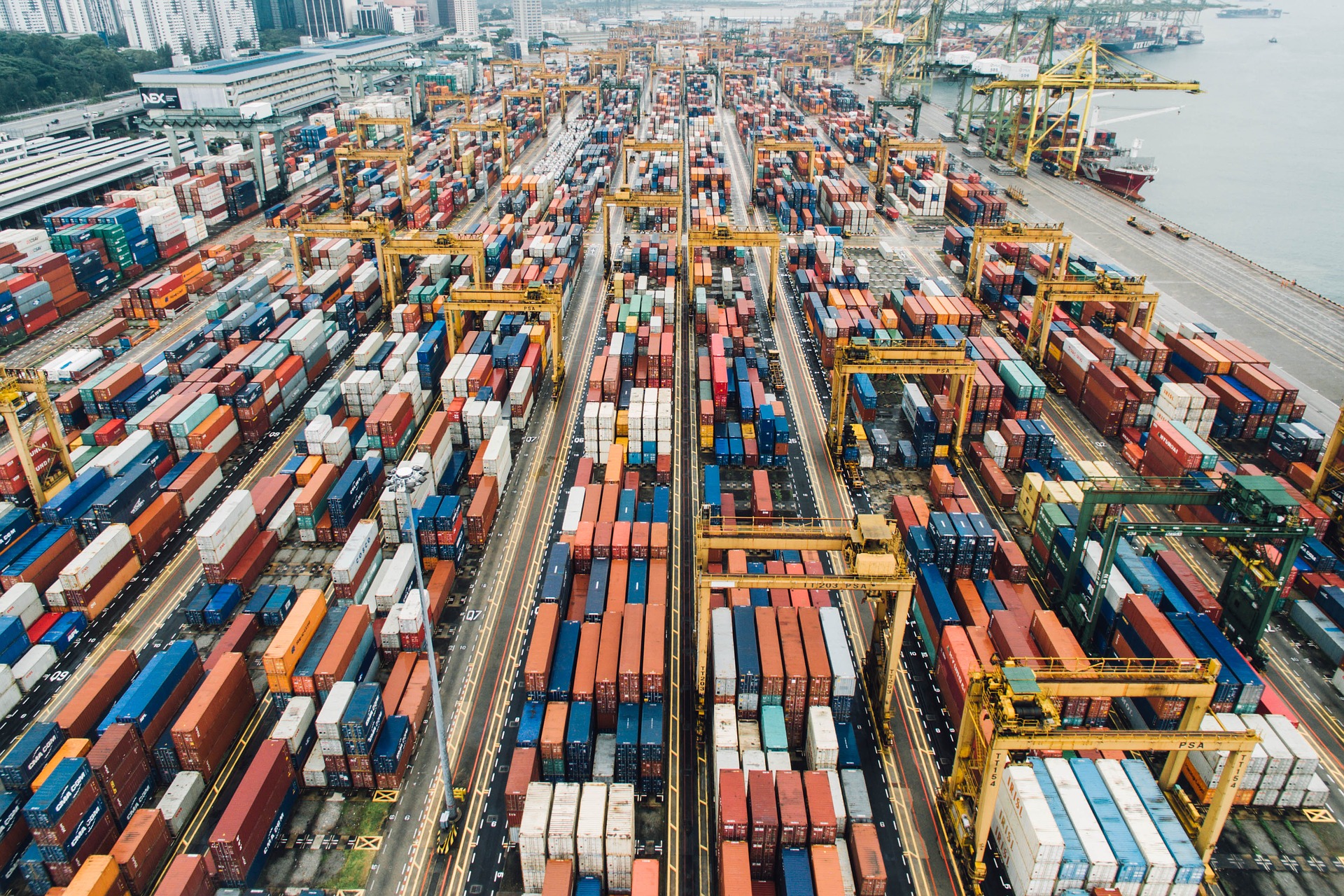
EUROFER: EU’s finished steel imports decrease in Q1
According to the Economic and Steel Market Outlook 2025-2026/Q2 2025 Report from the Economic Committee of the European Steel Association (EUROFER), total steel imports into the EU, including semis, decreased by nine percent year on year in the first quarter of 2025. During the same quarter, the EU’s imports of flat steel fell by four percent year on year, while imports of long steel rose by seven percent and imports of finished steel products moved down by one percent, both on year-on-year basis.
In the first quarter, Turkey, South Korea, Vietnam, Taiwan, China, Ukraine and India were the main countries of origin for finished steel imports into the EU. The first five countries accounted for 87 percent of total EU finished steel imports in the first three months. Turkey became the leading exporting country to the EU, with a share of 16.4 percent, followed by South Korea with 13.5 percent, Vietnam with ten percent, Taiwan with 8.8 percent, and China with 8.3 percent.
In the January-March period, imports of finished products from China rose significantly by 42 percent, while imports from South Korea, Turkey, and Vietnam went up by 28 percent, 20 percent and 14 percent, respectively. Imports from India, Japan and Taiwan, on the other hand, decreased by 56 percent, 39 percent and three percent respectively.
According to the EUROFER report, import shares reached 27 percent of apparent consumption and the trade deficit with third countries widened throughout 2024.

Hot-rolled coil prices in Europe fall further amid sluggish demand
Fastmarkets’ calculation of the daily steel hot-rolled coil index domestic, exw Northern Europe was €600.83 ($685.99) per tonne on Tuesday, down from €606.38 per tonne on Monday June 9.
Mills were heard targeting to achieve deals above €600 per tonne ex-works, with some suppliers reporting sales at this price level. This compares with €610 per tonne ex-works heard at the end of last week.
But, considering the high volume of available material for sale and hand-to-mouth buying, some sources expect the market to drop further.
A similar trend was seen in the Italian market.
Fastmarkets’ daily steel hot-rolled coil index domestic, exw Italy was calculated at €585 per tonne on Tuesday, down from €587.92 per tonne on Monday.
“Consumption is very fragmented at the moment; we observe a lack of restocking activity, while buyers’ stocks are higher than usual,” a buy-side source said.
Offers were heard in the range of €580-590 per tonne ex-works, with some “bold” bids heard as low as €550 per tonne ex-works.
Cheap import offers added to the bearish mood in the European domestic market.
Indonesian coils were available at €490-500 per tonne CFR Italy. Turkish material was offered at €520-540 per tonne duty paid, and Indian HRC was heard at €530-540 per tonne CFR.
Published by: Vlada Novokreshchenova


Italian government vows to continue ADI production support
Negotiations over distressed steelmaker Acciaierie d’Italia (ADI)’s sale remain ongoing, while the Italian government has confirmed its financial backing for the producer through a new decree ensuring the continuation of production.
The Taranto steelworks was damaged in May by a fire that stopped blast furnace no.1 from producing.
Union sources present at a meeting with government officials this week in Rome indicate that negotiations with Baku Steel will advance solely upon the execution of a programme agreement. This must define the responsibilities and financial contributions of the Italian authorities. The talks are said to be focusing on securing the necessary environmental authorisations for production and for the deployment of a floating storage regasification vessel off the coast of Taranto, which Baku plans to install.
“We have had no reassurance about the future and no guarantee about production continuity. The tender is at a standstill, there is no AIA [integrated environmental authorisation – Autorizzazione Integrata Ambientale], there is not a single guarantee but an idea of an uncertain programme agreement,” says Uilm union secretary Rocco Palombella in a note seen by Kallanish.
Insiders indicate significant scepticism surrounding the likelihood of a successful sale to Baku. This stems from multiple uncertainties related to the programme agreement, environmental authorisations, and the government’s financial involvement in the new entity.
The Azerbaijan consortium, which includes Baku Steel and Azerbaijan Investment Company, reportedly presented an industrial strategy along with terms that are deemed unacceptable by multiple stakeholders. The valuation of ADI’s assets is approximately €1.1 billion ($1.2 billion), with an additional €4 billion investment required. The consortium is reportedly requesting the government allocate more than €5 billion to ADI, encompassing tax credits, government-backed loans, and public investment.
The recent fire incident at blast furnace no.1 at Taranto has led to the unit’s seizure by the public prosecutor’s office in Taranto. This has prevented essential maintenance intervention required to protect the equipment. The absence of prompt intervention has jeopardised the BF, which is unlikely to be operational again before the end of the year.
Following the fire in May, the Taranto site is operating with a single blast furnace, no.4. The management has escalated the number of layoffs at Taranto to an estimated 4,000 employees (see Kallanish passim).
Natalia Capra France

ArcelorMittal enters Polish state aid talks: reports
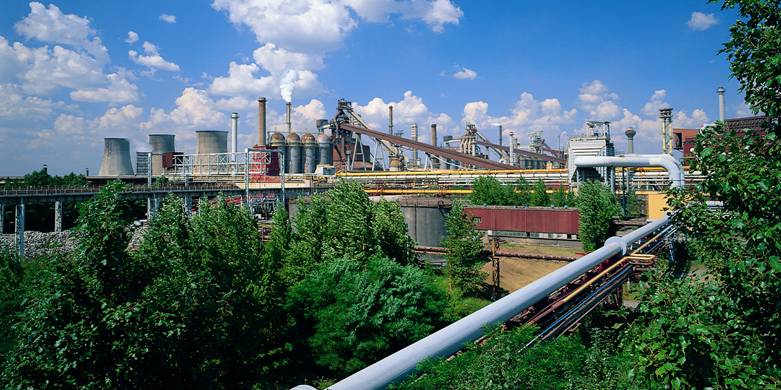
The Polish government has initiated talks with ArcelorMittal over providing PLN 1 billion ($268.5 million) in state aid for the “modernisation” of a blast furnace at the Dabrowa Gornicza steelworks, local media reports quote Polish lower house of parliament deputy speaker Wlodzimierz Czarzasty as saying.
Talks have started, among other bodies, with the Ministry of Finance on supporting the steel plant, “being aware that it is a private company, but we want to ensure that one of the furnaces is modernised … so that steel production remains and operates in Dabrowa Gornicza,” he is quoted as saying during a press conference on Monday.
Dabrowa Gornicza is ArcelorMittal Poland (AMP)’s flagship steelworks, producing 3-4 million tonnes/year of crude steel. AMP plans to transition the plant away from the blast furnace production route to EAF steelmaking in stages, with long products the first to be produced via EAF. The firm will likely continue to run one BF alongside the initial EAF, taking measures to mitigate its emissions levels.
ArcelorMittal did not reply to Kallanish requests for comment by Tuesday deadline.
Adam Smith Poland

Northwest European coil players prepare for weak summer
The downturn in northwestern European coil prices since May is unlikely to be reversed in the coming months, as market activity slows during summer, market players say.
While mills’ offers for hot rolled coil are now seen at between €620/tonne ($708) and €640, sources in Germany as well as Austria see transaction prices at €615-630 delivered. This would bring the lower end of ex-works prices to €600.
Sources would not speculate if that mark will soften below €600, but expressed little hope for a recovery in the short term. A German source tells Kallanish he attended a meeting last week with a major mill group in Central and Eastern Europe, with all its representatives bemoaning the reservation of customers to make purchases.
A relative stabilisation might kick in around September, when imports could wane in view of the introduction of CBAM in January, he adds. The level of CBAM charge will not be determined until March, but will apply retroactively to earlier arrivals. This would be a risky game for third-country exporters and EU importers.
In Austria, offers from Italy do not differ much from those quoted by northwestern integrated mills, a local source says. Regarding cold-rolled and galvanized strip, he sees a solid premium of €90-100/t for CRC and of €110-120 for galv, due to the costs of extra energy required for the processes.
He points at the very high power prices in Austria, a point made also by voestalpine at its press conference last week, with a call to the government for support. The burden from raw materials cost has become lighter due to falling iron ore prices, its executives noted.
The overall price drop for coil products was anticipated by German analyst Peter Fertig, who foretold in late April a downturn by 6% till early June. He cited pressure from cheap imports, but also the influence of lower production costs. According to his calculations, margins for German mills improved six-fold in the first four months of the year, with lower production costs on one side and rising prices on the other.
Christian Koehl Germany

Tata Steel: Steel is part of the problem, but also part of the solution
In a recent in-depth interview with McKinsey, T. V. Narendran, CEO and Managing Director of Tata Steel, highlighted the steel sector’s dual role in the global decarbonisation journey.
Acknowledging that steel production contributes around 8% of global CO₂ emissions, Narendran emphasized that no green transition is possible without steel, given its centrality in infrastructure, energy, and mobility.
He detailed Tata Steel’s strategic efforts to reduce emissions across geographies—from transitioning to scrap-based steel in the UK, exploring hydrogen solutions in the Netherlands, to piloting breakthrough technologies like EASyMelt in India. He also stressed the need for supportive policies, internal carbon pricing, and a circular supply chain mindset to accelerate sustainable transformation.

EUROMETAL at Breakbulk Club Meeting in Antwerp
On 10 June 2025, Fernando Espada, Vice-President of EUROMETAL, took part in the Breakbulk Club meeting at the Port of Antwerp-Bruges, a key gateway for European and global steel logistics.
In his presentation, Mr. Espada addressed the main challenges facing the European steel distribution sector—particularly for long and flat products—as it navigates the complex path toward meeting EU decarbonization targets.
He emphasized that while the steel industry is fully committed to the green transition, one of the greatest challenges for European industry is to maintain activity levels and steel consumption during this transformation. Mr. Espada highlighted the critical role that steel distributors play in supporting this balance, acting as a vital link between producers and end-users while adapting to regulatory, logistical, and technological shifts.
The Breakbulk Club meeting brought together key players from across the logistics and heavy-lift sectors, providing a platform for dialogue, insight sharing, and industry alignment on the path toward more sustainable supply chains.


IREPAS Short Range Outlook: June 2025
Competition becomes predatory in oversupplied global long steel market
The global long steel products market is oversupplied and overcrowded. The situation has worsened and is now structural. The competition in the global market is predatory. Margins are dead. The only strategy is cashflow and turnover. Whoever can ship first, wins. Whoever negotiates for $5/mt more, loses the order. Every confirmed business is a major success. Moreover, without the US market, competition may become brutal.
Latest US blanket 50 percent Section 232 duty marks unprecedented shift
The latest US decision to impose a blanket 50 percent Section 232 duty on all steel imports marks an unprecedented shift – one that severely impacts importers while handing a windfall to domestic producers. Although there was previously a similar measure targeting imports from Turkey, this universal application is unparalleled. What makes this especially jarring is its immediate enforcement, affecting cargoes due to arrive soon, offering no transition period or due process. This abruptness feels inconsistent with the values and principles we have long associated with the US marketplace – predictability, fairness, and rule of law.
New US decision cuts its market off from rest of world, importers handed long vacation
If the 50 percent Section 232 duty holds, it may ironically render the US the most expensive steel market globally, shutting it off from the world at a time when collaboration and balance are most needed. It seems importers in the US have been handed a long, scorching summer of vacation, just as they brace to absorb the financial fallout of all US-bound cargoes. These are extraordinary times and must be navigated with clarity, unity, and resolve.
Demand still weak in Europe and Turkey, with imports putting pressure on prices
Demand is still soft in the European market and imports are putting a ceiling on any potential price increases. Unless there is an actual pickup in end-user consumption, prices will hover at current levels or drop, especially if more cheap Asian billet flows in. Demand in Turkey is still lacking also, but more important is that, with the current iron ore and coal prices, there will be more supply pressure from Far Eastern and Southeast Asian suppliers. Far Eastern and Southeast Asian origin steel billet prices are going down almost every day.
Scrap-based producers falling behind in terms of costs
Scrap-based producers are getting priced out. Billet from Asia is cheaper than melting scrap. There is almost no point in running a melt-shop when you can just roll. This shift reshuffles power, as cheap billet exporters win and EAF-based mills are now considered high-cost producers.
Chinese long steel exporters start to push out Southeast Asians
Southeast Asian mills, who had dominated the market, are now being quietly pushed out by China. Chinese long product exports surged by over 100 percent year on year in the first quarter of 2025. Reduced blast furnace costs, falling domestic demand, and export subsidies mean this wave of Chinese exports will not slow as it is policy-driven, not market-driven. A serious displacement is taking place. Vietnam, Malaysia and Indonesia are all fighting for markets. Even South Korean mills, who were deemed to be bulletproof previously, are now closing lines for the first time in decades. China is stable, but prices are not going up and their steel is cheap, hoping for new export markets. Oil prices are also weak which is good for some players in the steel market, terrible for others.
Market currently very unstable, outlook unsatisfactory, seems to depend on political decisions
The market is currently very unstable. No one is making money. Everyone is quoting, but very few are actually booking orders. The outlook is unsatisfactory and seems to depend on political decisions.
OECD: Some brighter prospects in ASEAN and MENA regions
The recently published OECD Steel Outlook 2025 states, “Demand in the OECD area will remain roughly constant, while Chinese demand will decline appreciably due to the downturn in construction and structural shifts in China’s economy. Prospects are brighter in the Association of Southeast Asian Nations (ASEAN) and Middle East and North Africa (MENA) areas, where demand will grow strongly.”