


IETA: European institutions should fast track remaining CBAM delegated acts
The EU’s carbon border adjustment mechanism is helping to catalyze new carbon pricing mechanisms worldwide, with countries implementing, expanding or reconsidering their approaches to their carbon pricing policies, Aurora D’Aprile, EU policy officer at the International Emissions Trading Association, told Platts.
However, the Commission should fast track the remaining implementing acts, she said, as clarity is needed on the calculation of carbon prices paid abroad and the discounts importers can obtain before the definitive period of CBAM starts in 2026.
“We strongly encourage the European institutions to fast track the implementing acts, and the recognition of how to calculate and to recognize the carbon price paid in third countries,” said Aurora D’Aprile in an interview with Platts, part of S&P Global Commodity Insights.
Fragmentation remains a key issue arising from the EU’s carbon levy, IETA said in a report published June 26.
“It’s a very fragmented, fast-paced space,” said D’Aprile. “CBAM has proved to catalyze carbon pricing evolution, carbon pricing initiatives and the evolution of emissions trading systems all over the world.”
However, CBAM cannot be seen as a purely environmental measure abroad, she warned, adding that the EU measure has to be considered in the context of geopolitical and climate trade discussions.
The first legal challenge arising as a response to the EU’s carbon border mechanism came in May, when Russia launched a formal dispute at the World Trade Organization against the bloc’s CBAM and emissions trading system.
Russia said the measures imposed by the EU were “discriminatory” and “do not concern a genuine environmental measure.”
“The decision by Russia to revert this issue to the WTO is of key relevance,” said D’Aprile. “The risk is that operating globally is going to become more and more complex and uncertain, and costly, due to fragmentation. This is not something that would benefit the climate.”
Carbon prices paid abroad
The EU’s CBAM regulation states that importers can claim a reduction in the number of certificates they must surrender, corresponding to the carbon price already effectively paid in the country of origin for the declared embedded emissions of CBAM goods.
The EC defines the carbon price as a “monetary amount paid in a third country, under a carbon emissions reduction scheme, in the form of a tax, levy or fee in the form of allowance under a greenhouse gas emissions trading system”.
However, the EC is still working on several implementing and delegated acts before the definitive phase of the regulation kicks in. The publication of the implementing act that is set to further address the deduction of carbon prices paid in third countries is expected by the end of 2025.
“This is a central element of key importance for all the businesses that operate globally and will have to consider this to assess their strategies and their liabilities,” D’Aprile said.
The transitional phase of CBAM runs from October 2023 to December 2025. During this period, importers of carbon-intensive products such as iron and steel, cement, fertilizer, aluminum, hydrogen and electricity are only required to report the greenhouse gas emissions embedded in their imports.

Companies are required to purchase certificates starting in February 2027 for goods imported in 2026, according to the latest simplification package put forward by the EU. However, market participants have previously said that several challenges remain ahead of the definitive period.
International credits
The regulation on reductions for carbon prices paid in third countries only extends to compliance carbon schemes such as emissions trading systems or carbon taxes and does not mention international carbon credits or Article 6 units under the Paris Agreement.
“The role of international credits is something that IETA encourages to be put into the discussion,” said D’Aprile.
She welcomed the EC’s decision to greenlight the use of international credits and Article 6 units toward meeting the bloc’s 2040 climate targets, saying that this was a positive signal.
The amendments to the bloc’s climate law earlier in July will allow the “limited use of high-quality international credits” under Article 6 of the Paris Agreement starting from 2036. The regulation will allow for 3% of the bloc’s 1990 net emissions to be counted toward the 2040 target.
The use of these Article 6 units toward obtaining discounts under the EU’s carbon border levy, however, has not been addressed by the EC.
“This is something that may, in the future, enter into the conversation, but as of now, the priority should be how to recognize the carbon price effectively paid,” D’Aprile said.
The role of Article 6 will likely become part of the CBAM discussion in the future, she said, because the EU’s trade partners are already considering Article 6 in their compliance mechanism.
Singapore and Japan have recently issued policies that may encourage the trading of Article 6.2 carbon credits, with Japan establishing a tailored system, the Joint Crediting Mechanism, which only accepts bilateral methodologies approved by JCM partners.
Once the regulation enters the definitive period, the price of CBAM certificates will be calculated based on the quarterly average of EU Allowances in the first stage, before the calculation moves to a weekly average.
Platts assessed the weekly average price of EU Allowances for the nearest December 2025 delivery at Eur70.71/mtCO2e ($82.66/mtCO2e) on July 11.


EUROMETAL seeks inclusion of traders, distributors in trade measures
EUROMETAL has urged the European Commission to engage with member states to ensure that service centers, traders and steel distributors are included in discussions relating to trade measures, board member Julian Verden said July 17.
“EUROMETAL is fully behind the Commission’s endeavours to support the European steel industry, which we strongly believe is vital for Europe,” Verden, who is also managing director of Stemcor Europe, said during a telephone interview with Platts. “However it is not necessary that measures should go to the exclusion of imports.”
“I would suggest that the new measures that the EC is likely to put in place should be similar to the existing measures,” he said. “Some changes and reductions in volumes could be reasonable, but the EC should discuss them with us as we represent companies employing many workers and creating considerable taxes. We are happy to work to help propose optimal solutions so that the EC is not just hearing the steel producer side.”
EUROMETAL represents all operators of the steel intermediation chain.
When addressing Eurofer’s recent rumored requests for a 50% increase in safeguard duties and a reduction in quotas, Verden expressed strong reservations. He emphasized that doubling the existing 25% duty is unreasonable and would worsen the challenges faced by end customers. “We’re seeing real hardship,” he said, pointing out that the current duties are already burdensome for many in the industry. While he acknowledged that some adjustments to quotas might be warranted, he argued that a 50% reduction is unjustified, given that the market has only declined by about 15%.
The discussion also touched on the implications of the Trump administration’s tariffs, particularly regarding raw materials exports from Europe to the US. He hinted that if tariffs remain in place, they could lead to significant challenges for European traders selling to the US, particularly for pig iron and other semi-finished products, and higher costs for US steel companies, which probably lobby to lower the tariffs.
The US steel market has experienced significant volatility this year, which has largely benefited domestic raw steelmakers. The current tariff policy has supported finished steel product prices, although it has not significantly affected US producer costs.
Despite a decline in US Midwest hot-rolled coil prices from their mid-March highs, prices remain up 25% in the year to date, according to Platts pricing data.
According to the American Iron and Steel Institute, the Netherlands, the UK and Sweden are the top three exporters of scrap to the US.
Verden also raised concerns about the current challenging geopolitical climate, which is resulting in some shipping routes becoming more difficult to use, in particular after Houthi rebels attacked and sank two ships earlier in July, killing at least four seafarers after months of calm.
The Red Sea is a critical waterway for commodities shipping but traffic has dropped sharply since Houthi attacks off Yemen’s coast began in November 2023. Verden noted that while the freight market remains soft, insurance costs are increasing, pushing up operational costs for traders.
EU postpones sections quota adjustment to August
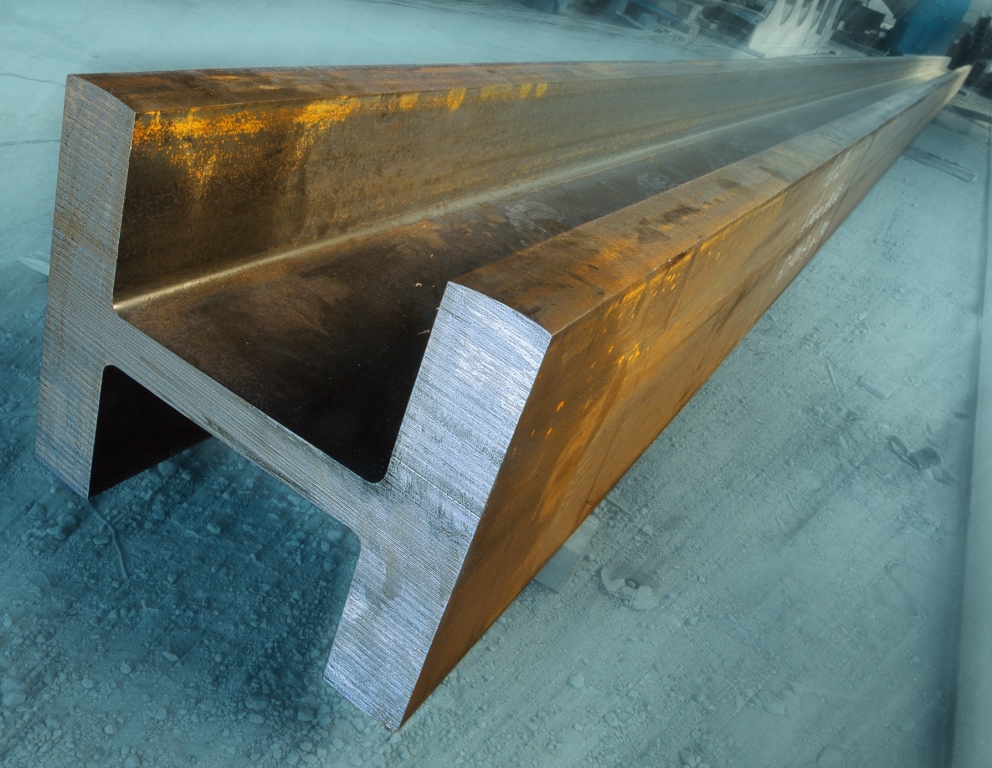
The removal of the 15% cap on the EU’s safeguard quota for steel sections will be postponed till 1 August, as the initial date of 1 July could not be upheld, the EU says in a note to the WTO Committee on Safeguards.
The adjustment affects Category 17 – angles, shapes, and sections of iron or non-alloy steel, under CN codes 7216 31 10, 7216 31 90, 7216 32 11, 7216 32 19, 7216 32 91, 7216 32 99, 7216 33 10, and 7216 33 90, Kallanish notes.
To swiftly restore traditional trade flows, the EU said previously it plans to remove the 15% country-specific import cap and reintroduce country-specific quotas for the UK, Türkiye, and Korea, along with a residual quota.
A 40% limit will apply to the residual quota, and quota holders will be excluded from accessing it during the final quarter of the safeguard year.
For the transition period from 1 August to 30 September 2025, quota volumes will be allocated on a pro-rata basis, based on remaining global quota balances as of 31 July.
Additionally, the EU proposes corrections to technical inaccuracies, including adjustments to footnotes and the removal of a cap in Category 4B.
The EU safeguard measure will remain in place until 30 June 2026, with a continued annual liberalisation rate of 0.1%.
Consultations with interested exporting members are scheduled for 22 and 23 July.
| Country | 1.7- 30.9.2025 | 1.10- 31.12.2025 | 1.1- 31.3.2026 | 1.4- 30.6.2026 |
| Ukraine | 31,663 | 31,663 | 30,974 | 31,318 |
| United Kingdom | 27,507 | 27,507 | 26,909 | 27,208 |
| Türkiye | 22,892 | 22,892 | 22,395 | 22,643 |
| South Korea | 5,335 | 5,335 | 5,219 | 5,277 |
| Other countries | 12,555 | 12,555 | 12,282 | 12,419 |
| United Kingdom to Northern Ireland | 14,255 | 14,255 | 13,945 | 14,100 |
Elina Virchenko Ukraine
