


European Commission launches consultation on new EU steel measure post-2026
The European Commission has opened today a Call for Evidence and Targeted Consultation on a future trade measure aimed at protecting the EU steel industry from the negative effects of global overcapacity. The initiative is designed to replace the current steel safeguard measure, which is set to expire on 30 June 2026.
The Commission is seeking stakeholder input to shape a highly effective and future-proof instrument to address:
- Record levels of global overcapacity, particularly from state-subsidised producers in third countries
- Trade diversion risks, worsened by recent US tariff hikes (now 50%) on steel and aluminium
- Persistent low-price import pressure on the EU market, while EU demand remains subdued
- The urgent need to secure investment conditions for the decarbonisation and long-term competitiveness of EU steelmakers
Access the consultation here: Post-2026 Steel Measures Questionnaire
Feedback deadline: 15 August 2025
This upcoming measure, expected in Q3 2025, could take the form of a new Regulation replacing the current safeguard, with a focus on: stronger, more targeted protection against injurious surges in imports, addressing the broader impact of systemic global overcapacity and supporting the EU’s Steel and Metals Action Plan and broader industrial competitiveness agenda.
EU long steel prices hold as summer lull deepens
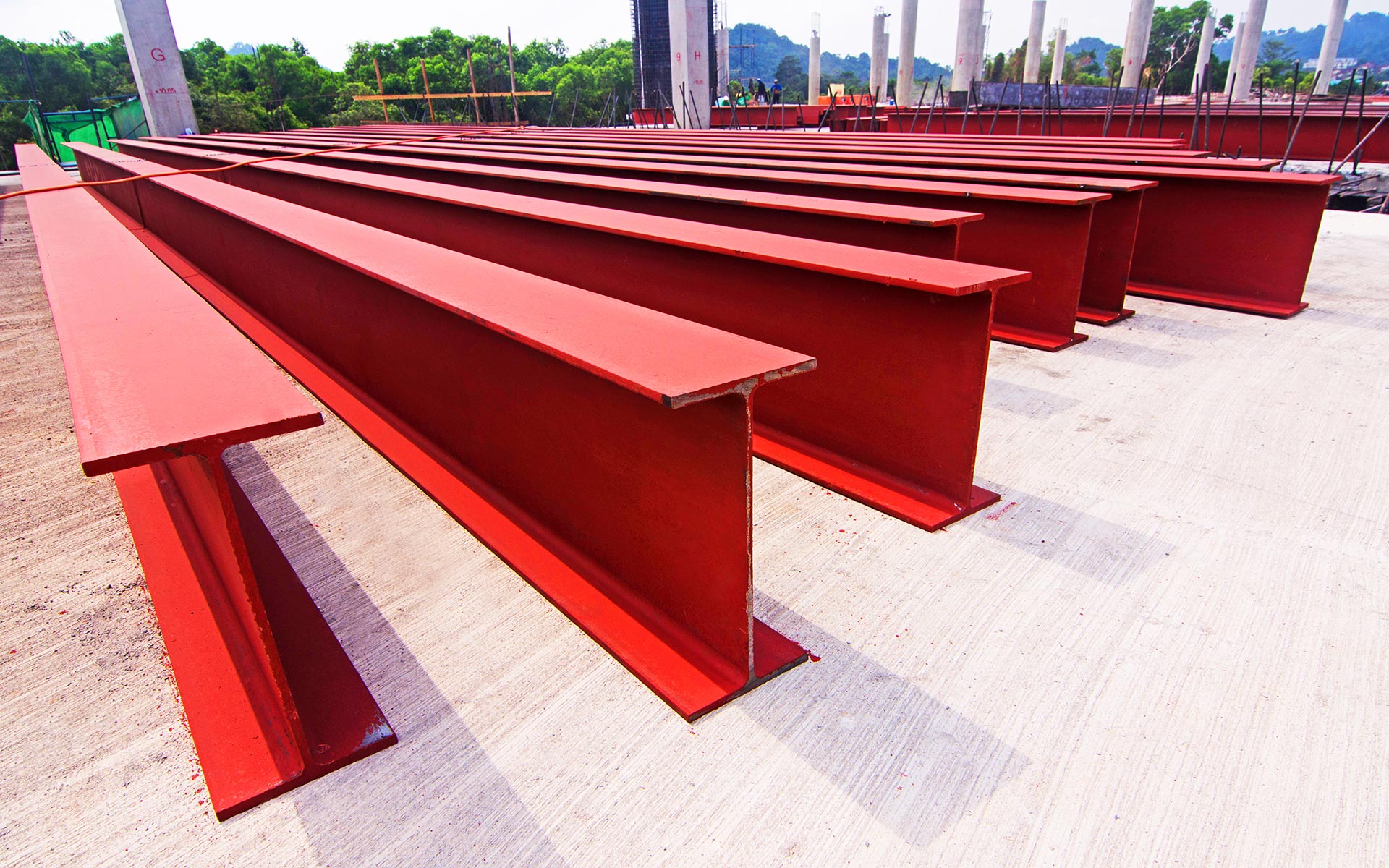
European domestic long steel prices remained stable in the week to July 16, with mills and buyers alike retreating into holiday mode, limiting liquidity and weakening any momentum toward price changes.
In Northwest Europe, rebar was heard trading at Eur600-630/mt delivered, with workable ex-works levels in Benelux cited at Eur610/mt. Market activity remained limited, with buyers showing little urgency to commit ahead of August maintenance stoppages.
“There is no real market right now — everyone’s either away or waiting,” a trader said. “The mood is muted, and we’re just rolling through the motions until September.”
In Southern Europe, the picture was slightly more dynamic, although far from robust. Sources in Italy said mills were testing higher rebar prices — Eur530-545/mt ex-works — as they moved to clear stock before summer closures. However, many were still shipping older orders priced closer to Eur510-520/mt.
“Private construction is at a standstill. Producers are trying to lift prices, but nobody’s biting yet,” a distributor said.
Market participants also flagged pressure from lower scrap prices, weak private construction demand and lingering overstock in parts of Central and Eastern Europe. Competition from imports out of Algeria and Egypt continued to weigh on sentiment.
Steel associations voiced concerns over broader trade policy risks. A distributor source said the proposed 50% US tariffs on some steel exports could jeopardize EU access to one of its last major export markets, adding urgency to ongoing EU-US negotiations.
Platts assessed Northwest European rebar at Eur610/mt ex-works and medium sections at Eur765/mt delivered Benelux, both stable week over week.
Platts assessed both carbon-accounted rebar and carbon-accounted medium sections at Eur30/mt each, both stable week over week.


EU HRC stabilizes; summer sentiment remains weak
European hot-rolled coil prices remained unchanged July 17, as sources cited disparate conditions among sellers amid general negativity.
Market conditions held largely stable as depressed summer demand fundamentals continued.
“For us, the market is better than expected but not as good as hoped after the new government was elected,” a service center source in Germany said, and indicated HRC offers at Eur560/mt ex-works Ruhr but otherwise calmer conditions.
The same source noted cheaper import offers, but said some origins, such as Indonesian, were not necessarily suitable for the whole market.
A second service center source said business conditions were slower and cited a disparity in attitudes among his customers, but that the majority remained largely negative. “Some of our customers are laughing about the situation as they have good books, and their purchasing prices are getting lower.”
“But the majority are in a bad situation, and are fighting for non-existent orders, with their sales prices dropping faster than their buying prices,” the source added.
Looking ahead, the source referred to the regulatory uncertainty facing the industry, highlighting that CBAM, safeguards and recent tariffs from the US further limited confidence in the market, a view shared by many.
Market participants kept noting a wide range of mill offers during the day, continuing the recent trend of sellers fighting to pick up tonnages in the market.
Platts assessed domestic HRC in Northern Europe at Eur535/mt ex-works Ruhr and in Southern Europe at Eur520/mt ex-works Italy, both unchanged day over day.
Platts assessed imported HRC in Northern Europe at Eur465/mt CIF Antwerp and in Southern Europe at Eur465/mt CIF South Europe, both unchanged day over day.
UK HRC prices steady on seasonal summer slowdown
UK domestic hot-rolled coil prices remained unchanged in the week ended July 17, as market participants pointed to a quieter period with stable demand and mixed expectations.
A service center source said activity levels were expected to decline in the coming weeks as the market moved deeper into summer, though current demand remained relatively stable.
The source also referenced the EU hot-rolled coil market, noting prices were more competitive across the water as mills continued to lower offer levels to fill order books for summer and questioned whether this would impact the UK market.
Platts assessed HRC in Northern Europe at Eur535/mt ex-works Ruhr, stable day over day and the lowest level since Nov. 23, 2020.
Platts assessed HRC in the UK at GBP505/mt DDP West Midlands, unchanged week over week. Tradable values were heard in the range of GBP500-520/mt.
The main point of concern raised from the market continued to be the lack of clarity over the recent tightening of UK quotas on certain types of steel.
“The hot-dipped galvanized quota situation is ridiculous,” a service center source said. “The government didn’t really give any notice; it has been really unclear.”
The source added that some UK ports, particularly Liverpool, were overcrowded due to the quota changes, with significant volumes of material awaiting customs clearance.
Some sources pointed out that customers were switching the origin of their hot-dipped galvanized imports from South Korea and Vietnam, which were most affected by the quota, to countries such as Brazil and Turkey.

EU postpones country-specific quotas on angles, shapes and sections to August
The European Commission has postponed the implementation date of July 1, 2025 to remove the 15 percent country-cap for quota volume for angles for Turkey, South Korea and the UK, shapes and sections of iron or non-alloy steel (Category 17) and re-introduce the country-specific quotas for the given countries, according to a notification submitted to the World Trade Organization (WTO). These adjustments will now be effective from August 1, 2025, to June 30, 2026.
The commission found that country-cap for quota volume under globalized Category 17 is affecting the traditional trade flows of the given three countries, restricting their access to duty-free volumes to levels below their historical trade levels, as SteelOrbis previously reported. The countries will be subject to 25 percent additional duty when quota volume is exceeded. According to the statement, the commission is willing to consult with EU member states on the proposed measure.
The quota volumes (mt) to be allocated for the UK, Turkey and South Korea can be seen at the table below.
|
Country |
July 1, 2025 – September 30, 2025 | October 1, 2025 – December 31, 2025 | January 1, 2026 – March 31, 2026 | April 1, 2026 – June 30, 2026 |
| Turkey | 22,892 | 22,892 | 22,394 | 22,643 |
| South Korea | 5,335 | 5,335 | 5,219 | 5,277 |
| The UK | 27,506 | 27,506 | 26,908 | 27,207 |
The products currently fall under the codes 7216 31 10, 7216 31 90, 7216 32 11, 7216 32 19, 7216 32 91, 7216 32 99, 7216 33 10, and 7216 33 90.


Germany urges swift action on Steel and Metals Action Plan to safeguard industry
In a decisive move before its summer recess, Germany’s Federal Council (Bundesrat) has backed a resolution by North Rhine-Westphalia demanding the rapid implementation of the European Steel and Metals Action Plan (ESMAP). The proposal, which also calls for a national steel summit, has received support from the states of Saarland, Bremen, and Lower Saxony.
Kerstin Maria Rippel, managing director of the German Steel Federation (WV Stahl), welcomed the resolution. She emphasized that the federal government must now fulfill its coalition commitments and push for ESMAP adaptation at the EU level to secure the future of Germany’s steel industry.
Key challenges facing Germany’s steel sector:
1. Foreign trade defense urgently needed
Germany’s steel producers face mounting import pressure and global overcapacity, leading to a sharp decline in production efficiency and competitiveness. Around one-third of steel consumed in the EU is imported, 50 percent US tariffs on steel remain in place, domestic demand remains historically low, and production facilities are underutilized. The OECD projects global steel overcapacity will rise from 600 million mt in 2024 to over 700 million mt by 2027. Therefore, a strong, long-term EU foreign trade defense instrument is required to shield local producers and secure jobs.
2. Competitive electricity pricing essential
Electric arc furnace (EAF) steelmaking in Germany is being threatened by high electricity and grid costs. Germany’s industrial electricity prices are well above international levels. A reduction in transmission charges, promised long ago, is yet to materialize. Delays worsen competitiveness and climate goals. Immediate implementation of industrial electricity pricing models, similar to France and Italy, and reduction of network fees are essential.
3. Green transformation for domestic growth
The development of lead markets for low-emission raw materials produced in Germany and the EU presents a key opportunity to drive economic growth and enhance the strategic resilience of the German steel industry. Germany’s special infrastructure and climate fund can revitalize the economy provided that policy focuses on local value creation.
Industry warning: Time is running out
Ms. Rippel issued a strong warning about the economic and social risks of continued inaction. Each month of delay weakens Germany’s competitive edge and puts thousands of jobs at risk, she noted. She also stressed that without stimulating domestic demand and ensuring fair competition, Germany and the EU risk losing global industrial leadership in green steel and sustainable materials.

Stability in Romania’s rebar spot prices but slight price reduction by sole domestic producer
This week, Romania’s rebar spot market has continued to show signs of stabilization, with prices holding steady compared to the previous week. According to market sources, although there was a brief uptick in demand in recent weeks, largely due to earlier price declines, current demand levels remain weak and unresponsive. At the same time, Romania’s sole domestic rebar producer, facing subdued demand typical of the summer period, has adjusted its pricing in line with spot market trends by slightly lowering its offers over the past week.
Reports indicate that Romanian rebar traders have maintained their prices from last week at €580-595/mt ex-warehouse. In contrast, the domestic mill’s rebar prices have slightly decreased to €585-590/mt ex-works, down from €590-605/mt ex-works in the previous week.
In the wire rod market, prices have also remained stable. Many traders continue to offer material at €580-590/mt ex-warehouse, as overall demand continues to lack momentum.
On the import side, no new transactions have been reported, and buyer interest remains limited. Most buyers are currently holding sufficient inventory, and with the summer holiday approaching, significant purchasing activity is expected to resume only by the end of August or September. Currently, target rebar offers from Bulgaria have decreased by €5/mt to €605-615/mt CPT from the past week, for July material. Offers from Greece have remained in line over the last week, with rebar standing at €585-590/mt CFR and wire rod at €580-585/mt CFR.
As for imports from outside of the EU, the material will be sold only in the next quota round (October 1) while European material is mainly available for July-August. Therefore, rebar from Turkey is priced at much lower level, though increased by €10/mt over the week to €475-490/mt CFR, based on an exchange rate of €1 = $1.16 and estimated freight costs of €15-20/mt. Meanwhile, rebar and wire rod offers from Egypt have stayed stable compared to last week, at €485-490/mt CFR and €500-505/mt CFR, respectively.

HRC prices stabilize in Europe; some suppliers voice small increases
European steel hot-rolled coil prices continued to stabilize after several weeks of a persistent downtrend, with mill sources hopeful that regulatory pressures will support a rebound later in the year – indeed some have already tried increases, sources told Fastmarkets on Thursday July 17.
HRC prices in Europe have been declining since early May due to a lack of demand, import pressure and because of an aggressive sales push by some suppliers in an attempt to “match import prices” to fill their order books.
But domestic prices have started stabilizing in the past few days, with the majority of industry sources that Fastmarkets spoke to saying they see further price drops as highly unlikely.
“Prices are now stabilizing near lows, but it looks like producers are eyeing increases for the fourth quarter. Moods are changing,” a buyer in Northern Europe said.
A supplier source reported an increase in the number of inquiries they had received for HRC with lead times in the fourth quarter and even the first quarter of 2026.
“This [potential rebound in HRC prices] is linked to CBAM (Carbon Border Adjustment Mechanism) coming into force and higher costs of imported coil as a result. We see that many buyers are looking to secure European [HRC] for Q4 2025 and Q1 2026,” a supplier in the region said.
This was echoed by several small and medium-sized buyers in the region, who told Fastmarkets that they had stopped ordering overseas coil amid CBAM and safeguards concerns.
In Northern Europe, offers from integrated mills were heard at €560-570 ($652-663) per tonne ex-works or delivered, depending on the supplier.
One supplier in the Benelux area increased offers by €10 per tonne, to €590 per tonne CPT, Fastmarkets heard.
Buyer sources estimated tradable prices at €540-550 per tonne ex-works, while most suppliers indicated €550 per tonne ex-works as the lowest price possible.
Mill sources pointed out that discounts were possible for HRC with shorter lead times – August-September, while for the material with delivery later in the year price “would be higher,” a second mill source said
Italian coil with September lead times was offered to Germany at €580 per tonne delivered.
As a result, Fastmarkets’ calculation of the daily steel HRC index, domestic, exw Northern Europe, was €550.63 per tonne on Thursday, up slightly by €3.57 per tonne from €547.06 per tonne on Wednesday.
The Northern European index was up by €6.05 per tonne week on week, but was down by €43.50 per tonne month on month.
In Southern Europe, meanwhile, Fastmarkets’ daily steel hot-rolled coil index, domestic, exw Italy, was calculated at €525.83 per tonne on Thursday, up by just €1.45 per tonne from €524.38 per tonne on Wednesday.
The index was up by €5.41 per tonne week on week, but down by €42.87 per tonne month on month.
In Italy, several large-tonnage deals were reported at €520-525 per tonne ex-works.
Offers were reported at €530-550 per tonne ex-works form local suppliers.
Sources agreed that HRC prices in Italy have also “hit rock bottom”, with both local and overseas suppliers rejecting lower bids.
“Italian buyers booked large volumes of HRC from Asian mills lately, but new lower bids were rejected by [import] suppliers, and buyers started to look at domestic material more,” a source in Italy said.
Local mills were not increasing prices so far, with sources not expecting any significant price movements until the end of August or early September.
In the secondary market, 4mm gauge HR sheet was offered at €630-650 per tonne CPT, with some deals reported as low as €620-630 per tonne CPT.
HRC offers from Indonesia to Italy were heard around €450 per tonne CFR, and at €480-490 per tonne CFR from India.
Offers from Turkey remained at €480-500 per tonne CFR, including the anti-dumping duty.


UK, US near final deal to eliminate steel tariffs following quota breakthrough
The UK and US are aiming to finalize a trade agreement by the end of July that would eliminate the Section 232 25% tariffs on British steel exports, according to official and public sources.
This follows recent progress in negotiations over quota eligibility and product scope, which had previously delayed the implementation of the tariff-lifting framework.
UK Prime Minister Keir Starmer is expected to meet US President Donald Trump in Scotland later in July during the president’s private visit to the country. The meeting, which will take place in an unofficial capacity, is expected to focus on finalizing the terms of the agreement. The US government has indicated the two leaders will revisit the deal reached in principle in May.
The framework for the tariff removal was set out in a White House document published on June 23, following an executive order signed by President Trump on June 16. The document outlines how the new quota system would work, and which steel products would be eligible for tariff removal, but it does not include a timeline for when the changes would take effect.
Under the proposed arrangement, the US would remove tariffs on UK steel in exchange for reciprocal reductions on UK tariffs for ethanol and beef. Progress had stalled due to technical disagreements over which steel products qualified under the new system.
Two of the UK’s largest producers — Tata Steel and British Steel — had faced uncertainty over their eligibility. Tata, which is transitioning to electric-arc furnace (EAF) production, has been importing semi-finished steel for finishing in the UK, which initially seemed to fall outside the scope of the deal.
“We welcome the progress the UK Government is making with the USA administration, in what is clearly a dynamic situation. We still very much hope that the UK and US governments can reach a positive trade agreement with zero tariffs for the UK steel sector, especially considering most of the products we supply into that market cannot be produced locally. Timing continues to be of the essence as we and our customers continue to be subject to 25% tariffs whilst negotiations are ongoing,” a Tata Steel spokesperson told Fastmarkets.
“A trade agreement with the US will not, however, negate the need for a replacement of the UK’s own safeguard measures with a more rigorous and efficient mechanism. This is necessary to ensure our domestic market remains competitive and is protected against undue and excess trade diversions which [are] significantly undercutting our UK business,” they added.
British Steel’s ownership by China’s Jingye Group raised concerns in Washington over potential trans-shipment risks, but after the emergency takeover of the company by the UK government in April, the issue is no longer on the table, Fastmarkets understands.
The UK exported approximately 180,000 tonnes of finished and semi-finished steel to the US in 2024, valued at £370 million ($496 million), according to trade association UK Steel. This accounted for 7% of the UK’s total steel exports by volume and 9% by value.
The US had threatened to raise tariffs on UK steel to 50% effective July 9 if a final agreement was not reached. A temporary reprieve was granted on June 3, with the US confirming that UK steel would continue to face the existing 25% tariff while negotiations were ongoing.
The move was described by Gareth Stace, director-general of UK Steel, as a “welcome pause,” but one that still leaves UK producers facing uncertainty over future access to the US market.
“Continued 25% tariffs will benefit shipments already on the water that we were concerned would fall under a tax hike,” Stace said in a press release on June 3. “However, uncertainty remains over timings and final tariff rates, and now US customers will be dubious over whether they should even risk making UK orders.”
Julia Bolotova in Brussels contributed to this article.

European steel CRC, HDG prices falling on seasonal slowdown
Downstream flat steel prices fell further in Europe in the week to Wednesday July 16, with slow demand during the holiday season still impacting the market, sources told Fastmarkets.
However, sources also said that prices might have reached their lowest possible levels this week.
Northern Europe
Domestic prices for cold-rolled coil in Northern Europe fell in the week to Wednesday, according to market sources.
Sources estimated the workable level at €630-655 ($732-761) per tonne ex-works this week, compared with €650-660 per tonne ex-works during the previous assessment period.
Fastmarkets’ weekly price assessment for steel cold-rolled coil, domestic, exw Northern Europe was €630-655 per tonne on Wednesday, falling from €650-660 per tonne the previous week.
Meanwhile, CRC imports were stable in the week to Wednesday.
Fastmarkets’ weekly price assessment for steel cold-rolled coil, import, cfr main port Northern Europe was €590-615 per tonne on Wednesday, unchanged week on week.
Domestic prices for HDG in Northern Europe also fell this week, with sources estimating the workable level at €640-670 per tonne ex-works on Wednesday, compared with €660-670 per tonne ex-works during the previous assessment period.
However, a deal was also heard at €645-650 per tonne ex-works.
Therefore, Fastmarkets’ weekly price assessment for steel hot-dipped galvanized coil, domestic, exw Northern Europe was €645-670 per tonne on Wednesday, widening downward from €660-670 per tonne the previous week.
Meanwhile, HDG imports were stable in the week to Wednesday.
Fastmarkets’ weekly price assessment for steel hot-dipped galvanized coil, import, cfr main port Northern Europe was €690-700 per tonne on Wednesday, unchanged week on week.
Southern Europe
Domestic prices for CRC in Southern Europe also fell in the week to Wednesday, according to market sources.
Sources estimated the workable level at €620-630 per tonne ex-works this week, compared with €630-650 per tonne ex-works during the previous assessment period.
As a result, Fastmarkets’ weekly price assessment for steel cold-rolled coil, domestic, exw Southern Europe was €620-630 per tonne on Wednesday, falling from €630-650 per tonne the previous week.
Regarding CRC imports, sources estimated the workable level at €600-610 per tonne CFR in the week to Wednesday, compared with €590-620 per tonne CFR during the previous week.
However, offers were also heard hovering around €590-610 per tonne CFR this week.
Therefore, Fastmarkets’ weekly price assessment for steel cold-rolled coil, import, cfr main port Southern Europe was also €590-610 per tonne on Wednesday, narrowing downward from €590-620 per tonne in the previous assessment period.
Domestic HDG prices in Southern Europe also fell in the week to Wednesday, with sources estimating the workable level at €630-650 per tonne ex-works, compared with €640-670 per tonne ex-works during the previous assessment period.
Fastmarkets’ weekly price assessment for steel hot-dipped galvanized coil, domestic, exw Southern Europe was €630-650 per tonne on Wednesday, falling from €640-670 per tonne the previous week.
On the other hand, HDG import prices were stable this week.
Fastmarkets’ weekly price assessment for steel hot-dipped galvanized coil, import, cfr main port Southern Europe was €660-690 per tonne on Wednesday, unchanged week on week.