


Long-standing CEO of SMS group Heinrich Weiss passes away at 83
SMS group has announced the passing of Heinrich Weiss, former CEO and long-standing figurehead of the company, who died on 8 September surrounded by his family.
Heinrich Weiss led SMS group for more than five decades, transforming it from a regional enterprise into a global leader in machine and plant engineering for the steel industry. He took over as Chairman of the Managing Board in 1971, following his entry into the family business in 1968. Under his leadership, SMS group expanded internationally, including the key acquisitions of Schloemann (1973), Mannesmann Demag (1999), and Paul Wurth (2021).
Weiss remained involved in the company’s strategic direction until 2024, ensuring a smooth generational transition. Alongside his business leadership, he held numerous influential positions in German industry and economic policy.
SMS group, the Weiss Family Foundation, and his family have paid tribute to his lasting legacy and commitment to innovation, integrity, and entrepreneurship.

State of the Union: EU steelmakers welcome President von der Leyen’s focus on the steel sector
The European Steel Association has welcomed the attention given to the steel industry by Commission President Ursula von der Leyen during today’s State of the Union address, in which she pledged to propose new measures to support clean manufacturing and Europe’s strategic industrial value chains.
In his statement, EUROFER Director General Axel Eggert underlined the severity of the challenges facing European steel producers:
“Our industry is currently facing all odds: global overcapacity, unfair trade practices, high energy prices, scarcity of strategic raw materials such as scrap, and the massive investment challenge of decarbonisation.”
The sector is now looking for concrete and urgent action — particularly on trade. Eggert emphasised the need for a robust successor to the current steel safeguard measures, which are due to expire in mid-2026. Without new tools in place, the EU market risks being overwhelmed by cheap, high-carbon imports that undermine domestic production and the EU’s climate ambitions.
President von der Leyen’s commitment to strengthening Europe’s clean manufacturing base, including proposals to support the transition to green production, promote circularity, and ensure energy access, was seen as a positive signal. However, Eggert stressed that implementation will be key:
“The Steel and Metals Action Plan (SMAP), unveiled last March, must be implemented in full – without watering down the ambition of the Commission President and her College of Commissioners.”


EESC calls for stronger trade protection in face of deepening EU steel industry crisis
The European Economic and Social Committee (EESC) has sounded the alarm over the existential crisis facing Europe’s steel and metals industry.
With imports surging, US tariffs shutting down export routes and global overcapacity rising, the EESC warns that Europe risks losing not only its steelmaking strength but also its strategic autonomy, green transition and industrial security.
Since 2018, EU steel production has plummeted by 31 million mt, while imports now command 27 percent of the domestic market. A key blow came in March 2025 when the US re-imposed 50 percent tariffs on EU steel, cutting off a vital market for 4.6 million mt of exports annually. This measure risks diverting 27 million mt of global steel flows toward Europe, with global overcapacity projected to surge to 721 million mt by 2027 – five times Europe’s annual production.
The EESC proposes a blueprint for saving Europe’s steel industry, with a mix of trade, energy and environmental measures:
- Tougher trade safeguards
- Import caps: 15 percent for flat & stainless steel, five percent for long steel.
- Universal tariffs applied to all countries, without exemptions.
- Strict “melted and poured” rules to stop circumvention.
- End carry-over quotas; enforce strong above-quota tariffs (ideally at 50 percent).
- Energy market reforms
- Immediate relief on energy prices for energy-intensive industries.
- Rebates on network tariffs.
- Dedicated hydrogen funding for green steelmaking.
- Fixing Carbon Border Adjustment Mechanism (CBAM)
- Close loopholes that allow circumvention.
- Maintain free allowances for exporters.
- Extend CBAM scope to downstream steel-intensive products.
- Protecting strategic scrap
- Monitor ferrous and aluminum scrap flows.
- Consider export duties or tariff quotas.
- Enforce stricter rules against illegal scrap exports.
What is at stake
While the US, China and India actively protect and invest in their steel sectors, Europe risks being left behind.
- Energy prices in Europe are two to three times higher than in China or India.
- Nine million mt of EU production were shut down in 2024 alone.
- Russia continues to export large volumes of steel into Europe despite sanctions.
Without decisive action, Europe could become the world’s dumping ground for high-emission, subsidized steel, devastating domestic producers, the EESC noted.
The EESC stresses that delay means defeat. It stated that Europe must act decisively with permanent trade defenses, energy market reforms, CBAM fixes and strategic raw material protection.


Norway calls for stronger EU CBAM to prevent carbon leakage and close loopholes
The Norwegian government has submitted its views to the European Commission’s consultation on the Carbon Border Adjustment Mechanism (CBAM). Norway emphasized that, while its domestic industries, particularly in primary aluminum, ferroalloys and silicon metal, already operate with significantly lower lifecycle emissions due to renewable electricity, they remain vulnerable to carbon leakage and unfair competition.
Welcoming the commission’s initiative, Norway stressed that a stronger CBAM is essential to maintain the competitiveness of hard-to-abate industries during the green transition.
Norway underlined that CBAM will only succeed if loopholes are closed. Excluding downstream products risks shifting production outside the EU, harming upstream producers. While acknowledging the difficulty of defining which downstream goods should be included, Norway recommended prioritizing those most closely linked in price to CBAM-covered products.
The government also urged continuous monitoring and updates to tackle circumvention. For example, process scrap in the aluminum sector or the use of substitutes should be addressed. Stronger emissions reporting standards and verification rules were highlighted as critical.
Norway noted that not all circumvention risks can be predicted. Therefore, CBAM should be designed to evolve with emerging threats, ensuring loopholes do not undermine its effectiveness.
Norway indicated that it pays special attention to the electricity sector, stressing that emission factors for imported electricity must be calculated consistently across all importers from the same country or bidding zone. Clear rules are also needed to incentivize third countries to decarbonize their energy systems, preventing carbon leakage in cross-border power trade.

UK’s new defense industrial strategy puts UK steel at core of national security
The UK government has unveiled its Defence Industrial Strategy (DIS) 2025, placing UK steel at the center of national security. For the first time, procurement reforms will allow the Ministry of Defence (MOD) to prioritize domestic steel producers, marking a turning point for the sector long sidelined in defense projects.
According to UK-based trade association UK Steel, the publication of the DIS signals a decisive policy change. UK Steel noted that, with the DIS 2025, the UK government is reshaping the rules of defense procurement. By putting steel at the heart of industrial security, the UK strengthens not only its defense capacity but also its economic resilience. Steel is now officially recognized as an “industrial security priority”, breaking from the previous “global competition by default” approach.
Key elements of the new strategy include:
- Support for UK businesses through long-term contracts, procurement reforms and a stronger focus on homegrown supply chains.
- Building resilience by securing domestic manufacturing capacity, stockpiles, and encouraging inward investment into defense-critical industries.
- Fixing procurement processes by simplifying requirements, increasing transparency and engaging industry early in defense planning.
Gareth Stace, director general of UK Steel, welcomed the commitment and said, “For too long, our producers have been overlooked in major defense contracts. The Defence Secretary’s commitment in the DIS is a welcome endorsement of the strategic role of our sector.”
He added that the new Defence Industrial Joint Council will further enhance cooperation between government and industry to showcase UK steel’s capacity to scale, innovate and deliver for defense.
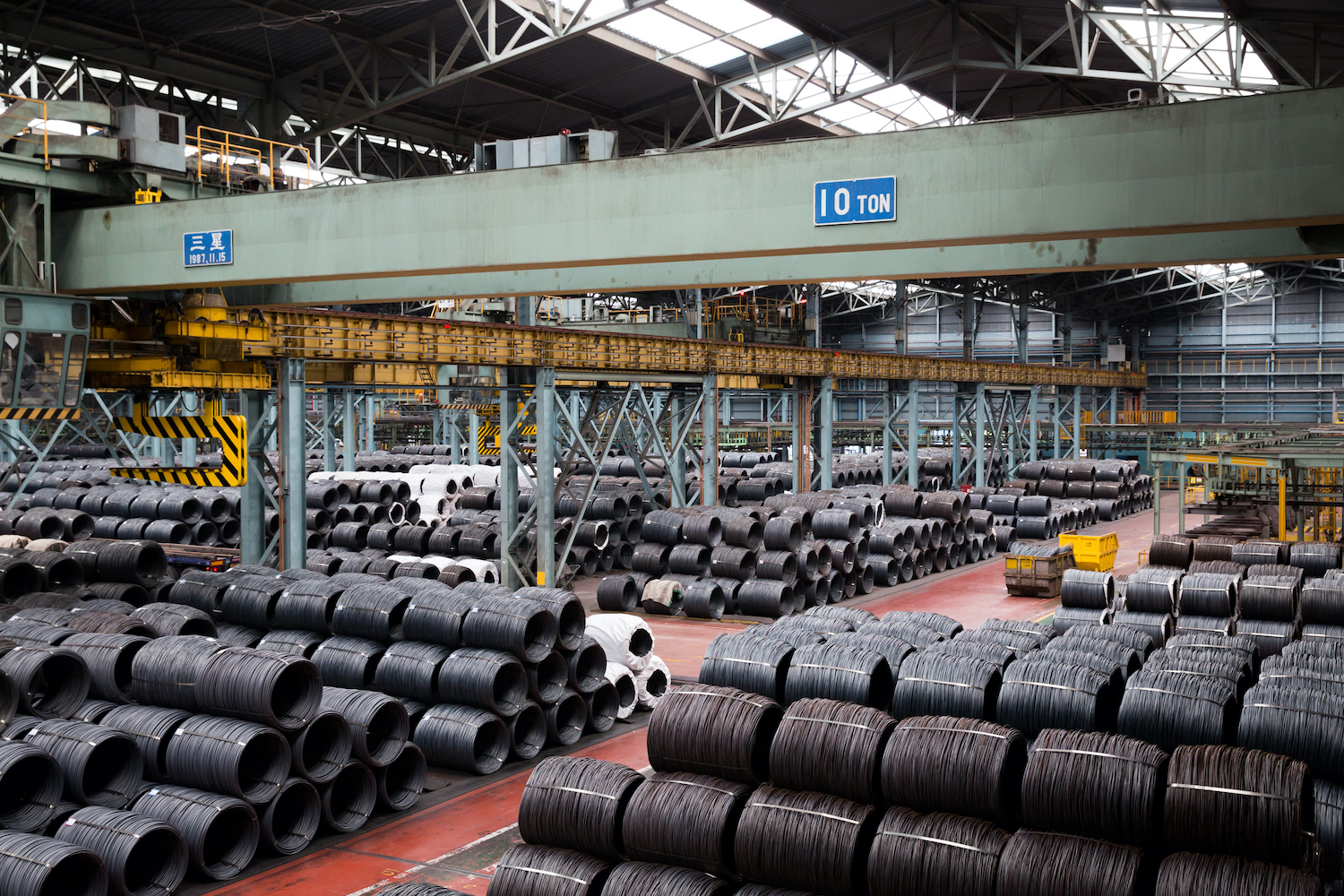
European steel HRC prices still trending below mill targets on low demand
European prices for steel hot-rolled coil were stable to slightly higher on Wednesday September 10, but were still trending below mills’ target offer levels, Fastmarkets heard.
Mills were looking to push offer prices for October-November delivery coil to around €600-630 ($706-741) per tonne ex-works, but no deals have been reported at that level.
Buyers estimated the workable market at €570-590 per tonne ex-works on Wednesday, similar to prices heard over the past few days.
Despite the cautiously positive trend and limited import availability due to the coming implementation of the EU’s Carbon Border Adjustment Mechanism (CBAM), some market sources still saw persistent problems with real demand as factors affecting growth.
According to traders, the market should expect further increases in prices by the end of September, when more buyers will have a need to restock.
Fastmarkets’ calculation of the daily steel HRC index, domestic, exw Northern Europe, was €583.13 ($683.87) per tonne on September 10, up by €5.21 per tonne from €577.92 per tonne on September 9.
The Northern European index was up by €8.13 per tonne week on week and by €7.50 per tonne month on month.
Prices for overseas coil also increased over the past week.
Offers from Indonesia were heard around €490-500 per tonne CFR, offers from India were heard at €520 per tonne CFR and offers from Turkey were heard around €520-540 per tonne CFR.
Fastmarkets’ weekly price assessment for steel hot-rolled coil, import, cfr main port Northern Europe, was €490-520 per tonne on Wednesday, rising from €475-515 per tonne the previous week.
In Italy, workable prices for HRC in the spot market were still lagging behind target offers.
“In August, mills had comfortable lead times, especially considering maintenance closures, but after the restart in September it turned out that October [delivery] HRC still must be sold,” a local source said.
Target offers by local integrated mills were heard at €580-600 per tonne delivered (€570-585 per tonne ex-works) on Tuesday, but no trades at such prices have been reported so far.
Buyers’ estimates of the workable price remained at €540-550 per tonne ex-works, in line with the most recent transactions.
Fastmarkets’ daily steel hot-rolled coil index, domestic, exw Italy, was €548.50 per tonne on Wednesday, down by €0.88 per tonne compared with €549.38 per tonne on Tuesday.
The Italian index was up by €0.17 per tonne week on week, but down by €2.75 per tonne month on month.
In the secondary market, 4mm HR sheet was on offer at €650 per tonne CPT.
Market sources said that while steel service centers were looking to raise prices to €670-680 per tonne CPT, demand was not strong enough to support this.
Despite overall muted demand for overseas coil in anticipation of the CBAM implementation, several market sources reported a deal for Indonesian HRC.
Around 20,000-25,000 tonnes of HRC from Indonesia – “with guaranteed delivery in 2025, before CBAM kicks in” – was booked in Italy at €485 per tonne CFR.
Market sources familiar with the matter noted that in any case of late delivery in 2026, CBAM-related risks would be on the seller’s side. As Fastmarkets has reported, several Asian suppliers offered similar conditions for cold-rolled coil contracts to Europe.
Meanwhile, other overseas HRC offers remained flat on Wednesday.
Offers from Turkey were reported around €520-540 per tonne CFR, including the EU anti-dumping duty, for late November arrival.
From India, offers were reported at €520-530 per tonne CFR for October-November shipment coil.
Fastmarkets’ weekly price assessment for steel hot-rolled coil, import, cfr main port Southern Europe, was €485-520 per tonne, narrowing upward from €470-520 per tonne the previous week.
Julia Bolotova, Davide Montagner


BYD eyes Europe production localisation by 2028: report
Chinese electric vehicle maker BYD plans to build all electric vehicles (EVs) for Europe locally by 2028, according to executive vice president Stella Li.
“We are training ourselves to be more European in production,” Li told Reuters during the IAA Mobility car show in Munich. The executive added it would take the company “two to three years” to produce the EVs needed to supply European demand.
The automaker is currently building a factory in Hungary, with operations set to start by year-end. It recently selected Austrian steelmaker voestalpine to supply the factory in Szeged.
In addition, Li confirmed the recently launched compact EV Dolphin Surf would be the first car made in the upcoming Hungary facility.
“Europe is a tremendously important market for us, so it’s natural to confirm here, at the region’s largest auto show of 2025, that our iconic Dolphin Surf will be the first car that we manufacture in Hungary,” the executive said in a statement seen by Kallanish. “We’ve been consistent with our commitment to this project and we’re really excited to start selling cars produced in Europe.”
BYD offers 13 models in Europe, of which battery electric vehicles (BEVs) face a 27% tariff.
Facing the price war in the Chinese market, BYD recently reported a net profit of CNY 6.36 billion ($891.9m) for the second quarter, marking a 29.9% drop year-on-year.
According to data from the China Association of Automobile Manufacturers (CAAM), BYD ranked second among complete vehicle exporters in the first half of the year, with export volume surging 130% y-o-y, and recorded the fastest growth rate among the top ten complete vehicle exporters.
Kallanish Asia , Reethu Ravi UK


Fives upgrades Lusosider galvanizing line
French technology supplier Fives tells Kallanish it has won an order from Lusosider, the sole Portuguese supplier of flat products, to optimise zinc consumption at its galvanizing line in Paio Pires.
The steelmaker is thereby expected to increase the reliability of its operations, achieving maximum quality and productivity while reducing costs.
The project includes the installation of an air-knife that fully automates the adjustment of wiping process conditions, optimising the operation of the equipment in the coating pot zone. This solution also significantly reduces zinc consumption and prevents quality issues.
“This digital model can control the wiping parameters during transitions and steadily adjust coating weight to limit overcoating and Zn consumption,” Fives explains.
The equipment can be adapted to any strip processing line thanks to its plug-and-play system and can also be integrated with other digital systems on the line, the supplier adds.
Ludosider is part of Brazil’s CSN group.
Todor Kirkov Bulgaria

Stegra joins LESS initiative
Swedish steel venture Stegra, formerly H2GreenSteel, has joined the Low Emission Steel Standard (LESS), Kallanish learns.
LESS is a voluntary emission standard, creating a unified and credible label for low- and near-zero emission steel.
After several of ArcelorMittal’s European companies joined LESS earlier this summer (see Kallanish 28 July), the initiative’s members now represent approximately 45% of Europe’s steel production.
Stegra is an industrial impact scale-up in the process of building its first plant for large-scale production of green hydrogen, green iron and green steel in Boden, Sweden.
“For us, a credible and transparent label like LESS is essential to demonstrate the decarbonisation level of our products and to enable access to future-oriented markets,” says Niklas Wass, head of operations at Stegra’s Boden site. “We believe LESS should be adopted as the official EU-label for low and near zero.”
“Stegra brings both technical excellence and a strong sustainability vision to our community,” says Carmen Ostwald, secretary general of LESS.
“Their participation reinforces our mission to build a harmonised framework for low-emission steel and to accelerate the sector’s transition toward climate neutrality,” she concludes.
Christian Koehl Germany

Tata Steel UK Advances Transition to Low-Emission Steelmaking
Tata Steel UK has reaffirmed its commitment to decarbonisation, with its Chief Commercial Officer, Anil Jhanji, confirming that the company’s transition to low-emission steelmaking is progressing on schedule. The cornerstone of this transition is the new electric arc furnace (EAF) project at Port Talbot, now officially underway following a groundbreaking ceremony in July.
The project, supported by a £500 million grant from the UK Government and backed by a total investment package of £1.25 billion, represents a major shift in the UK’s steel industry. The new facility is expected to begin production by December 2027, marking a critical step in reducing industrial emissions and modernising Tata Steel’s UK operations.
Jhanji expressed gratitude to Tata Steel’s customers for their trust and collaboration during the transition, noting the importance of long-standing partnerships:
“It’s like building a flyover while the traffic is flowing over it. Your continued confidence in us is making all the difference.”
The company has asked customers to provide more detailed forecasts of medium and long-term steel demand as it adapts to new sourcing models and longer supply chains. With traditional blast furnace operations phased out — including the decommissioning of Port Talbot’s Blast Furnace 4 — Tata is now operating as a re-roller, sourcing substrate globally.
Tata Steel UK says it is actively pursuing additional supply chain efficiencies and expanding its Tier 1 supplier network to ensure stable, high-quality steel supply during the transition period.