


ArcelorMittal to invest EUR1.3bn in single Dunkirk EAF
ArcelorMittal will invest EUR1.3bn in installing replacement electric-arc steelmaking capacities at its Dunkirk plant, scheduled for first operations in 2029, the company announced 10 February.
According to the steelmaker, the new 2 mt electric-arc furnace (EAF) will be capable of producing steel with “three times less CO2 than a blast furnace,” at 0.6t CO2e/t, and will operate on a mixture of scrap, direct-reduced iron/hot-briquetted iron (DRI/HBI), and pig iron. Half of the EUR1.3bn investment will be financed publicly with Energy Efficiency Certificates.
France’s President, Emmanuel Macron, was present for the announcement at the French site, accompanied by company leadership.
“I am delighted we are now able to launch this €1.3 billion investment in Dunkirk, which underscores our Group’s long-term commitment in France,” said CEO Aditya Mittal in a press statement. “I must thank President Macron and the French government who – very early on – understood the challenges the European steel industry was facing.”
Mittal’s comments reference steelmakers’ long-cited issues with the competitiveness of the European steel sector against global pressures, which the European Commission is attempting to remedy with new industrial support policies, and regulatory simplification. Policies initially proposed by the Commission in last year’s Steel and Metals Action Plan – such as new long-term steel trade protections, the implementation of the Carbon Border Adjustment Mechanism (CBAM), and the upcoming Industrial Accelerator Act (IAA) – are intended to better support the ‘investment case’ for industrial decarbonisation, which for European steelmaking, is largely characterized by the transition from blast-furnace to basic-oxygen furnace (BF-BOF), to EAF steelmaking fed by scrap and direct-reduced iron (DRI).
In its press release, ArcelorMittal states that it “appreciates the progress made by the European Commission to better protect the European steel industry,” and “expects [proposed measures] to restore fair and competitive conditions in the European steel market, thus securing a sustainable future for steel production within the European Union.”
ArcelorMittal has suspended the majority of its European decarbonisation projects, citing aforementioned burdens on competitiveness, as illustrated in McCloskey’s recent Global Green Steel Profile. Postponement to the renovations at Dunkirk specifically related to the high cost of gas and hydrogen in Europe, as stated by company leadership in the French Parliament last year.
The steelmaker’s latest announcement on its decarbonisation plan appears reduced from its initial scope, confirming the construction of only a single EAF, as opposed to previous commitments to construct two EAFs, and a 2.5 mt/y DRI plant. The two EAFs were originally scheduled for initial operations in 2027.
Secondary steelmaking sources have suggested that this indicates ArcelorMittal is abandoning its DRI investment plans and will instead import DRI/HBI to facilitate decoupled steelmaking.
McCloskey’s recent coverage of the leaked draft of the EU’s upcoming Industrial Accelerator Act (IAA) indicates that the European Commission is planning to introduce a ‘sliding scale’ into its new green steel definition, represented by a voluntary low-carbon label that gives a better ‘green classification’ the lower the share of constituent scrap. This could give DRI-EAF steel an advantage over the EU’s existing scrap-EAF production in achieving equivalent, or even improved classifications, despite the lower emissions profile of high-percentage scrap-fed steels.
The EU’s independent EAF steelmakers have largely opposed the inclusion of the sliding scale, fearing that it will give integrated steelmakers undue access to secondary steelmakers’ core construction sector demand as low-carbon markets become increasingly (and at times inconsistently) regulated by instruments such as the IAA.
Despite the fact that the thrust of the European Commission’s regulatory efforts in the steel sector are to protect the ‘investment case’ for decarbonisation without undermining industrial resilience, some market sources have argued that the current trajectory of steel policy across CBAM, the new permanent steel quotas, and green steel standardisation are instead facilitating the gradual decoupling of iron and steelmaking on the continent.
These sources allege that integrated steelmakers are lobbying for ‘sliding scale’ based green standards of universal scope in order to consolidate their access to future domestic low-carbon demand, supporting a limited transition to decoupled EAF steelmaking, while simultaneously closing the market to downstream imports but retaining access to low-cost DRI/HBI from abroad. If true, this would threaten to off-shore primary steel production, undermining the Commission’s push for industrial resilience, and potentially stimulating domestic steel price inflation beyond what consuming industries can tolerate.
The French Democratic Confederation of Labour (CFDT) – France’s largest trade union by membership – boycotted Macron’s visit to the Dunkirk site on similar factors, describing the announcement as “political staging.”
“This announcement is a smoke screen and will not suffice; we are very far from the initial plan […] while ArcelorMittal has obtained everything it wanted!” stated the union in an associated press release. “Behind the hollow words and the promises, there are thousands of jobs threatened and eliminated, weakened industrial basins, and shattered lives.”
ArcelorMittal released its full-year 2025 results this week, reporting $3.2bn net income, and foreseeing an improved outlook for European steel prices and demand in 2026.

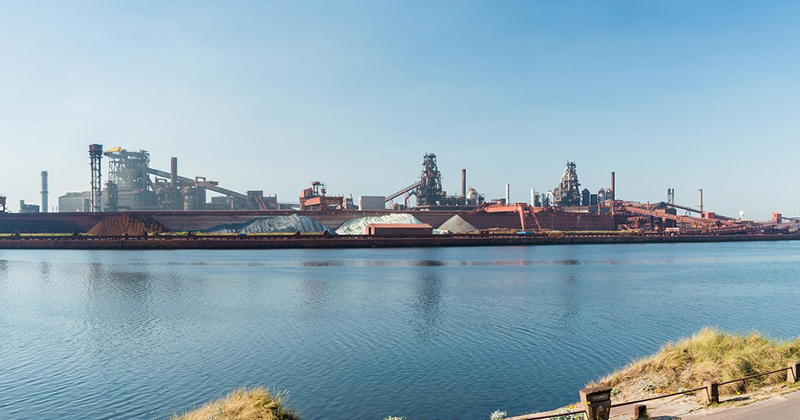
ArcelorMittal has confirmed a EUR 1.3 billion electric arc furnace investment in Dunkirk

Approval has been granted for SSAB’s new electric arc furnace facility in Luleå
The Swedish Land and Environment Court of Appeal has issued its decision approving SSAB’s permit to build and operate a new steel plant in Luled. With this ruling, the legal uncertainties surrounding the construction of the electric arc furnace (EAF) facility-set to replace the company’s existing blast-furnace-based production site-have now been resolved.
In December 2024, SSAB received approval for the new facility from the Land and Environment Court at the Umeå District Court. The permit allowed the company to secure its long-term competitiveness and reduce carbon dioxide emissions from production by up to 90%. However, the decision was appealed, and the case was brought before the Land and Environment Court of Appeal.
The Court of Appeal reviewed the parties’ written submissions, issued its ruling, and upheld the original decision. This has cleared the way for SSAB to continue its work on the new facility without interruption, following the activation of part A of the permit in June. A formal groundbreaking ceremony was held in Luleå on 17 September, with Swedish Minister for Energy, Business and Industry Ebba Busch in attendance.
Carl Orrling, SSAB’s President, Chief Technology Officer and Head of the Transformation Office, welcomed the court’s decision, stating: “We are pleased that the Court of Appeal has addressed the unresolved issues relating to the permit for our new steel plant in Luleå. Eliminating this uncertainty provides clarity and stability for our transformation process. The new facility will offer a stronger cost position, a more attractive product range of premium steels, and greater flexibility to manage fluctuations in demand. Once we shut down the existing production, we will virtually eliminate carbon emissions from Luleå.”
In its ruling, the court also emphasized that the site is appropriate for the facility and that electric arc furnaces meet the criteria for “best available technology.” It further noted that emissions monitoring will not be left solely to the supervisory authority but will instead be regulated in detail under the permit. This framework defines not the method of monitoring, but the scope under which it is included in the permit.
Sara Arvidson, SSAB’s Head of Environment and Energy, said the decision gives the project additional momentum: “We are very pleased that the Court of Appeal has approved our permit and that the transformation project can proceed as planned. After commissioning, certain reviews will be carried out during a trial period. We will now continue our work to meet the specified conditions and ensure that the project is implemented responsibly.”


Tata Steel UK Advances Transition to Low-Emission Steelmaking
Tata Steel UK has reaffirmed its commitment to decarbonisation, with its Chief Commercial Officer, Anil Jhanji, confirming that the company’s transition to low-emission steelmaking is progressing on schedule. The cornerstone of this transition is the new electric arc furnace (EAF) project at Port Talbot, now officially underway following a groundbreaking ceremony in July.
The project, supported by a £500 million grant from the UK Government and backed by a total investment package of £1.25 billion, represents a major shift in the UK’s steel industry. The new facility is expected to begin production by December 2027, marking a critical step in reducing industrial emissions and modernising Tata Steel’s UK operations.
Jhanji expressed gratitude to Tata Steel’s customers for their trust and collaboration during the transition, noting the importance of long-standing partnerships:
“It’s like building a flyover while the traffic is flowing over it. Your continued confidence in us is making all the difference.”
The company has asked customers to provide more detailed forecasts of medium and long-term steel demand as it adapts to new sourcing models and longer supply chains. With traditional blast furnace operations phased out — including the decommissioning of Port Talbot’s Blast Furnace 4 — Tata is now operating as a re-roller, sourcing substrate globally.
Tata Steel UK says it is actively pursuing additional supply chain efficiencies and expanding its Tier 1 supplier network to ensure stable, high-quality steel supply during the transition period.

Czech-based Třinecké Železárny postpones steelmaking decarbonization plans
The Czech Republic’s largest steelmaker Třinecké Železárny has announced that it is postponing the completion date of the largest decarbonization investment in its history with completion now expected no earlier than 2030 instead of the previously announced 2028.
This investment would lead to a gradual reduction in carbon dioxide emissions by 55 percent compared to 1990.
The postponement includes key changes in steelmaking, including the construction of an electric arc furnace and infrastructure. Until the completion, it will actively negotiate with the government of the Czech Republic and the European Union to secure adequate support for the successful implementation of the project.
The main reasons for the delay in the implementation of the electric arc furnace are the lack of public support, uncertainty about the future direction of Europe in the rules related to the Green Deal, the current negative situation in the steel market, and unclear rules for protecting the market from imports from countries with lower steel production costs.

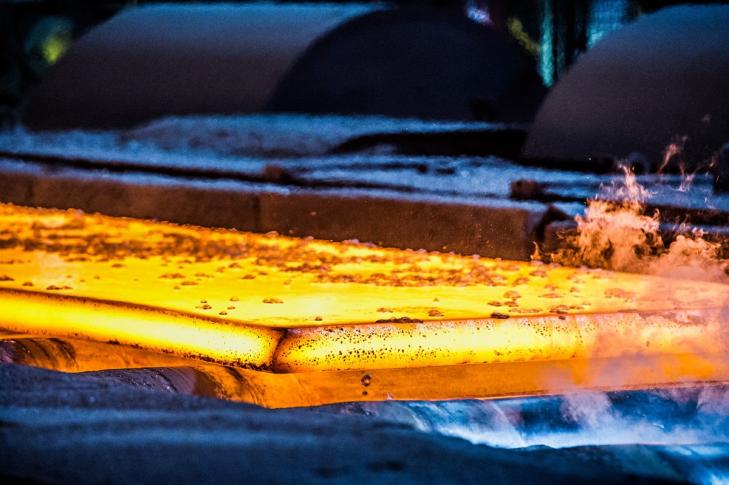
EU steel emissions to see higher penalties as free allowances get taken away
EU steel production emissions will be gradually penalized further from 2026 through to 2034, which will lead to higher costs for existing steel production and incentivize lower-emissions output.
The penalties based on carbon emissions emitted by key steel and raw materials production processes will increase under the EU’s Emissions Trading System and Carbon Border Adjustment Mechanism.
EU steel processes will see the quantity of allocated free emissions allowances reduce in a non-linear trajectory from existing levels to zero by 2034. This will lead to heavier emissions costs for producers forced to buy EU Allowance, or EUA, carbon permits for compliance. The ETS free allowances are to be replaced by the CBAM from 2026 and 2034.
The removal of free EUAs would lead to additional costs for steel producers exceeding benchmark levels. Based on reference values for blast furnace-based steel mills producing met coke and iron ore sinter, higher costs of around Eur144.72/mt of finished steel can be expected, with a reference cost for electric arc furnace carbon steel producers of Eur18.93/mt of steel, using July average EU carbon prices and analysis by S&P Global Commodity Insights.
Related podcast: How is Europe’s steel industry rising to the challenge of energy transition
Steel producers with higher operating emissions will be encouraged to adapt steel processes and raw materials usage, as well as invest, to transition more of the region’s production to steel with lower embedded emissions.
The alternative would be to pay to offset the difference, assuming risks on forward carbon pricing and using any banked EUAs available.
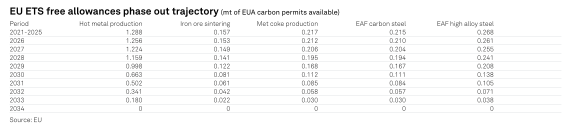
The dilemma may be how to manage the higher costs of alternative raw materials such as iron ore pellets and high-grade ferrous scrap, along with supporting the energy transition to use green hydrogen and renewable power and cut coal-based fuels.
Investment in new plants and processes to achieve low-emissions steelmaking have pushed steel companies such as Salzgitter and Thyssenkrupp to seek government subsidies and grants.
A move to certify emissions in steel production and mining, logistics and processing has allowed carbon-accounted steel markets to develop in the past few years.
Europe has led the interest in carbon-accounted steel and industry decarbonization, followed by Canada and the US and some markets in Asia.
The CBAM’s effect on global seaborne steel trade is anticipated to further deepen the interest in carbon-accounted steel production and marketing.
Steel end-users and steel processing and distribution groups are looking to adapt steel supplies for consumers, and to meet new procurement targets and standards. This is also pushing for more transparency around steel’s carbon intensities, with interest led by industry and government bodies.
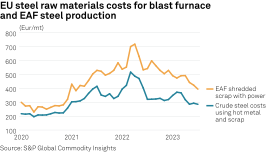
Steel producers are currently obliged by the EU to report and pay for emissions from installations in the region based on the defined categories of hot metal production, iron ore sintering, met coke production and two types of electric arc furnace steel production.
Scope 3 emissions for steelmakers, emitted from raw materials mining, processing and logistics, are not included under the ETS reporting scheme.
The incoming CBAM will be applied for steel, pig iron and direct-reduced iron product imports, among other markets such as for aluminum, cement, hydrogen and fertilizers.
The CBAM aims to require the same carbon emissions cost being paid for imports as relevant to EU steel and other products, ensuring a level playing field and complying with World Trade Organization rules. The mechanism will take into account EU ETS and free allowances levels for applicable markets as the frameworks converge, in relation to certified carbon emissions for import products.
CBAM will develop reference emissions values for product categories where reported carbon intensity data is not available prior to the mechanism’s launch on Jan. 1, 2026.
Importers to the EU will buy CBAM certificates to comply with any outstanding product emissions costs required. CBAM certificates will price based on weekly EU Allowance pricing.
The CBAM will enter into application in its transitional phase on Oct. 1, with the first reporting period for importers ending Jan. 31, 2024.
Reporting obligations and information sought from EU importers of CBAM goods, as well as a provisional methodology for calculating embedded emissions released during the production process of CBAM-related imports will be specified further in an Implementing Regulation. This legislation will be adopted by the European Commission after consulting the CBAM Committee.
The CBAM and ETS will apply charges with adjustments available for steel production processes through to 2034, which mean steel imports are expected initially to pay a similar carbon-based charge. CBAM is not expected to include upstream Scope 3 emissions, emitted from mining and processing, logistics and transportation of steel raw materials.
Imported flat and long steels produced with ferrous scrap and direct-reduced iron may compete with more emissions-intensive steel in certain grades and segments.
European steel markets and user groups are increasingly differentiating on pricing and demand between steel with carbon emissions data reported for Scope 1, 2 and 3, and whether direct emissions cuts or mass balance-based calculated emissions reductions are involved.
A variation between the ETS and steel production emissions compliance, and a new focus on product-level carbon intensity with upstream emissions is seen. This considers emissions in the entire production chain and any differences between steel imports and EU origin products.
EU safeguards already place quotas on steel imports by origin. CBAM is designed to help ensure imports are on a level playing field with EU products and emissions costs, and support investments in industry decarbonization.
The reduction in the steel sector’s free EUAs may lead to higher compliance costs for steel producers if they cannot decarbonize at the same rate, as companies fund high capital greenfield plants.