

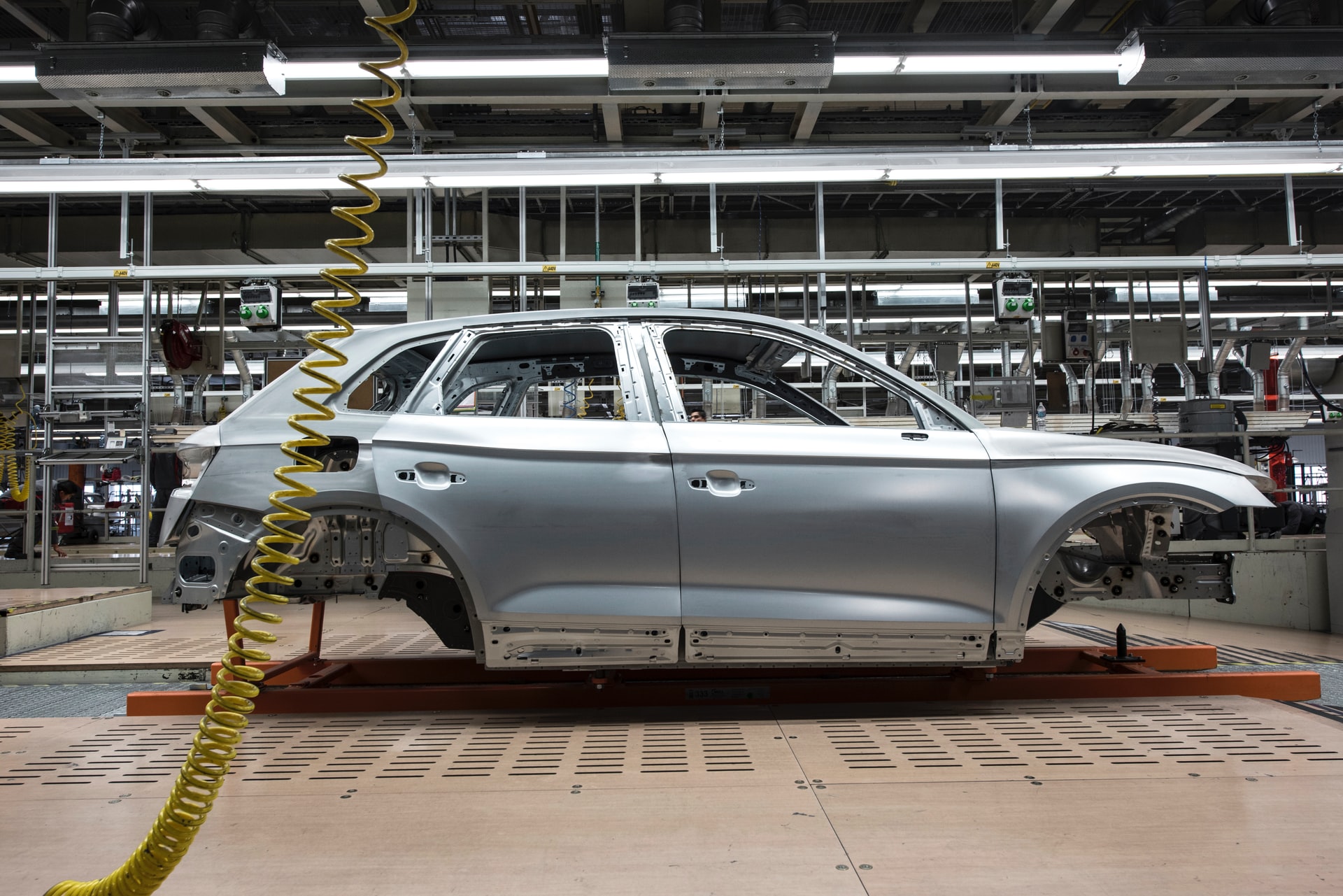
CLEPA: EU losing ground in global automotive market
Europe’s automotive suppliers have issued a stark warning to authorities to support the industry or risk manufacturing capabilities leaving the continent.
“With up to 75% of the value of vehicle components made in Europe, the continent’s automotive supply industry generates substantial economic value and supports hundreds of thousands of jobs,” according to the European Association of Automotive Suppliers (CLEPA). “Yet Europe’s automotive suppliers are issuing a stark warning based on a recent study of European value creation: without urgent and decisive EU action, the continent risks losing its industrial backbone, hundreds of thousands of jobs, and its capacity to lead in clean mobility and innovation.”
A new study by Roland Berger, commissioned by CLEPA, highlights that European suppliers face a cost disadvantage of 15-35%, mainly driven by high energy and labour costs, regulatory burdens, and fragmented frameworks. Meanwhile, countries such as China and the US combine industrial support measures with protective mechanisms, creating structural disadvantages and unfair competition, the association claims.
According to the study, without urgent EU action, up to 23% of European value add is at risk by 2030 through the combined effect of powertrain transition and value transfer outside the EU. In practice, Europe could see the loss of up to 350,000 jobs, eroding both employment and the industry’s wider social contributions, Kallanish notes.
“Europe is in a decisive battle for its industrial sovereignty,” says CLEPA secretary general Benjamin Krieger. “Suppliers are committed to invest and innovate, but they cannot do so on an uneven playing field. Maintaining a competitive and resilient automotive ecosystem in the EU will require urgent, market-driven action by industry and targeted policy measures, to strengthen Europe’s attractiveness as a location for manufacturing, R&D and investment.”
This includes addressing key location factors such as electricity prices and regulatory burden, while also considering policies to ensure EU local content in vehicles to retain know-how and production capacity, he adds.
Suppliers employ 1.7 million people in Europe and invest €30 billion ($35 billion) in R&D annually. CLEPA is thus urging policymakers to swiftly address competitiveness challenges, evaluate options to reduce structural costs and cut red tape. It should also prioritise technology openness in decarbonisation, in a swift revision of CO2 standards regulation for cars, vans and trucks.
Svetoslav Abrossimov Bulgaria

Assofermet Acciai: September starts weak for Italian steel, with CBAM and US tariffs fueling uncertainty
In the July-August period, the Italian steel market recorded a partial recovery in purchase prices, which rekindled operators’ interest, albeit timidly. However, according to the latest monthly report from Assofermet Acciai, updated as of September 11, the sector faced strong difficulties in passing on the increase in coil costs to end customers, amid persistently weak demand and a widespread climate of uncertainty.
The September outlook shows substantial continuity with previous months, further aggravated by growing concerns related to the CBAM. Imports done during 2026 will be subject to the purchase of certificates as of February 2027. However, the European Commission has not yet disclosed the calculation basis needed to estimate the effective costs.
Additional uncertainty comes from US tariffs on steel and aluminium, which risk diverting volumes from the Far East to Europe, exacerbating the domestic oversupply. In this context, ahead of the new regulation that will replace the current safeguard measure in June 2026, Assofermet has already submitted several key points to the European Commission for consideration in the drafting phase.
July ended with reduced volumes and prices still at their lowest levels, while the first week of September showed no signs of recovery: demand remains below expectations and purchasing activity is limited, also due to high stock levels and very short production lead times.
For stainless flat products, July showed relative stability, with limited single-digit percentage movements, while in August some products, particularly cold-drawn tubes, attempted a modest upward push sufficient to support revenues. The construction sector remains more fragile, with rebar, welded mesh and related products continuing to show signs of weakness.
In the distribution segment, July recorded a trend similar to that of the previous year: stable prices allowed the market’s underlying direction to be assessed without sudden fluctuations, while August saw attempts at upward movement in some categories. September opened with a cautiously improving scenario, with moderately higher volumes and slight price increases in some segments, although the fragility of downstream demand remains evident.
According to Assofermet, the coming weeks will be decisive in shaping the trend for the final part of the year. The evolution of demand in key end-use sectors such as construction and automotive, together with inventory management, will be crucial in determining whether the market can consolidate the first signs of recovery or whether downward pressure from oversupply and international uncertainties will prevail.


European Parliament approves simplified CBAM rules with new import threshold
The European Parliament has announced that it has voted to approve reforms to the Carbon Border Adjustment Mechanism (CBAM), introducing a streamlined framework designed to ease compliance for small importers.
It was emphasized that the reform contributes to supporting competitiveness, while ensuring a just transition for EU industries and maintaining climate neutrality goals for 2050.
A central change is the introduction of a de minimis mass threshold. Imports of up to 50 mt per importer per year are now exempt from CBAM obligations. 90 percent of importers will fall under this exemption, particularly SMEs and individual importers handling small volumes.
Crucially, the reform preserves climate integrity. 99 percent of emissions from imports of iron, steel, aluminum, cement, and fertilizers will remain covered by CBAM.
For importers still covered by CBAM, the legislation introduces simplifications across several areas:
- Authorization process is streamlined for easier access
- Emissions calculation is clarified and standardized
- Verification procedures are simplified for reporting obligations
- Financial liability becomes clearer for CBAM declarants
These measures are designed to reduce administrative burdens, addressing concerns raised by businesses while keeping the mechanism effective.
The revised CBAM also includes stronger anti-abuse measures aimed at preventing circumvention. This ensures that the new threshold cannot be exploited to evade compliance.

EUROFER files petition for antidumping investigation into Turkish cold rolled coil
According to an official communication circulated by the General Directorate of Imports, Ministry of Trade of Turkey, the European Steel Association (EUROFER) has filed a petition with the European Commission for an antidumping investigation for cold rolled coil imports from Turkey.
The petition included Turkish producers Atakaş Çelik, Çolakoğlu Metalurji, Diler Holding, Erdemir, Gazi Metal, Göktaş Metal, Habaş, Kibar Holding, MMK Metalurji, Tat Metal, Tezcan Galvaniz, Tosyalı-Toyo and Yıldız Demir Çelik. The investigation has not been initiated yet.
The products subject to the investigation fall under Customs Tariff Statistics Position Numbers codes of 7209.15.00, 7209.16.90, 7209.17.90, 7209.18.91, 7209.18.99, 7209.25.00, 7209.26.90, 7209.27.90, 7209.28.90, 7211.23.30, 7211.23.80, 7211.29.00, 7225.50.80 and 7226.92.00 (TARIC codes of 7209.15.00.90, 7209.18.99.90, 7209.25.00.90, 7211.23.80.19, 7211.23.80.95, 7211.23.80.99, 7211.29.00.19 and 7211.29.00.99).
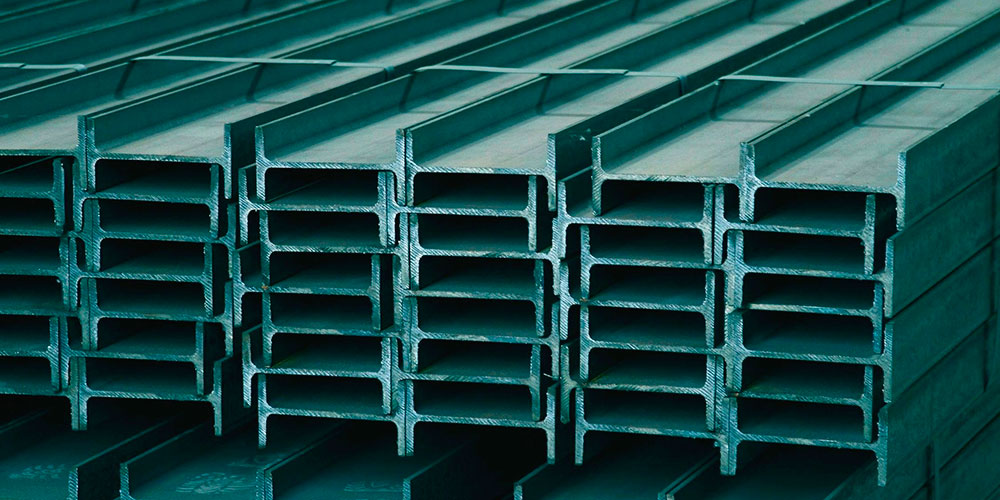
European longs market stable to lower amid pessimistic mood
No major changes have been reported in the longs steel segment in Europe this week. The market mood is overall sluggish, and price trends have emerged as sideways to lower amid offer exceeding demand and international uncertainty due to recent military escalations that have involved Poland.
Pessimistic mood is emerging among rebar sellers in Italy, who have reported a decline of €20/mt in prices. If €280/mt ex-works base (€545/mt ex-works including regular extras) had only been seen in a couple of deals last week, when the average price was €300/mt ex-works base (€565/mt ex-works including regular extras), the new level this week seems to have stabilized at the lowest. “Offers are high considering insufficient [rebar] demand,” a source claimed. “I expect further declines next week”. In the meantime, though, in southern Italy demand of finished steel seems good, and according to media reports, rebar incomes since the beginning of this year have been rather satisfying compared to other finished products, even though their levels are not comparable to pre-pandemic’s.
In the wire rod segment, no changes have been reported in Italy nor in other European countries, where the market mood remains weak, and the low steel demand – especially in Poland – is mainly due to a general sluggishness. “Market players are worried about two main issues, i.e. recent military events and the CBAM. Especially about the latter, they are eager to have more information, but no one seems to have the right indications,” a source reported.
As for exports, ex-Spain rebar prices to UK ports have been reported at €535/mt FOB, down by €5/mt week on week.
Finally, in the import segment, most price levels have remained unchanged compared to last week. Rebar and wire rod prices from Turkey have been reported at €485-495/mt CFR and €495-500/mt CFR, respectively, unchanged compared to last week. Rebar and wire rod prices from Egypt have been reported at €485-495/mt CFR and €500-505/mt CFR respectively. The former is down by €5/mt on the lower end of the range, whereas the latter is unchanged compared to last week. Finally, Indonesian wire rod prices to Europe have been reported at €480/mt CFR. These prices are based on the euro-dollar exchange rate of 1.17 (European Central Bank, September 11).