


UK Metals Expo: Concerns remain over CBAM understanding
Concerns remain over the lack of clarity and understanding regarding the incoming Carbon Border Adjustment Mechanism (CBAM) as well as the scope of included products, delegates heard during a panel at last week’s UK Metals Expo in Birmingham, attended by Kallanish.
The lack of information about the mechanism was highlighted by Frank Aaskov, director of energy and climate change policy at UK Steel.
“We are still missing key information from the European Union and the Commission on use of default values,” he said.
“There is amongst [EU] importers a very low level of knowledge of what is actually required to comply. What are the financial potential liabilities for buying non-EU steel from 1 January onwards next year?” he noted. “There is a general lack of information and … general lack of experience with the practicality of complying with CBAM. I don’t think the European Commission have helped themselves by being so late in publishing a lot of information.”
Aaskov added that CBAM webinars and engagement with stakeholders have been aimed at primary producers rather than the importers of steel.
He continued that despite CBAM having a year and a half of transition period, the necessary information and awareness has not diffused sufficiently. Market participants do not know what their cost obligations will be after 1 January for importing non-EU steel.
He also raised concerns about steel containing goods not being covered by the current “narrow” scopes of the UK and EU CBAM. Imports of cars or washing machines containing that steel therefore do not currently bear the same costs as domestic manufacturers of these products.
“We think CBAM should be expanded to cover the customers of steel. The EU has now committed to looking at including more downstream products, but they haven’t yet confirmed what these should be,” he said.
He noted that a failure of CBAM could lead to deindustrialisation and the disappearing of demand for steel in the UK and EU markets.
Carrie Bone UK


Assofermet: new EU measures on steel and aluminum put the entire metal and steel supply chain and European manufacturing at risk
Assofermet, the Italian association representing companies in the trade, distribution, and processing of steel, metals, scrap, and hardware, has issued a statement expressing serious concerns over the convergence of several EU regulatory measures set to take effect in 2026.
The association highlights the simultaneous entry into force of the Carbon Border Adjustment Mechanism (CBAM), the scheduled expiry of EU steel safeguard measures, and the potential introduction of new rules of origin such as the “melted and cast” principle. Taken together, these changes risk creating significant disruption across the metals value chain — particularly for re-rollers, service centres, processors, and traders.
Assofermet points to regulatory uncertainty, unclear cost structures for future imports, and increased financial exposure for companies as they attempt to plan ahead without concrete information. The association warns that these challenges are compounded by weak domestic demand in the EU and rising competitive pressure from non-EU producers who are not subject to comparable obligations.
Further concerns are raised about the possible extension of safeguard measures to aluminium products, which could add additional strain to an already fragile market.
In a letter sent on 29 July 2025 to the European Commission and the Italian Government, Assofermet urges a re-evaluation of the regulatory approach. The association calls for balanced policies that safeguard both environmental ambitions and the economic sustainability of the EU metals industry.
Press Release Assofermet 15.09.2025


Pipes distributor Hoberg & Driesch acquires Schierle
The combination of two German pipe distributors will create a new national market leader in the segment of hydraulic products, Kallanish has learned.
Effective 1 September, Hoberg & Driesch Group (H&D), headquartered in Düsseldorf, has acquired Schierle Stahlrohre, located in nearby Neuss. The company will now operate under the name Hoberg & Driesch Schierle. With this acquisition, H&D says it has significantly strengthened its position in the market for hydraulic products – including piston tubes, piston rods, and cylinder tubes – in Germany and beyond.
As part of the integration, Schierle’s manufacturing capabilities in this field will become part of H&D’s portfolio. This expands the group’s technical diversity, and enhances its vertical integration, allowing for more targeted and efficient responses to individual customer requirements, H&D says.
“With Schierle, we are significantly expanding our competence in the field of hydraulics and establishing a future-oriented centre for this product group,” says Hanns-Jörg Westendorf, H&D chief executive.
H&D says the move sends a clear signal for strategic growth and technological strength. The combination of high stock availability, increased manufacturing depth, and long-standing expertise lays the foundation for even closer partnerships with customers in mechanical and plant engineering, hydraulic technology, and international distribution, it adds. H&D operates 20 sites in Germany and seven in other European countries.
Christian Koehl Germany

Carl Brockmeyer to head thyssenkrupp Materials Distribution & Trading
Carl Brockmeyer will become chief executive of the Distribution & Trading business unit at thyssenkrupp Materials Services on 1 December, the company informs Kallanish.
He will take over from Detlef Schotten, who will retire from tk Materials Services in March 2026 after more than 30 years with the company, following a transition and handover period.
Brockmeyer has been working at international industrial companies for around 20 years and has extensive experience in strategic business development as well as in the areas of service and digitalisation. He has held various positions at Oerlikon and Atlas Copco.
Ilse Henne, ceo of tk Material Services, emphasises Brockmeyer’s contacts with various customer industries that are important for the company. This and “his many years of international experience, particularly in North America, will help us continue our transformation from a pure materials distributor to a service provider,” she says.
Christian Koehl Germany

European Parliament gives final CBAM simplification approval
The European Commission has given its final green light to changes simplifying the Carbon Border Adjustment Mechanism (CBAM), with 617 votes to 18, and 19 abstentions.
The amended law sets a new de minimis mass threshold whereby imports up to 50 tonnes per importer per year will not be subject to CBAM rules. It replaces the current threshold exempting goods of negligible value. The new threshold exempts 90% of importers − mainly small and medium-sized enterprises and individuals − who import only small quantities of CBAM-covered goods.
However, 99% of total CO2 emissions from imports of iron, steel, aluminium, cement and fertilisers will still be covered by CBAM.
The Parliament gave its initial approval to the CBAM simplification amendment in May. It was then reviewed for approval by the committee responsible for interinstitutional negotiations. The text now still has to be officially endorsed by the Council.
The amendments will also create safeguards to ensure rules are met and anti-abuse provisions to strengthen prevention of circumvention of the rules, a European Parliament note says.
The rules on imports still covered by CBAM are also simplified, regarding for instance: the authorisation process, the calculation of emissions, verification rules and the financial liability of authorised CBAM declarants, it adds.
Adam Smith Austria

MEPs urge January safeguard replacement, 2012-2013 import target
A group of 106 MEPs has urged European Commission President Ursula von der Leyen to implement the steel safeguard replacement measure from 1 January 2026, aiming for 85% EU capacity utilisation and import shares of 2012-2013 levels.
In a letter dated 11 September to von der Leyen, Executive Vice-President for Prosperity and Industrial Strategy Stéphane Séjourné and Commissioner for Trade and Economic Security Maroš Šefčovič, the MEPs pointed to July’s French government-led non-paper. Backed by 11 EU member states, this set out a comprehensive vision for the design of the new trade defence instrument.
The MEPs, including Committee on Industry, Research and Energy coordinators Christian Ehler, Dan Nica and Christophe Grudler, emphasise the framework must also apply a meaningful tariff on imports out of quota, to effectively limit the imports to the targeted market shares. “It must provide for a comprehensive coverage of all relevant products and countries, including steel derivatives where appropriate. Lastly, the Commission should assess the effectiveness of a ‘melted and poured’ rule of origin to address the issue of circumvention,” the letter reads.
“In addition to providing the highly effective protection to the European steel industry that is so urgently needed, the new framework must comply with the Union’s international obligations, notably by being WTO-compatible,” the MEPs write.
“Lastly, we urge you to also consider the competitiveness of steel-using sectors. Next to a strong and highly effective trade safeguard for steel, measures to boost the competitiveness of steel-using sectors should also be adopted. The European Union cannot afford to lose competitiveness of one industry at the expense of another’s, but must act from a holistic approach,” they add.
The next few months are shaping up to be extremely busy for the European Commission. Besides the safeguard replacement, the Commission is expected to publish crucial CBAM benchmarks in the fourth quarter, accompanied by a legislative proposal extending CBAM to downstream products and introducing additional anti-circumvention measures. A measure to support EU steelmakers’ export competitiveness has also been promised.
Adam Smith Austria

UK construction sustainability standard misalignment disqualifying domestic steel
The construction sector pathway to net zero is excluding domestic steel from being used in projects due to a misalignment in sustainability standards between the two sectors, panellists said during last week’s UK Metals Expo in Birmingham, attended by Kallanish.
Ben Cunliffe, director of sustainability at British Steel, told delegates there needed to be an “urgent discussion” regarding the “alignment of steel consuming sectors and alignment particularly of government policy”.
The construction sector, which is British Steel’s largest steel consuming sector, is taking a completely different path to net zero, he noted. He added the sector was in a race to remove embodied carbon steel from buildings. The impact of that means “British Steel or other steel producers in this country are essentially disqualified from supply into an increasing number of projects, [which] are being replaced by imports,” he added.
There is a “complete mismatch between, on one hand, the steel industry doing its best to decarbonise and being part of national policy, and on the other hand, the market being offshored for structural steel,” he noted.
This was causing serious difficulties for the steelmaker, and the issue was being made worse by the wide market adoption of product classifications such as Steelzero and the construction leadership council. These frameworks disqualify UK produced steel from supply into British projects, Cunliffe highlighted.
“Why are we allowing that to happen?” he asked.
He also highlighted the Welsh government net zero policy excludes steel by Tata Steel and British Steel from schools, hospitals and public buildings. “They’ve failed to understand the bigger picture of the UK Steel Strategy,” he added.
He warned of deindustrialisation in place of decarbonisation as a serious threat for the UK.
Elsewhere, during a separate panel discussion on the construction sector, panellists noted a divergence in the willingness to pay for low-emission steel used in projects.
Jonathan Clemens, ceo at BCSA, highlighted the divide in the construction sector for these products. “There are certain markets, [such as] commercial in London which is very much into the green agenda, and there are certain clients in parts of the UK and certain product types [that have] no interest at all in low-carbon steel,” he said.
“It isn’t everyone all going in one direction. Part of the challenge is the cost of lower carbon steel versus traditional steel,” he concluded.
Carrie Bone UK
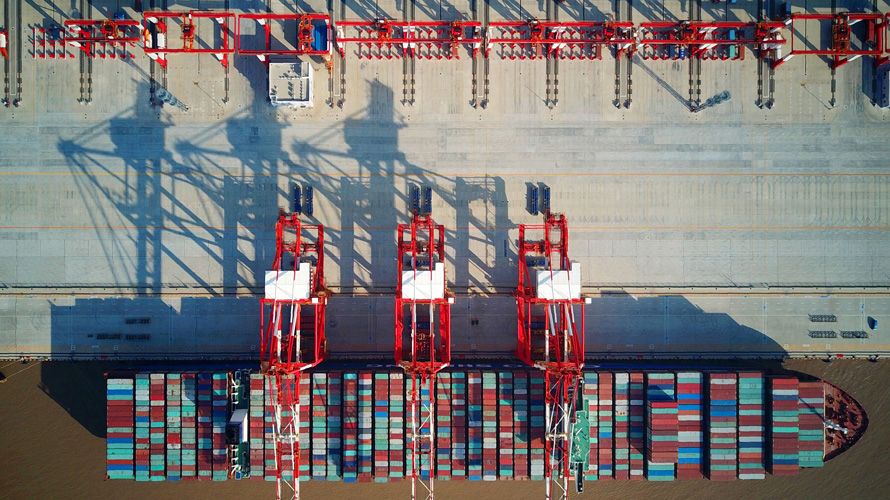
EU’s finished steel imports down seven percent in Q2 2025
According to the Economic and Steel Market Outlook 2025-2026/Q3 2025 Report from the Economic Committee of the European Steel Association (EUROFER), total steel imports into the EU, including semis, decreased by three percent year on year in the second quarter of 2025.
During the same quarter, the EU’s imports of flat steel fell by nine percent year on year, while imports of long steel decreased by two percent and imports of finished steel products moved down by seven percent, both on year-on-year basis.
In the second quarter, Turkey, South Korea, China, India and Ukraine were the main countries of origin for finished steel imports into the EU. The first five countries accounted for 57 percent of total EU finished steel imports in the first six months. Turkey became the leading exporting country to the EU, with a share of 21 percent, followed by South Korea with 12 percent, China with nine percent, and Ukraine and India each with eight percent.
In the April-June period, imports of finished products from Ukraine rose significantly by 44 percent, while imports from Turkey and China went up by 41 percent and 11 percent, respectively. Imports from India, Japan, Taiwan and South Korea, on the other hand, decreased by 50 percent, 40 percent, 17 percent and 16 percent, respectively.
According to the EUROFER report, imports have been volatile throughout 2024 and 2025, following fluctuations from the previous four years. After declining from late 2022 to mid-2023 due to weak demand, imports rebounded in 2024. It is too early to assess the impact of US tariffs from available 2025 data, and increasing trade uncertainty has made patterns highly unpredictable. Despite this volatility, imports remained at historically high levels through the second quarter of 2025, representing 25 percent of consumption and widening the trade deficit with third countries.


Germany urges EU to delay phaseout of free carbon allowances for heavy industry
Germany is urging the European Union to delay the phaseout of free carbon allowances for energy-intensive industries under the EU’s emissions trading system (ETS), according to a report by Bloomberg.
Citing rising energy costs and economic pressure, Berlin argues that the Carbon Border Adjustment Mechanism (CBAM), designed to replace free allocations, will not provide sufficient protection for Europe’s heavy industries.
The EU’s ETS rules are set to tighten in 2026, requiring more industries to purchase carbon certificates if they fail to cut emissions.
Free allocations of carbon certificates, long granted to sectors like steel, cement, and chemicals, are scheduled to be phased out by 2034. The phaseout begins with aviation in 2026, gradually extending to other sectors.
The EU plans to replace free allocations with CBAM, which imposes a carbon levy on imports of carbon-intensive goods such as steel and cement.
At a reception hosted by energy company RWE AG in Berlin, German economy minister Katherina Reiche argued that free allocations must remain in place to prevent deindustrialization.
She warned that, without additional safeguards, essential sectors risk collapse, adding that Germany will seek a solution with the European Commission.
German industrial groups have voiced strong support for Berlin’s stance:
- Thyssenkrupp has called for a slower phaseout of free allowances, citing risks to steel competitiveness.
- The IGBCE union warned that current rules risk “killing our businesses”.
- Analysts stress that CBAM may not adequately protect complex industries, such as chemicals, where imports are more difficult to regulate.
The debate comes at a time of economic weakness in Germany. The country faces high US tariffs and elevated energy prices following Russia’s invasion of Ukraine.
The prolonged downturn underscores the fragile state of heavy industry, raising fears of job losses and reduced investment.
The European Commission is currently preparing to expand CBAM’s scope to cover additional carbon-intensive products and strengthen rules to address circumvention tactics by trading partners.

Polish rebar prices up despite low demand
Over the week to Friday, market participants estimated the workable market for rebar at around 2,400-2,420 zloty ($664-669) per tonne CPT, compared with 2,370-2,420 zloty per tonne CPT heard in the previous assessment period.
According to market sources, despite mills pushing for higher offers, prices will still be “under pressure” over the next few weeks due to scrap prices and because of “low demand” from the market.
Fastmarkets’ weekly price assessment for steel reinforcing bar (rebar) domestic, cpt Poland was also 2,400-2,420 zloty per tonne on Friday, narrowing upward from 2,370-2,420 zloty per tonne the previous week.
Meanwhile, wire rod prices remained stable this week.
Fastmarkets’ price assessment for steel wire rod (drawing quality), domestic, delivered Poland was 2,580-2,650 zloty per tonne on Friday, unchanged week on week.
