

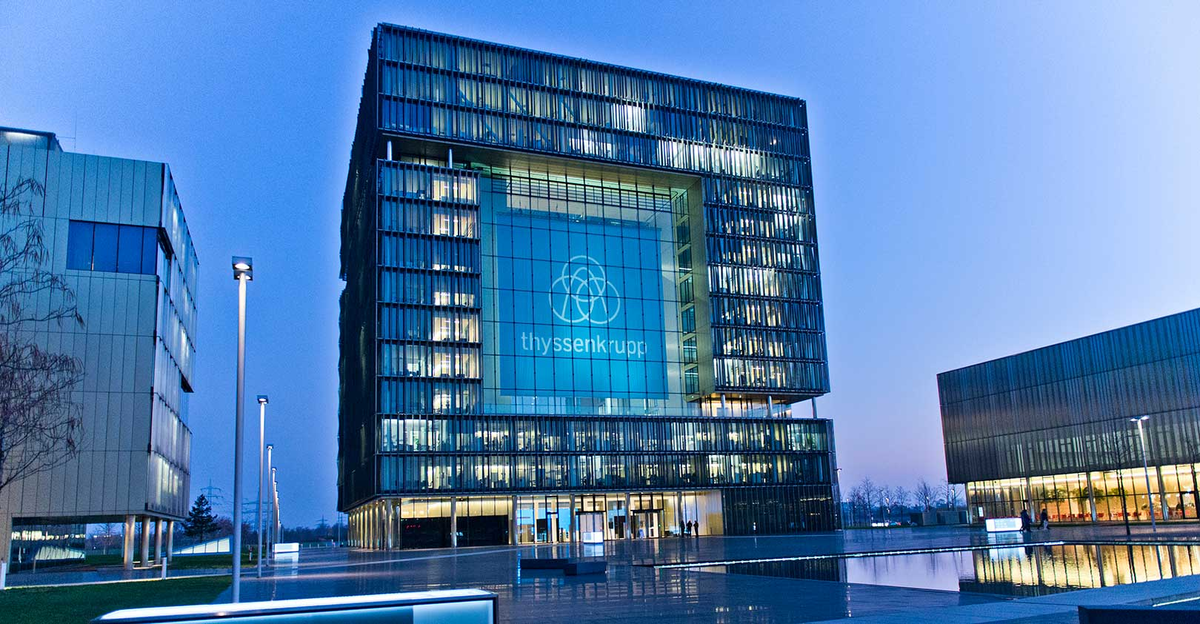
Thyssenkrupp Materials Trading signed a purchase agreement for green steel project in Australia
Thyssenkrupp Materials Trading has signed a 100% purchase agreement with Progressive Green Solutions (PGS) for the first large-scale green steel project to be implemented in Geraldton, in the Mid-West region of Western Australia.
The agreement highlights that Western Australia’s renewable energy potential can directly support Germany and the European Union’s decarbonization targets and potentially set a global standard for green hydrogen-based industrial projects. In this context, the region is expected to develop a new value-added manufacturing industry in the long term, while also strengthening German technology and expertise on a global scale.
The project will deepen trade relations between Australia, Germany, and the EU, while also increasing diversity in demand and supply chains. Supported by Western Australia’s Premier Roger Cook and his government, the initiative involves Thyssenkrupp, technology providers SMS Group, Midrex, Thyssenkrupp Nucera, and financial partner KfW IPEX Bank.
Western Australia’s Minister for Mines, Petroleum and Finance David Michael, Parliamentary Secretary David Scaife, and Geoff Baker, a member of the Friends of Clean Energy and Climate Action Group, welcomed the German delegation at the WA Parliament House and expressed their support.
As highlighted by European Union leaders, there is an emphasis that “the time is now not for talking, but for action” to achieve climate goals. The project aims to overcome “greenwashing” criticisms and mark a turning point in genuine green steel exports.


EESC: European steel sector faces existential crisis
The European Economic and Social Committee (EESC) has unveiled a plan to rescue Europe’s steel industry in order to safeguard the EU’s strategic autonomy and green sovereignty.
According to the Committee’s statement, EU steel production has fallen by 31 million tons since 2018. Imports have captured 27% of the domestic market, while the sector has lost more than 95,000 jobs since 2008, with 18,000 of those losses occurring in 2024 alone. This situation has deepened into systematic failure due to global overcapacity, unfair trade practices, and the collapse of transatlantic trust.
One of the most significant turning points in the crisis was the US decision in March 2025 to impose a 50% tariff on EU steel. This move closed the American market, which had previously absorbed 4.6 million tons of European steel exports annually, while creating the risk of redirecting 27 million tons of global steel flows to Europe. According to estimates, global overcapacity will reach 721 million tons by 2027, equivalent to five times the EU’s annual production. The EESC warned that this process could turn Europe into a “last resort dumping ground” for subsidized and high-emission surplus steel.
The statement emphasized that current security measures and trade defense instruments are insufficient. According to the EESC, the EU now needs bold, comprehensive, and permanent trade measures against global overcapacity. Key recommendations under the Committee’s Steel and Metals Action Plan include:
Strict import limits should be set (15% for carbon flat and stainless steel, 5% for long products).
Customs duties should be applied universally to all products and countries, including those with free trade agreements with the EU, without any loopholes or exceptions.
To prevent smuggling, the origin of steel should be tracked using “melted and cast” rules.
Rolling quotas should be abolished, and an additional tariff of up to 50% should be applied to products above the quota to send a strong price signal to the market.
However, according to the EESC, trade protection measures alone are not sufficient. Energy prices in Europe are 2-3 times higher than those in China or India, weakening competitiveness. The Committee recommends the following steps:
- Emergency energy price reductions and network tariff refunds for energy-intensive industries,
- Reorganization of the electricity market to decouple fossil fuel prices from electricity,
- Establishment of a special hydrogen financing mechanism to support industrial transformation.
The EESC also addressed Carbon Border Adjustment Mechanism (CBAM), noting that the current regulation will not achieve its objectives. According to the statement, if the gaps in CBAM are not addressed, it will be ineffective, and legal regulations are needed to protect free permits in exports. Furthermore, the scope of CBAM should be expanded to include steel-intensive sectors.
The issue of scrap metal was also one of the prominent topics. EESC drew attention to the rapid increase in scrap exports, which are critical to the circular economy. Iron scrap exports are expected to double, while aluminum scrap is expected to exceed 1.3 million tons. Therefore, it was stated that the Commission should apply strict sanctions against export taxes, tariff quotas, and illegal exports.
EESC reminded that this process directly affects not only the steel sector but also Europe’s Green Deal targets and the 2030 Defense Readiness. The statement said, “While the US, China, and India support their steel sectors with protective measures, Europe must show the same determination.”
Finally, EESC called on European institutions, national governments, and industry representatives to implement a joint action plan without delay: “Europe’s future strength begins with steel. Delay is defeat!”

Sudhakar Sivaji appointed CEO of Aperam, succeeding Tim Di Maulo
The ceo of stainless steel producer Aperam, Timoteo Di Maulo, is retiring after more than a decade at the helm.
The board of directors has appointed Sudhakar Sivaji, currently Aperam’s cfo, as ceo, with the transition taking effect from 1 January 2026, Kallanish notes from a company statement.
Sud Sivaji, who joined Aperam as cfo in 2020, brings nearly 25 years of industry experience in steel, alloys, and the aerospace sector. He has previously worked at Thyssenkrupp’s Steel and Materials Services businesses in leadership roles across Europe, the US, China, and Brazil.
Di Maulo will remain a member of the board of directors and as strategic advisor on European public affairs. Under his leadership, Aperam diversified its business and strengthened its circular model.
He established a four-segment structure, placed carbon reduction and recycling at the core of strategy, and reinforced trade defence and commercial excellence.
“Tim has been an outstanding leader, guiding Aperam through a period of profound transformation. He has built a stronger, more diversified, and more sustainable company, well prepared for future challenges,” says Lakshmi Mittal in a note.
Looking ahead Aperam aims to strengthen what is calls value leadership. Each division will concentrate on competitiveness and growth, as the company intends to reinforce its supply chain and implement major investments in Brazil, France, US, and across Europe.
Nicolas Changeur, ceo of service and solutions and cmo for Aperam Stainless Europe, has been appointed chief financial officer.
Natalia Capra France


US opens Section 232 tariff inclusions request window
The US government is inviting requests for additional downstream items to include in the Section 232 steel tariffs, Kallanish learns.
A notice has been issued based upon a coordinated effort by the Bureau of Industry and Security (BIS), Office of Strategic Industries and Economic Security, and the Department of Commerce addressing the opening of an inclusions window for the ongoing issuance of steel and aluminium tariffs, according to a Federal Register document.
President Donald Trump in February issued Proclamations 10895 and 10896, which called for specified rates of duties on imports of aluminium and steel articles and derivative steel and aluminium items.
The BIS established a process for including additional derivative steel and aluminium articles, within the scope of the duties authorised by Trump under Section 232.
The inclusions window for submissions runs for two weeks, through 29 September.
The notice indicates that accepted inclusion requests following the submission window will be posted for a two-week public comment period.
John Isaacson USA

Steel standards organisations welcome ISO, GHG harmonisation
Two steel standards organisations have welcomed the recently announced news of a harmonisation between the International Organization for Standardization (ISO) and Greenhouse Gas (GHG) Protocol.
The two framework organisations are to harmonise their existing portfolios of greenhouse gas standards and co-develop new standards for GHG emissions accounting. This includes standards from the ISO 1406X family of standards, alongside the GHG Protocol Corporate Accounting and Reporting, Scope 2 and Scope 3 Standards.
This will help to deliver a unified global standard for the sustainability sector, progressing the ongoing work within the standards sector seeking to align frameworks and create interoperability, the organisations point out.
The partnership will also see work on a joint product carbon footprint standard.
Speaking to Kallanish, Adina Renee Adler, executive director at the Global Steel Climate Council (GSCC), highlights the ongoing work of the Steel Standard Principles.
“I do believe that this partnership is an outcrop of the work that we’re all doing together to promote interoperability between all of our programmes,” she says.
“We welcome any announcement by two programmes and two partners to think how work going forward can be done in a way to be interoperable,” she adds. However, she notes some of the work will eliminate duplication, rather than create interoperability.
She says the ISO and GHG Protocol standards were due an update, and as part of the latter’s update, some of the proposals had caused concern with GSCC’s members.
Adler adds that “it’s a standard for standards that they be updated at least every five years”.
“We will be going through a review process ourselves coming up very soon,” she adds.
Experts from both organisations will now collaborate through an integrated technical process, with the goal of delivering cohesive standards.
Adler says this will be a “a multi-year process”, which will be “perfectly timed for this already scheduled review of our standard”.
Annie Heaton, chief executive at ResponsibleSteel, tells Kallanish: “All standards organisations should take note of this new partnership and follow its example. The need for harmonised measurement of greenhouse gas emissions is undeniable. This is not only essential for the steel industry itself, but also for buyers, investors, and civil society, who all depend on good data to enable comparable market information to drive effective decarbonisation.”
The organisation also highlights progress made through the Steel Standards Principles.
“ResponsibleSteel is proud to be working alongside others in this initiative and in partnership with other standards bodies to ensure good data on industry emissions. And let’s be clear, good data means more than consistent measurement. It also requires independent scrutiny, providing the assurance that the data is credible as well as comparable,” she adds.
GHG Protocol says the development of combined standards for GHG emissions terminology and reporting provides a long-awaited, trusted solution for companies, auditors and policymakers, which aligns with calls for harmonisation by government and companies. The partnership will include a portfolio of dual-logo standards covering corporate, product and project accounting.
Carrie Bone UK

EU steel imports surge, exports decline in July
European hot-rolled coil (HRC) imports surged by 76pc in July from June to more than 1mn t, according to data from Global Trade Tracker.
The sharp increase was driven by the quota reset on 1 July, prompting importers to rush material to EU ports to avoid the 25pc safeguard duty once quotas are exhausted.
Turkey remained the largest HRC supplier to the EU in July, having shipped 250,000t, supported by its separate quota allocation. Taiwan exceeded its 112,717t portion of the other countries’ quota, selling 157,412t, while South Korea, which has its own quota, also surpassed its 163,078t allocation with 182,932t shipped. Indonesia, which is currently exempt from the HRC safeguard, also sold more than 150,000t to the EU.
Cold-rolled coil (CRC) and hot-dip galvanised (HDG) imports also rose sharply in July, similarly driven by the quota reset. Turkey led CRC shipments with 58,000t out of a total 276,600t, while Vietnam was the top HDG supplier at 185,500t of the 822,530t total. Despite this, Vietnamese HDG volumes were down by 17pc on the year.
A similar surge was seen in long products, particularly rebar, as country-specific caps limited allocations for importers. EU rebar imports rose fivefold on the month in July to 306,277t, with volumes mainly from Turkey, Algeria and Egypt.
Despite the import surge, exports declined in July. HRC exports fell by nearly 30pc on the year in July to 168,000t, largely because of lower demand from the UK and US. Rebar exports dropped by 56pc on the year but rose by 67pc on the month to 56,200t, supported by resumed sales to the US after a pause in June.
By Elif Eyuboglu

Source: argusmedia.com

India’s Jindal bids for ThyssenKrupp Steel Europe
Indian steelmaker Jindal Steel will enter negotiations with German producer ThyssenKrupp for the acquisition of its European steel arm.
Jindal confirmed it has submitted a non-binding offer for ThyssenKrupp Steel Europe, with plans to transform it into ‘Europe’s largest integrated low-emission steelmaker’.
“The plan would secure steel production in Germany and create new business opportunities,” Jindal said.
ThyssenKrupp is currently in the process of downsizing its production capacity and staff, after it reached an agreement with workers’ union IG Metall in July.
The Indian steelmaker added that as part of its offer it pledges to complete the DRI project in Duisburg and establish additional electric arc furnace (EAF) capacity with a financial commitment of over €2bn.
This contrasts Luxembourg-based steelmaker ArcelorMittal’s position, after it said it would not proceed with previously announced direct-reduced iron (DRI) and EAF decarbonisation projects at Bremen and Eisenhuttenstadt due to concerns related to economic feasibility.
ThyssenKrupp ceded last year 20pc of its stake in its European steel arm to German infrastructure investor EP Corporate Group (EPCG). Talks continued as EPCG looked to acquire a further 30pc to form a 50:50 joint venture.
The steelmaker is also looking to sell its 50pc stake in the German producer Huttenwerke Krupp Mannesmann (HKM). ThyssenKrupp said this remains the preferred option after it announced the termination of its supply contact with HKM in April.
By Carlo Da Cas
Source: argusmedia.com

Trading subdued in European HRC market, mills seek for orders
Meanwhile, mills were said to be looking for contracts to fill the order book for October production.
The official offers from mills from Northern Europe were within the range of €600-630 per tonne ex-works, whereas several trading sources mentioned on Tuesday that during negotiations asking prices slid to €590-610 per tonne ex-works.
Workable levels were estimated within the range of €570-580 per tonne ex-works, but no sales were heard during the day.
Fastmarkets’ calculation of the daily steel hot-rolled coil index, domestic, exw Northern Europe was €585 ($687.32) per tonne on Tuesday, up by €4.69 per tonne from €580.31 per tonne on Monday September 15.
The Northern European index was up by €7.08 per tonne week on week and by €15.83 per tonne month on month.
In the Italian market, hot-rolled coil offers were heard varying within the range of €570-600 per tonne ex-works, while workable levels were estimated within the range of €540-550 per tonne ex-works, with no transactions reported during the day.
Fastmarkets’ corresponding daily steel hot-rolled coil index domestic, exw Italy was calculated at €556.25 per tonne on Tuesday, up from €548.75 per tonne on Monday.
The Italian index was up by €6.87 per tonne week on week, but up by €18.75 per tonne month on month.
The import segment was also quiet, with buyers adopting a wait-and-see approach.
“Import is a mess, totally. CBAM (Carbon Border Adjustment Mechanism) is not clear yet, and people are more confused than ever. Therefore, import of any origin is out of question as it is a gamble,” one trader said.
HRC from Turkish suppliers was offered at €520-540 per tonne CFR, including the EU anti-dumping duty, for late November arrival.
Most recent offers of HRC from India to Italy were at €520-530 per tonne CFR for November shipment.


Development of regional ETSs possible antidote to EU industry’s CBAM woes
CBAM will enter its definitive phase on January 1 2026, and is intended to level the playing field between domestic producers that are exposed to the EU’s Emissions Trading System (ETS) and international producers that are not under the same requirement.
Market participants have frequently pointed to loopholes within the policy that they say threaten the competitiveness of Europe’s industry and fail to deliver on decarbonization objectives.
Sources have pointed to the so-called “scrap loophole” whereby remelted aluminium scrap is allocated a zero emissions rating under CBAM. This means that non-EU producers can avoid CBAM costs, while EU producers are still subject to the ETS, potentially leaving a gap ripe for exploitation.
In addition, the “downstream product loophole” is another challenge, with some arguing Europe could be exposed to an influx of downstream products as it has no CBAM liability, potentially resulting in a competitive disadvantage for EU producers.
Other challenges include continuing uncertainty around the policy’s ambit, open consultations, and questions around when and if to include Scope 2 emissions.
But the development of ETSs in other regions could offer a solution to some of the issues that have been raised in relation to CBAM.
Instead of paying a tax on embedded emissions in imported goods, the carbon price would be paid within the origin country’s ETS, with carbon tax revenue staying in that region rather than being spent in the EU.
“In the case of Turkey, there is a direct linkage with what’s happening to EU policy and market,” Fastmarkets’ Head of Carbon Modeling, Shyamal Patel, said during the panel.
“The actions of European policymakers are certainly influencing their international counterparts – really in some ways that is a step towards the ideal,” Patel added.
The Turkish ETS is set to enter its two-year pilot phase in 2026. Under Turkey’s Climate Change Mitigation Strategy and Action Plan (CCMSAP), which outlines the country’s plan for achieving net-zero emissions by 2053 – it was noted that the development of its ETS would align with the EU’s ETS and its CBAM.
“In an ideal world, CBAMs would not be needed – there would be domestic carbon pricing in every jurisdiction, and those carbon revenues would be recovered at home – in Turkey, India, China and beyond. CBAM would be much less of a concern in all our minds,” he added.
This sentiment was echoed by Clement Silva, Partner at Osrich SA, on the panel.
“The UK CBAM should be implemented in 2027… So, what they are trying to do is to link it to EU CBAM… The same for Turkey’s [ETS], and Serbia has also created their own strong emission scheme,” Silva said.
In April, the UK published draft primary legislation for its CBAM, which will become effective from January 1 2027, using the previous quarter’s average UK ETS auction price to calculate liabilities under the mechanism. And, in May, the UK and EU agreed to work toward linking their ETSs.
Serbia, meanwhile, is currently preparing to introduce a carbon pricing mechanism through the establishment of a national Monitoring, Reporting and Verification (MRV) system.
“Taiwan as well, which has joined to imitate the EU CBAM because they also want to have close links with the EU,” he added.
Taiwan signed a memorandum of understanding (MOU) with the European Energy Exchange (EEX) in July of this year, in a move to establish its own ETS.
“I think there has definitely been a lot of international criticism, especially from developing countries on CBAM and on the taxation,” Leah Wieczorek, Vice President of EMEA and APAC Carbon Markets at StoneX, said on the panel.
“We see a lot of countries that are now really prioritizing establishing carbon pricing, which I think is a really good thing, specifically if we look at the APAC region,” Wieczorek said.
“We see South Korea, Japan, Taiwan, China, all those countries really pushing ahead. And I think that some of the initiatives that those countries [are engaging in] are actually quite helpful,” she said.
“Specifically, for example, in South Korea or in the UAE, you see that the government has done a lot of capacity building on CBAM, where they are actually aiming to support the suppliers in really getting prepared for that,” she said.
“I think that’s really meaningful in shifting awareness to the subject,” she added.
But complexities do arise around how the charge on carbon is done in different locations.
“The proposed US Foreign Pollution Fee Act would be based on national average emissions assumptions. The EU is, at the moment, facility specific, which could create a lot of issues around re-exporting, and more broadly, for the flow of material around the world,” Patel said.
“The EU wants to avoid double charging by reducing the number of certificates required to reflect any effective carbon price already paid in the country of production. But the more different mechanisms and interpretations of carbon policy there are, the more complex it gets,” he added.
Despite this, the desire for more interconnectedness across global markets was strong on the panel.
“I think, in an ideal world, we would have carbon pricing that’s across all different kinds of jurisdictions, which then means we don’t really need a CBAM anymore, [though this] would unfortunately be a very ambitious goal,” Wieczorek said.
“The ideal world would be without CBAM – the world where there is an emissions market for everyone and everyone pays for their free externality,” Silva said.
In early September, the EU Commission launched a call for evidence on CBAM rules and methodology across three different topics, one of which was the Commission seeking inputs into the rules for importers applying for a reduction in the number of CBAM certificates required to purchase to take into account the carbon price paid in a third country.

ArcelorMittal to introduce its latest generation of electrical steels
ArcelorMittal has announced that its subsidiary ArcelorMittal Europe – Flat Products is set to showcase its latest generation of electrical steels and a brand-new tailor-made services package at Coiltech Italia 2025 on September 17-18 in Italy.
With e-mobility and industrial applications growing rapidly, ArcelorMittal is reinforcing its market leadership through product innovation, expanded capacity, and advanced customer support services.
ArcelorMittal will highlight its upgraded non-oriented electrical steels, notably its upgraded high polarization grades, self-bonding varnish coating solutions and its latest low-loss iCARe® 420Save grades. The next generation of iCARe 420Save grades is scheduled to come onstream in 2026, extending to 0.2 mm gauge and combining the lowest magnetic losses with high strength.
Charlotte Daugu, sales director of electrical steels, ArcelorMittal Europe – Flat Products, said, “The upcoming launch of our new electrical steels plant at Mardyck in France, alongside our existing Saint-Chély-d’Apcher facility, will significantly increase our electrical steels production capacity.” The new electrical steel lines at Mardyck will annually produce 170,000 mt of non-oriented electrical steel.
