


European coil and green steel round-up: EU coil prices supported by good order books, reduced access to imports
European coil prices consolidated higher in the week to 17 October, as steelmakers firmed their revised offer levels having filled much of their fourth-quarter allocations.
In Northwest Europe, hot-rolled coil (HRC) offers for 2025 delivery were reported between EUR620-630/t delivered, though McCloskey’s sources in both the production and distribution segments still consider trading levels as between EUR570-590/t on latest deals, and expect near-term volumes – where available – to settle between EUR580-600/t ex-works.
Forward offers for January were reported between EUR630-650/t delivered.
Mill sources reported strong sales at previous price levels following the latest round of steelmaker offer price increases, and some market participants see this latest offer rise as unlikely to have an immediate effect on spot prices, instead facilitating more attractive conditions for steelmakers in their upcoming long-term contract negotiations.
Distributors expect mills to attempt further increases alongside scheduled regulatory clarifications – namely the Carbon Border Adjustment Mechanism (CBAM) calculation values and clarifications to country-specific quotas within the European Commission’s proposed safeguard replacement – and don’t see the higher offer levels as realistic for now.
“We don’t see prices as rising in a significant way in the immediate term, as there are more regulations coming that will give mills more evidence for bullishness,” said a German distributor. “Everyone is watching stock levels, imports in-transit, and mill availability, as there are supply concerns if importing does become impossible, but so far this hasn’t resulted in massive deals – buyers aren’t quite that desperate yet.”
CBAM is already having a strong depressive effect on import competitiveness in advance of January’s fiscal implementation, as its uncertain cost implications for 2026 clearances leave importers exposed to unspecific costs beyond reasonable risk tolerances. Present import limitations could then be compounded by tightening from the European Commission’s proposed steel protection overhaul.
“Importers did see some tightening coming and so purchased high volumes of imports during the summer, but it’s not even close to mitigating the actual level of import restrictions we could see from CBAM and replacement safeguards,” said a Benelux-based distributor. “Some are still underestimating the volume cuts proposed, but it really seems unprecedented – and it’s not clear domestic mills can even fill the gaps.”
The source said that while distributors hoped that domestic price increases would carry through the value chain healthily, there were real fears that CBAM cash flow pressures would pressure some distributors to “offer at stupid prices,” and “create a cannibal cycle” in the stockholding segment.
A third distributor was more optimistic, saying that “the rise is supported by stockholders, as higher prices for new production will lead to higher priced stocks.”
Either way, mills now appear to have sufficient orderbooks for the rest of the year to begin firming their offer levels at least slightly, with sources across the value chain expecting traded volumes to increase in price toward EUR600/t ex-works as restocking proceeds, with the caveat that steel consumption is yet to recover in any meaningful capacity.
“To be honest it was a bit surprising to see European mills all follow the offer increases so quickly, but it seems they’ve filled a lot of their allocations and can afford to be a bit pickier,” said a North European mill source. “Certainly we are happy with the volumes we’ve secured [at previous price levels] with new customers, and can now more comfortably offer remaining volumes at higher prices.”
In Italy, offers were similarly heard at EUR620-630/t delivered, but sources were less consolidated in their price sentiments, with no deals heard in the week and reports of bids as high as EUR590/t ex-works regarded as unrealistic by mill sources.
“There is a price recovery, but realistic prices aren’t yet as high as some claim, and buyers are resistant,” said another mill source. “Prices in Italy could be EUR10-20/t higher, but haven’t approached the higher offer levels, overall it’s hard to say as liquidity remains low.”
As in North Europe, Italian sources expect prices to continue to rise in the more import-dependent Italian market as buyers are forced to turn to domestic mills for necessary volumes, and even import offers advertised as inclusive of CBAM duties are generally unattractive.
“There are just too many risks,” said an Italian trader. “New quotas could come in earlier than expected, and CBAM values aren’t clear – even when imports are offered with CBAM included there is limited interest.”
Import offers in Italy were reported at EUR500/t CFR ex-Indonesia, at EUR520-530/t CIF ex-Turkey, including anti-dumping duties, and ex-Asia for December shipment, and at EUR560/t CFR ex-Saudi Arabia.
Such import offers are increasingly reported alongside their associated embedded carbon emissions, and were communicated to traders at 1.3t CO2 content – coincidentally the level generally anticipated for CBAM’s blast furnace benchmark value – from both an Indonesian, and Saudi producer.
Green Steel
This week, discussions in the green steel segment largely concerned how support mechanisms for European steelmakers would better facilitate the clean transition, with delays from producers like ArcelorMittal and Salzgitter potentially disadvantaging them against competitors earlier to the decarbonisation game if demand for green steel ramps up significantly in the coming years.
This is expressed in the wide range of premiums offered for green steel products, at EUR200-300/t for low embedded emissions steel, and negotiable to below EUR100/t from steelmakers with incumbent scrap-based electric-arc furnace (EAF) production, as opposed to those producing with renewables-based direct-reduced iron. Stockholders are almost unanimously unwilling to pay green steel premiums above EUR100/t, and consider ‘workable’ spot premiums as around EUR80/t.
Demand from distributors is still reported at a low level, though steelmakers are still seeing an increase in long-term or future direct-to-consumer sales to the automotive, renewables, and construction sectors – though even this interest in decarbonised offerings is highly regional and limited on a spot basis.
McCloskey’s reduced carbon marker, calculated on the basis of all surveyed green HRC premia on week, currently stands at EUR59.92/t.
| Weekly European steel coil | |||||
| EUR/t | Term | 17-Oct-25 | Change | ||
| Weekly Northwest Europe steel coil | |||||
| Northwest Europe ex-works HRC | EX-WORKS | 585.00 | 5.00 | ||
| Northwest Europe ex-works CRC | EX-WORKS | 670.00 | 5.00 | ||
| Northwest Europe ex-works HDG | EX-WORKS | 690.00 | 10.00 | ||
| Weekly South Europe steel coil | |||||
| Italy ex-works HRC | EX-WORKS | 555.00 | 5.00 | ||
| South Europe CIF HRC | CIF | 525.00 | 5.00 | ||
| Source: McCloskey by OPIS. | © 2025 Dow Jones Energy Limited. | ||||
| Weekly green steel | |||
| EUR/t | Term | 17-Oct-25 | Change |
| Green Northwest Europe HRC premium (scopes 1-3 CO2 0.8t) | 80.00 | 0.00 | |
| Green Northwest Europe ex-works HRC (scopes 1-3) | EX-WORKS | 665.00 | 5.00 |
| Green HRC premium (scopes 1-2 CO2 0.5t) | 80.00 | 0.00 | |
| Green Northwest Europe ex-works HRC (scopes 1-2) | EX-WORKS | 665.00 | 5.00 |
| Green HRC reduced carbon price (scopes 1-3) | 59.91 | 12.29 | |
Maria Tanatar Associate Director, Steel and Green Steel
Benjamin Steven Journalist, Steel

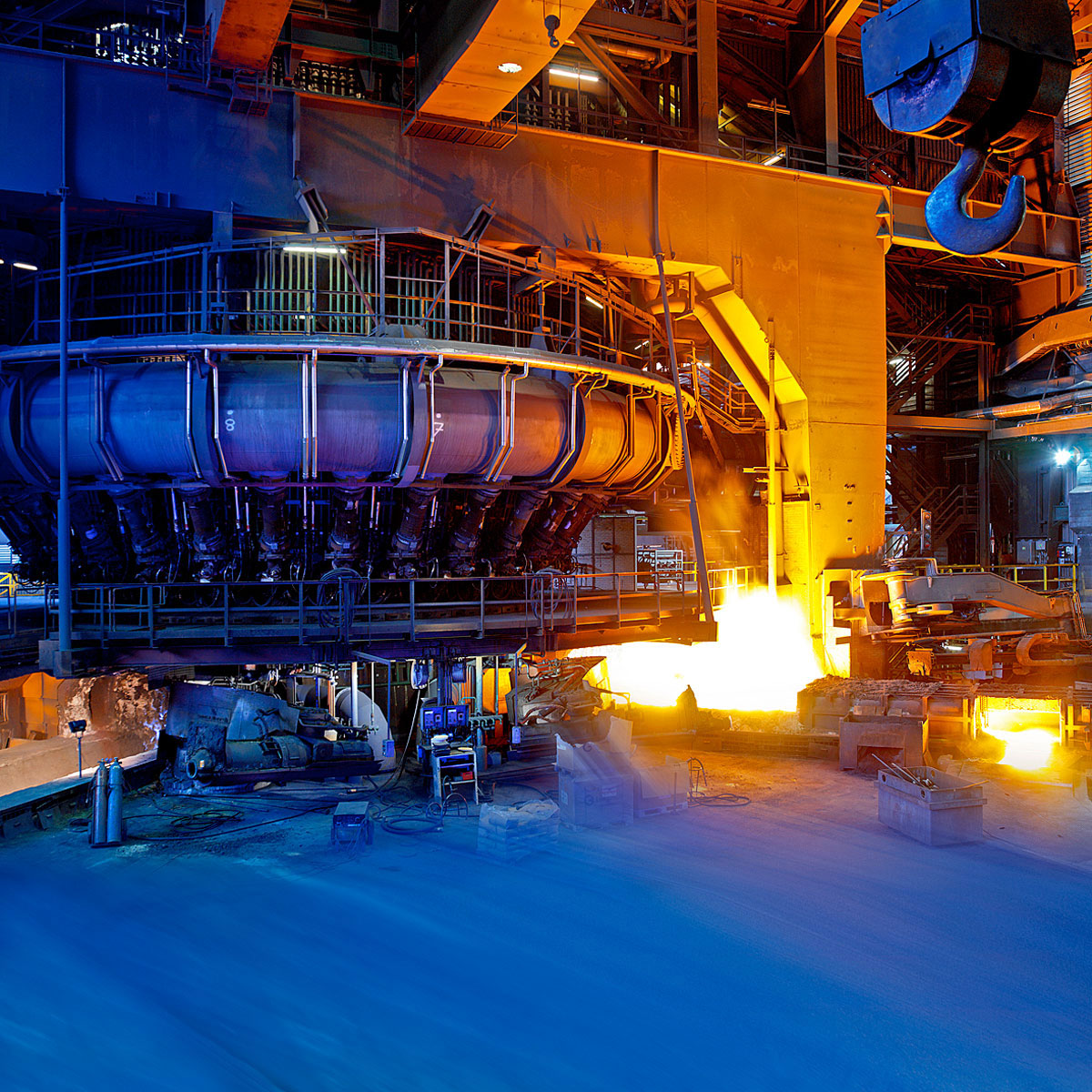
Siemens Mobility to source green steel from Voestalpine
German rolling stock manufacturer, Siemens Mobility, signed a green steel supply agreement with Austrian steelmaker Voestalpine that will increase the share of decarbonized steel in its rail vehicle production, Siemens said on 17 October.
Siemens Mobility plans to increase the share of green steel in rail vehicle production to at least 20% in 2025. The agreement with Voestalpine also includes additional volumes of CO₂-reduced ‘Greentec Steel Edition’ that could be supplied in the next three years.
Siemens Mobility aims to cut CO2 emissions by 90% by 2030 and become carbon-neutral by 2050.
The steel purchase agreement expands Siemens Mobility’s “Green Steel for Bogies” pilot project, launched in 2022 at the global competence center for bogies in Graz, Austria.
The premium products in the ‘Greentec Steel Edition’ are produced at the Voestalpine site in Linz using a CO2-optimized production route and generate up to 70% less emissions compared with conventional steel.
To learn more about decarbonization projects of Voestalpine or of other steelmakers across the EU – see McCloskey’s European Green Steel Profile.
Maria Tanatar Associate Director, Steel and Green Steel

European heavy plate round-up: EU heavy plate prices started to rise
European heavy plate prices have started to recover in the week to 17 October, supported by combination of demand revival and the effects of the European Commission’s proposed new safeguard measures that will limit imports in the EU.
Distributors that had been avoiding larger restocking over the past few months have returned to the market to book required volumes. This allowed steelmakers to fill their order books and gave them ground to ask for higher plate prices.
“Big distributors returned for restocking after several months of inactivity, so the order books of the mills are full now. We no longer need to chase the volumes and now we can target higher prices,” a steelmaker said.
In Italy, deals for big lots of plate have been reported at EUR590-600/t ex-works. Such prices have not been available for average buyers – they have been paying EUR610-630/t ex-works.
As Italian re-rollers already have limited volumes for December rolling they have been aiming to get prices of around EUR650/t ex-works for January. And suppliers have been in no rush to settle deals for the first quarter as they expect prices to rise further.
“Re-rollers [in Italy] started to ask for EUR40-50/t more for plate. I think it will be achieved in the next few weeks, supported by approaching carbon border adjustment mechanism [CBAM] and new quotas for imported steel,” a trader said.
The European Commission released its proposal for new steel safeguard measures on 7 October. McCloskey calculated around a 63% reduction in annual import volume within heavy plate’s product category 7 between the new proposal, and the existing safeguard system.
Market participants have expressed concerns that imports are too risky until the final version of the new safeguard regulation is available. A few sources expect that the measures could come into force in January next year.
Implementation of CBAM from 2026, combined with a lack of guidance from the EU authorities that would allow importers to estimate the duties is expected to deter buyers from imports at the start of next year and will support domestic prices.
European re-rollers need to achieve higher plate prices to cover higher slab costs due to CBAM.
Import offers of slab from China and Vietnam have been reported at around $520-530/t CFR Italy, with market participants estimating achievable prices at around $500-510/t CFR.
In Germany, domestic heavy plate prices have moved up to EUR670-700/t ex-works with deals heard at EUR670-680/t ex-works.
| Weekly European heavy plate, slab and green steel | |||||
| Unit | Term | 17-Oct-25 | Change | ||
| Weekly heavy plate | |||||
| Northwest Europe ex-works heavy plate | EUR/t | EX-WORKS | 675.00 | 5.00 | |
| Germany delivered heavy plate (Northwest Europe) | EUR/t | DEL | 700.00 | 20.00 | |
| Italy ex-works HRC | EUR/t | EX-WORKS | 555.00 | 5.00 | |
| Weekly steel slab | |||||
| Italy CFR slab | $/t | CFR | 515.00 | 0.00 | |
| Weekly green steel | |||||
| Green heavy plate premium (scopes 1-3 CO2 1t) | EUR/t | 25.00 | 0.00 | ||
Maria Tanatar Associate Director, Steel and Green Steel
Benjamin Steven Journalist, Steel

3 EUROMETAL Board Members at Global Flat Steel 2025 in Istanbul
Several EUROMETAL members took the stage last week at the Global Flat Steel 2025 conference, organised by Kallanish in Istanbul.
Held at a time of deep structural shifts in the steel sector, the conference brought together leaders from across the world to discuss how the flat steel market is navigating demand volatility, rising protectionism, and the accelerating push toward decarbonisation.
Board Member Tayfun Iseri, Chairman of YISAD and Board Member of Colakoglu Metalurji, joined Session 1: Global Steel Trends in an Era of Unpredictability. Tommaso Sandrini, CEO of S.Polo Lamiere, and Jaap Jan Aardenburg, Head of Trade Affairs at Tata Steel Nederland, joined Session 4: Flat Steel Trade & Supply Chains.
Other EUROMETAL members contributed actively to the conference: Jérôme Waterkeyn, CEO of SteelForce Group, rounded out the conference with a forward-looking analysis of flat steel pricing trends and shared his perspective as a trading executive navigating rapid change, offering a pragmatic view on risk management, sourcing, and the need for adaptable pricing strategies in 2025 and beyond. Gilles Mirol, Chief Commercial Officer of Hydnum Steel, as a key player in one of Europe’s most ambitious green steel projects, joined a technical panel focused on how the industry is responding to the decarbonisation imperative.


Thyssenkrupp Electrical Steel halts production amid surge in low-priced ex-China imports
Thyssenkrupp Electrical Steel, a subsidiary of German steelmaker thyssenkrupp, has halted production at its Gelsenkirchen plant for one week amid growing market pressure from low-priced Chinese steel imports, according to German media reports.
The shutdown will affect approximately 1,200 employees, with all operations, including administrative work, temporarily suspended. Also, a short-time work scheme remains under consideration if weak market conditions persist.
The company said the decision stems from an influx of underpriced Chinese steel being sold below domestic production costs, significantly reducing order volumes for electrical steel products.
Sources clarified that the short-time work discussions are not related to the plant’s competitiveness, but to distorted market conditions caused by dumping-level imports.
Local political representatives have voiced concern over the situation. Felix Langer, spokesperson for The Left Party in Gelsenkirchen, criticized the lack of effective industrial policy, stating that “workers are once again paying the price for political failures”.
The party called for binding protection measures for strategic sites like Gelsenkirchen, describing it as a “central building block for the energy transition”.
In a statement of solidarity, The Left Party urged the federal government to safeguard industrial jobs and technological know-how, warning that unchecked dumping imports threaten both employment and Germany’s green transition goals.


EU adopts CBAM amendment introducing 50-mt exemption and simplified reporting
The European Parliament and the Council of the European Union have announced that they have adopted Regulation (EU) 2025/2083, amending the original CBAM Regulation (EU) 2023/956.
The new law aims to simplify, clarify, and strengthen the Carbon Border Adjustment Mechanism (CBAM) ahead of its full enforcement on January 1, 2026.
It reflects lessons learned during the transitional phase (October 2023-December 2025) and introduces procedural and technical adjustments to improve administrative efficiency.
50-mt “de minimis” exemption
A new mass-based threshold exempts importers with total annual imports of 50 mt or less of goods covered under Annex I, including iron and steel, aluminum, fertilizers, and cement, from CBAM reporting, declaration, and certificate purchase obligations.
This “de minimis exemption” relieves small traders of compliance burdens while maintaining 99 percent coverage of embedded emissions under CBAM.
Imports of electricity and hydrogen are excluded due to their distinct trade and emissions profiles.
Declarant obligations and compliance
Importers anticipating exceeding the 50-mt threshold must apply for authorized CBAM declarant status before crossing the limit. Applications submitted by March 31, 2026, will allow continued imports until approval is granted. Indirect customs representatives acting for importers must also be registered as declarants.
Authorized declarants will file their first annual CBAM declaration by September 30, 2027, covering 2026 imports. Declarations must include verified data on import volumes, embedded emissions, and carbon prices paid abroad.
Alignment with EU ETS and default values
The amendment aligns CBAM emission boundaries with those of the EU Emissions Trading System (ETS), excluding emissions from downstream finishing processes not covered by the ETS.
When reliable third-country data is lacking, default values will reflect the average emission intensity of the ten most carbon-intensive exporting countries, minimizing the risk of carbon leakage.
Declarants may reduce the number of certificates surrendered if they prove payment of a carbon price in the country of origin, supported by independent certification and proof of payment.
From 2027, the European Commission may publish default carbon prices for third countries in €/ton CO₂, based on verified public data and official submissions.
Penalties, monitoring and certificate rules
Importers exceeding the 50-mt limit without authorization will face financial penalties, though payment of the fine will discharge further obligations for that year. Penalties for authorized declarants failing to surrender certificates will remain aligned with the EU ETS excess emissions penalty, ensuring consistency and deterrence.
Member states will begin selling CBAM certificates in 2027 for emissions linked to 2026 imports. Prices will mirror the average 2026 EU ETS allowance prices, while declarants must hold CBAM certificates equal to at least 50 percent of estimated annual emissions each quarter, reduced from the previous 80 percent requirement.
The European Commission and national authorities will monitor import flows to prevent circumvention practices such as shipment splitting and may revise the exemption threshold via delegated acts if emissions or trade volumes shift significantly.
European longs prices stable and range-bound amid complex market conditions
The European long steel market has remained mostly stable this week, with just minor changes in the market fundamentals. Import longs prices, however, have increased a little, amid higher export prices from Turkey and a stable euro-dollar exchange rate.
In Italy, local rebar prices are remaining range-bound and have been reported at €230-240/mt ex-works base (€495-505/mt ex-works including regular extras). “Mills are asking for at least €30/mt more, but only with the aim of making final customers withdraw the orders they had concluded previously [when rebar sales prices were higher]”. A representative of an Italian steel mill has claimed that longs – especially rebar – sales are difficult “with prices being uncompetitive all over Europe”, as energy prices remain on the high side.
As for wire rod, local prices in Italy have not changed week on week, staying at €575-590/mt delivered for drawing quality and €550-565/mt delivered for mesh quality.
In the meantime, the official closing process of ArcelorMittal’s Zenica and Prijedor plants has started, after their sale by Pavgord group was concluded at the end of June this year, as SteelOrbis had reported. According to local media reports, both sites will be closed in November 2025, and a market source has reported that “theoretically, but this is just a hypothesis, the land occupied by the mills will be converted into a building lot, and the iron ore furnace will be demolished”. The import of this closure on the market remains to be seen.
In the export segment, rebar prices from Spain to UK ports have remained unchanged from the previous week at around €540/mt FOB, whereas ex-Greece rebar and wire rod prices have been reported by market sources at €560/mt and €555/mt, respectively.
As for imports, rebar and wire rod dollar-based prices from Turkey have increased by $10/mt week on week. Considering the euro-dollar exchange rate at 1.16, CFR prices for Turkish rebar in the European Union are €10/mt higher on the upper end of the range, standing at €500-510/mt. Ex-Turkey wire rod prices to the same destination have reached €505-510/mt CFR.

Global steel demand set to rebound in 2026, Worldsteel says
On Monday October 13, the report expressed “cautious optimism” as it forecast “modest growth” in global steel demand in 2026, compared with flat demand volumes expected for 2025.
Worldsteel attributed the anticipated shift in trend to a moderation in the decline of Chinese steel demand, growth signs in developing economies such as India, Saudi Arabia, Egypt and Vietnam – and “the long-awaited return of steel demand growth in Europe.”
However, high production costs, paired with cost pressures on consumers, trade tensions and shifting geopolitical dynamics are some of the key factors currently “dampening” steel demand across international markets, Worldsteel said.
China’s decline expected to decelerate
According to Worldsteel, Chinese steel demand will drop further by approximately 2% in 2025, marking a slowdown from when the market started to decline in 2021. The decline is forecasted to drop to 1% in 2026.
The reduction is a “moderation” of the declining trend, which is primarily driven by an “ongoing downturn” in the east Asian country’s housing market, the association said.
Worldsteel warned, however, that risks to its current China steel demand outlook “weigh on the downside” amid growing global protectionism and financial pressures on local governments.
Recently, escalating trade tensions between the US and China have weighed on steel market sentiment and prices, as well as a poor demand outlook.
Fastmarkets assessed the price of domestic hot-rolled coil, ex-warehouse Eastern China, at 3,380-3,390 yuan ($474-475) per tonne on Friday October 17, compared with 3,420-3,430 yuan on September 17.
Member mills of the China Iron & Steel Association (CISA) sharply reduced crude steel production in late September to levels not seen since the beginning of 2024, due largely to local environmental restrictions, but production sentiment was also said to be impacted by weaker finished steel prices and high stocks.
The world’s largest steel producer recorder a 0.7% drop in output to 77.4 million tonnes in August from the same time last year, according to Worldsteel’s data.
China produced 671.8 million tonnes of steel between January-August, down by 2.8% compared with the same period in 2024.
India keeps on growing
Meanwhile, the association forecasts that India’s steel consumption will continue to grow, rising by around 9% between 2025 and 2026, with expectations that local steel demand will increase by 75 million tonnes compared with 2020.
India had consistent growth in steel production, supported by strong domestic consumption for steel and a robust infrastructure sector.
While the construction sector is expected to remain strong, according to Fastmarkets’ research team, recent production capacity expansion has put pressure on prices. The introduction of safeguard duties on imports in April has also negatively impacted the market.
Meanwhile, a recent reduction of the country’s goods and services tax on cement from 28% to 18%, is also expected to favor steel consumption in the country further, according to Fastmarkets research team.
Strong demand forecasts for India accompanied high output figures this year, with the south Asian country having produced 14.1 million tonnes of steel in August, up by 13.2% year on year, according to Worldsteel data.
Meanwhile, the country produced 108.9 million tonnes between January-August 2025, an increase of 10.2% compared with the same period in 2024.
Steel demand in the developing world (excluding China) is expected to grow significantly by about 3.4 % in 2025 and 4.7 % in 2026, with this expansion expected to be driven chiefly by strong demand in India, and growth in some Association of Southeast Asian Nations and Middle East-North Africa countries, Worldsteel added.
Demand for Saudi steel also grows
Saudi Arabia was also among Worldsteel’s list of developing economies set to experience growth in steel demand in the coming months, contributing to the increase in global consumption.
Saudi Arabia’s increased demand for steel can be linked to a number of factors that have contributed to the development of its steel industry.
These include the government’s Saudi Vision 2030 program, which aims to diversify the country’s economy from its dependence on crude oil by allocating more funds to other key sectors, including construction.
Currently, the country is investing in major infrastructure project, which are set to boost local steel demand.
Outlook for leading producers
Leading steel producers are forecasted to experience demand growth in the future.
According to Worldsteel, steel demand in the US is expected to increase by 1.8% in 2025, thanks to “front-loading of production ahead of increased tariffs and continued growth in infrastructure spending,” the association said.
Lower levels of market uncertainty, private investments and a growing construction sector are also going to support steel demand in the US, Worldsteel said.
Based on Worldsteel data, the US reported a 3.2% rise in steel production to 7.2 million tonnes in August 2025.
Meanwhile, steel demand in the EU and UK is expected to increase by 1.3% in 2025 and 3.2% in 2026, Worldsteel said.
According to the association, the growing demand for steel in the EU is the result of “increased infrastructure and defense spending” across the region, as well as “improving” macroeconomic conditions, including inflation and household income.
In September, the European Steel Association (Eurofer) updated its outlook for apparent steel consumption across EU member states, predicting a decline of 0.2% to 128 million tonnes in 2025, compared with 129 million tonnes in 2024.
However, despite apparent steel demand experiencing two quarterly rebounds in late 2024 and in early 2025, consumption remains below pre-pandemic levels, Eurofer said.
Africa experiences upward trend
Despite years of muted market growth, steel demand in Africa has grown by around 5.5% per year over the past three years, according to Worldsteel data, especially in the continent’s northern and eastern regions.
According to the association, the trend is supported by developing economies, stability and reduced market volatility, as well as a strong construction sector.
Egypt was also mentioned in the association’s list of developing economies experiencing growth in steel demand.
Fastmarkets assessed the price for steel reinforcing bar (rebar) domestic, exw Egypt at E£33,000-38,200 ($693.75-803.07) per tonne on Thursday October 16, compared with E£32,000-38,200 per tonne on September 11.
Central and South America to follow trend
Worldsteel predicts 5.5% growth in the region’s steel demand this year, primarily driven by positive outlooks for the Argentinian and Brazilian markets. According to the association, the forecast is expected to boost the region’s steel demand to around 50 million tonnes.


European green steel premiums unchanged amid limited, project-based demand
Market participants described another quiet week for the European green steel market.
“There are not so many projects requiring green steel in Europe – at least for now,” a source from a steel service center in Germany told Fastmarkets.
“There are only a few large customers in Europe who require green steel. Regular volumes are being sold to these buyers, but we’re not talking about significant tonnages,” a mill source in Northern Europe said.
A buyer in the Nordics told Fastmarkets they were considering purchasing 2,000-4,000 tonnes of green steel for 2026 and were currently negotiating terms.
A Germany-based white goods producer was also reported to be placing regular orders for green steel.
“We’re making trial orders for some Nordic buyers, but the volumes are not large,” a distributor told Fastmarkets.
Overall, sources agreed that the green steel market is likely to remain a niche sector over the next several months.
“Large-scale demand for green steel can only be stimulated through public projects. Otherwise, it will remain a niche market,” a second mill source said.
Fastmarkets’ weekly assessment of the green steel domestic flat-rolled differential to the HRC index, ex-works Northern Europe was stable at €100-170 ($87.02-147.93) per tonne on Thursday, unchanged since September 11.
Under Fastmarkets’ methodology, European green flat steel is defined as material produced with Scope 1, 2 and 3 greenhouse gas (GHG) emissions capped at a maximum of 0.8 tonnes of CO₂ per tonne of steel produced.
Sources agreed that because transactions are largely project-based, prices varied widely.
“Green steel remains a very ‘case-by-case’ market,” a buyer in Germany said.
European mills were quoting premiums for green steel starting around €200 per tonne, with some suppliers targeting €210-300 per tonne. But in practice, tradable levels were lower.
“If you ask a mill for green steel, they might initially quote a €200-per-tonne premium [minimum], but once real volumes are on the table, suppliers become more flexible,” a buyer in the Benelux region said.
Buyer sources said achievable premiums for green flat steel were typically in the range of €100-150 per tonne, with large-volume deals often concluded at €120-130 per tonne. Mill representatives suggested a slightly higher range of €150-180 per tonne.

European HRC buyers resist price rises amid weak demand
Market participants polled by Fastmarkets on Friday on both the buying and sell side reported a lack of demand.
“Demand is missing totally. Stocks are sustaining low buying activity. How long can this last? A few months more,” a buyer in Italy said.
“Next year prices will be much higher, but some people still believe that CBAM [Carbon Border Adjustment Mechanism] will not happen or will be postponed, and new protection measures will be changed. Not everyone has understood the situation. I am buying what is possible,” the buyer added.
In addition to uncertainty over regulatory measures, steel output at a mill in Northern Europe will be reduced for around a month, which could create a deficit in the market.
A fire on October 8 at ArcelorMittal Fos-sur-Mer in southern France halted one blast furnace (BF) for at least one month.
On Wednesday October 15, an ArcelorMittal spokesperson told Fastmarkets that the company is organizing a one-month shutdown of the affected BF, although this may be adjusted depending on the progress of repair work.
“Other production facilities will continue to operate continuously or will alternate between periods of operation and shutdown depending on operational requirements and scheduled maintenance,” the spokesperson said.
ArcelorMittal typically operates two blast furnaces at Fos-sur-Mer, with a combined capacity of 5 million tonnes per year of pig iron. The site focuses on HRC and cold-rolled coil production.
This news, nevertheless, had no impact on demand in Northern Europe.
“No one is accepting higher prices so far. Demand is not there,” a trader in Germany said.
“Prices are now just testing. No demand, only uncertainty,” a producer in Benelux told Fastmarkets.
Offers for December-delivery HRC were reported at €600-640 per tonne ($700-747) ex-works or delivered in Germany and the Benelux area, while estimates of workable prices did not exceed €585 per tonne ex-works.
Fastmarkets’ daily steel hot-rolled coil index domestic, exw Northern Europe was €591.25 per tonne on Friday, stable day on day.
The index rose by €13.75 per tonne week on week and by €10.00 per tonne month on month.
In Italy, HRC was available at €600-630 per tonne delivered, netting back to €580-610 per tonne ex-works, according to sources.
Meanwhile, estimates of workable prices ranged from €570 to €590 per tonne ex-works, with no major deals heard during the day.
“Bids are at €560 per tonne ex-works, but no mill is accepting this level, so all is dead,” an Italian buyer told Fastmarkets.
“There is still little progress in the cut sheet market. The minimum price is €660 per tonne ex-works and the maximum is around €680 per tonne ex-works. This is not enough for HRC to be booked at €600 per tonne ex-works,” a producer source said, estimating workable prices at €570-590 per tonne ex-works.
Fastmarkets’ daily steel hot-rolled coil index, domestic, exw Italy was calculated at €580 per tonne on Friday, down by €1.67 per tonne day on day from €581.67 per tonne on Thursday October 16.
The Italian index rose by €35 per tonne week on week and by €27.93 per tonne month on month.
Central European HRC prices increased in the week to Wednesday October 15, following an upward trend observed in other European regions. Workable price estimates hovered at €580-590 per tonne ex-works on Wednesday, compared with €570-585 per tonne ex-works earlier in October.
Offers were also heard at €630 per tonne ex-works, but buyers were not ready to accept those levels.
Fastmarkets’ weekly price assessment for steel hot-rolled coil, domestic, exw Central Europe was €580-590 per tonne on Wednesday, up from €570-585 per tonne the previous week.
Davide Montagner in London contributed to this report.