


CSN acquires Spanish flat steel producer Galvacolor from Cristian Lay
Companhia Siderúrgica Nacional (CSN), Brazil’s largest industrial conglomerate, has announced its acquisition of Spanish steel producer Galvacolor from CL Grupo Industrial (Cristian Lay). The transaction marks a renewed interest by CSN in the Spanish market, subject to approval by the Spanish National Markets and Competition Commission (CNMC), which was officially notified on October 21.
Located in Jerez de los Caballeros (Badajoz), Galvacolor specializes in the production of flat steel coils, offering a portfolio of four core products: pickled and oiled, cold rolled, galvanized, and pre-painted steel. The company was acquired by CL Grupo Industrial in 2020 and relaunched with an initial €20 million investment following several years of inactivity.
While Galvacolor reported revenues of €95 million in 2024 — down 16.65% year-on-year — the company also posted operating losses of €7.4 million and a negative net equity of €21.57 million. However, a €31 million shareholder loan from Grupo Gallardo Balboa helped stabilize its balance sheet.
This divestment aligns with CL Grupo Industrial’s 2025–2027 strategic plan, which aims to drive €200 million in investments and focus on sustainable growth. Its Steel Division remains one of its largest revenue generators, alongside the Packaging Division, and is undergoing significant transformation driven by innovation and sustainability.
For CSN, the acquisition of Galvacolor is a return to the Iberian industrial landscape. A decade ago, CSN had shown interest in Grupo Gallardo’s assets, including Cementos Balboa in Extremadura and Corrugados Azpeitia and Corrugados Lasao in the Basque Country.
With over €7 billion in annual revenue, an EBITDA of €533 million, and a workforce exceeding 20,000 employees, CSN is a vertically integrated giant active in steel, mining, logistics, cement, and energy. Headquartered in Brazil, it also maintains operations in Germany and Portugal, and its shares are traded on the São Paulo (B3) and New York Stock Exchanges (NYSE).
Source: eleconomista.es

Poland sanctions steel firms bypassing EU Russia ban
Poland has imposed autonomous sanctions, in addition to EU measures, on STEELTRADE Sp. z o.o. – formerly EMK Group – and OMNI GRP Sp. z o.o. This is for indirectly supporting Russia’s war against Ukraine through exports and re-exports of metal and steel products banned under EU sanctions.
Poland’s National Revenue Administration reports that STEELTRADE and OMNI GRP exported steel sheet, plate, and flat-rolled products made of alloyed and non-alloyed steel or cast iron, including DILLIDUR high-strength abrasion-resistant sheets. The firms may also have exported Uddeholm Dievar steel, a premium-grade alloy valued for its exceptional strength, lightness, and durability, widely used in defecse manufacturing. Authorities therefore presume these materials were destined for Russian defence factories, indirectly supporting the country’s military industry.
STEELTRADE, registered in 2019 and controlled by Belarusian citizen Uladzimir Liashchuk, exported nearly PLN 30 million ($8.25m) worth of steel to Russia in 2021-22, later redirecting over PLN 110m to Kazakhstan and then to a Hong Kong intermediary re-exporting to Russia, according to Polish authorities. Over 200 shipments reportedly ended up in Russia.
OMNI GRP, founded in 2022 and led by Andrei Karpovich with Liashchuk and Veranika Pental, carried out similar exports to Turkey, China, and Kazakhstan, with intermediaries supplying Russia.
The sanctions, announced on 7 October, aim to curb Russia’s industrial potential and limit its access to critical steel inputs, Kallanish notes.
Elina Virchenko UAE


Protectionism risks steel substitution, higher costs: ISTA/NSA meeting
Rising protectionism in the UK and European markets risks steel substitution and higher costs for end users, participants said during last week’s meeting in Leeds held jointly by the National Steel Association (NSA) and International Steel Trade Association (ISTA), attended by Kallanish.
“Our businesses are under attack,” said one speaker, citing the Trade Remedies Authority (TRA) changes brought in at short notice earlier this year.
These have “unfairly cost companies millions of pounds in unbudgeted duties and are continuing to distort trade patterns in the affected product groups.”
“Investment will not take place against the background of instability and uncertainty created by ministerial unpredictability,” they added.
While they noted the need for domestic steel production to be maintained, this should not be detrimental to the independent steel processing, distribution, manufacturing and construction industries.
They added that docks and hauliers cannot exist solely on exports.
The source highlighted the ongoing pushback from some sectors in response to proposals by the EU to reduce import quotas to 2013 levels.
“The downstream manufacturers would be left wide open to imports of finished products at the same time as facing higher prices from domestic producers who would be protected,” they said.
They rejected suggestions that the UK and EU markets are the same, noting that producers in the EU are protected by quotas while consumers still have a wide choice of producers, while there is one UK producer for each main product. This risks creating a monopoly situation.
Elsewhere, a port representative also warned of the “massive change globally” which they said was going to impact every person in the sector.
The changes will make trade “difficult to do” as no one can risk paying a 50% tariff.
If the UK was to replicate the EU safeguards, it would see domestic mill price rises, resulting in higher costs for manufacturing industries and carmakers, they noted.
“We live in a global industry and substitution is relatively easy,” they noted, with steel able to be replaced by timber and concrete in some cases.
They suggested that whichever material is cheapest and has the least amount of trade protection will be chosen.
“We’re killing our industry and manufacturing,” they said. “The more trade protection we have, the fewer options we give our customers; and the more expensive they become, the more difficult it is for them to compete, and it’s a global industry.”
They suggested the tightening of safeguard measures will encourage imports of finished goods from overseas.
Elsewhere, they noted that short-sea ports have struggled during 2025 as the market has struggled, particularly on flat products more than long products.
Carrie Bone UK

EU coil mills waver in annual contracts
Coil mills and big buyers attending last week’s Euroblech trade fair in Stuttgart exchanged first positions in the upcoming negotiations for annual supply contracts, mainly for the automotive industry. Some buyers said they would not mind if mills were bolder with their proposals.
Talking to Kallanish, a couple of mills stated they are asking for at least €100/tonne ($116) more in comparison to last year’s agreements, “in order to be able to keep operating”, as one manager put it.
Among buyers, the impressions were more diverse, ranging from hikes of €60 to €100, although buyers find that the higher end will be unrealistic.
However, buyers might not be happy with a shallow year-on-year increase either, telling Kallanish that minimal increases are harder to hand down to customers. These are often the carmakers, which are bigger and more powerful in negotiations.
“If we, for example, have a y-on-y increase of only €10-20, the carmakers will just ignore it, and insist to continue their previous contracts with us,” a buyer of a tier one supplier said. “With a €50 hike, we would have a decent basis for new deals with the OEMs.”
Using a popular figure of speech, he compared the situation of the automotive suppliers to “the sausage in the sandwich – we taste good, but we have no influence over the pressure from above and below”.
This is why he would prefer mills to impose their will over pricing more strongly, which they are not doing. “I am missing an attitude of ‘we must, and we will’; there are too many subjunctives and maybes,” he pointed out.
He hopes that positions will firm for the upcoming substantial negotiations in two to three weeks’ time.
Christian Koehl Germany

EU HRC prices remain unchanged; market view shifts to 2026
European hot-rolled coil prices remained stable on Oct. 28 as market participants shifted their view to 2026 with the introduction of CBAM and enhanced safeguard measures.
After the market recently converged at the Blechexpo trade fair Oct. 21-24, one mill noted the atmosphere was surprisingly positive, despite sellers raising offer levels for material recently.
However, the mill raised concerns over the threat of cheap finished goods entering the market in 2026, which could limit the effectiveness of the European Commission’s safeguard proposals and CBAM, since they are not currently covered in the regulation.
Tradable values for domestic HRC in Northern Europe were reported at Eur620-630/mt ex-works Ruhr for January 2026 deliveries, with second-hand deals said to be concluded at those levels.
In Southern Europe, offers for domestic HRC were reported at Eur600-610/mt ex-works Italy.
Platts assessed domestic HRC in Northern Europe at Eur595/mt ex-works Ruhr, and in Southern Europe at Eur585/mt ex-works Italy, both stable day over day.
The outlook on imports seemed unclear as participants shared different views on the availability of material.
“Nothing makes sense, it’s actually a mix of feelings in the market,” an Italian-based trader said. “Some people still think they can buy imports for safe arrival by year-end, especially from India.”
A North Europe-based trader noted that many traders were beginning to offer material on a DDP basis to Antwerp for 2026 as end-users look to reduce their involvement with CBAM. He added that he was unsure how deals on a CIF basis would currently be negotiated for next year.
Import offers in Southern Europe were reported between Eur600-700/mt DDP Italy, inclusive of potential CBAM costs, for Taiwanese and Turkish material.
Platts assessed imported HRC in Northern Europe at Eur490/mt CIF Antwerp, and in Southern Europe at Eur485/mt CIF South Europe, both unchanged day over day.


New car registrations in EU up 0.9 percent in Jan-Sept 2025
In September this year, new passenger car registrations in the EU rose by 10.0 percent year on year to 888,672 units, according to the European association of car manufacturers ACEA.
In the given month, Spain (+16.4%), Germany (+12.8%), Italy (+4.2%) and France (+1.0%) reported positive results.
In the first nine months of this year, new car registrations in the EU advanced by 0.9 percent year on year to 8.06 million units. France (-6.3%), Italy (-2.9%) and Germany (-0.3%) showed a negative performance. On the other hand, Spain (+14.8%) posted an increase.


European buyers weigh new HRC offers; deals limited
Target offers for January delivery coil were reported at €620-650 ($723-758) per tonne ex-works from integrated producers in Northern Europe.
A re-roller was offering limited volumes for January at €600 per tonne ex-works.
While the high end of offers was deemed unrealistic by buyer sources, at least for the beginning of 2026, most of them agreed that €610-620 per tonne ex-works could be acceptable for January delivery.
But new deals for the first quarter delivery of HRC were scarce so far, with both buyers and sellers still being cautious.
“We are trying to increase prices downstream and it is not a fast process,” a steel service center in Germany said.
“So far, nobody needs HRC for December — there is plenty of imports in the market and we actually bought slightly more than we need for the fourth quarter in expectations of price rises,” a stockholder in Germany said. “I think we will see more activity [for first quarter tonnages bookings] towards the end of November,” they added.
Besides, some suppliers were holding back on January volumes sales, estimating the markets.
“Nobody wants to sell too cheap and too soon. There is no doubt [HRC] prices will increase in the first quarter of 2026, the question is how much,” a seller source said.
Overall, sources agreed that it was not possible to buy HRC cheaper than €600 per tonne ex-works from first-tier suppliers in Europe.
Fastmarkets’ daily steel hot-rolled coil index domestic, exw Northern Europe was €602.50 per tonne on Tuesday, up slightly from €602.00 per tonne on Monday October 27.
The index was up by €7.50 per tonne week on week and by €24.79 per tonne month on month.
Fastmarkets’ corresponding daily steel hot-rolled coil index domestic, exw Italy was calculated at €591.25 per tonne on Tuesday, stable day on day.
The Italian index was up by €5.83 per tonne week on week and by €40.62 per tonne month on month.
In Italy, offers from a local supplier were reported at €630 per tonne delivered (equivalent to €610-615 per tonne ex-works) for January delivery coil.
According to sources in Italy, producers were only willing to grant discounts on remaining December volumes, noting that further price reductions would not be feasible for January.
Buyers in Italy estimated the workable domestic HRC price in Italy around €580-600 per tonne ex-works on Tuesday.
Offers from Turkey came in at €530 per tonne CFR to Italy, including the anti-dumping duty.
One source also reported an offer from Saudi Arabia at €520 per tonne CFR.
Overall, overseas HRC offers were scarce since both the Carbon Border Adjustment Mechanism and the new trade regime proposed by the Commission earlier in October were significantly limiting buying appetite for new imports.

Thyssenkrupp sees limited impact from Duisburg fire
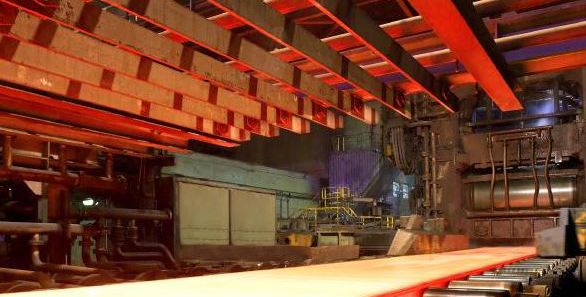
A fire at German steelmaker Thyssenkrupp’s Duisburg plant is expected to have a limited impact on shipments, a company spokesperson told McCloskey on 28 October.
The fire broke out late afternoon on 24 October at Thyssenkrupp Steel Duisburg in the hot strip mill in the Bruckhausen plant area and was put out early in the morning of 25 October.
Since the equipment impacted by the accident was still in the ramp-up phase, Thyssenkrupp’s customers will see limited impact on their shipments.
Although no official cause of fire or exact extent of the damage was determined, “it can be stated that the two central plant components, the new continuous casting line No 4 and the rolling mill of the new hot strip mill No 4, have not been damaged or have only sustained minor damage. The furnace area of the hot strip mill and the hall structure appear to have been the most affected,” the spokesman said.
Northwest European hot-rolled coil prices jumped by EUR20/t over the week to 24 October, with deals settled at EUR600-620/t ex-works. The anticipated reduction in supply from overseas due to a combination of new stricter quotas on imports, and effects of the carbon border adjustment mechanism (CBAM) coming into force in 2026 fueled the price rise. Although real demand is unlikely to rise, the market share of EU mills is expected to increase. And any reduction or delays of steel delivered from domestic mills supports the upbeat sentiment in the market.
On 22 October, Thyssenkrupp permanen
In September, Indian steelmaker Jindal Steel submitted a non-binding offer for Thyssenkrupp’s Steel Europe division.
SSAB to supply Vattenfall with green steel for dam gate
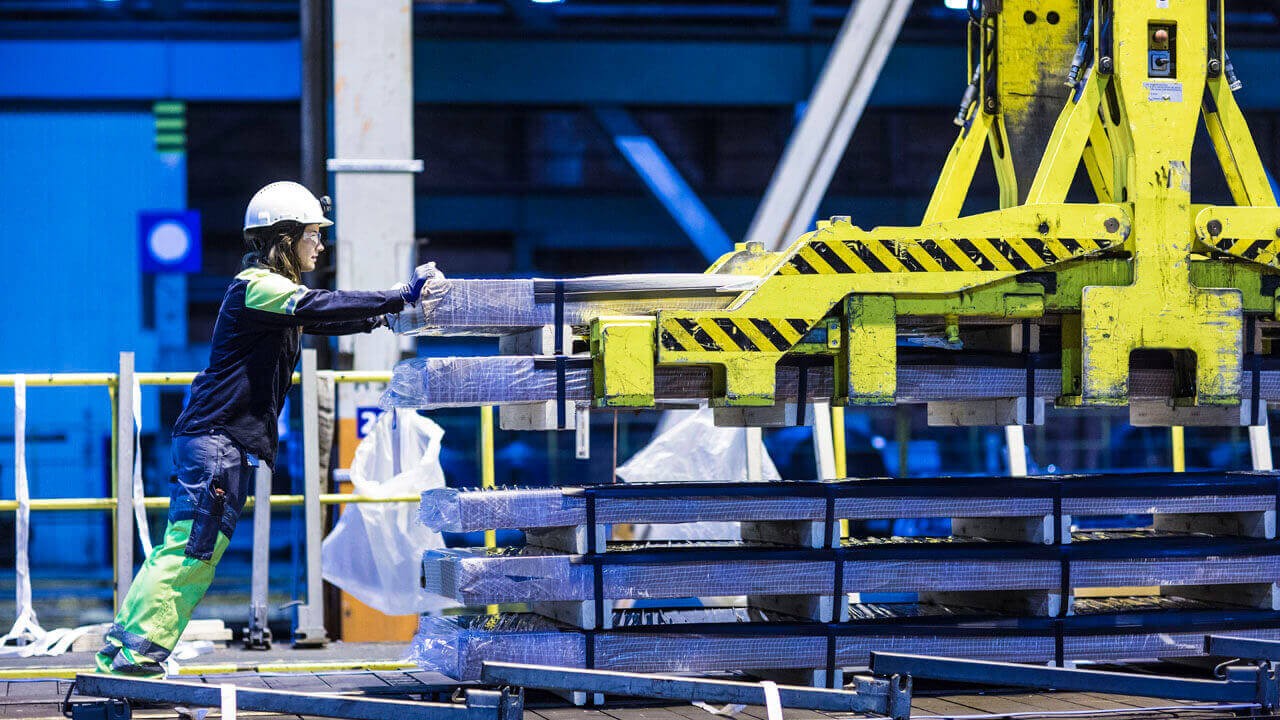
Swedish steelmaker SSAB has signed an agreement with state-owned energy company Vattenfall to supply green steel for a new dam gate, to be the largest and first of its kind globally produced from ironmaking with near-zero fossil carbon emissions.
SSAB said the agreement covers a pilot delivery of 120 tonnes of HYBRIT-produced steel for the new dam gate, produced via electric-arc furnace (EAF) with “fossil-free sponge iron”.
HYBRIT is a joint project between SSAB, Vattenfall, and ironmaker LKAB, seeking to create a fossil-free production chain from raw materials to finished steel, beginning with hydrogen-based direct-reduced iron (H2-DRI) through to green energy-powered EAF steelmaking.
“This is an important step in our shared commitment to reducing carbon emissions. With forward-thinking partners like Vattenfall, we continue to lead the transformation of the steel industry. Our successful collaboration through HYBRIT now demonstrates what we can achieve to reduce the climate footprint across the entire value chain,” said Thomas Hörnfeldt, Vice President of Sustainability at SSAB.
The steelmaker describes its fossil-free steel as a “proof-of-concept for the emission-free materials of the future, demonstrating that it is possible to manufacture large, complex components with a radically reduced climate footprint.”
As European authorities signal that sustainability criteria could be incorporated into public procurement directives or mandates via legislative proposals scheduled for this year, a demonstration of the applicability of low-carbon steel to larger-scale infrastructural developments could advantage SSAB’s HYBRIT steel in this emerging market.
HYBRIT-based renovations and developments are expected to become fully operational, and scale, between 2028-2029, as detailed in McCloskey’s European Green Steel Profile.
Benjamin Steven Journalist, Steel


EU imposes Chinese screws, track shoes AD duties
The European Commission has imposed definitive anti-dumping duties on two Chinese-origin steel derivative products, screws without heads and steel track shoes (STS), confirming provisional measures introduced earlier in the year, Kallanish notes.
From 23 October, a definitive anti-dumping duty was applied to imports of screws and bolts, whether or not with their nuts and washers, without heads, falling under CN codes 7318 15 42 and 7318 15 48 and originating in China. The decision followed an investigation initiated after a complaint by European fastener producers represented by the European Industrial Fasteners Institute (EIFI). The European Commission also confirmed the definitive collection of provisional duties and extended the measure to all registered imports of the product concerned.
The final duty levels vary by company: Zhejiang Junyue Standard Part Co. is subject to 54.7%, the Brother Group (Jiaxing High-enter Fasteners Co., Zhejiang Morgan Brother Technology Co., Jiaxing Brother Standard Part Co.) to 57.1%, and the Chinafar Group (Jiaxing Chinafar Standard Parts Co., Jiangsu Zhe Fasteners Co.) to 72.3%. Other cooperating companies are charged 59.8%, while all other exporters face the general duty rate of 72.3%, calculated on a cif Union border price basis before customs duty.
From 20 October, the Commission imposed a 62.5% definitive anti-dumping duty on imports of steel track shoes from China, following a complaint by Duferco Travi e Profilati. The regulation applies to certain steel shoes, with or without rubber pads, whether or not assembled in a track chain, classified under CN codes ex 8431 39 00, ex 8431 49 20 and ex 8431 49 80.
Larger cast STS used in heavy-duty machinery such as cranes and excavators were excluded after the Commission accepted Liebherr’s technical argument that such products are not produced in the EU. The measures also cover track groups and full track groups, but the 62.5% rate applies only to the track shoe component, which must represent at least 31% of the total product value declared at customs.
Distributors’ association EUROMETAL says it welcomes the measures. It has recently intensified its calls for the European Commission to broaden the revised safeguard measures to include steel derivatives and downstream products. The association warned that the exclusion of derivatives risks creating a “dangerous imbalance – protecting upstream production while exposing downstream sectors to unfair competition”.
Elina Virchenko UAE