
Protectionism risks steel substitution, higher costs: ISTA/NSA meeting
Rising protectionism in the UK and European markets risks steel substitution and higher costs for end users, participants said during last week’s meeting in Leeds held jointly by the National Steel Association (NSA) and International Steel Trade Association (ISTA), attended by Kallanish.
“Our businesses are under attack,” said one speaker, citing the Trade Remedies Authority (TRA) changes brought in at short notice earlier this year.
These have “unfairly cost companies millions of pounds in unbudgeted duties and are continuing to distort trade patterns in the affected product groups.”
“Investment will not take place against the background of instability and uncertainty created by ministerial unpredictability,” they added.
While they noted the need for domestic steel production to be maintained, this should not be detrimental to the independent steel processing, distribution, manufacturing and construction industries.
They added that docks and hauliers cannot exist solely on exports.
The source highlighted the ongoing pushback from some sectors in response to proposals by the EU to reduce import quotas to 2013 levels.
“The downstream manufacturers would be left wide open to imports of finished products at the same time as facing higher prices from domestic producers who would be protected,” they said.
They rejected suggestions that the UK and EU markets are the same, noting that producers in the EU are protected by quotas while consumers still have a wide choice of producers, while there is one UK producer for each main product. This risks creating a monopoly situation.
Elsewhere, a port representative also warned of the “massive change globally” which they said was going to impact every person in the sector.
The changes will make trade “difficult to do” as no one can risk paying a 50% tariff.
If the UK was to replicate the EU safeguards, it would see domestic mill price rises, resulting in higher costs for manufacturing industries and carmakers, they noted.
“We live in a global industry and substitution is relatively easy,” they noted, with steel able to be replaced by timber and concrete in some cases.
They suggested that whichever material is cheapest and has the least amount of trade protection will be chosen.
“We’re killing our industry and manufacturing,” they said. “The more trade protection we have, the fewer options we give our customers; and the more expensive they become, the more difficult it is for them to compete, and it’s a global industry.”
They suggested the tightening of safeguard measures will encourage imports of finished goods from overseas.
Elsewhere, they noted that short-sea ports have struggled during 2025 as the market has struggled, particularly on flat products more than long products.
Carrie Bone UK

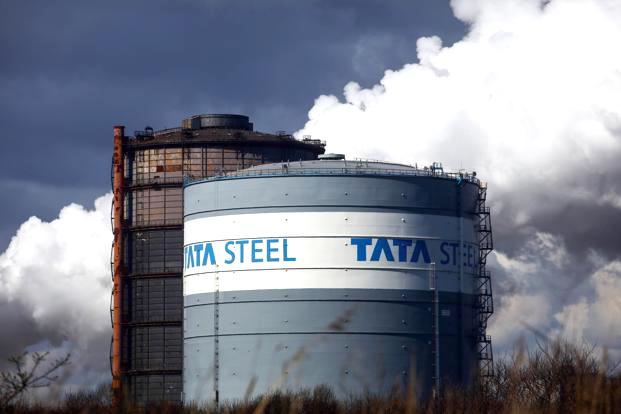
ISTA to meet UK govt on Tata Steel import concerns
ISTA had called for an immediate solution to make it possible for UK buyers to import Indian material. Sources close to the matter told S&P Global Commodity Insights Aug. 3 that the UK government agreed to meet the trade body in September to discuss the matter.
In the July 27 letter seen by S&P Global that was sent to members late-Aug. 3, ISTA claims that the repeated steel orders by Tata Steel UK could be seen as “an unfairly attempt to manipulate the free market.”
“Like all UK steel producers, Tata benefits from the protection of the Safeguard Measures quota system, but it cannot be considered as fair trading practice to then take up that quota thus preventing importers from supplying their own customers,” the letter said.
“Steel already booked and currently on the water to the UK, destined for independent service centres and manufacturing, will not be able to be customs cleared and utilised – a fact Tata Steel know only too well,” ISTA said in the letter, warning that the lack of import opportunities would have a “devastating and immediate effect on steel manufacturing.”
ISTA suggested several options to resolve the matter: to either create a new import category code for Tata Steel’s own domestic use or changing the quota to be utilized for its intended imports and end-user customers. Another possibility would be to increase the quota volume for the other country category, under which Indian material falls.
Tata Steel to receive new order in Sep
Tata Steel has a 22,000 mt order of Indian HRC arriving in September for clearance under the quota period starting Oct. 1. The quota is expected to exceed immediately, sources said. The company is also said to have received a previous order of Indian material in June to support production of its Port Talbot works while it faced production problems.
Although it is understood that Tata has not received material in the current quota period July 1 to Sept. 30, the quota nevertheless is likely to be exhausted soon. There are 1,105 mt left under the other country quota as of Aug. 3, which means it is considered “critical” where a 25% duty deposit has to be paid. The opening balance was 22,837 mt.
Tata Steel UK declined to make an immediate comment on the matter when contacted Aug. 3 after usual office hours.
In an earlier statement July 27 to S&P Global, a spokesperson had said: “Tata Steel, like most other steelmakers, sometimes complements its own production with supplies from other sources to balance its utilisation of downstream businesses.”
The Platts weekly assessment for UK HRC was at GBP615/mt DDP West Midlands Aug 3, stable week on week, according to data from S&P Global.
Author Laura Varriale