


Stegra receives additional EUR 37 million support for zero-emission steel plant
The Swedish Energy Agency has announced that Stegra has received approximately EUR 37 million in additional state aid from the Industrial Leap program for its planned fully integrated, zero-emission steel production facility in Boden.
Stegra had previously secured a EUR 100 million grant from the Industrial Leap program as part of the EUR 265 million Swedish support package approved by the European Commission under EU State Aid rules in September 2024 and partially financed through the Recovery and Resilience Facility. With the newly announced EUR 37 million in additional funding, the total amount of public support allocated to the project has increased significantly.
Commenting on the development, Stegra CEO Henrik Henriksson stated: “We are grateful for the decision by the Swedish Energy Agency. This support enables us to strengthen the competitiveness of Sweden and Europe. There is still a gap within the limits approved by the EU, and we hope further steps will be taken to close this gap and ensure a more level playing field with other projects.”
The company’s project in Boden is regarded as an important step in accelerating Europe’s transition to fossil-free steel production.


Swedish steel giant Alleima AB has opened its new tube plant in China
Swedish steel producer Alleima AB has doubled its local production capacity by commissioning the second phase of its cold-working facility in Zhenjiang, Jiangsu Province, eastern China.
The company aims to shorten delivery times for its Asian customers and supply high-quality tube products with the new facility.
The expanded 12,500-square-meter plant was built with an investment of 193 million yuan (approximately USD 27.2 million). It will produce high-performance tubular products serving sectors such as petrochemicals, hydrogen energy, pulp and paper, and healthcare—including high-temperature and hydrogen refueling tubes that were previously imported.
The new plant is powered by solar energy, and the company uses more than 80% recycled steel. Alleima AB targets a 50% reduction in CO₂ emissions by 2030 compared to 2019 levels.
Carl von Schantz, President of Alleima AB’s Tube Division, said: “Over the past seven years, we have seen impressive development in the Asia region, with strong revenue growth in the chemical and petrochemical segment.” The company’s President and CEO, Goran Bjorkman, emphasized that the capacity expansion and wider product portfolio strengthen their ability to supply products locally in Asia and aim to serve China’s strong and growing market.

Europe steel market in the final week of november: Weak demand, tighter quotas and stabilizing prices
As the final week of November unfolds, the European steel market maintains a cautious stability shaped by persistent uncertainties. The absorption of CBAM’s provisional values, rising import-related costs and buyers’ hesitation ahead of the 2026 obligations continue to keep both domestic and imported steel prices within a narrow, sideways band.
HRC Market Holds Steady as CBAM Uncertainty Drives Spot Purchasing
Hot-rolled coil (HRC) prices across Europe’s flat steel market remained largely stable despite the pressure created by provisional CBAM values. Buyers, still waiting for clarity on the emission obligations that will come into force in 2026, continue to avoid long-term bookings and opt instead for short-term, hand-to-mouth purchases.
In this context, January-delivery HRC in Germany is reported in the €610–620/t EXW range, while Italian mills are transacting at €590–600/t. DDP offers for January 2026 deliveries into Italy are expected to fall between €570–600/t. These figures indicate that the week is closing with prices virtually unchanged.
On the import side, HRC prices remain relatively steady; however, tighter quotas and rising CO₂-related charges are preventing imported material from exerting any meaningful downward pressure on EU domestic prices. As a result, the European market is not experiencing the typical price-softening effect usually generated by imports.
EU Steel Production Declines Amid Weak Demand and Regulatory Pressure
Latest figures from the World Steel Association show that the downward trend in European steel production has continued. Crude steel output in the EU fell by 3.5% year on year in October to 10.8 million mt. Total production for January–October reached 107.8 million mt, marking a 3.4% decline compared with the same period last year. This underscores the dual challenge faced by European mills: muted demand and increasing regulatory burdens.
Behind this broader picture lie shifting production strategies. In regions where demand and industrial activity are concentrated, press and tooling manufacturers are exploring geographic diversification to manage cost inflation, with some evaluating options outside the EU. On the demand side, the slowdown in automotive and white goods production—combined with the transitional impacts of CBAM—suggests that final consumption trends are being shaped primarily by short-term market conditions.
Türkiye–Europe Steel Relations Strengthen Further
As November draws to a close, Türkiye’s commercial ties with Europe show renewed momentum, particularly in steel.
Turkish companies continue to secure significant positions in key EU infrastructure projects. Erciyas Steel Pipe recently won a supply contract worth approximately EUR 7.86 million for a 42-km section of a natural gas transmission project in Romania—an important development for the region’s pipeline segment. Meanwhile, British Steel has signed a GBP 35 million contract to supply material for Türkiye’s high-speed rail network, strengthening the mutual industrial linkage between the two markets.
Moderate Fluctuation in Long Products and Profiles
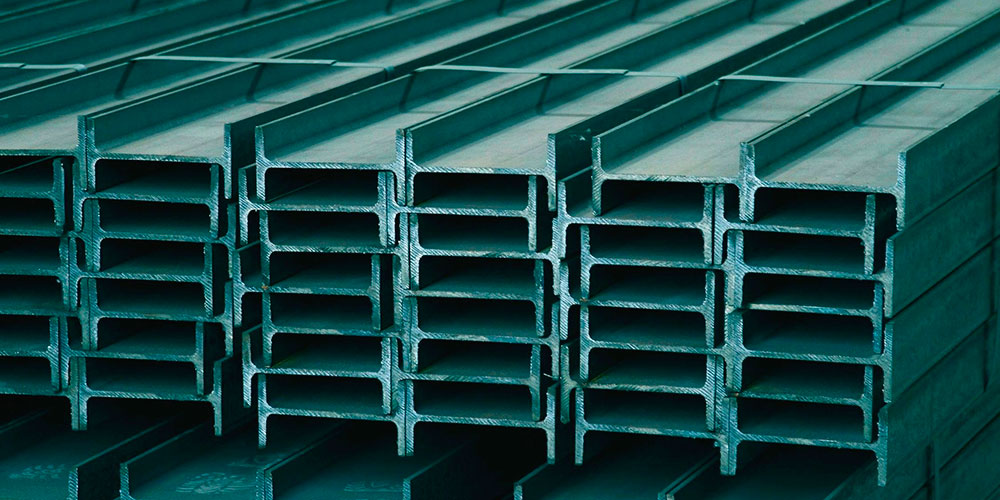
Prices in Europe’s long products and steel profiles segment ended the week with modest fluctuations. German IPN offers from Peiner and Thüringen were reported between €710–730/t EXW, while Spain-based Celsa’s offers into Germany stood in a similar range. In Italy, Duferdofin’s IPN sales were transacted at €700–705/t. Market participants note that most deals were concluded €10–15 below headline list prices. Even so, the broader European profile market continues to trade around €700–740/t CPT.
In rebar, Germany maintained EXW levels at €580/t and CPT at €590–600/t. In Spain, prices stood at €640–645/t CPT and €620–630/t EXW. Overall, the long products market reflects a pattern of controlled stability rather than any pronounced downward trend.
A similar picture is visible in the HDG and CRC segments. German HDG hovered at €710–730/t EXW, with CRC quoted at €700–720/t. In Italy, CRC remained in the €695–715/t band, while HDG stood between €715–720/t. These figures point to a week marked by narrow-band movements and limited volatility.

ArcelorMittal Poland permanently shuts down production at Huta Królewska
ArcelorMittal Poland has announced that production at the Huta Królewska steelworks in Chorzów will be permanently shut down, with all installations scheduled to come offline by the end of December this year. The company is preparing solutions to support the 270 employees currently working at the site, prioritizing job transfers within the group.
According to Marek Kempa, managing director of the long products division, the plant accounts for less than one percent of ArcelorMittal Poland’s total output. He noted that the age of the installations makes ensuring safe operations increasingly difficult, requiring major capital expenditure that cannot be justified in the current European steel market environment.
Before reaching this decision, the company made extensive efforts to sustain operations at Huta Królewska. Over recent years, ArcelorMittal Poland invested PLN 30 million ($8.21 million) in projects designed to expand the product range and improve quality. These included a new scale breaker, rolling stand modernization, a rail marking machine, and a new measurement and control block for rail production. The company also sought a strategic investor and explored joint venture options, though without success.
“This was a very difficult decision, given the long tradition and history of Huta Królewska,” said Wojciech Koszuta, president of the management board and CEO of ArcelorMittal Poland. He emphasized the company’s appreciation for the employees’ dedication and confirmed that everyone wishing to remain within the ArcelorMittal Poland structure will be offered opportunities.


German union discusses ‘best-owner’ practice for thyssenkrupp steel
German union IG Metall and the works council of thyssenkrupp Steel have together launched a so-called “fair and best-owner” agreement process for the sale of the company, Kallanish hears.
Germany’s largest steelmaker is the subject of takeover talks between parent thyssenkrupp AG and India’s Jindal group.
According to IG Metall, a fair and best-owner agreement is a way of providing safety for the steelmaker’s sites, employees, and their co-determination role on the supervisory board. This has been a traditional procedure for all of thyssenkrupp AG’s divestments in recent years, IG Metall notes.
“Our employees need reliability for the future,” says tk Steel’s shop chairman Tekin Nasikkol. “Our future owner must respect existing wage agreements and other agreements. With that I mean primarily the pledge to maintain jobs and sites until September 2030.”
The buyer candidate Jindal has been informed about the procedure, IG Metall says.
Christian Koehl Germany


EU SSC shipments rise slightly in nine months
European steel service centres (SSCs) experienced a moderate rebound in shipments during the first nine months of 2025, according to the latest SSC market monitoring report by EUROMETAL.
Across the EU27, shipments of strip mill flat products increased by 0.5% year-on-year from January through September, Kallanish learns from the European steel distributors association. A notable growth occurred in September alone, which was up 11.1% y-o-y, signalling improving industrial activity, EUROMETAL says.
At the same time, EU27 SSC inventories fell by 6.2% compared with the 2024 nine-month period, reflecting cautious stock management despite strengthening demand.
EUROMETAL mentions a stronger performance in the region comprising Germany, Austria, the Netherlands, and Belgium, where shipments rose 1.4% year-on-year in January-September and 10.8% in September alone. Stocks in this core industrial region were down 10.9% over the nine months, indicating sustained de-stocking across northern continental Europe, the association notes.
Rising shipments combined with disciplined stock levels indicate that European service centres are cautiously adapting to recovering demand, it concludes.
Christian Koehl Germany

Damstahl commissions third high-bay warehouse
Damstahl, a Germany-based distributor of stainless steel products, has commissioned the third new high-bay warehouse it has built since 2023 to replace old facilities, Kallanish notes.
At its headquarters in Langenfeld near Düsseldorf, it inaugurated the site’s second high-bay warehouse this month, after completion in early October. The first one started operation already in July 2024.
In June, Damstahl opened a high-bay warehouse at its Danish site in Skanderborg, which has a storage capacity of 10,000 tonnes – about one third of the site’s sales in Denmark. It consists of 3,800 cassettes, at a length of 100 metres and height of 12m. Companies involved in the construction were engineering company Gråkjær, high bay supplier Fehr, and project coordinator n Langebæk A/S.
The warehouses in Langenfeld have a height of 20m with 3,800 cassettes, and a capacity of 13,300t. The units replaced older warehouses that could not keep up with today’s requirements and ambitions, and facilitate faster delivery times, the company says. The new facilities provide 50% more capacity for the storage of long products, while the Danish site handles mainly sheet products.
Michael Lund, chief executive of Damstahl group, notes the facilities were designed with sustainability as a significant factor, with solar modules accounting for 30% of the warehouses’ energy consumption. The building of three new warehouse systems in a short period was the biggest investment in the company’s 65-year history, he adds.
The inauguration of the second Langenfeld high-bay warehouse coincided with the celebration of Damstahl’s 65th anniversary this month. Founded in 1960, the company is part of the Neumo Ehrenberg Gruppe, which is also active in aseptic and sterile fluid handling, and precision tools production. Damstahl has 300 employees and annual revenue of some €560 million ($648m).
Christian Koehl Germany

Austria ramps up crude steel production in October
Austria increased crude steel production in October compared to the previous month, according to worldsteel data.
Output amounted to 704,581 tonnes, up 11.2% on-month and 45.7% higher year-on-year, Kallanish notes.
In the first ten months of the year, the country produced 6.22 million tonnes of steel, compared to 6mt in the same period last year.
Austria remained at 22nd in the ranking of top global steel producers in October, data show.
Overall EU output in October was down 3.5% on-year at 10.79mt. January-October production was 105.7mt compared to 109.4mt in the same period last year.
Austrian steelmaker voestalpine is currently pursuing production cutbacks in Austria and Germany, which include layoffs, since it does not expect the economic situation to improve in the coming months (see Kallanish passim).
In the group’s first fiscal half-year – April through September 2025 – revenue declined by 5.6% year-on-year to €7.6 billion ($8.8 billion). Consolidated earnings before taxes increased by 12% to €278 million, while profit after tax rose by 8.6% to €199m.
The Austrian steelmaker previously expressed optimism over economic stimulus in the form of the infrastructure spending programme announced by the German government.
The steelmaker will supply steel to Chinese electric vehicle producer BYD for its new car factory in Hungary. The company was chosen by BYD because of its geographical proximity to the Hungary plant, and the high quality and excellent reputation of Austrian steel, the Chinese company noted.
Svetoslav Abrossimov Bulgaria
Revista InfoAcero Noviembre 2025
Les enviamos la edición de Noviembre de nuestra revista InfoAcero
Destacamos a continuación algunos de sus contenidos:
- Opinión – D. Alberto Fernández – Junta Directiva UAHE
- Índice UAHE: Evolución precios de aprovisionamiento Septiembre 2024 – Septiembre 2025.
- Metal –Actividad productiva y Comercio exterior en el sector metal – Informe de coyuntura Confemetal
- Siderurgia: Previsiones a corto plazo de la demanda global de acero – Worldsteel Association
- Eventos: EUROMETAL Steel Net Forum Iberia 2026, 27 y 28 abril , Santander
- ASCEM: Resumen XXVI Asamblea General, Madrid, 4 noviembre
- Colaboración RRHH – D. Agustín Barroso – Director RRHH HIEMESA


French Parliament backs ArcelorMittal nationalisation in fiery midnight vote
The French Parliament has adopted the proposal to nationalise ArcelorMittal at an estimated cost of €3 billion ($3.46 billion), following a highly heated debate in the National Assembly on Thursday monitored by Kallanish.
A National Assembly source present during the debate confirms that all three articles of the draft law were approved, following the debate that lasted until midnight – with 127 votes in favour and 41 against.
The bill – opposed by the government – must now proceed to the Senate for confirmation, where it could be blocked by the conservative majority.
Kallanish reported in Friday’s newsletter that the first article of the bill had been adopted before press time (see Kallanish passim).
The debate was prompted by a bill from the left-wing La France Insoumise (LFI) party calling for the nationalisation of ArcelorMittal. The push for nationalisation has come in recent months from unions and several political parties. In May, French President Emmanuel Macron confirmed the government will not pursue nationalisation. This came in response to several strikes initiated by unions, to protest the announcement earlier this year of 600 job cuts by the steelmaker in France.
“Our bill to nationalise ArcelorMittal France has been adopted! Despite obstruction from the National Rally, we succeeded in getting this essential bill passed, a key step for ecological transition, our industrial sovereignty, and the protection of 80,000 jobs,” LFI wrote in a celebratory social media post, calling the midnight vote a “historic victory”. The estimated cost of €3 billion is nothing compared with the cost of losing expertise and independence, the party pointed out.
ArcelorMittal has acknowledged the vote. A company spokesperson stresses that nationalising ArcelorMittal would “in no way resolve the challenges facing the steel industry in France and Europe”.
Action is needed on the structural factors undermining competitiveness, the firm notes. Europe must defend its steel market from the flood of low-priced imports, swiftly enforcing the trade defence measures announced in October, and implementing an effective CBAM, it adds.
“Changing ArcelorMittal’s shareholder structure would do nothing to address these structural issues – quite the opposite. Breaking up French assets and separating them from the rest of the group would only severely worsen their situation,” the firm comments.
“Today, our sites in France remain resilient because they are part of the ArcelorMittal group: our major sites in Dunkirk and Fos-sur-Mer deliver less than 30% of their production to France, due to the deindustrialisation that has affected our country. Without European customers and without other ArcelorMittal companies to which we supply steel, our sites would be in a far more precarious position,” it adds.
“Being part of a strong and profitable global group also enables our French sites to continue benefiting from investments,” it notes.
The solution lies at the European level. “Nationalisation would be a false solution, and we will continue to explain this throughout the next stages of the legislative process for this proposed law,” the company concludes.