MEPS’s global steel production and capacity round-up
The acquisition Spanish flat steel processor Galvacor, US Steel’s plans for a new DRI plant at Big River Steel and South Korea’s new antidumping duties all feature in MEPS’s latest global steelmaking capacity round-up.
MEPS’s monthly summary of steel industry developments from around the world features articles which were previously featured in the November editions of the European Steel Review, International Steel Review and Stainless Steel Review.
Europe
Galvacolor
Galvacolor’s acquisition by Brazilian steelmaker CSN has been approved by the Spanish National Markets and Competition Commission (CNMC).
The flat steel processor in Jerez de los Caballeros, southwestern Spain, has been owned by CL Grupo Industrial since 2020 and was revived after several years of inactivity through an initial EUR20 million investment.
Galvacolor has an annual production capacity of up to 400,000 tonnes per year, comprised of 100,000 tonnes per year of pickled and oiled coil, 100,000 tonnes per year of cold rolled coil and 200,000 tonnes per year of galvanised products. It also produces pre-painted steel.
Celsa France
Celsa France has completed the modernisation of its wire rod mill in Bayonne.
The work involved the installation of a new 10-stand finishing block and a 1,200mm diameter coiling station, replacing the equipment currently in operation at the site.
The new equipment will improve mill productivity by allowing for stable rolling speeds of up to 105 metres per second, introducing the ability to process low, medium and high carbon grades.
Industeel
Industeel Belgium, part of ArcelorMittal, has commissioned SMS group to modernise the walking beam furnace at its Charleroi plate mill.
The upgrade includes a full furnace relining, along with installation of new burners, control systems and a heat recuperator. Once completed, the upgraded furnace, originally built in 1969, will be capable of operating on natural gas and up to 70% hydrogen mix, significantly reducing emissions.
The removal of the existing furnace and installation of the new equipment will be carried out during a six-week outage in summer 2026.
North America
Big River Steel
US Steel has announced plans to build a new direct reduced iron (DRI) plant at its Big River Steel subsidiary in Osceola, Arkansas.
The facility, which will strengthen the raw material supply chain for its electric arc furnaces, will be completed in 2027, according to state filings.
Big River Steel’s DRI plant will use pellets sourced from US Steel’s Keetac iron ore facility, in Minnesota. The investment in the site forms part of Nippon Steel’s USD11 billion modernisation plans for US Steel, following the Japanese company’s acquisition of the steelmaker earlier in 2025.
North American Stainless
North American Stainless has confirmed that it plans to modernise its rolling line in Ghent, Kentucky, with the installation of a new mill finishing block.
The new equipment is designed to increase efficiency, improve product quality and expand the range of stainless and speciality alloy bar products produced at the site.
Once completed, the upgraded line will have an annual rolling capacity of around 200,000 short tons, producing round, hexagonal and speciality rebar products in both straight and coiled form. Commissioning is scheduled for the third quarter of 2026.
Asia
Jiyuan Iron and Steel
Jiyuan Iron and Steel is set to modernise the eight-strand continuous billet caster at its plant in Henan, China.
The upgrade, scheduled for completion in June 2026, will lift the site’s annual production capacity to more than one million tonnes and will enable the production of square billets ranging from 150mm to 210mm.
The project involves a complete redesign of the caster and the addition of new systems to improve control, stability and product consistency throughout the casting process. The revamped caster will produce high carbon and automotive steel grades.
Hebei Jinxi Iron and Steel
Hebei Jinxi Iron and Steel has contracted equipment manufacturer Primetals Technologies to supply two twin-strand continuous slab casters for its plant in Qianxi County, Hebei Province.
The two units will each have a capacity of 2.5 million tonnes per year. They will produce slabs with thicknesses ranging from 200mm to 230mm and with widths between 800mm and 1,800mm in a broad range of grades.
Installation of the new casters is underway, with commissioning scheduled for the end of 2026.
Trade Defence – South Korea
South Korean authorities have issued the definitive version of antidumping duties to be applied to imports of commodity grade steel plates sourced from China.
Under the new regulation, Baoshan Iron & Steel, Jiangsu Shagang Steel and Hunan Valin Xiangtan Iron & Steel will receive individual dumping rates of 27.9%, 29.6% and 32.3%, respectively. All other Chinese suppliers will receive a rate of 34.1%.
The measures against Chinese-origin plate imports have been amended since the initial investigation to exclude pressure vessel, wear-resistant and high-strength steel plate.
Xinhuang Metal Materials
Xinhuang Metal Materials has received environmental approval to build a new precision stainless cold rolling line.
The steelmaker, based in Lianping County, Guangdong province, will increase its annual output by 96,000 tonnes through the installation of the new line, producing 200-, 300- and 400-series stainless steels.
Xinhuang Metal Materials’ new equipment will be constructed at an existing workshop. It will include three four-roll mills along with two bright annealing furnaces.


French National Assembly backs nationalizing ArcelorMittal France, defying government
The French National Assembly adopted, on first reading on late Nov. 27 a bill proposed by France Insoumise, against the advice of the government, aimed at nationalizing ArcelorMittal France.
The bill passed with the support of left-wing groups, and it will now go to the Senate, dominated by right and the center groups. The debate was seen by S&P Global Energy on the website of the National Assembly.
“We are facing unfair competition, and nationalization does not solve this problem in any way,” Alain Le Grix de la Salle, president of the French operations of ArcelorMittal, said at France info radio before the vote.
“Our sites are now exposed to global overcapacity and destructive imports from European markets,” he said.
The government also argued that the battle must be played out in Brussels.
France is not alone in facing industrial decline. The UK nationalized British Steel in April 2025 after owner Jingye threatened to shut Scunthorpe’s blast furnaces, while Italy placed Acciaierie d’Italia under extraordinary administration in 2024 after years of what the government called “underinvestment.”
European producers are squeezed between weak demand and a surge of cheaper, often subsidized imports.
The EU is preparing tougher trade-defense measures — including tighter quotas, higher tariffs and stricter “melt-and-pour” origin rules — to protect the sector as it shifts to low-carbon production.
According to worldsteel figures, France produced 10.76 million mt of crude steel in 2024, recovering by 7.6% after a drop of 17. 5% in 2023.

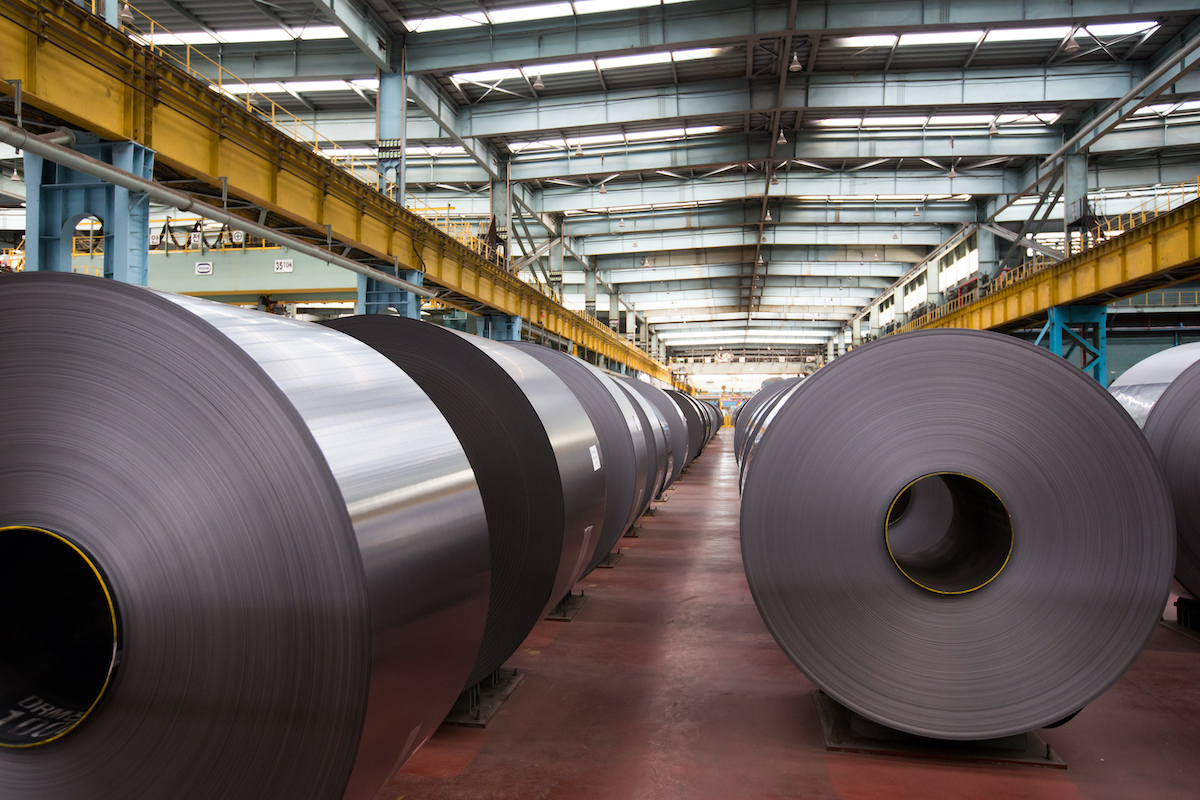
European HRC price remains stable as mills eye higher levels
European hot-rolled coil prices remained stable Nov. 28, as higher offers from suppliers were resisted by buyers.
Market participants faced significant uncertainty related to the CBAM and safeguards, which undermined buying confidence. Additionally, buyers were reducing their positions in anticipation of the year’s end.
The offers for hot-rolled coils were reported at $625-$650/mt ex-works Ruhr and $605-$615/mt ex-works Italy during the day.
Platts assessed domestic HRC in Northern Europe at Eur605/mt ex-works Ruhr, and in Southern Europe at Eur595/mt ex-works Italy, both stable day over day.
“There is a chance for further increase, however. But people are more likely to wait,” a trader said. “In terms of stocks, people are well supplied now, so there will be some resistance till Christmas, and then there will be more push for January and February production from mills.”
“Prices should be supported by demand when it comes,” a producer said. “Stocks are full, and there is uncertainty around CBAM, so that is preventing stronger price upside. But new trade measures will support an increase eventually. Some imports will be replaced by supply from the domestic market.”
Offers for cold-rolled coils were reported at Eur730-760/mt ex-works Ruhr. However, CRC buyers were seeking Eur710/mt delivered NW Europe, a producer said, adding that it was too low to accept. He estimated the gap between buyers and sellers at Eur50/mt.
Platts assessed domestic CRC in Northern Europe at Eur700/mt ex-works Ruhr, stable day over day.

European Commission study reveals economic costs of US tariff escalation
The European Commission has released a detailed analysis on the global economic implications of the sharp US tariff increases adopted under the second Trump administration.
According to the study, these measures represent the largest rise in US import tariffs since the 1930s and carry significant consequences for both the United States and its trading partners, including the EU.
The report finds that US tariffs weaken the American economy rather than strengthen it. Higher import duties increase production costs—because US industry heavily depends on imported inputs—and reduce the purchasing power of households. As a result, US real GDP declines, inflation rises, and the Federal Reserve is forced to tighten monetary policy, further dampening domestic demand.
While tariffs are intended to shift demand from foreign to US-made goods, they also trigger a strong appreciation of the US terms-of-trade, making American exports less competitive and suppressing export volumes. The study concludes that only around one quarter of the tariff burden is actually paid by foreigners, with the majority falling on US firms and consumers.
For Europe, the macroeconomic impact is moderately negative, driven mainly by lower EU exports to the United States. At the same time, European producers gain market share in third countries, where US exporters lose competitiveness due to higher costs and a stronger dollar. The EU nonetheless faces a terms-of-trade loss, which reduces real income.
The analysis also warns that retaliatory tariff measures would deepen losses on both sides, while rising financial uncertainty in the US could amplify the negative effects well beyond the direct impact of tariffs.
Overall, the Commission’s findings confirm that tariff wars create instability across global value chains, with widespread implications for industrial sectors—such as steel distribution—that rely on predictable, rules-based trade.

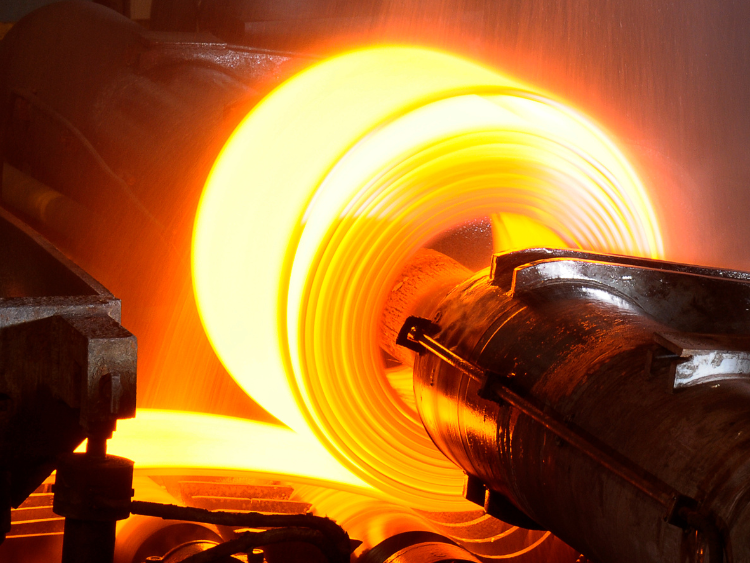
European domestic HRC market largely quiet; sellers seek higher prices in Central Europe
In Northern Europe, mills’ targets remained in the range of €620-650 per tonne ex-works, with only one re-roller in the region heard offering coil around €600 per tonne ex-works.
Estimates of workable prices still ranged €610-620 per tonne ex-works, with no deals heard on the day.
As a result, Fastmarkets’ daily steel hot-rolled coil index domestic, exw Northern Europe moved marginally to €615.00 ($713.00) per tonne on Friday, down by just €0.17 per tonne from €615.17 per tonne on November 27.
The index was up by €2.92 per tonne week on week and by €12.95 per tonne month on month.
In Italy, January-delivery coils were available within the range of €600-620 per tonne ex-works, while workable prices were said to remain below €600 per tonne ex-works.
Fastmarkets’ daily steel hot-rolled coil index domestic, exw Italy was calculated at €602.50 per tonne on Friday, up by €0.42 per tonne from €602.08 per tonne on Thursday.
The index was up by just €0.62 per tonne week on week, but increased by €11.25 per tonne month on month.
In Central Europe, HRC — including material from the leading European supplier — was available at €640-645 CPT(around €630 ex-works) versus €620-630 per tonne CPT heard earlier in November, with some tonnages heard sold at the lower end of the range.
Successful closure of December order books by the key local supplier, the absence of pressure from import material — particularly from Indonesia — as well as the rise in regional pipe prices were cited by sources as some of the key reasons for the increase.
This information, however, emerged after the publication of Fastmarkets’ weekly price assessment for steel hot-rolled coil, domestic, exw Central Europe on Wednesday November 26, when it stood at €610-620 per tonne, unchanged from the week prior.

European CRC, HDG prices mostly flat, market sees more DDP CBAM-accounted offers
A distributor source told Fastmarkets that there was “no demand” in the market, adding that players are not looking to take risks until there is more clarity on new regulatory changes.
Meanwhile, a second distribution source said that consumption remains limited as players “await more clarity with CBAM”.
Northern Europe
Domestic prices for cold-rolled coil in Northern Europe rose slightly in the week to Wednesday, according to sources.
Estimations of workable levels were heard hovering €710-730 per tonne ex-works, compared to €700-720 per tonne ex-works during the previous week.
However, a deal was also reported at €710-720 per tonne ex-works.
Fastmarkets’ weekly price assessment for steel cold-rolled coil domestic, exw Northern Europe was €710-720 ($823-835) per tonne on Wednesday, narrowing upward from €700-720 per tonne a week earlier.
Meanwhile, domestic HDG prices were stable.
Estimations of workable levels were heard hovering €710-730 per tonne ex-works, the same as in the previous assessment period.
An offer was also reported at around €730-750 per tonne ex-works.
Fastmarkets’ weekly price assessment for steel hot-dipped galvanized coil domestic, exw Northern Europe was also €710-730 per tonne ex-works, unchanged week on week.
On the other hand, HDG and CRC import prices were also stable.
Fastmarkets’ weekly price assessment for steel cold-rolled coil import, cfr main port Northern Europe was €604-620 per tonne on Wednesday, unchanged week on week.
Fastmarkets’ weekly price assessment for steel hot-dipped galvanized coil import, cfr main port Northern Europe was also flat at €680-720 per tonne on Wednesday.
Southern Europe
Domestic CRC prices in Southern Europe increased in the week to Wednesday.
Estimations of workable levels were heard hovering €690-730 per tonne ex-works, compared to €690-720 per tonne heard in mid-November.
However, a deal was also reported at €710-720 per tonne ex-works.
Fastmarkets’ weekly price assessment for steel cold-rolled coil domestic, exw Southern Europe was €710-720 per tonne ex-works, narrowing upward from €690-720 per tonne in the previous week.
Meanwhile, domestic HDG prices also increased.
Estimates of workable levels were heard hovering €700-730 per tonne ex-works, compared with €695-720 per tonne in mid-November.
A deal was also reported at €730 per tonne ex-works.
Fastmarkets’ weekly price assessment for steel hot-dipped galvanized coil domestic, exw Southern Europe was €700-730 per tonne on Wednesday, rising from €695-720 per tonne in the previous week.
Meanwhile, CRC and HDG import prices were also stable.
Fastmarkets’ weekly price assessment for steel cold-rolled coil import, cfr main port Southern Europe was €600-620 per tonne on Wednesday, while the weekly price assessment for steel hot-dipped galvanized coil import, cfr main port Southern Europe was €670-700 per tonne on the same day, both unchanged week on week.
With the market seeking clarity with CBAM-related costs on imports, Fastmarkets has decided to launch a DDP import steel price assessment for flat steel products on Wednesday November 26.
The new DDP assessments for imported flat steel in Europe provides insight for market participants looking to navigate the trade landscape shaped by CBAM.
The assessments, which factor the effects of CBAM-related costs, aim to mirror how the spot market is likely to function from 2026 onward, reflecting underlying supply-and-demand dynamics. Therefore, CBAM certificate costs may not always be fully priced in or passed through in spot DDP transactions.
For this reason, the published prices do not incorporate any explicit, calculated CBAM certificate cost, which can change significantly across data submissions. Reasons for these changes include differences in brand and origin, the timing of customs clearance and applicable CBAM cost at that moment, and the share of carbon costs already covered in the country of origin.
Northern Europe
Fastmarkets’ weekly price assessment for steel cold-rolled coil import, ddp Northern Europe was €700-730 per tonne on Wednesday.
Offers were reported at around €700-730 per tonne DDP.
Fastmarkets’ weekly price assessment for steel hot-dipped galvanized coil import, ddp Northern Europe was €730-730 per tonne on Wednesday.
An offer was reported at €730 per tonne DDP.
Southern Europe
Fastmarkets’ weekly price assessment for steel cold-rolled coil import, ddp Southern Europe was €700-720 per tonne on Wednesday.
Estimations of workable levels were reported at €700-710 per tonne DDP.
An offer from South Korea was reported at €720 per tonne DDP.
Fastmarkets’ weekly price assessment for steel hot-dipped galvanized coil import, ddp Southern Europe was €720-730 per tonne on Wednesday.
Offers from Asia were reported at €720-730 per tonne DDP, with an offer from Vietnam reported at €720 per tonne DDP.