


Assofermet: Urgent need for transitional CBAM measures to prevent instability in EU steel market
Assofermet, the Italian association representing companies in the steel, metals, scrap and hardware sectors, has submitted a formal request to the European Commission to address the growing uncertainty surrounding the application of the Carbon Border Adjustment Mechanism (CBAM) regulation on steel and aluminum imports, reiterating the need for transitional measures to safeguard the European supply chain.
The new communication, dated December 5, 2025, highlights that the absence of definitive parameters for calculating CBAM costs – benchmarks and default values, expected only in the first quarter of 2026 – is forcing operators and importers to plan procurement “blindly”, with potential impacts on the entire continental manufacturing sector.
According to the association, this lack of clarity makes it impossible to assess the actual cost of supplies scheduled for delivery in 2026, since related CBAM charges will only emerge in February 2027. This situation, Assofermet warns, is generating significant market instability for trade, distribution, service centers and producers that regularly purchase semi-finished and raw steel and aluminum products from non-EU countries, with potential ripple effects across the European steel chain and export-oriented processing industry.
To avoid such consequences, Assofermet proposes a temporary exemption from the obligation to purchase CBAM certificates for all steel and aluminum imports cleared from January 1, 2026, until five months after the publication of the definitive reference parameters. This request, already shared with Italy’s foreign affairs and industry ministries (MAECI and MIMIT), aims to secure a more balanced and sustainable initial phase of CBAM implementation, preventing distortions in purchasing decisions and operational challenges along the supply chain.
Assofermet has also reaffirmed its readiness to cooperate with European and national institutions to ensure a gradual and effective transition to the new regulatory framework, maintaining a balance between the EU’s environmental goals and the need to protect industrial competitiveness. The association stresses that, without corrective measures, the current regulatory scenario risks creating further instability for Europe’s production system, already under pressure from energy costs and procurement constraints.


LESS, producers back sliding scale approach for labelling
The Low Emission Steel Standard (LESS) has joined a consortium of European steel players to support a public statement backing the use of the sliding scale approach for the EU label for steel, Kallanish learns.
The 25 backers of the statement include large European steel producers, such as ArcelorMittal, Tata Steel, Thyssenkrupp, Dillinger and Voestalpine. This is in addition to Volvo, Climate Group, Steelwatch and Stegra.
The European Commission is expected to unveil an EU label for steel as part of the Industrial Accelerator Act, and as part of this, the group has called on the sliding scale to be adopted in order to drive real decarbonisation. The backers say this will “adopt a clear, credible, and technology-neutral framework”.
It says the approach is fair and effective, rewarding genuine emissions reductions across all production routes. It adds the sliding scale acknowledges the decarbonisation efforts of primary steel producers and offers a clear roadmap for steady improvement. It also recognises the limited availability of high-quality scrap and the need for both primary and secondary steel decarbonisation in Europe.
The approach, initially proposed by the International Energy Agency (IEA), has been adopted by ResponsibleSteel, LESS, and CISA for its frameworks.
The approach also prevents carbon leakage and ensures upstream Scope 3 emissions are accounted for, avoiding outsourcing of emissions. It is also market-ready and proven by LESS certifications, which classify steel products based on their specific emissions and scrap share.
The statement warns a footprint-only approach risks shifting emissions and jobs abroad. However, this stance is in contrast to a briefing by EU think-tank Sandbag, which says the sliding scale approach risks distorting incentives, overlooks product diversity, and undermines circularity. The organisation instead proposes an alternative method.
Carrie Bone UK


European steel prices hold flat as market awaits january shift
Despite the clarification of CBAM rules, demand across the European steel market remains subdued, leaving traditional supply–demand dynamics—rather than regulation—as the main driver of price movements.
In markets such as Germany and the Czech Republic, HRC prices are stuck in a narrow band of €605–615/t EXW. On the CRC and HDG side, rising energy costs continue to squeeze margins, and several mills remain hesitant to sell CRC altogether. In Germany, CRC is trading at €700–710/t, while HDG is hovering around €710–730/t.
Italy: HRC Eases Further as Demand Remains Weak
In Italy, hot-rolled coil prices have softened to €580–600/t EXW, with sluggish spot activity throughout December exerting additional downward pressure. Interest in green steel remains muted, with only limited-volume purchases observed. For CRC and HDG, producers are attempting to hold levels at €700–720/t, but weak domestic demand is challenging the sustainability of these prices. A similar trend persists in long products, where rebar is assessed at €540–570/t EXW and wire rod at €580–600/t CPT.
Northwest Europe: Market Stabilizes at €600–620/t as Mills Target €620–660/t for January
In Northwest Europe, the tight balance between supply and demand continues. HRC transactions largely remain concentrated around €600–620/t EXW. Producers and trading sources report that, with CBAM now fully clarified, January 2026 HRC offers are expected to gradually shift into the €620–660/t range. Several key factors underpin this expectation.
First, the formal implementation of CBAM has significantly increased the cost of imports, reducing the competitiveness of both Asian and non-EU suppliers and making EU-based production comparatively more attractive. At the same time, many European service centers, having deliberately run down inventories towards year-end, will be required to restock in January. This seasonal replenishment is expected to create upward pressure on domestic prices.
Higher energy and logistics costs relative to late-year levels are also lifting producers’ cost base, reinforcing their higher price targets. Meanwhile, the diminishing appeal of imports—particularly from countries facing heavy CBAM liabilities—continues to push buyers toward European mills, providing an additional layer of price support.
Although these factors collectively point toward a mild upward trend, market sentiment remains cautious. Whether levels above €650/t can be sustained will depend largely on the strength of demand recovery in early January. The extent to which buyers engage in aggressive restocking will ultimately determine the market’s real direction.
Market Direction to Be Set in January 2026
While CBAM rules have now been fully established, the market has yet to find a decisive direction. Prices remain mostly flat, with slight downward variations across certain regions. Demand is still weak, and buyers are reluctant to take on additional risk ahead of the January transition.
The anticipated turning point is expected in the first days of 2026. As CBAM begins to translate into real, on-the-ground cost structures, its impact on price levels and trade flows will become clearer. From that point onward, the direction of the European steel market will depend less on regulatory uncertainty and more on the interaction between demand, costs and the new import dynamics—an interplay that will only fully reveal itself once January gets underway.


Germany urges EU to boost low-emission steel use in automotive sector
Germany has called on the European Union to significantly increase the use of low-emission steel in automotive manufacturing, as part of a broader effort to align industrial policy with Europe’s climate-neutral objectives. In a joint letter to European Commission President Ursula von der Leyen, 11 German state premiers have urged the Commission to establish regulatory coherence between the steel and automotive sectors.
Clean steel as a foundation for Europe’s industrial and climate future
Kerstin Maria Rippel, CEO of the German Steel Federation (WV Stahl), welcomed the move, underscoring that low-emission steel production in Germany and across the EU is essential for protecting the continent’s industrial base while driving the transition to climate neutrality.
She stressed that market-based incentives along the entire value chain, starting with basic materials, are required to ensure competitiveness and support long-term investment in clean technologies.
Crediting low-emission steel in fleet targets seen as key policy tool
Rippel highlighted one policy mechanism with significant potential: allowing automotive manufacturers to credit verified carbon reductions achieved through certified low-emission steel toward their EU fleet emissions targets. Such an approach would reinforce industrial value creation, enhance competitiveness, and support climate protection simultaneously, she added.
The steel industry, Rippel emphasized, is ready to contribute to this transition but requires a regulatory framework that supports large-scale investment and tightly integrates the strategies of the steel and automotive sectors.

EU home appliance manufacturers warn against safeguard proposal
The European Commission’s proposed steel safeguard replacement measure is likely to exacerbate the declining share of EU-produced appliances in total EU sales, as EU plants close and capacity in and imports from third countries grow, warns APPLiA, the association representing home appliance manufacturers in Europe.
The association’s members produce nearly 65 million large appliances directly within the EU annually. While the European large household appliances market has expanded since 2021, the share of EU-produced appliances in total EU sales fell by 5% in 2024, it notes.
“The safeguards as envisioned in the Commission’s proposal risk creating shortages of certain types of steel, thereby increasing production costs and negatively affecting industry competitiveness,” the association says in a note seen by Kallanish. “While presented as a general safeguard, the proposals impacts are uneven. It places strong emphasis on supporting the European steel producers with almost no consideration of the negative impact on downstream manufacturers.”
At current capacity, European steel production cannot meet domestic demand at a competitive price. Steel accounts for 46% of the materials in association members’ products and “creating artificial scarcity” will significantly cause an increase in primary production costs, it continues.
APPLiA suggests maintaining the current out-of-quota duties; administering quotas on a yearly basis and reintroducing a carry-over mechanism; improving transparency on quota allocation; and ensuring adequate quotas for steel categories which are not manufactured in sufficient volumes in the EU. It also suggests reviewing the measure on an annual basis, using criteria tied to quota exhaustion, supply-chain impact, and downstream harm.
Lastly, it warns the melt-and-pour rule will introduce administrative and financial burdens and supply chain uncertainty atop already tight quotas.
Pauline Weinzierl, head of trade and industrial policy at Directorate E of the European Commission’s Directorate-
Adam Smith Austria

Knauf Interfer reorganises steel activities
German distribution group Knauf Interfer has reorganised its Steel business unit with a new structure and significant investments, it tells Kallanish.
In future, the Steel unit will be divided into the Steel Service and Functional Metals subdivisions. The Steel Service division will bundle the activities and logistics capacities of the steel service centres, the blanking plant and the Benelux sales office. Production and finishing of cold-rolled strip will be bundled in the Functional Metals division.
Among its processing and finishing services, Knauf highlights multi-layer surface coating, in which it applies several layers of different metal coatings to the surface of strip steel. This allows it to combine the advantages of different metal coatings, Knauf explains.
It also offers selective finishing, a process to selectively coat certain areas of the steel strip while leaving other areas untreated. With its blanking line and other machinery, the Steel unit is also capable of manufacturing complex products, the company notes.
Parallel to the organisational realignment, Knauf Interfer has initiated investment in the Steel unit. In August, extensive expansion and new construction work was started at the Delta Stahl plant in Barsinghausen, Germany. In May, Knauf expanded the portfolio in strip finishing through the integration of the H. D. Lenzen Group.
“In the long term, the importance of distribution, including in-house procurement, warehousing, processing and logistics, will continue to grow for national and international supply chains,” says group chief operating officer Domenico Marino.
Christian Koehl Germany
EC clears Metinvest’s takeover of ArcelorMittal Tubular Products lasi
The European Commission has announced that it has approved Ukrainian steel and mining group Metinvest’s takeover of Romania-based ArcelorMittal Tubular Products Iasi S.A. (AMTP Iasi).
The Ukrainian steel and mining group had applied for the acquisition in October this year, as previously reported by SteelOrbis.
No competition risks in tube segment
The transaction involves Metinvest gaining sole control over AMTP Iasi, a Romanian producer of small welded carbon steel tubes. After examining the companies’ combined market presence in the relevant product segments, the Commission concluded that the merger would not significantly impede competition.
ArcelorMittal France to start Mardyck lines
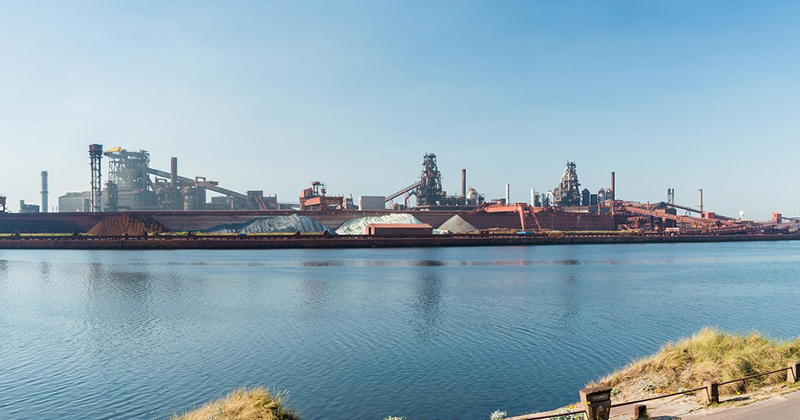
The first three production lines at ArcelorMittal France’s new electrical steel unit in Mardyck, near Dunkirk, are scheduled to become operational by the end of 2025, Kallanish reports.
The three lines which are part of phase 1 of the project include a preparation line, the annealing coating line, and the slitting line.
The investment, supported by €25 million ($29.06m) from the French state under the France 2030 programme, is aimed at meeting increasing demand for high-performance electrical steels used in electric motors for automotive, industrial and energy applications.
By 2027, the site will have five new production lines in operation. Civil engineering work is underway for phase 2 of the project, which includes an annealing pickling line and a reversible rolling mill.
Once fully operational, the unit will significantly increase ArcelorMittal’s production of ultra-thin electrical steels, complementing output from its Saint-Chély-d’Apcher site.
“I will feel great emotion when the first of the 155,000 tonnes of electrical steel we will ultimately deliver each year comes off the lines,” ceo of ArcelorMittal France Bruno Ribo says in a note seen by Kallanish.
“With this new production unit… ArcelorMittal’s electrical steel production capacity in Europe will reach 295,000 tonnes per year. All of ArcelorMittal’s electrical steels in Europe will be produced in France, strengthening the French ecosystem around electromobility and the energy transition,” he adds.
The company says the project strengthens its ability to supply materials critical to Europe’s electrification push, particularly in electric vehicles and renewable-energy systems, while reinforcing its industrial base in the Hauts-de-France region.
This $500m investment is ArcelorMittal’s largest in Europe in the past ten years, the company notes.
Natalia Capra France

European steel market weighs new trade regime amid fragile demand, CBAM uncertainty
Market participants at EUROMETAL’s Steel Trade Day in Düsseldorf warned that Europe’s steel supply chain is entering a period of heightened uncertainty, as weak demand coincides with the rollout of a new trade regime and lingering ambiguity around the Carbon Border Adjustment Mechanism.
From service centers to international traders, the tone at the event on Dec. 4 reflected a cautious reassessment of Europe’s competitive position, with many noting that the region risks tighter supply, higher volatility and reduced visibility heading into 2026.
New TRQ system seen as structurally tighter
A large portion of the discussion at the event focused on the EU’s forthcoming trade defense architecture. A permanent TRQ system featuring a 50% out-of-quota duty, double the current safeguard rate. According to multiple speakers, the structure could reduce available import volumes by more than 40% compared with 2024 flows for flat products.
“The numbers are brutal,” one trade-policy consultant said. “Quotas will be tight, frontloaded and likely exhausted almost immediately. Smaller importers will struggle to survive.”
Participants noted several operational challenges, including, uncertainty around country allocation, with China, India and Indonesia unlikely to receive specific quotas initially and possible exemptions for Ukraine on security grounds.
Many expect firms to stock-build into mid-2026, anticipating higher landed costs once the new regime takes effect.
Supply chain warns of unquantifiable risk
Across panels and bilateral meetings, participants stressed that they cannot accurately calculate risk under simultaneous CBAM and TRQ reforms.
“Right now, no one can forecast exposure for 2026, not even for next quarter,” a Germany-based distributor said. “Financing is harder, customers want fixed prices, and nobody wants to take the CBAM liability.”
A Turkey-based mill source said uncertainty was causing exporters to reassess the EU as a core market.
“We are 70% export-focused and theoretically CBAM-favourable because we are mostly EAF,” the source said. “But we cannot compete with China, which is more than $200/mt cheaper. Until we have clarity, we are looking more at the US and North Africa.”
Importers also highlighted the cash-flow burden of CBAM compliance.
“Even if you pass the cost on, the importer is the one financing the payment upfront,” a source said.
Demand remains stagnant
Market sentiment pointed to demand that is stabilizing at low levels but has not yet recovered meaningfully. Several participants described a “wait-and-see” approach from both buyers and service centers.
“Demand hasn’t bottomed yet, OEMs are still weak,” the trader said. “Everyone is operating in a ‘do nothing until next year’ mode.”
Service centers said order intake remained modest, while rising price-risk exposure has led to shorter contract cycles and reduced stockholding across the distribution sector.
Platts assessed Northwest European hot-rolled coil at Eur610/mt ex-works Ruhr on Dec. 4, stable day over day.
Calls for realistic policy as volatility grows
Speakers at the event urged policymakers to align decarbonization and trade strategies with market realities, warning that fragmented regulation risks further weakening the region’s industrial base.
“Asia is not staying dirty; they are building green steel faster than Europe thinks,” a policy expert said. “If we want green transformation, we need incentives like green public procurement and clear benchmarks.”
Others warned that the combined pressures of rising costs, higher bureaucracy and reduced competitiveness were pushing European companies toward specialization or consolidation.
“The EU is still an attractive import destination, but our own industry is in structural decline,” one distributor said. “Without clearer rules, this volatility becomes permanent.”
Imports remain competitive despite policy headwinds
Several market participants told Platts, part of S&P Global Energy, that imports continue to set the price floor in Europe, even as CBAM reporting obligations expand and new permanent tariff-rate quotas move closer to implementation.
A service center source, sourcing 80%-85% of its volumes from imports, said Turkish and Asian material remains comparable to the Northwest European domestic supply.
“Even with CBAM, imports are still competitive. Safeguards are the real problem, though,” the source said, noting Northwest European HRC at around Eur600/mt ex-works, compared with Asian-origin HRC at Eur560-580/mt DDP including CBAM.
Some buyers echoed this view, pointing to Eur760-780/mt domestic CRC offers in Spain and warning that shrinking domestic order books were intensifying competition among service centers.
“The environment is very hard to operate in. Everyone is fighting for the same limited volume,” a trader said.
A Germany-based trader added that CRC availability from overseas has tightened considerably. “There are no import CRC offers right now,” the source said. “It’s a very tight market.”

CBAM uncertainty suppresses Asian steel flows to Europe; long-term prospects remain positive
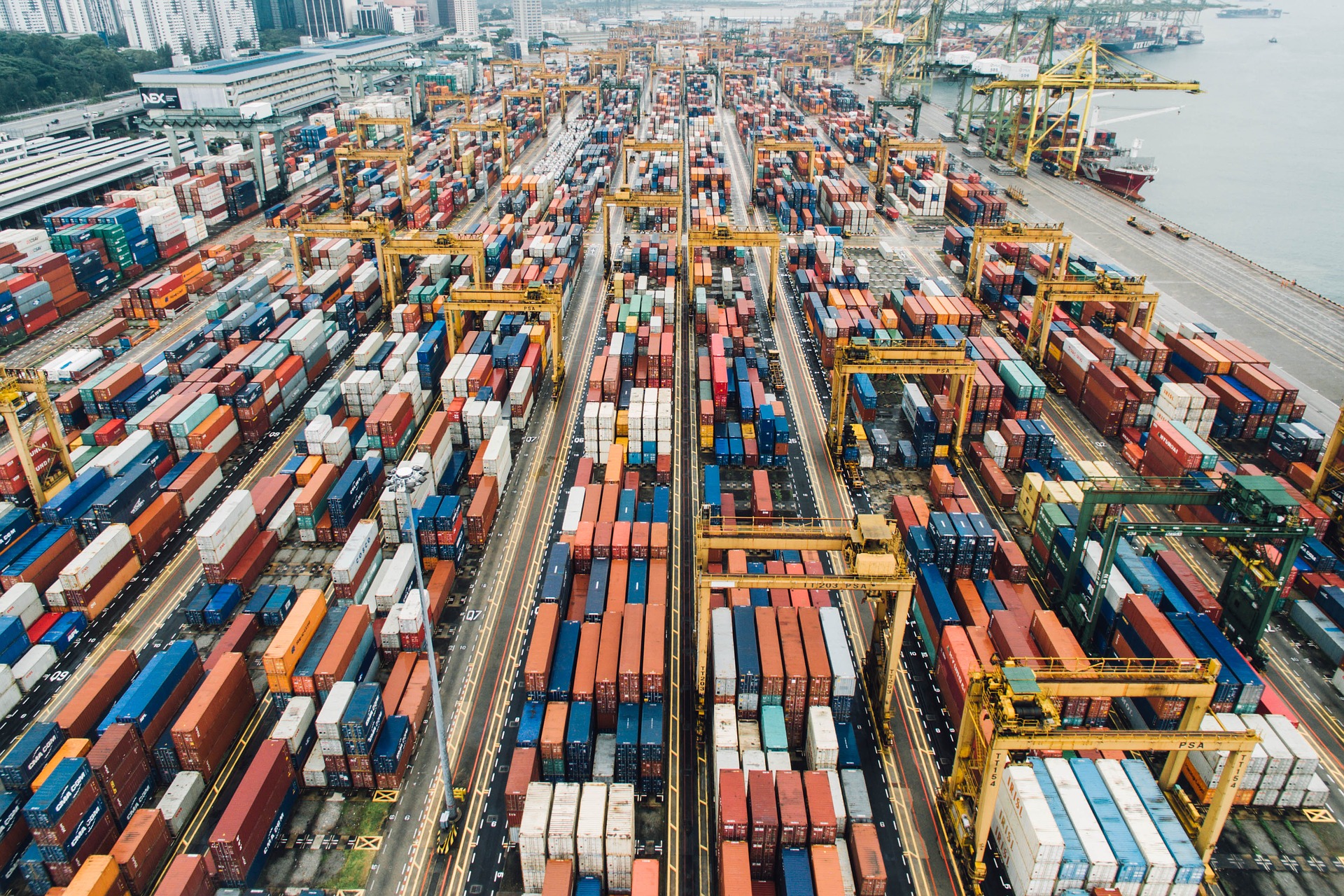
Asian steel shipments to Europe have slowed sharply in recent months as uncertainty surrounding the EU’s Carbon Border Adjustment Mechanism (CBAM) deters buying interest, mill sources, traders, and other market participants told Platts, part of S&P Global Energy, in the week to Dec. 8.
European buyers have largely avoided sourcing steel from Asia while they await clarity on CBAM-related compliance requirements, several mill and trading sources said.
“It’s not that mills don’t want to offer. It’s that European buyers are reluctant to book from Asia right now because of the longer lead time,” an Indian mill source said. The source added that although some mills attempted to ease buyers’ concerns by offering December-shipment cargoes, overall demand has stayed muted.
According to S&P Global Energy’s Global Trade Analytics Suite, Indian steel exports to the EU fell 33.4% to around 2.4 million mt in the first nine months of the year, compared to the same period in 2024.
China remained the top exporter, raising outflows by 29.15% in the first nine months of the year to around 3.2 million mt.
Indonesia’s steel exports to the EU rose 145.6% to 1.7 million mt over the same period, according to GTAS.
A source from a major Indonesian mill said they had already submitted CBAM-related data to authorities, adding that most information circulating in the market remains unofficial or leaked.
Because of the uncertainty, the mill is holding back lower-margin offers to Europe — similar to producers in India, Vietnam, and Malaysia, the source said.

Engagement with EU continues
Despite the slowdown, Asian mills have continued to engage with EU buyers, given Europe’s status as a key export market, particularly for hot-rolled coil (HRC), mill sources said.
The Indian mill source said mills are still offering into Europe despite weak offtake and margin pressure, as returns remain better than in other regions. The source reported the mill’s latest deal to Southern Europe at $575/mt CFR in late November, with freight at $50-$60/mt.
By comparison, Indian offers to Vietnam around the same period were reported at $485/mt CFR, while offers to the Middle East were heard at $510/mt CFR, Platts data showed.
Platts assessed imported HRC in Northern Europe at Eur500/mt CIF Antwerp Dec. 3, stable day over day, and in Southern Europe at Eur495/mt CIF South Europe, down Eur5/mt over the same period.
The Indian source stressed the need for greater clarity on CBAM pricing before mills can develop a comprehensive strategy. “For now, we only have some leaked numbers, not official figures. We will wait until the actual numbers are released before coming up with our strategy,” the source said.
Despite cautious sentiment, a trading house purchased in November three HRC shipments of approximately 100,000 mt of Indonesian coils to be sold to Europe for mid-February shipment, a China-based trader said.
Commenting on this deal, a Singapore-based trader said the sellers could face losses given the high default value indicated in a leaked CBAM document.
An Eastern China-based trader echoed this sentiment, saying that many buyers are unwilling to take on such risks and are instead turning to shorter lead-time cargoes from within the EU or nearby suppliers, such as Turkey.
A Vietnam-based mill source, however, said that this trend has also been seen throughout the year, rather than just in the last few months, adding that a seasonal slowdown in demand and depleted quotas were also major drivers.
Some market participants expect delivered pricing to become more common for EU-bound cargoes from January 2026. A Japan-based source said that buying indications for February shipment rose by $10/mt compared with December shipment, showing some willingness among buyers to absorb CBAM-related costs.
Navigating CBAM a bonus
With flows to Europe constrained, several Asian mills are targeting alternative destinations in the Middle East and South America, especially amid the year-end slowdown, according to several Asia-based traders. Competitive pricing is emerging in these markets, with many mills offering to offload excess supply at aggressively low prices, the traders added.
Still, sentiment is broadly optimistic that Asian steel exports to Europe will rebound once CBAM requirements become clearer.
Market participants said that clarification could create upside potential for mills that are able to supply compliant or higher-margin products.
A second Singapore-based trader said that a post-CBAM rebound in EU demand could also boost ASEAN markets through improved pricing.
Mills that successfully adjust to the new CBAM regime could gain a long-term competitive advantage as more countries begin considering similar carbon pricing mechanisms, a third Singapore-based trader said.
“Building trading experience under CBAM will be strategically valuable, especially as many stakeholders see Europe’s mechanism as a benchmark for their own carbon adjustment strategies,” the trader added.