


German crude steel output down 9.3% in Jan-Nov 2025, sector calls for swift action to protect production
In November this year, Germany’s crude steel output went down by 2.6 percent year on year to 2.84 million mt, according to the information provided by the German Steel Federation Wirtschaftsvereinigung Stahl (WV Stahl).
In the first 11 months of this year, crude steel production in Germany declined by 9.3 percent year on year to 31.35 million mt.
In the given month, Germany’s pig iron output amounted to 1.87 million mt, down by one percent, while in the January-November period it decreased by 10.7 percent to 19.89 million mt, both on year-on-year basis.
In November, the country’s hot rolled steel output grew by 0.4 percent year on year to 2.50 million mt, while dropping by 6.5 percent to 27.50 million mt in the first 11 months this year, both compared to the same periods of the previous year.
WV Stahl emphasized that crude steel production in Germany continued its downward trajectory in November 2025, highlighting the persistent strain on the country’s steel industry. This confirmed that production remains well below the levels needed for sustainable capacity utilization. For the full year, output is projected to reach only around 34 million mt, marking the fourth consecutive year in which production has fallen significantly short of the 40 million mt threshold considered necessary for adequate utilization of installed capacity. As a result, overall market conditions for steel producers remain extremely challenging.
Import pressure and energy costs weigh on industry
According to WV Stahl, the industry’s difficulties are being exacerbated by intensifying import pressure on the EU steel market and persistently high energy costs at production sites. The share of steel imports in the EU market has recently climbed to around 30 percent, a level widely viewed by industry representatives as unsustainable and damaging to domestic producers’ competitiveness.
WV Stahl CEO Kerstin Maria Rippel stated the renewed decline in production is a clear warning signal. She said the figures underline the severe consequences of inadequate location conditions for steelmaking in Germany, adding that rising import pressure is placing the entire European steel industry under acute stress.
Against this backdrop, Rippel urged swift and decisive action at EU level. She stressed that the European Commission’s proposed safeguard measures for steel trade must be implemented rapidly and without dilution, warning that the sector cannot afford further delays. With production continuing to fall month by month, she argued that every week counts and called on the European Parliament and EU member states to take decisions that are now critical for the survival of the industry.


EU flags impending stainless CRC AD measure expiry
The European Commission has published a notice of the impending expiry of anti-dumping measures on imports of stainless steel cold-rolled flat products from China and Taiwan, Kallanish notes from the Official Journal of the European Union.
Unless an expiry review is initiated, the duties will lapse on 17 September 2026.
EU producers may request a review within three months of the expiry date if they can demonstrate that dumping and injury would likely continue or reoccur.


German mills, carmakers disagree over EU automotive package
The European Commission’s Automotive Package, which has extended the production of combustion engines, and encourages the use of green steel, has been met with contrasting comments from Germany’s mills and carmakers.
Steel federation WV Stahl welcomes the Commission’s proposals to create incentives that provide a lead market for “Steel Made in the EU”. The federation highlights the specific proposal to revise CO₂ emission standards for new passenger cars and light commercial vehicles. “For the first time, low-emission steel produced exclusively in the EU will be counted towards achieving the limits for corporate fleets,” WV Sthal writes.
Contrasting that, the carmakers appreciate neither the one nor the other, and particularly dismiss Brussels’ new requirements regarding green steel and renewable fuels.
An adjustment of steel sourcing is tied to conditions that the automotive industry cannot influence, Kallanish reads in a statement by carmakers’ federation VDA. “Whether sufficient quantities of green steel produced in the EU will be available at competitive prices in 2035 is beyond the automotive industry’s control,” VDA argues.
It also finds the ideas behind the Corporate Fleets Initiative and its allocation to the various member states are “completely unrealistic”. VDA concedes there is an urgent need for action regarding heavy commercial vehicles and their associated fleet-wide CO₂ regulations. But it notes the obvious areas for action are, again, outside the reach of carmakers. These include, in particular, the expansion of the charging and H2 refuelling infrastructure, VDA notes.
The package as it stands is the “antithesis of planning certainty”, VDA writes. “We will be penalised if others fail to do their homework or if expectations are not met.”

Poland’s defence ministry acquires Huta Czestochowa
Poland’s defence ministry has finally acquired plate maker Huta Czestochowa and is eyeing obtaining armour plate certification in January, Kallanish notes.
The ministry has been working on the takeover since state-owned Weglokoks acquired the then insolvent former Liberty-owned plate mill in November 2024 on a leasing basis. The rolling mill and a few weeks later the electric arc furnace were restarted in January after considerable idle time.
The signing ceremony on Monday also saw the signing of a letter of intent between the Polish Armaments Group, Huta Czestochowa and Wegkoloks with a view to leveraging the Czestochowa mill’s capabilities to supply the defence industry.
The plate mill assets will be assigned to Poland’s Military Property Agency.
“We have an important task ahead of us – to develop Huta Czestochowa into the best steelworks in Poland, to build great potential. I would like to thank the management and employees for what you have accomplished over the past several months. You have launched new production capacity, found contractors, and contracts for next year are largely secured,” notes Polish defence minister Wladyslaw Kosiniak-Kamysz.
The acquisition is a “historic” moment for the security of Polish industry, he adds.
Although Polish industry leaders have said repeatedly they are against nationalising the country’s steel industry, the current geopolitical climate has laid bare the importance of defence and indigenous steel production, especially in Poland, a country in close proximity to the war in Ukraine and with a history of suffering caused by its neighbours.
Huta Czestochowa said it plans to produce 300,000 tonnes of crude steel in 2025 and grow this to 500,000t in 2026 (see Kallanish passim). The firm’s EAF has a 700,000 t/year crude steel capacity, while the plate mill is 1.2 million t/y design capacity.

Italian long products register acceptable 2025 performance: market
Italian long product prices are expected to remain stable in the coming months despite mills continuing to push for increases, Kallanish notes.
Following a brief improvement in demand, when major distributors secured volumes before Christmas stoppages, the market turned quiet. The increases sought by rebar and merchant bar producers have not translated into contracts, leaving overall price levels broadly unchanged.
January may bring some upward pressure linked to CBAM. European wire rod producers are attempting to lift prices but have met resistance so far. Italian wire rod values have risen by only about €10/tonne ($11.69/t) in recent weeks as competition from other European suppliers is keeping the market competitive.
Two agents report having had satisfactory business in 2025. Both report lower sales volumes and revenue for merchant bar, although these were offset by improvement in other products such as sections and wire rod derivatives, which saw higher volumes overall.
Merchant bar remains at €250-260/t base delivered, stable compared to early December, equivalent to €670-680/t delivered including size extras. Drawing-quality wire rod prices are at around €580/t delivered, while imported material from other European countries is at about €15/t lower.
Sections prices are showing little movement compared to early December despite the €20-30/t increases implemented by European producers. First category sections remain at roughly €730/t delivered, with asking prices at around €750/t base delivered.
Italian rebar is beginning to soften as demand eases ahead of Christmas. Prices now stand at €280-290/t base ex works, equating to €550-560/t including size extras.
Ukraine’s 2026 steel output may match 2025: GMK
Steel production in Ukraine next year could remain at the 2025 level of approximately 7.2 million tonnes under baseline scenario, according to a GMK Center forecast.
Ukrainian steel companies have already reached their maximum capacity for production growth, the report claims.
GMK’s optimistic scenario assumes a return to 7.6mt, while the pessimistic scenario assumes a decline to 6.3-6.6mt due to the blocking of maritime logistics and restrictions on the European market, Kallanish notes.
“The main risks are associated with the European market, which accounts for 81% of finished product exports,” the media outlet says. “The introduction of the CBAM carbon management mechanism is already creating technical barriers to imports. A stricter tariff-rate quota system will be introduced in July, potentially reducing EU imports by 40-50%.”
“If Ukraine doesn’t receive a temporary exemption from the CBAM, it will be extremely painful for the industry and we could lose long-rolled and billet exports to the EU, which would lead to the closure of two or three of the seven operating blast furnaces in Ukraine,” the article states.
Alternative markets remain inaccessible due to aggressive Chinese exports and high energy and logistics costs, GMK Center observes. “The main hope lies in the domestic market, which could expand by 5-10% thanks to defence projects or post-war reconstruction,” it concludes.
Ukrainian steel companies decreased crude steel production in November compared with the previous month amid the Russia-Ukraine war, unfavourable global market conditions and logistical problems, according to national steel association Ukrmetallurgprom.
Crude steel output last month amounted to 641,100t, down 1.2% from October but 18.5% more year-on-year. Rolled products output was however up 10.3% month-on-month and grew 18.5% on-year to 589,100t.
Pig iron output increased 1.8% m-o-m and was 29.7% more y-o-y at 704,300t.
January-November steel output decreased 3.1% on-year to 6.81mt, with production of rolled products up 4% to 5.97mt. Pig iron output amounted to 7.2mt, up 10.2%.
Liberty’s Dalzell plate mill restarts operations
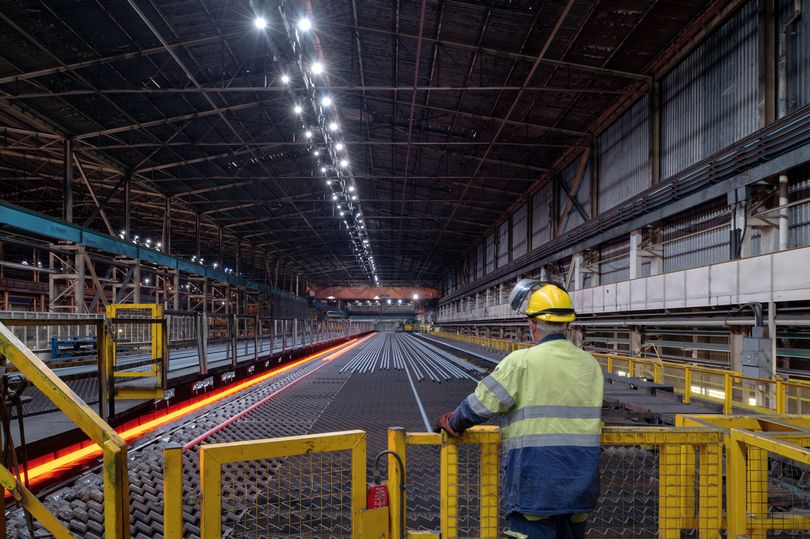
Liberty Steel’s Dalzell plate mill in Motherwell, Scotland, has resumed operations for a government order, Kallanish learns.
A Liberty spokesperson says Dalzell “is fulfilling an order for the British government as an anchor for its resumption of operations, sourcing slab from British Steel.”
The spokesperson adds: “We aim to ramp up production in the coming months through a pipeline of select projects.”
Workers at the mill are believed to have been on furlough for some time, with operations halted since mid-2024.
Earlier in 2025, Prime Minister Keir Starmer said that he was “horrified” by Dalzell being idle.

Italy’s steel production returns to decline in November after four months of growth

German exports to US slump in Jan-Nov 2025 amid rising tariffs
The close transatlantic trade relations are coming under significant strain due to US President Trump’s tariff policies. This is already reflected in the export performance of German industries during the first three quarters of 2025.
The German Economic Institute (IW) has published a report on German export performance to the US finding that Germany’s goods exports to its major overseas partner fell sharply in the first three quarters of the year, largely due to higher US import tariffs and sector-specific challenges.
According to the analysis, total German exports of merchandise goods to the US declined by about 7.8 percent in the first three quarters of 2025 compared with the same period in 2024, a reversal from the roughly five percent average annual growth seen between 2016 and 2024. This contraction reflects heightened tariff barriers and subsequent weak demand in key industries.
The report highlights that automobiles and automotive parts experienced the steepest drop in export value, falling by nearly 14 percent, while machinery and chemical exports also posted substantial declines of around 9.5 percent each, underlining the broad impact of the tariff regime. These three sectors collectively account for more than two-thirds of the overall export downturn to the US market. Export levels for most major sectors remain near or below their 2022 values, indicating a significant setback in trade flows after years of consistent growth.
The report attributes the export slump mainly to tariff policy on US imports – including 50 percent duties on many steel and aluminum-related products for machinery exports and elevated car tariffs – which have created a new normal in transatlantic goods trade. Unless tariff levels decrease, the study warns that a sustained recovery of German exports to the US is unlikely in the near term.
The IW analysis underscores the challenges facing German industry in maintaining global market share against protectionist trade policies and suggests continuing adjustment of export strategies and diversification of markets may be necessary to counteract the downturn.

CBAM could cost UK industry £800 million annually as EU rules out exemption
The European Union will not grant the UK an exemption from its Carbon Border Adjustment Mechanism (CBAM) unless the two sides formally link their emissions trading systems, according to media reports.
The decision means that UK producers are set to face a significant increase in administrative requirements from January 2026.
£800 million annual cost and administrative burden
According to estimates from the UK government, CBAM could cost British industry around £800 million per year. In addition to the carbon cost itself, exporters will face extensive new administrative requirements, including emissions reporting, verification and certification, drawing comparisons with the surge in paperwork following Brexit.
The UK-based trade association UK Steel indicated that an exemption is unlikely to be secured before Easter at the earliest, meaning companies must prepare to comply fully with CBAM rules from the start of 2026.
EU position: linkage first, exemption later
Wopke Hoekstra, European commissioner for climate action, stated that the EU’s position is clear. “We’re not exempting anyone, but the moment we will be fully linking those two, it is likely that there will be an exemption at that point in time,” he said.
Hoekstra acknowledged that the UK government would have preferred a different sequencing but stressed that the EU would not alter its approach. He added that discussions would continue with the UK to achieve a formal linkage between the two carbon markets.
Potential relief for UK electricity exports
Some limited relief may be available for UK electricity exports. Electricity, alongside steel, cement, fertilizers, aluminum and hydrogen, falls within CBAM’s scope. However, the Commission has indicated that UK electricity exports should not, in principle, be subject to CBAM charges, as UK power generators already face higher carbon costs than their EU counterparts. This position has been welcomed by the UK government.
Industry warns of competitiveness risks
Industry groups continue to warn that CBAM will undermine the competitiveness of UK exports. Frank Aaskov, director for energy and climate change policy at UK Steel, said CBAM creates an additional barrier to UK steel exports at a time of heightened global trade uncertainty.
He noted that while the direct carbon cost may appear modest, around €13/mt for products such as hot rolled wire, the steel market is extremely price-sensitive. With prices near €650/mt, cost differences of just €5/mt can determine whether a producer secures or loses a contract, particularly when competing against low-cost imports from China. The impact is expected to be especially severe for small and medium-sized producers.
UK seeks carbon market linkage
A UK government spokesperson reiterated that securing a UK-EU carbon market linkage remains a priority, noting that such an agreement would spare UK industry from paying CBAM charges on exports valued at approximately £7 billion. “Our priority remains securing a carbon-linking agreement as soon as possible,” the spokesperson said.