


The European Parliament will not approve the EU-US trade agreement following the new tariff decision
Following US President Donald Trump’s announcement that he would impose additional tariffs on European countries regarding Grönland, the major political groups in the European Parliament (EP) announced that they would not approve the trade agreement reached between the EU and the US last July.
Leaders of the European People’s Party (EPP), the largest group in the European Parliament, along with the Socialists & Democrats (S&D) and Renew Europe, described Trump’s statements as “unacceptable” and said that the approval process of the agreement should be halted.
EPP President Manfred Weber stated that, due to the threats made over Greenland, approving the trade agreement at this stage is “not possible.” He stressed that suspending the agreement which foresees zero tariffs on U.S. products has become unavoidable.
S&D President Iratxe García Pérez criticized Trump’s decision to impose tariffs of up to 25% on European allies supporting Greenland, describing it as “imperialist pressure.” She said the EU must act immediately, suspend negotiations, and activate its “anti-coercion instruments.”
Renew Europe leader Valérie Hayer also called Trump’s threat of tariffs against countries that do not support his plan to annex Greenland “unacceptable.” Arguing that the U.S. has recently taken a series of aggressive steps against the EU, Hayer said it is now necessary to “be deterrent.” She also announced that her group would not participate in the vote on the EU–U.S. Turnberry trade agreement.
Following Trump’s decision to impose additional tariffs on eight European countries, ambassadors of EU member states were called to an extraordinary meeting in Brussels, where the situation is expected to be assessed.
Trade Agreement and Tariff Tensions
Trump had announced last July, after a meeting with European Commission President Ursula von der Leyen, that a trade agreement between the parties had been finalized. Under the deal, the EU would not impose tariffs on U.S. products, while the U.S. would apply a 15% tariff on EU goods. The agreement requires approval by the European Parliament to enter into force.
However, in a statement yesterday, Trump targeted European countries opposing the U.S. purchase of Greenland and announced new tariffs on Denmark, Norway, Sweden, France, Germany, the United Kingdom, the Netherlands, and Finland. According to the announcement, these eight countries will face a 10% tariff starting February 1, 2026, rising to 25% from June 1, 2026. Trump said the tariffs would remain in place until an agreement is reached for the complete purchase of Greenland by the United States.


Trump’s decision on customs duties for 8 European countries after the Grönland tension
U.S. President Donald Trump announced that tariffs would be imposed on Denmark and several European countries, citing their opposition to the United States’ attempt to purchase Grönland following the recent controversy over the issue.
Trump stated that Denmark, Norway, Sweden, France, Germany, the United Kingdom, the Netherlands, and Finland would be subject to the planned customs duties.
Trump argued that the United States has provided Europe with unconditional support for many years, saying, “World peace is at risk. China and Russia want Grönland, and there is nothing Denmark can do to stop this.”
Stating that he considers Grönland’s defense to be inadequate and that the region’s security is of critical importance to the United States, Trump announced that the countries concerned would face a 10% tariff starting from February 1, 2026, rising to 25% after June 1, 2026. He added that these rates would remain in effect until an agreement is reached on the full purchase of Greenland.
Trump’s remarks triggered strong reactions from European countries. French President Emmanuel Macron said the threat of tariffs was unacceptable and stressed that Europe is determined to defend its sovereignty. Recalling France’s support for Denmark’s military exercise in Grönland, Macron said, “No threat, whether in Ukraine, Greenland, or anywhere else in the world, will divert us from our course.”
Dutch Foreign Minister David van Weel emphasized that military activities in Grönland are aimed at strengthening Arctic security, adding that the Netherlands is preparing a coordinated response with the European Commission and EU partners. UK Prime Minister Keir Starmer reminded that Grönland is part of the Kingdom of Denmark and said imposing tariffs on allies is the wrong approach.
European Commission President Ursula von der Leyen and European Council President Antonio Costa said in joint statements that Trump’s decision would weaken transatlantic relations and could create a dangerous spiral. EU officials noted that the military exercise in Grönland had been coordinated in advance and did not target any country, while stressing that Europe would present a united stance against the tariffs.
Recalling that U.S. efforts to purchase Grönland have been ongoing for 150 years, Trump argued that the region is vital in terms of modern defense systems. Denmark, however, has long rejected any transfer of sovereignty, while European countries have recently stepped up calls for enhanced military cooperation in the Arctic and have begun deploying small units and officers to the region.

EU, Mercosur ‘arriving at political accord’: EC
The EU and Mercosur are arriving at a “political accord” on raw materials, which involves a framework for cooperation on joint investments in lithium, nickel and rare earths projects, European Commission President Ursula von der Leyen said Jan. 16.
Such an accord will ensure “strategic independence in a world where minerals are tending to become instruments of coercion,” von der Leyen told journalists in Rio de Janeiro after a meeting with Brazilian President Luiz Inacio Lula da Silva to discuss details of the broader EU-Mercosur trade accord, which was formally agreed upon Jan. 9 by a majority of nations involved. The EU hopes to gain access to the four-country bloc’s agriculture and metals sectors. The Mercosur countries seek to work around US trade restrictions and counter China’s growing influence.
The formal signing of the accord is to take place Jan. 17 in Asuncion, Paraguay, one of the four member countries of the Latin American southern cone common market, along with Argentina and Uruguay.
With the accord, EU import tariffs on Mercosur mineral products, including critical minerals, copper, aluminum, ferroalloys and steel products, should be eliminated within 10 years. Brazilian iron ore already enters the EU at a zero tariff.
Both von der Leyen and Lula stressed the importance of establishing new strategic supply chains in the areas of energy and digital transition, involving new investments to support sustainable development within the ambit of the EU-Mercosur accord.
Lula indicated that this will incentivize new EU investments in Mercosur.
“But we [in Mercosur] will not limit ourselves to being eternal exporters of commodities; we want to produce and sell higher value-added industrial goods,” he said.
The Brazilian mining institute Ibram noted in a Jan. 15 statement that the 2023-24 renegotiation of the EU-Mercosur accord will allow Brazil to proceed with a policy proposed by its government late in 2025 and currently under consideration by the country’s congress, which stipulates that at least 80% of the country’s rare earths production should be processed into value-added products within the country, rather than exported in raw material form.
The idea will now be to attract EU investment in processing rare earths within Brazil, Ibram said. Brazil holds the world’s second-largest reserves of rare earths, after China, but it currently has only one producer.
Lula told journalists that further accords are envisaged in the future between Mercosur and Canada, Vietnam, Mexico, Japan and China, following recent accords struck with the European Free Trade Association and Singapore.

European green steel premiums unchanged amid slow trading; policy impact remains distant
Buying interest for steel produced with a reduced carbon footprint remained limited across Europe during the assessment week.
Seller sources have reported “very few inquiries” for green steel in recent weeks, but attributed this partly to the winter holiday break in Europe.
Still, sellers expressed cautious optimism, expecting green steel demand to pick up in 2026, supported by regulations.
Several sources noted that green steel had come increasingly into focus following recent decisions related to the EU’s carbon border adjustment mechanism (CBAM) and the proposed automotive package regulation
Market participants added that while the rollout of CBAM and the gradual phase-out of free carbon allowances in Europe are expected to support demand for green steel, any meaningful impact is unlikely in the near term.
Under Fastmarkets’ methodology, European green flat steel is defined as material produced with Scope 1, 2 and 3 greenhouse gas (GHG) emissions capped at a maximum of 0.8 tonnes of carbon dioxide per tonne of steel produced.
Offers for steel meeting these specifications were reported at a minimum of €200 ($232) per tonne across Europe.
But several supplier sources agreed that for reasonable tonnages, lower premiums could be achieved around €150-170 per tonne.
One supplier source said that premiums below €150 per tonne were unworkable for emissions thresholds below 800 kg of CO2 per tonne.
But buyers gave lower estimations in the range of €70-150 per tonne during the assessment week.
A buyer source said that green steel premiums in the three-digit range were attainable only in project-driven transactions, noting that higher premiums are typically limited to public procurement and are otherwise unaffordable.
At the same time, an automotive end-user told Fastmarkets that it was securing green steel through offtake agreements with future direct-reduced iron/electric-arc furnace (DRI-EAF)-based producers, arguing that scrap-based green steel currently available on the market could not be considered “fully green.”
Such comments highlight that the absence of commonly accepted standards and definitions for green steel remains one of the key obstacles to its broader adoption across supply chains.
Fastmarkets’ weekly assessment of the green steel domestic, flat-rolled, differential to the hot-rolled coil index, ex-works Northern Europe was stable at €100-170 per tonne on Thursday.
Meanwhile, Fastmarkets’ assessment of the flat steel reduced carbon emissions differential, ex-works Northern Europe was €40-50 per tonne on Thursday, also stable week on week.
For steel produced in blast furnaces with reduced carbon emissions of 1.4-1.8 tonnes of CO2 per tonne of steel, offers for premiums were reported at €60-70 per tonne during the assessment week.
Buyers’ estimates of tradable prices were around €40-50 per tonne, with no new trades reported.
Author: Julia Bolotova


EU public procurement proposal for low-CO2 metal by end of month: EC official
Moutarlier hinted at the much-awaited update on procurement rules on Thursday January 15 during a panel discussion at the Future Minerals Forum in Riyadh, Saudi Arabia.
Talking about the willingness to pay for a green premium metal and how regulation could help incentivize the uptake of lower-carbon-emission metals that often come with a higher price tag, the official said the EC is looking at this now.
“We will be coming later on this month with our Industrial Accelerator Act, trying to tie green products with public procurement or subsidy plans so that there are incentives that as regulator we can bring to bridge the gap,” Moutarlier said.
“We need to be selective and we will probably start at least with green steel in our proposal later this month. This is not something that we will be able to impose all throughout the different projects and for all the different material,” Moutarlier added.
The panel also discussed other incentives that could help uptake, such as a proposed floor for critical minerals to help boost the market.
Trading for green metal premiums remains slow in Europe amid economic weakness, which remains a hurdle to committing to a premium if there is no obligation.
Fastmarkets’ weekly assessment of flat steel reduced carbon emissions differential, exw Northern Europe was €40-50 ($46-58) per tonne on Thursday, stable week on week.
Fastmarkets’ monthly assessment of aluminium low-carbon differential P1020A, Europe was $0-30 per tonne on January 2, up from $0-20 per tonne on December 5. In comparison, the European low-carbon premium lags behind Asia, with Fastmarkets’ aluminium low-carbon differential P1020A, Japan, South Korea assessed at $40-85 per tonne on January 2, stable month on month.
With carbon costs increasingly in focus, plans such as the Carbon Border Adjustment Mechanism may be an incentive to buy lower-carbon-emission material, even if there is no intention of greening the supply chain, according to panelists.
“It’s not even always a willingness to pay for green, but sometimes it’s a pure cost calculation that you’re avoiding CO2 cost,” Christian Hoffmann, partner Metals & Mining Practice at McKinsey, said on the panel. “And that avoidance of CO2 cost makes it a business case,” Hoffmann said.
Author: Laura Varriale
Worthington Steel’s Kloeckner takeover two years in the making
“We had been looking at this deal for two years and Kloeckner was always number one on the list [of potential acquisition targets],” Worthington Steel president and CEO Geoff Gilmore said on Friday.
News of Worthington Steel’s takeover attempt of the German metals processor and distributor broke in early December 2025, ringing out a year of intense mergers and acquisitions (M&A) in the overall steel industry.
On the evening of Thursday January 15, news emerged that Worthington Steel was successful in its takeover attempt, entering a business combination agreement with Kloeckner & Co to create the second-largest steel service center company in North America, with more than $9.5 billion of combined revenue.
The combination of Worthington Steel and Kloeckner & Co has created a distribution giant in North America, taking the spot previously occupied by the merger of value-added processor and distributor Ryerson Holding and metals service center Olympic Steel, which created a $6.5 billion service center behemoth.
Gilmore said he had expressed his congratulations to the CEOs of Ryerson and Olympic when their mega merger was announced and said he was happy to let them have the spot of the second-largest North American steel service center for just two months.
“They cannot claim to be the second largest any more; now we are the second-largest [steel service center] company [in North America] and they are a distant third,” Gilmore said.
Despite being a German company, about 75% of Kloeckner & Co’s shipments are in North America, making it an attractive acquisition target, Gilmore said.
Kloeckner & Co, with approximately 110 locations across North America and Europe and product capabilities including carbon flat-roll steel (sheet and plate), electrical steel, aluminium, stainless steel and long products, was an attractive M&A target as it is a “highly complementary business” with “adjacent markets” to Worthington Steel’s operations, Gilmore told Fastmarkets.
Kloeckner & Co has “more end-market diversification” than Worthington Steel, Gilmore said, noting that the “significant synergies” of the “much bigger combined company” will make for seamless integration of the two companies.
Together, the combined company will have about 12,000 employees, Gilmore said.
The synergies could amount to approximately $150 million in anticipated annual cost, operational and commercial process synergies primarily in North America and about 95-99% of those synergies are in Kloeckner’s North America operations, Gilmore said.
Synergies are expected to be fully realized by the end of Worthington Steel’s fiscal year 2028 and the transaction is expected to triple Worthington Steel’s scale in terms of sales, representing approximately $9.5 billion of combined revenue while maintaining margins above 7%.
A subsidiary known as Worthington Steel GmbH has been established for the acquisition, which will launch a voluntary public offer to acquire all outstanding shares of Kloeckner & Co.
Kloeckner shareholders who choose to participate in the offer will receive €11 ($12.76) in cash for each share tendered into the offer.
The offer price implies an enterprise value of $2.4 billion.
Kloeckner’s US assets have drawn the attention of other North American market participants as well, as the German company sold eight distribution sites of its US subsidiary, Kloeckner Metals Corporation (KMC) in 2025.
Georgia-based KMC sold seven US-based service centers to Canadian processor and distributor Russel Metals for approximately $119 million in late September 2025 and sold an eighth US distribution site to Service Steel Warehouse.
USMCA review: “Imperative to get a strong intercontinental agreement”
It is unsurprising that M&A activity heated up last year, according to Gilmore, as it is only the “bigger businesses with stronger balance sheets” that can make the investments in technology and talent required to fortify a company against market shocks.
2025 was a year of dizzying M&A activity in both the steel supply and distribution side, driven by heightened trade uncertainty and beset by US President Donald Trump’s “America First” trade policy, which deployed steep metal tariffs and upended traditional supply chains.
The review of the US-Mexico-Canada Agreement (USMCA), scheduled for July 1, 2026, is of crucial importance to the future stability of a business like the one Gilmore is heading.
“It is imperative to get a strong intercontinental agreement in place,” Gilmore said, underlining Worthington Steel’s expansion of its Tempel Steel facility in Apodaca, Mexico, to capture a larger chunk of the growing North American laminated electrical steel market.
“There is not enough electrical steel capacity [in the US] and Worthington Steel would feel positive about investing more in Mexico,” Gilmore said, adding that for further investments to occur across borders, a definite answer to what a revamped USMCA would look like is required.
The uncertainty caused by the future of the USMCA is concerning for any steel sector CEO and has slowed down onshoring and nearshoring of steel supply chains, Gilmore said.
“Every end market has been subdued last year and interest rates would have gone down more if not for the [inflationary pressure] created by the trade tariffs,” Gilmore added.
Author: Rijuta Dey
Klöckner & Co intends to divest Becker Group
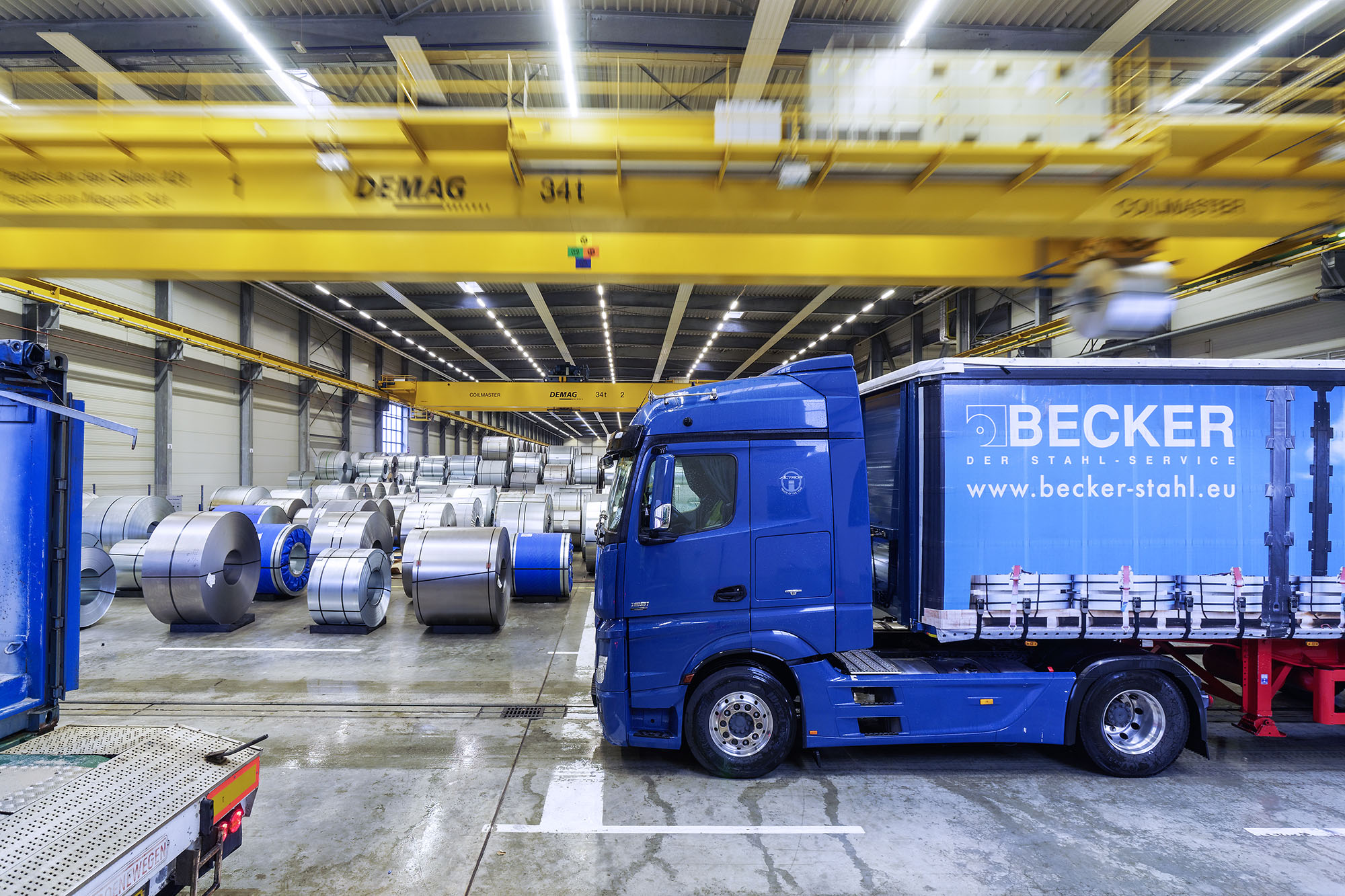
Klöckner & Co announces its intention to sell Becker Group, one of the largest multi metal platforms in the flat steel sector in Europe.
The Management Board of Klöckner & Co reached this decision after a comprehensive analysis and assessment of possible strategic options for Becker Group.
With this move, Klöckner & Co aims to enable the Becker Group’s participation in industry consolidation in Europe under new ownership, while placing a sharper focus on higher value-added products and services.