

European HRC prices steady as import scarcity underpins market; ArcelorMittal raises April offers
European hot-rolled coil prices were broadly stable on Tuesday January 20, with limited import availability seen as a major driver behind recent gains. Meanwhile, ArcelorMittal surprised the market with new price increase, Fastmarkets heard.
European producers could still offer March delivery HRC, but availability was running tight, sources said.
Offers from integrated mills were reported around €650-670 ($755-778) per tonne ex-works, while transaction prices still didn’t exceed €630-640 per tonne ex-works in Germany and the Benelux area.
ArcelorMittal announced new offers for April delivery at €700 per tonne base delivered, but this remains “above tradeable levels” so far, buyers said.
A buyer source confirmed suppliers were aiming for even higher prices for second-quarter delivery, considering expectations of increasingly tight import steel supply due to both the Carbon Border Adjustment Mechanism (CBAM) and the approaching implementation of new safeguards measures.
“New safeguard measures will likely be imposed after old system expires, so on July 1. That means that even if someone risks buying new imports under the CBAM regime, they will have to make sure material arrives to Europe before the end of the second quarter,” the buyer source said.
In October 2025, the European Commission proposed sweeping reform of its steel import safeguards, suggesting cuts in tariff-free quotas by about 47% and imposing a steep 50% ad valorem duty on any volumes beyond the new threshold.
While total quota volumes have been revealed, it’s not clear yet how those volumes will be distributed, and country-specific quota volumes were yet to be revealed.
“New imports are totally missing from the market, because there is too much uncertainty over its costs and availability,” a second buyer said. “Therefore, we see increased reliance on European mills.”
Source also pointed out that European suppliers were not in a hurry to increase production volumes to fill the gap left by imports.
“Increasing steel production would mean the need to buy more carbon credits (a Carbon EUA [European Union Allowance]), which are getting more and more expensive. It makes more sense to keep [the HRC] market tight,” a third buyer said.
Fastmarkets’ daily steel hot-rolled coil index, domestic, exw Northern Europe was €640.75 per tonne on January 20, up by €0.12 per tonne from €640.63 per tonne on January 19.
The index was also up by €2.42 per tonne week on week and by €17 per tonne month on month.
Fastmarkets’ daily steel hot-rolled coil index domestic, exw Italy was calculated at €631.67 per tonne on Tuesday, stable day on day.
The index was also up by €2.40 per tonne week on week and by €17.92 per tonne month on month.
Prices of €650 per tonne delivered (around €635 per tonne ex-works) were said to be achieved in transactions for limited volumes.
Buyers estimated tradeable prices at €630-635 per tonne ex-works.
“There is no major restocking; steel-service centers keep quiet since they booked more volumes in the fourth quarter and now prefer to wait. At the same time, tubemakers are more active now and start negotiating with mills, partially accepting higher prices,” a local buyer said.
Italian suppliers could offer March-April delivery coil.
Tubemakers in Italy were traditionally more reliant on import coil, but sources said that new imports were very limited and very risky.
Sources reported offers from Turkey at €520 per tonne CFR including anti-dumping duty and at €490-495 per tonne CFR from India.
“For Indian material you have to add about €200 per tonne in CBAM costs, which makes price uncompetitive,” a buyer in Italy said.
A deal for Turkish coil was heard at €630-640 per tonne DDP, with CBAM costs included.

ArcelorMittal raises European flat steel offers for April delivery
Leading European steelmaker ArcelorMittal has raised its offer prices for hot-rolled coil across Europe by another €30 ($35) per tonne for April delivery, with even bigger rises for cold-rolled and hot-dip galvanized coil, Fastmarkets heard on Tuesday January 20.
Several industry sources familiar with the matter confirmed to Fastmarkets that ArcelorMittal had announced a price increase of €30 per tonne for April-delivery HRC, with new offers at €700 per tonne base delivered, compared with €670 per tonne base delivered for March delivery coil.
ArcelorMittal also announced new offers for downstream flat steel — cold-rolled coil and hot-dip galvanized coil.
Notably, offers for April delivery HDG from the supplier were reported at €820 per tonne base delivered, compared with €780 per tonne base delivered for March.
And for CRC, offers were reported even higher — at €830 per tonne base delivered for April lead times.
The CRC market in Europe is traditionally dominated by imports, especially in the commodity grades segment, but recent regulations developments — notably an anti-dumping investigation, targeting CRC originating in India, Japan, Taiwan, Turkey and Vietnam, and covering around 65% of the EU’s total CRC imports — curbed import options. On top of that, the Carbon Border Adjustment Mechanism (CBAM) rollout as of January 1 also limited new imports.
ArcelorMittal’s new offers have not been traded so far, but market sources noted that sentiment in the European flat steel market was becoming increasingly bullish.
But sources pointed out that the recent price increases achieved in the European flat steel market were driven entirely by shifting trade regulations — notably CBAM and new trade regime, while real demand remained sluggish.
“This is not a demand-driven increase. Flat steel prices are edging up yes, though this is largely driven by concerns over CBAM-related costs and potential new safeguards rather than underlying demand,” a buyer in the Benelux area said.
An Italian buyer said that only a limited number of companies are financially equipped to handle CBAM, leading to a sharp slowdown in import activity. As a result, reliance on domestic steel is expected to increase significantly this year, with imports becoming increasingly difficult to manage.
In January, European HRC prices continued climbing slowly, with buyer sources pointing out increased reliance on European mills, while new imports became “unmanageable.”
Fastmarkets’ daily steel hot-rolled coil index, domestic, exw Northern Europe, was €640.75 per tonne on January 20, up by €0.12 per tonne from €640.63 per tonne on January 19.
So far, tradable prices for HRC across Europe have remained below ArcelorMittal’s target offers — with recent trades in Northern Europe reported at €630-640 per tonne ex-works.

EU weighs EUR 93 billion retaliation over Trump’s Greenland threat
EU countries have discussed retaliation options — including up to EUR 93 billion in tariffs — in response to President Donald Trump’s decision to impose additional duties on some European countries over Greenland.
According to a report by Politico, EU ambassadors held an extraordinary meeting in Brussels following President Trump’s decision to impose additional tariffs on eight European countries over Greenland. During the meeting, concrete steps that could be taken against the US in case no agreement is reached in talks with Washington were discussed.
The ambassadors assessed various options that could be activated if Trump’s tariffs come into force. In this context, the reactivation of measures prepared by the EU last year — but suspended after a trade agreement was reached with the US in July — was brought back onto the agenda. These measures include the swift imposition of up to €93 billion in tariffs on US goods.
Another prominent option discussed was the EU’s so-called “trade bazooka,” formally known as the Anti-Coercion Instrument, which has never been used before. This legal framework was created to respond to economic pressure from other countries and allows the EU to take various economic measures against the US. Under this instrument, US companies could be restricted from accessing the European market, and their commercial licenses and participation in public tenders could be limited.
On January 17, President Trump claimed that world peace was at risk in relation to the Greenland dispute and announced that he would impose tariffs on Denmark, Norway, Sweden, France, Germany, the UK, the Netherlands, and Finland for opposing the US purchase of Greenland. Trump stated that a 10% tariff would apply to these eight European countries from February 1, 2026, rising to 25% after June 1, 2026, and that these rates would remain in place until a deal is reached for the full purchase of Greenland.
Trump’s remarks drew reactions from EU leaders and European countries.
Meanwhile, EU leaders will convene at an extraordinary summit on Thursday, January 22, following Trump’s decision to impose additional tariffs on countries supporting Greenland. In a written statement, the spokesperson for the EU Council Presidency announced that European Council President António Costa will hold a special EU Leaders’ Summit at 19:00 on January 22 to discuss transatlantic relations. Costa also said that EU member state leaders will meet again in the coming days to further discuss the Greenland issue.


GMH Gruppe brings kind & co., schmiedewerke gröditz and buderus edelstahl under one roof
GMH Gruppe has consolidated Kind & Co. and Buderus Edelstahl under a single Open Die Forging Group together with Schmiedewerke Gröditz, as part of its ongoing integration process within the group.
The move stands out as a key element of GMH Gruppe’s transformation strategy and aims to strengthen the group’s position in the European tool steel and open die forging markets. To support the integration, GMH Gruppe will invest approximately EUR 30 million across the Open Die Forging Group.
As part of the consolidation, coordination will be enhanced among the three companies in production planning, metallurgy, logistics and sales. Efficiency gains are expected through shared capacity management, process harmonization and the integration of interfaces.
Within the integrated structure, each brand has been given a clear positioning. Kind & Co. focuses on hot work tool steels, premium and remelted tool steels for technically demanding applications, while also offering end user services, technical application support and vacuum hardening. Schmiedewerke Gröditz specializes in open die forgings, rolled rings, engineering steels, special forged components for plastics processing, as well as stainless and remelted steels. Buderus Edelstahl is positioned as a full service tool steel supplier, providing high depth of processing engineering steels for large components, plastics processing applications, tool holders and die supports. This differentiation enables GMH Gruppe to address diverse customer requirements across a wide range of applications.
Within the Open Die Forging Group, standard, performance oriented and premium solutions are offered, allowing customers to select the option best suited to their technical requirements and expected service life. Together, the three companies cover the entire value chain for tool steel and open die forging, from scrap melting and remelting to forging, machining and heat treatment.
Across the integrated structure, the portfolio includes more than 400 steel grades and over 2,500 analysis modifications, ranging from standard tool steels to premium remelted grades. The ability to source small quantities and small format components from a single supplier is particularly important for industries requiring short lead times, prototyping and special geometries. GMH Gruppe CEO Dr. Alexander Becker stated that bringing three strong companies together under the GMH Open Die Forging Group has created a unique product and service portfolio, offering customers integrated solutions ranging from technological consulting and in house steel production and refining to forging, heat treatment and complex machining processes.
The integration also aligns with increasing demand for reliable Europe based supply in sectors such as automotive, mechanical engineering and foundry industries. Combined inventories in Germany, Italy, China and the United States are expected to improve material availability and reduce volatility in international supply chains. Total annual production across the integrated portfolio exceeds 100,000 tons.
Under the investment program, a new ladle transfer car will be commissioned at Schmiedewerke Gröditz to enhance production efficiency and material purity. Additional plans include the installation of a new hardening furnace for large structural and gigacasting components at the Bielstein site, the relocation of energy efficient forging furnaces from Wetzlar to Gröditz, and further modernization measures across the group. These steps are expected to contribute to capacity expansion, improved energy efficiency and the modernization of production technology.
GMH Gruppe follows a production route based exclusively on electric furnaces and recycled scrap material, achieving up to an 80 percent reduction in CO₂ emissions compared with conventional blast furnace methods. As one of Europe’s largest privately owned metal processing companies, GMH Gruppe operates more than 20 facilities in over 50 countries, employs around 6,000 people and generates annual revenues exceeding EUR 2 billion. Active in sustainable steel production, the group contributes to the circular economy through the use of recycled scrap and supplies low carbon footprint products to sectors ranging from automotive and mechanical engineering to energy and construction.

Italy’s steel production ended 2025 higher, with a strong rebound in December
Italy’s steel sector recorded a notable recovery in production in the final month of 2025 and ended the year on an increase.
According to data obtained by SteelRadar from the Italian steel producers’ association Federacciai, the strong rise in steel and hot-rolled product output in December pushed the sector to its highest monthly levels in the 2022–2024 period.
Crude steel production in Italy reached 1.4 million tonnes in December, up 20.5% year on year. As a result, total crude steel output for full-year 2025 amounted to 20.7 million tonnes, marking a 3.6% increase compared to 2024.
Production of hot-rolled products also maintained an upward trend in December. Long products output rose by 18.4% year on year to 811,000 tonnes, while flat products production increased by 4.4% to 663,000 tonnes over the same period.
Looking at the full year 2025, long products production grew by 5.5% to 12.3 million tonnes, while flat products output rose by 3.8% to 8.9 million tonnes. As a result, the increase in hot-rolled products supported overall production growth for the year.
UK market condemns BP’s Chinese procurement for Teesside
A plethora of UK industry players have reacted strongly to reports of BP procuring Chinese steel to be used in the Net Zero Teesside project, Kallanish learns.
The high profile project to build a gas-fired power station using carbon capture and storage has partial taxpayer support and government backing, and is situated on the former Redcar steelworks site.
UK industry minister Chris McDonald says he is “deeply disappointed” by the choice to use China-origin steel. “We have been clear we expect Net Zero Teesside Power to use UK steel wherever possible and I will be meeting the company urgently to discuss this,” he adds.
Industry association UK Steel has condemned the move. Its director-general, Gareth Stace, says: “BP’s decision to buy 7,000 tonnes of Chinese steel, worth around £5 million [$6.7m] for the Net Zero Teesside project, rather than sourcing it from British Steel just miles away, beggars belief. For a major, taxpayer-supported project, this is deeply disappointing and should never have been allowed to happen.”
He adds: “UK producers, including British Steel in the region, have both the capability and capacity to supply this steel. This decision underlines why clearer expectations and firmer delivery are needed, so companies benefiting from public support cannot continue to offshore value, jobs and strategic capability when UK supply is available.”
Meanwhile, in a strongly worded social media post, Ben Houchen, mayor of the Tees Valley, said it was “staggering” that thousands of tonnes of Chinese steel would be imported for the project “while the UK’s own steel industry remains on its knees”.
He added: “I’ve raised this issue directly with Government ministers, officials and the leadership at NZT and have been absolutely clear that this is wrong. Those warnings have clearly fallen on deaf ears. Here in Teesside we know better than anywhere else the devastation caused by the closure of industries like steelmaking. To now use Chinese steel on the very site where our own steelworks shut a decade ago is nothing short of a slap in the face.”
He also noted that the project is backed by UK government, using taxpayer money, meaning there was “no excuse for British steel not being at the heart of it”. The government is disregarding British manufacturing and British workers, he added, comparing the situation to when German steel was used to build the Riverside Stadium in 1995 – during a Conservative government.
In a separate social media post, Ben Cunliffe, director of sustainability at British Steel, said the move was an example of “what is wrong with the UK’s industrial landscape and policies” and that it was a “huge slap in the face for the people of Teesside”.
“Billions of pounds of UK tax payers money being used to buy steel from China whilst British Steel’s Teesside Beam Mill only a mile or so from the project site, is overlooked. For the avoidance of doubt, our mill in Teesside is capable of supplying all of the structural steel for this project. It’s beyond outrageous,” he concluded.
Kallanish has approached BP for comment.


Bosnian industry urges action over Serbian import quotas
The Foreign Trade Chamber of Bosnia and Herzegovina (VTK/STKBiH) has urged Bosnian authorities to lodge a complaint with Serbia and the Central European Free Trade Agreement (CEFTA) joint committee over Serbia’s new steel import quotas.
The quotas are in effect since 1 January and impact rebar, wire rod and hot and cold rolled steel, with a 50% duty imposed on imports above the allocated tonnages (see Kallanish passim). The measure is valid for six months.
The impact on long products is especially relevant for Bosnia (BiH), which is home to the Balkans’ largest long steelmaker, Nova Zeljezara Zenica, once of ArcelorMittal.
“The quotas introduced by the Serbian Government do not follow real trade flows, because, as stated in the Regulation, they were created based on data for the period 2020-2024,” VTK/STKBiH notes.
“Having reviewed the aforementioned Regulation, especially the part of the defined quotas relating to the above-mentioned products for BiH, we express concern on behalf of companies, i.e. exporters of these products to Serbia. Namely, based on data from the VTK/STKBiH, it is evident that in 2025, already in the first quarter, BiH exports exceeded the allowed quarterly quota,” it adds.
“It is evident that when determining the quotas, the following parameters were not fully taken into account: the cumulative volume of real trade flows, regional distribution models and the real market share of producers and suppliers from Bosnia and Herzegovina,” it continues.
The measure also limits the unhindered duty-free sale of goods within CEFTA countries, hampering long-term contracts that Bosnian suppliers have with Serbian customers, VTK/STKBiH says. The detention of trucks at border crossings is the most critical problem for Bosnian exporters at present, with longer detentions being experienced due to additional quota monitoring procedures by Serbian customs authorities, it continues.
“The consequences of the delay are already measurable and serious: direct and growing financial costs (truck downtime, penalties, additional transportation costs), delays in deliveries to contracted customers in the Republic of Serbia, disruptions in production and construction supply chains, and serious damage to the reputation of suppliers from Bosnia and Herzegovina as reliable and predictable partners,” VTK/STKBiH concludes.

Iron, steel dominate first CBAM imports
Iron and steel imports into the EU have accounted for the lion’s share of Carbon Border Adjustment Mechanism (CBAM) goods entering the bloc since 1 January, Kallanish learns from customs data.
The data, which covers the first reporting window from 1-6 January, shows that CBAM imports declared totalled 1,655,613 tonnes.
Within this, iron and steel accounted for 98%. Fertilisers accounted for 1.2%, cement 0.5% and aluminium 0.3%, while electricity and hydrogen saw 0%.
The main countries of origin of CBAM-covered imports included Türkiye, China, India, Canada, Taiwan and Vietnam, while the top importing member states were Belgium, Spain, Romania, Netherlands, France and Germany.
Seamless interconnection of the CBAM Registry with National Customs Import Systems, Taric and EU Customs Single Window by member states ensured real-time data exchange, efficient validation of declarants, and uninterrupted import procedures at EU external borders, the European Commission notes.
It adds that national authorities are reporting stable processing times, however, some industry sources have seen minor delays at some ports related to paperwork issues.
The progress demonstrates the EU’s capacity to deploy complex climate policy instruments without hindering trade, while reinforcing transparency, fairness, and climate ambition across global supply chains, the Commission says.
Other data show more than 4,100 CBAM economic operators successfully obtained CBAM authorised declarant status across the EU prior to and immediately after 1 January. From 1-7 January, 10,483 Import Customs Declarations with CBAM goods were validated automatically and in real time via integrated customs systems.
Italian re-rollers increase prices further amid rising costs
Italian re-rollers are planning to continue lifting tube prices in line with the sharp increases already seen for hot rolled coil values.
Several large players have continued to source imported HRC to cover substantial volume requirements, despite the prospect of higher costs linked to CBAM and quotas. One buyer tells Kallanish it is sourcing material from producers who are expecting to face lower CBAM charges, although it remains uncertain how costs will ultimately evolve, and the company is currently reviewing its supply chain. The source adds that CBAM effectively acts as a duty and an additional protection measure, while the harsher constraint on imports remains safeguard and quotas, which can be exhausted within days given the significant needs of some large EU steel processors.
Another market participant says that, should safeguard measures be confirmed under the expected rules, a sharp rise in European HRC prices is likely. “The key issue for us is understanding when this strong increase will occur,” the source comments.
Market conditions for tubes and coil derivatives in Italy and France remain relatively calm following the holiday period, sources say. However, due to recent price increases, apparent demand has re-emerged in Italy.
Tube prices are also expected to continue rising in the coming months, with the scale of increases depending on the severity of safeguard measures, according to re-rollers.
Following the implementation of new price lists by all Italian re-rollers in December, discount levels currently stand at around 42-43 points. Producers are now aiming to reduce levels to 40 points as early as this week, sources say.
One large European steelmaker confirmed to Kallanish last week that his asking price for HRC is €670/tonne ($779.39/t) base delivered. An Italian tube producer notes that, at a discount of 42-43 points, the standard 40x40x3 tube grade is priced at around €770/t, which is insufficient to generate a profit. Re-rollers require a spread of roughly €170/t between HRC and this workhorse grade to avoid operating below cost. This would imply a tube price of at least €840-850/t, alongside a reduction in discount to around 38 points in the coming weeks, to restore margins.
A French source adds that passing higher values downstream remains challenging, while Italian re-rollers have so far maintained a firm stance on pricing.
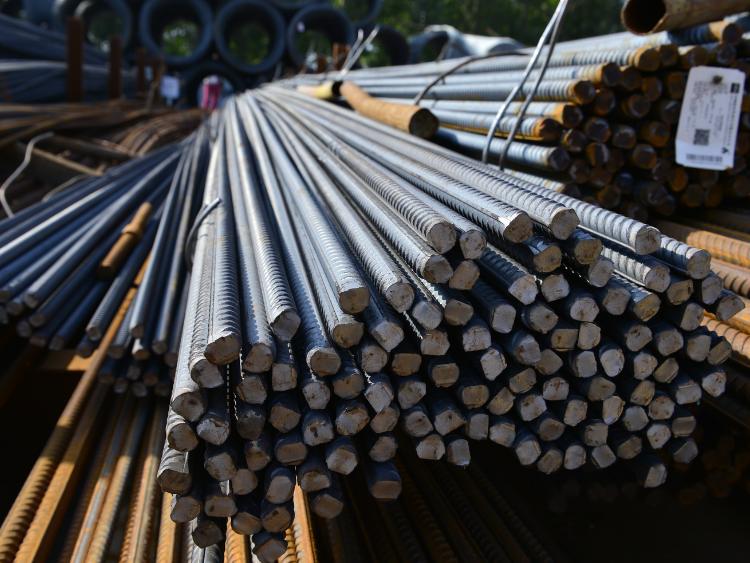
Polish rebar prices rise amid higher scrap and energy costs
Prices in Poland for domestic steel reinforcing bar (rebar) increased in the week to Friday January 16 amid higher production costs linked to increases in scrap and energy costs, sources told Fastmarkets.
Fastmarkets’ weekly price assessment for steel reinforcing bar (rebar), domestic, cpt Poland was 2,480-2,550 zloty ($682-702) per tonne on Friday, up from 2,400-2,450 zloty per tonne in the previous week.
The assessment matches some estimates of workable levels heard within the range of 2,480-2,550 zloty per tonne CPT, with the upper end of the range supported by a deal reported at 2,540-2,550 zloty per tonne CPT.
Sources said some producers have attempted to increase offers or indicated that higher offers are being pursued, but no price level for those offers was reported during the assessment period.
“There are rumors that prices might increase, but right now it is not clear what will happen,” a distributor source said. “Steel mills have to decide prices based on increases in scrap and energy costs,” the source added.
But the source said producers will have to see whether buyers will accept any price increase.
Meanwhile, a trader source said market mood remains calm with “no big demand” because low temperatures during the winter months affect market activity.
Prices remained flat for drawing-quality wire rod, with no new trading activity reported during the week.
Fastmarkets’ weekly price assessment for steel wire rod (drawing quality), domestic, delivered Poland was 2,600-2,650 zloty per tonne on Friday, unchanged week on week.