


EU steel demand boost legislation pushed back again to February
The European Union has postponed its Accelerator Act until the end of February, a spokesperson of the cabinet of the European Commissioner for Prosperity and Industrial Strategy Stéphane Séjourné told Platts, part of S&P Global Energy on Jan. 26.
This is the second delay for a key legislation designed to boost demand for EU-made low-carbon steel and other industrial products.
“It has been postponed in order to maintain this to a very high level of ambition, as the deal is discussed today, and we believe that ambition should prevail over haste,” the spokesperson said.
The legislation was originally scheduled for publication by the end of December 2025, then pushed to the end of January before the latest delay to February. The Accelerator Act represents a critical piece of EU industrial policy aimed at boosting competitiveness, decarbonization and demand for European-made products.
Steel implications
For the steel sector, the legislation could prove pivotal as European steelmakers invest heavily in cleaner production technologies to manufacture low-carbon emissions steel. The act is expected to include public procurement requirements that would mandate a significant percentage of low-carbon steel made in Europe for infrastructure projects, rail networks, renewable energy installations and public buildings.
These sectors represent enormous steel demand, and preferential treatment for EU-produced low-carbon steel could provide crucial market support as the industry transitions to cleaner production methods.
The European steel industry faces mounting pressure from global overcapacity and geopolitical tensions that are reshaping supply chains.
Séjourné has also proposed another important measure for the steel industry — the new imports measures designed to replace the current safeguard that is due to expire at the end of June. The new measures must still be discussed by the plenary, as the committee already discussed it, the spokesperson said.
At the end of December 2025, the Council maintained the core protective elements of the Commission’s proposal, notably the substantial reduction in import quotas (limiting tariff-free import volumes to 18.3 million mt/year, a reduction of 47% compared to 2024 steel quotas) and the doubling of the out-of-quota duty to 50% compared to 25% under the current steel safeguard. At the same time, it incorporates several amendments to increase flexibility, legal clarity and consideration for the economic interests of downstream users.
Platts, part of S&P Global Energy, assessed Northwest European hot-rolled coil carbon-accounted at Eur705/mt ex-works Ruhr Jan. 23, up Eur5/mt day over day.
On Jan. 23, Platts assessed domestic HRC in Northern Europe at Eur635/mt ex-works Ruhr, and imported HRC in Northern Europe at Eur505/mt CIF Antwerp, unchanged day over day.


EU Parliament Trade Committee supports major cut in steel import quotas
On Tuesday, the International Trade Committee adopted a series of measures to counteract the negative impact of global overproduction on the EU steel market.
By 36 votes in favour and 2 against, with 5 abstentions, MEPs on the International Trade Committee have adopted their position on the proposed regulation to counteract the negative trade-related effects of the global steel production surplus on the Union market. The global steel safeguards in place since 2018 under the World Trade Organisation (WTO) will expire on 30 June 2026.
The approved text envisages lower import quotas, limiting tariff-free import volumes to 18.3 million tonnes a year – a reduction of 47% compared with 2024 steel quotas. It would also apply a 50% customs duty to imports above the quota and to steel goods not covered by the quota.
The draft regulation seeks to strengthen the traceability of imported steel products by clarifying the evidence to be provided by importers on the origin of their steel.
Members reiterated the need for the new regulation to comply with WTO rules and asked the Commission to monitor the impact of the regulation and assess the possibility to amend the products covered by the rules.
Finally, the draft legislation would ban all steel imports from Russia and Belarus, adding steel to the list of goods for which there are already restrictions on imports from the two countries.
After the vote, rapporteur Karin Karlsbro (Renew, SE), said: ” Steel production is a strategic priority for Europe. In times of geopolitical uncertainty, the strength of our steel industry is central to Europe’s resilience. Today, we have said yes to continued tariff-free trade with Ukraine and no to Russian steel imports into the EU. This is a clear demonstration of European resolve.”
The International Trade Committee also approved the decision to start negotiations with the Council, with the aim of reaching a deal on the final form of the bill in the Spring.
Source: europarl.europa.eu
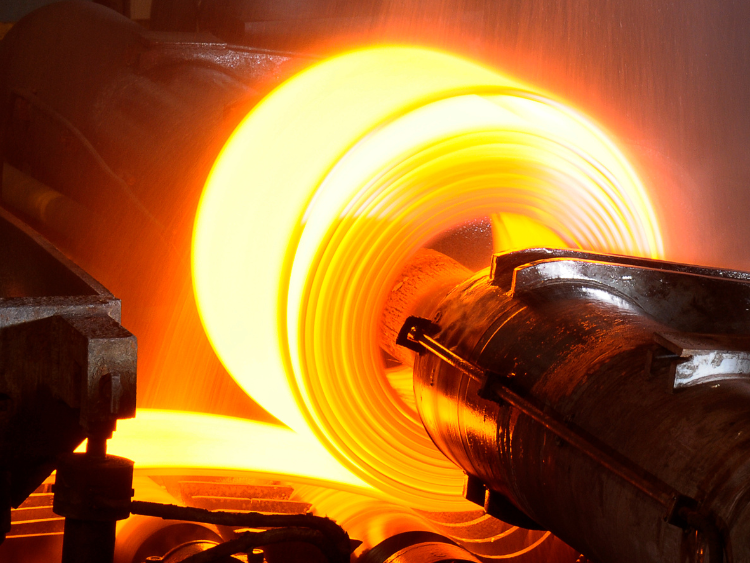
European steel HRC prices firm; CBAM adds ‘gambling’ element to imports
In Northern Europe, major integrated mills followed market leader ArcelorMittal and also announced higher offer prices for April-delivery coil.
Notably, in Germany offers were reported at €670-675 ($799-805) per tonne for April delivery, while a supplier in the Benelux area was hoping to get around €675-680 per tonne ex-works.
ArcelorMittal kept its offers at €700 per tonne delivered (€685-690 per tonne ex-works) for April volumes.
Major suppliers in the region were practically sold-out for March deliveries already, market sources said.
New offers have not yet been achieved in any deals, with buyers’ estimates of achievable prices at €640-660 per tonne ex-works.
“There is no major restocking yet, but mills are well booked and are absolutely in no rush,” a buyer in Germany said. “Buyers, however, will not have many options to choose from – importing is a total disaster because of CBAM.”
As a result, Fastmarkets’ daily steel hot-rolled coil index, domestic, exw Northern Europe, was €649.50 per tonne on January 27, up by €3.25 per tonne from €646.25 per tonne on January 26.
The index was up by €8.75 per tonne week on week and by €22.00 per tonne month on month.
The corresponding daily steel hot-rolled coil index, domestic, exw Italy, was calculated at €637.96 per tonne on Tuesday, increasing only by €0.46 per tonne from €637.50 per tonne a day earlier.
The index was up by €6.29 per tonne week on week and by €14.84 per tonne month on month.
Italian producers were still able to offer March-delivery coil, according to several market sources.
Target offers were heard at €670-680 per tonne delivered (€655-665 per tonne ex-works).
Buyers estimated achievable prices at €630-640 per tonne ex-works, in line with the most recent transactions.
“Italian suppliers moved to increase offers on [January 23], following ArcelorMittal’s example, but these new prices have not yet been accepted by buyers,” a trade source in Italy said.
Industry sources agreed that the implementation of CBAM and its effects on new imports remained the major driver behind recent price increases in the European market.
“CBAM has turned the import business area into a casino – we are gambling with prices, we have no idea what the final costs of the imported coil will be in the end,” a second buyer in Italy said.
“Risks of new imports are unprecedented. We buy imported coil today, not knowing the exact price when it arrives in Europe,” a third buyer said.
Market sources reported offers from Turkey at €520-530 per tonne CFR including anti-dumping duty, and at €540 per tonne from Algeria and Saudi Arabia.
On a DDP basis, with CBAM costs partially accounted for, Turkish HRC was on offer to Italy around €630-640 per tonne, market sources said.
From Asia, HRC offers were reported at €610-620 per tonne DDP, but trade sources were cautious about CBAM costs in this case.
“Asian suppliers have high default values and long lead times. It’s a risky booking because CBAM costs eventually might exceed those [quoted] in the initial agreement,” another buyer said.
Another trade source said that there were some HRC offers from Asian mills available at prices “below €600 per tonne DDP,” but this was not confirmed by the market at the time of publication.
