GravitHy, Marcegaglia to cooperate on green steel
French greenfield low-carbon hot-briquetted iron (HBI) producer GravitHy, Italian flat steel and tube producer Marcegaglia and low carbon fuel company Elyse Energy have signed a memorandum of understanding (MoU) to develop complementary industrial projects in Fos-sur-Mer, France, GravitHy said in a statement on 4 February.
The agreement formalizes the shared commitment to explore and develop industrial collaborations within the Fos-sur-Mer port and industrial zone, creating a major European industrial green steel hub in the area.
The cooperation includes shared logistics, including railway infrastructure; and carbon capture and consecutive utilization of CO2 emitted by Marcegaglia for Elyse Energy’s fuel production. The companies will also collaborate on water and energy solutions, and creation of common energy storage solutions.
GravitHy is developing a low carbon HBI production plant with a capacity of 2 mt/y, which will be in operation by 2030. The project will reduce emissions by around 90% compared with conventional blast furnace (BF)-based steelmaking.
Marcegaglia is in the process of modernizing the Fos-sur-Mer plant which it acquired in 2024. After the upgrade, which is scheduled for completion by 2028, the plant will produce green steel using electric-arc furnace (EAF) technology. Capacity of the mill will be 2.1 mt/y of both carbon and stainless steel hot-rolled coil, which will be shipped for further processing to Marcegaglia’s plant in Ravenna, Italy.
In 2025, Marcegaglia signed an agreement with equipment supplier Danieli to supply the Fos-sur-Mer plant. Prior to its acquisition of the Fos-sur-Mer mill, Marcegaglia had no carbon steelmaking capacities and relied on imported slab for heavy plate rolling and on HRC purchases, mainly from outside the EU.
Elyse Energy, through its NeoCarb project, plans to start production of green chemicals, including methanol and electro-sustainable aviation fuel (e-SAF) from 2030, using captured CO2 as feedstock.

Liberty Galati to be auctioned in mid-March
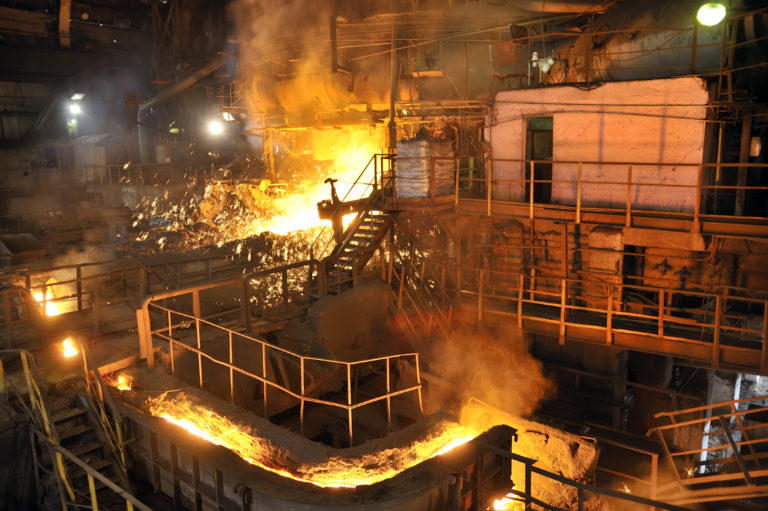
Romanian flat steel plant Liberty Galati will be put up for auction on 12 March following approval of its restructuring plan by the Galati Court, according to insolvency administrators Euro Insol and CITR.
The sale price will be EUR690 million, according to Romanian media reports.
A total of 13 potential investors have expressed interest in acquiring the plant. Market participants named the following as potential buyers:
- Ukraine’s Metinvest. The company previously had been considering acquisition of another Central European mill – Dunaferr as part of its expansion in the EU.
- Indian steelmaker JSW Steel
- Turkish flat steel service centre KMC Steel
- India’s Jindal Group. In September, the company submitted a non-binding offer for German Thyssenkrupp’s Steel Europe division
- Iraq’s Galiawa Group
- Romania’s UMB. The company recently acquired ArcelorMittal Hunedoara, a Romania-based long steel producer
- European distributor and trading company Steel Mont. It had already proposed a toll processing agreement and potential acquisition of Liberty Galati.
Romanian authorities decided in mid-September to establish an inter-ministerial committee to preserve state interests in the Liberty Galati steelworks and to prevent bankruptcy.
Liberty Galati has remained idled since a failed restart attempt in June last year. The steelworks’ capacity is 3 mt/y.
Flacks Group mulls British Steel acquisition
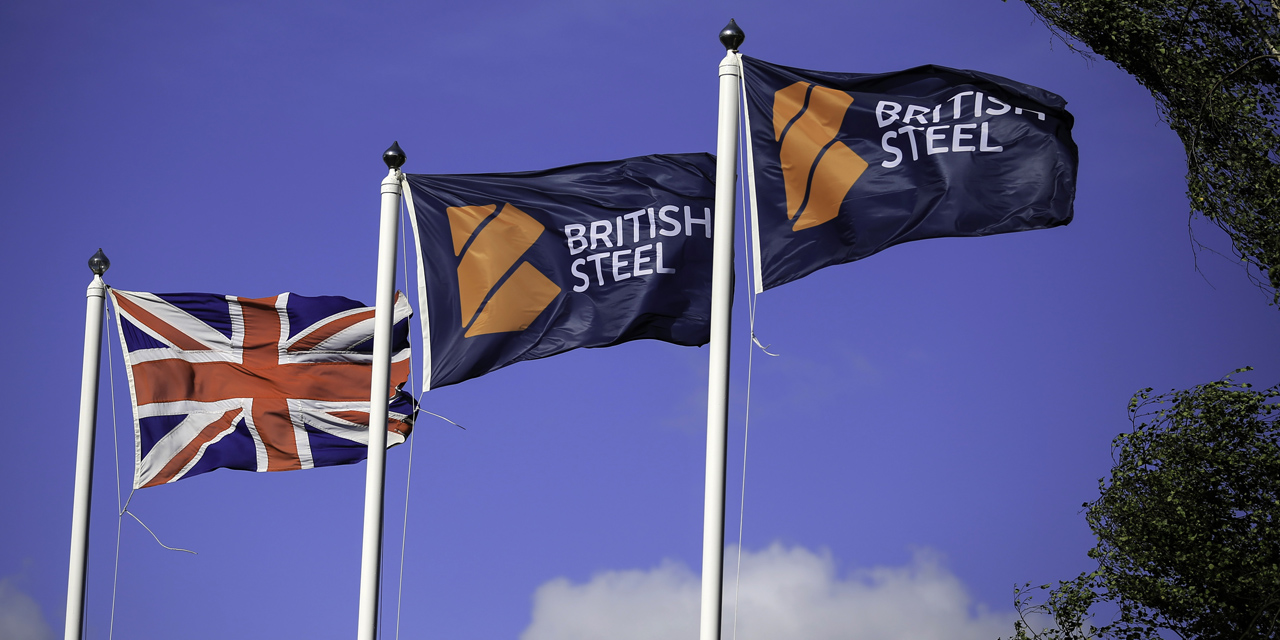
The Flacks Group, a United States-based investment firm focused on the turnaround of distressed businesses, is considering the acquisition of troubled UK steelmaker British Steel, CEO Michael Flacks told McCloskey on 3 February.
Flacks Group is in the early stages of the potential purchase with no agreement achieved with the UK authorities yet.
In April 2025, when British Steel faced the possibility of complete closure, the UK government intervened, taking direct control of its operations. The UK government is now focused on keeping the Scunthorpe and Teesside sites operating, securing raw material supplies, and reviewing previously proposed decarbonisation plans.
Flacks Group plans to replace the existing blast furnaces (BFs) and basic oxygen furnaces (BOFs) at British Steel with electric-arc furnaces, achieving a significant reduction in CO2 emissions.
The plans are in line with the project initially proposed by China’s Jingye Group, the company in control of British Steel before the state intervention. It had planned to install one EAF at the Scunthorpe site, closing its BF/BOF operations, and another EAF at the Teesside rolling mill.
The Scunthorpe site operates two BFs with a combined installed capacity of approximately 3 mt/y. The other two remain inactive.
Late last year Flacks Group emerged as the preferred bidder for Italian steelmaker Acciaierie d’Italia (ADI). The company plans to double steel output at ADI to 4 mt within one year. As part of the decarbonisation initiative Flacks Group plans to replace existing BFs with two EAFs and keep only one BF running.
Michael Flacks said he expects the ADI deal will be approved by the end of April this year.

ArcelorMittal expects tariffs, CBAM to restore production levels and profit in 2026
ArcelorMittal expects world ex-China apparent steel demand to grow 2% in 2026, with production and shipments rising across all regions versus 2025, supported by operational improvements and trade protections, it said Feb. 5.
In Europe, the company forecasts that the combined effect of the Carbon Border Adjustment Mechanism and new tariff rate quota measures will reset capacity utilization to higher levels, helping it to regain market share and restore profitability, the largest European steel producer said in its full-year 2025 and fourth-quarter 2025 earnings report.
“2025 was a pivotal year for the global steel industry and ArcelorMittal,” Aditya Mittal, Arcelor Mittal’s chief executive officer, said, adding, “While ongoing geopolitical volatility brought significant challenges, important foundations were also laid for a more supportive operating environment moving forward.”
“The global economy has shifted toward greater domestic supply resilience, including widespread tariffs, leading more countries to address manufacturing competitiveness. “Nowhere was this more necessary than in Europe, where ArcelorMittal has significant, high-quality operations,” Mittal said.
Trade impact
“One of the most important developments was the proposal for new trade measures in Europe and enhancements to CBAM, to level the playing field on carbon costs,” Mittal said, adding, “Combined, this will enable European producers to recover to sustainable utilization levels and generate healthy returns on capital.”
The new TRQ trade measures are estimated to reduce EU flat and long product imports by 10 million metric tons compared with 2024 levels, supporting the domestic market. ArcelorMittal said it has the capacity to fully meet demand, with existing furnaces able to run at higher utilization rates while idled units can restart as demand recovers.
New capacity is expected to be commissioned in 2026, including the Gijon electric arc furnace for long products and the expansion of the Sestao EAF to increase flat steel output.
ArcelorMittal’s European crude steel production totaled 29.17 million mt in 2025, down from 31.21 million mt in 2024. Q4 2025 European output was at 6.4 million mt, down 11.8% quarter over quarter and 16.9% year over year, primarily due to maintenance and the sale of its Bosnian operations.
Platts, part of S&P Global Energy, assessed domestic HRC in Northern Europe at Eur650/mt ex-works Ruhr Feb. 4, and in Southern Europe at Eur650/mt ex-works Italy, both up Eur5/mt day over day. The Northern European price was at its highest level assessed since May 2025, and the Southern European price was at its highest level since March 2024. Platts assessed imported material in Northern Europe at Eur505/mt CIF Antwerp, and in Southern Europe at Eur495/mt CIF Southern Europe, both unchanged day over day.
Groupwide, ArcelorMittal produced 55.6 million mt of crude steel in 2025, down from 57.9 million mt in 2024. Q4 2025 output was at 12.8 million mt, down 5.9 % quarter over quarter down by 8.6% year over year.
Mining sector
In 2025, the company produced 35.3 million mt of iron ore, up from 27.9 million mt in 2024. Q4 2025 iron ore production rose to 10.1 million mt from 8 million mt in Q3. Liberia achieved record iron ore production and shipments in 2025, supported by operational improvements and the ongoing ramp-up of Phase 2 capacity expansion. Liberia alone delivered 10 million mt of iron ore shipments in 2025, with the operation progressing toward 20 million mt annual capacity. Shipments are expected to exceed 18 million mt by end-2026 as sinter-feed output rises and the concentrator ramps up.
Platts assessed the 65% Fe North China Index at $116.55/dry mt CFR North China Feb. 5, down $1.95/dmt day over day, in line with tradable values, maintaining the spread between the 65% and 61% Fe iron ore indexes at $16.25/dmt.
European HRC prices flattened by offers outpacing market reality
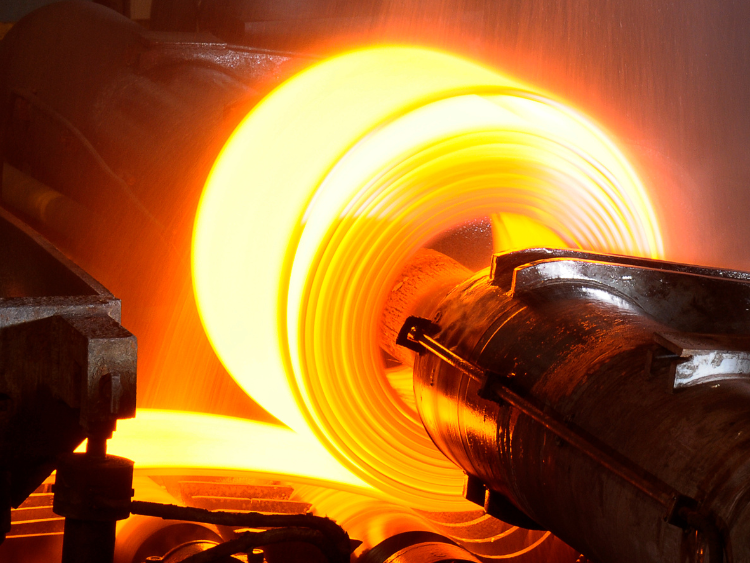
European prices for hot-rolled coil stabilized in the week to Thursday February 5, lagging higher offers from key suppliers, while sentiment remained cautiously positive, sources said, although this was more to do with the regulations curbing imports than a recovery in demand.
European integrated flat steel producers were looking to achieve higher offers for April delivery coil, with March said to be practically sold out at most sellers.
New offers were ranging between €670 ($792) per tonne and €685 per tonne ex-works in German and Benelux area.
One German supplier aggressively selling March-delivery HRC at around €620 per tonne CPT (€605-610 per tonne ex-works) for big tonnages in late January, stopped accepting lower bids about two weeks ago and has now aligned its offers with other suppliers in the region, sources told Fastmarkets.
But some sources said the supplier’s trading arm could still sell HRC quite aggressively outside Germany – for instance, Italy, Poland and elsewhere.
Italian HRC, meanwhile, was on offer to Germany at a base price of €700 per tonne delivered, Fastmarkets understands, although transactions were heard no higher than €670-680 per tonne, according to sources.
Overall, buyers’ estimations of tradeable values for HRC in Northern Europe were hovering at around €650 per tonne ex-works, with suppliers providing higher estimations of around €660 per tonne ex-works.
“The uptrend we’ve been observing since early January has stalled for now – new offers are way above realistic market levels. But considering situation with imports – we will likely see more acceptance of higher prices in a few weeks,” a producer in the region said.
“Demand is not completely dead – we are having inquiries quite regularly, and [HRC] stocks built ahead of CBAM [Carbon Border Adjustment Mechanism] implementation will run out shortly,” a second supplier said.
As a result, Fastmarkets’ daily steel hot-rolled coil index domestic, exw Northern Europe was €651.25 per tonne on Thursday, up by €0.25 per tonne from €651.00 per tonne on Wednesday February 4.
The index was down by €4.58 per tonne week on week but up by €21.25 per tonne month on month.
Fastmarkets’ corresponding daily steel hot-rolled coil index domestic, exw Italy was calculated at €647.50 per tonne on Thursday, stable day-on-day.
The index was up by €4.17 per tonne week on week and by €24.38 per tonne month on month.
In Italy, March delivery HRC was practically sold out at local suppliers, with offers for April delivery coil standing at €660-685 per tonne ex-works, while buyer estimates of achievable prices came in at €640-650 per tonne ex-works for April delivery tonnages.
A producer source reported transactions for small tonnages (below 1,000 tonnes) at €640-650 per tonne ex-works, while bids for larger volumes were reported at €635-640 per tonne ex-works.
In the secondary market, meanwhile, trading was also slow, with 4 mm HR sheet on offer at around €750 per tonne delivered – although some steel service centers were still able to sell at €720-730 per tonne CPT using old HRC feedstock, sources said.
They also pointed out that interest in new import orders remained muted, largely due to the continued lack of clarity regarding CBAM costs for new imports, with default emissions values quite punitive for many regular suppliers – including India and Indonesia – while final emissions verification is not expected to be done until early 2027, following the submission of 2026 data.
In terms of offers, Indian-origin HRC was on offer to Italy at around €600 per tonne DDP, inclusive of CBAM-related costs; Turkish HRC was on offer to Italy at €630–640 per tonne DDP, also including CBAM costs, sources said.
And one source reported an offer for Indonesian HRC at €480 per tonne CFR to Italy, but exclusive of CBAM costs.


Growing costs push European domestic rebar prices higher
European domestic rebar prices continued climbing in the week to Wednesday, February 4, supported by growing production costs, particularly for scrap and energy, market participants told Fastmarkets.
Sources said there was a growing need for steel scrap in the EU due to a slowdown of steel imports following the implementation of the Carbon Border Adjustment Mechanism (CBAM) at the start of the year.
The reduction in steel billet and long steel import volumes has resulted in a higher reliance on domestic supplies, the sources said, which increased the demand for scrap to feed Europe’s electric-arc furnace based long steel industry.
Scrap collections in Europe have fallen recently, however, due to seasonal factors and more severe weather in some regions.
“An acute scrap shortage is emerging in Europe,” a local long steel producer told Fastmarkets.
And a producer from Northern Europe reported a February price increase of €20 per tonne for old scrap and €15 per tonne for new scrap compared with January.
A source from Italy, meanwhile, said that scrap prices there had increased by more than €20 per tonne over the past two months, while energy costs were about 15% higher than mill forecasts for January.
Because of these conditions, mills across Europe have attempted price rises, which are gradually being accepted by customers.
In Italy fresh offers of 8-40 mm rebar were heard in a wide range at €595-640 per tonne ex-works, depending on the mill and the region, sources said, with the lower-end prices traditionally said to be representative of northern Italy, while the upper end represented the situation in southern parts of the country.
Sales prices were also said to be within rather wide range, depending on the mill, the region and the size of cargo.
In the northern Italy, sales were said to have been done mostly around €580-610 per tonne ex-works, sources said.
In southern Italy, deals were heard at up to €640 per tonne ex-works, sources said, adding that this level had not been widely accepted – resulting in a situation that a local trading source described at “a big chaos”.
Fastmarkets’ weekly price assessment for steel reinforcing bar (rebar) domestic, exw Italy was €580-630 per tonne ex-works on Wednesday, narrowing from €560-590 per tonne on January 28. The average was €605 per tonne.
Concerns were growing among market participants that market leader Pittini’s 400,000 tonnes per year rebar mill at its Verona site, would affect prices in the near term.
Spanish mills followed similar trend to those in Italy and increased their effective rebar offers to around €680 per tonne delivered, with some smaller deals reportedly taking place at this level, while that level was said to be unworkable for bigger tonnages.
Fastmarkets’ weekly price assessment for steel reinforcing bar (rebar) domestic, delivered Spain spread to €665-680 per tonne on February 4, from €665 per tonne delivered on January 28.
“The Spanish are less active in France, we have noticed, and also the economic indicators there are better,” a supplier from Northern Europe said,discussin gthe reasons for the comparatively high price levels in Spain.
In Northern Europe, meanwhile, and in Germany and the Benelux areas in particular, rebar offers varied in the range of €630-640 per tonne delivered.
Workable prices were estimated at €610-640 per tonne delivered.
Fastmarkets’ weekly price assessment for steel reinforcing bar (rebar) domestic, delivered Northern Europe widened up to €610-640 per tonne on Wednesday, compared with €610-620 per tonne on January 28.

European steel heavy plate prices flat amid fresh Italian bookings, muted northern Europe market
European steel heavy plate prices were stable in the week to Thursday February 5, with fresh transactions in the Italian market amid healthy demand and bullish sentiment.
Italy
Fresh bookings for Italian heavy plate in the domestic market were reported at €700-720 ($827-851) per tonne exw but offers remained higher at €720-750 per tonne exw levels.
Fastmarkets’ weekly price assessment for steel domestic plate, 8-40mm, exw Southern Europe was €700-720 per tonne on Thursday, unchanged week on week.
And, with healthy demand, producers have started shifting focus to second-quarter delivery, sources said.
Fastmarkers heard the specialized plate for projects for the second and third quarters of the year was assessed at €730-750 per tonne exw.
Northern Europe
Heavy plate prices were also flat during the pricing period, with muted trade in the domestic market, market sources told Fastmarkets.
Fastmarkets’ weekly price assessment for steel domestic plate, 8-40mm, exw Northern Europe was €750-780 per tonne on Thursday, unchanged week on week.
However, some smaller intra-regional deals from Italy to Germany were reported, with offers made at €770-780 per tonne exw.
“The CBAM effect is strongly supportive,” said one producer source said.
Imports
Import offers were also reported during the week, but they were excluded from Fastmarkets’ assessed plate import prices for southern and northern Europe because the offers were DDP and therefore outside the specification.
Indonesian import offers were made to Southern Europe at €690-700 per tonne ddp, while offers for Indian material were reported in Germany at around €730-740 per tonne ddp.
ArcelorMittal pins 2026 upturn on EU import curbs; North America to ship more at higher prices in Q1
ArcelorMittal said the European Union’s new import regime and carbon border levy should lift domestic utilization and margins this year, while North American shipments and realized prices are set to rise in the first quarter after Mexico-related disruptions were resolved, the company said during a fourth-quarter earnings call on Thursday February 5.
“We have idle capacity in Europe that can be brought online quite quickly. The signpost is very clear: customer demand. We don’t want to bring in capacity just for the sake of it, earning a healthy and sustainable return on capital employed is key,” Aditya Mittal, chief executive officer at ArcelorMittal, said during the call.
ArcelorMittal estimated that the EU’s tariff‑rate‑quota tool (TRQ), together with the Carbon Border Adjustment Mechanism (CBAM), will cut steel imports by around 10 million tonnes versus 2024.
“About 8 million of [the 10-million-tonne reduction in imports to Europe] is flat products. We are already working on tools and bonuses in Poland and elsewhere, and we are in a good position to meet demand without significant additional [capital expenditure],” chief financial officer Genuino Christino said during the earnings call.
CBAM is the EU’s instrument to curb carbon leakage by placing a carbon cost on imported steel; from January 1, 2026, importers must surrender CBAM certificates for embedded emissions, priced in line with the EU Emissions Trading System (ETS) and adjusted to benchmark levels.
“In Europe, we will of course also see higher shipments, which are to some extent seasonal. We will also see prices improving to some extent, but I would say that this is really more a second order phenomenon for us,” Christino said, adding that the company’s raw materials and carbon emissions costs will rise under CBAM.
In North America, Christino said operational issues in Mexico had been largely resolved and flagged a better near‑term run‑rate. “We will see a recovery in volumes in North America in Q1. As we know, prices have been moved up. So we will be shipping more at higher prices.”
ArcelorMittal reactivated the blast furnace at its Lázaro Cárdenas steel plant in Michoacán, Mexico, in late January after a prolonged outage and maintenance cycle.
Elsewhere, Christino described Brazil as “relatively stable.” Shipments there increased on higher slab exports, offset by a weaker mix, while the company pointed to steady conditions in its mining division.
In Liberia, ArcelorMittal reported record annual iron ore shipments in 2025 and said the amended Mineral Development Agreement extends to 2050, reserving rail capacity up to 30 million tonnes per year.
European green steel sellers struggle to close deals at current premiums
Green steel markets across Europe were at complete standstill for both flats and longs over the past week; spot activity was close to nothing, with buyers reluctant to pay high premiums for decarbonized steel, Fastmarkets heard on Thursday February 5.
Buyers across Europe continued to show limited willingness to pay premiums for steel produced with reduced carbon emission content, citing unfavorable market fundamentals and broader challenges that European steel was faced with.
Fastmarkets’ methodology defines European green steel as “steel produced with Scope 1, 2 & 3 emissions at a maximum of 0.8 tonnes of CO2 (tCO2e) per tonne of steel.”
Scope 1 refers to direct emissions, while Scope 2 and 3 are indirect emissions.
Premiums from European steelmakers able to produce steel with such emissions thresholds continued to be reported at €200-300 ($236-354) per tonne — relatively stable over the past several months.
During the assessment week, a supplier source confirmed an offer for green premiums at €200 per tonne with room for discounts for larger tonnages, but reported no deals in the past several weeks.
“We have a few inquiries, but when it comes to the prices, buyers show great resistance to pay three-digit premiums,” the supplier source said.
Buyers’ estimates of the tradable value for green steel premiums were heard no higher than €100-150 per tonne in the week to Thursday. Some sources suggested even lower premiums were possible in spot trades — below €100 per tonne — claiming that higher premiums could be mainly sealed in offtake agreements.
Seller sources estimated the achievable premiums for green flat steel at €150-180 per tonne.
As a result, Fastmarkets’ weekly assessment of the green steel domestic, flat-rolled, differential to HRC index, exw Northern Europe was flat at €100-150 per tonne on February 5, unchanged since January 22.
Meanwhile, in the long steel sector, demand for green products has been almost non-existent lately.
“Unfortunately, there is zero willingness to pay premiums for green longs. Our regular longs are already considered green [because they are produced via electric-arc furnace (EAF) using a favorable energy mix in the countries where assets are located],” a supplier source said.
Project businesses were inquiring for green long steel products produced with a CO2 emissions threshold around 450-500 kg per tonne of steel, sources said, but such demand was limited.
Fastmarkets’ methodology defines European green long steel as steel produced with Scope 1, 2 or 3 emissions at a maximum of 0.5 tCO2e per tonne of steel.
Premiums for steel with such specs were offered by several suppliers around €20 per tonne during the assessment week. But even such a relatively low premium was rarely sealed in deals, sources said.
Estimations of achievable premiums were heard at €0-20 per tonne during the assessment week.
As a result, Fastmarkets’ green steel, differential to steel reinforcing bar (rebar) domestic, delivered Northern Europe was €0-20 per tonne on Wednesday February 4, down from €20-30 per tonne seven days prior.
Vlada Novokreshchenova in Dnipro contributed to this report

NW European sections prices gaining gently
Northwestern European sections mills are attempting to exert price increases for the beginning of the year, although observers do not see the rise substantiated by sufficient market demand.
At the end of December, prices for category 1 sections from domestic mills appeared to reach €730/tonne ($860/t) delivered, with transactions rarely going higher, more often lower. January’s price move is in line with announcements heard earlier from ArcelorMittal that it aims to bring up prices for long products by €20-30/t.
According to a manager at a central German distributor, mills announced €20/t hikes and could successfully implement them.
“We had to replenish our stocks from the seasonal depletion at year-end, to be able to serve incoming orders,” that distribution source tells Kallanish, giving €750/t as the current price mark he accepts.
The distributor adds that mills are relatively well utilised for February, and that quick orders cannot be served in a matter of days, as is traditionally sometimes the case. He heard that one Luxembourg mill, after maintenance/repair measures, does not quite work to the desired capacity yet, to the benefit of other sections mills.
One northern German manager says there are still volumes left at December’s prices, but in this case he talks about an earlier level of €750/t, possibly caused by higher transport costs. The level now he sees at €770/t.
Elsewhere in Germany that next stop is anticipated, too, as mills are ambitious to boost prices further, but against and in spite of low market demand. Mill sources state that €770/t should be the price level to cope with the current cost structure (see separate article).