


Production costs become untenable for EU longs mills
European long steel prices are increasing, although by less than producers anticipated in January. Several mills tell Kallanish that they expect values to continue rising gradually, and they will try to adopt a rigid stance, as increasing production costs are forcing them to push for further price increases this month.
Some producers in northern Europe confirm they have temporarily halted sales in order to assess the impact of recent rises in energy and raw material costs before issuing new price lists. In several countries, production cuts remain in place to balance supply with demand, as consumption continues to be subdued. One source notes that electricity and gas prices across Europe have risen further in recent weeks, impacting heavily European EAF producers. Another adds that scrap prices have been increasing steadily over the past months, with February bringing additional, and in some cases unexpected, hikes across Europe.
One producer says it has managed to increase its long prices by about €35/tonne ($41.46/t), depending on product, compared with November and early-December levels. However, the steelmaker adds that prices are unsustainable and no longer cover current production costs. Based on today’s cost structure, the producer estimates that the first gategory of sections should be priced at around €770/t delivered, compared with current levels that are €30-40/t lower depending on country. Similarly, mesh-quality wire rod should be priced at least at €650/t, while drawing-quality material should be some €15/t more expensive, for producers to achieve positive margins.
Several buyers argue that passing on price increases downstream remains difficult in this market, particularly for products such as rebar. Rebar consumption remains subdued across Europe, with prices only edging up in January or remaining flat in some markets. However, sources expect demand to improve “after a harsh winter” as the peak construction season approaches.
Some steelmakers in both northern and southern Europe confirm they are reducing output, while others say they are choosing to maintain high production levels in order to avoid higher fixed costs.
Author: Natalia Capra France

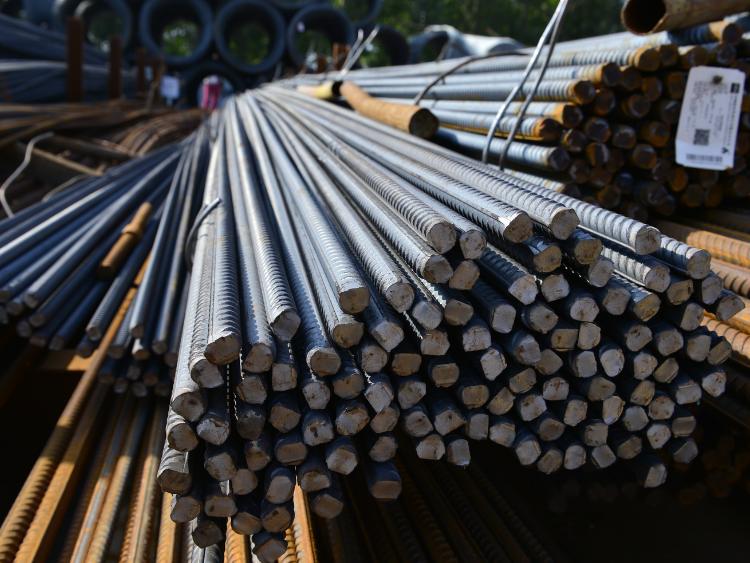
Italian rebar prices rise as mills seek increases
Italian rebar prices are ticking up by around €10/tonne ($11.84/t) compared with January, following recent increases announced by producers, who are targeting €320/t base ex-works, Kallanish notes.
Several buyers, however, say market activity has yet to fully recover after the Christmas holidays. Demand in January and February remains subdued, with heavy rainfall in central Italy delaying construction activity, agents and buyers confirm.
One large European producer adds that the rebar market across Europe is generally weak, with only limited exceptions. Producers are under pressure to push price increases as costs, particularly energy, continue to rise.
Scrap prices are also moving higher across Europe, while in Italy they are increasing more sharply due to tight availability.
Despite producers’ firm attitudes, price increases have so far been implemented only moderately. Average contract prices are currently around €300/t base ex-works. Volumes concluded above this level are for small tonnages.
Mesh prices are also ticking up to €390-400/t base ex-works, plus approximately €300/t in extras. Including size extras of €260-270/t, effective rebar transaction prices are currently assessed at €560-580/t ex-works, sources suggest. One steelmaker is rumoured to have decreased extras only for some commodity grade mesh by €20/t to possibly stimulate demand.
Meanwhile, rebar producers active on the German market are continuing their attempts to increase prices, but buyers remain caution.
Currently base prices are at €350/t, translating to €615/t delivered, including €265/t for size extra. One international mill group was heard going for €20-30/t extra for its products. According to a central German manager, domestic mills confine themselves to €15-20/t for the moment, which is little above the increase of scrap prices in January (see Kallanish 5 February).

Commission acts against dumped imports of High-Pressure Seamless Steel Cylinders
The European Commission has imposed definitive anti-dumping duties on imports of high-pressure seamless steel cylinders originating from China.
The duties range from 57.7% to 90.3% and follow an investigation which concluded that Chinese imports were being dumped on the EU market, causing injury to EU producers. The investigation covered high-pressure seamless steel cylinders for compressed or liquefied gas, across all diameters and volume capacities.
According to the Commission, the measures are intended to restore fair competition between Chinese manufacturers and EU-based producers. The EU industry concerned is located in Austria, the Czech Republic, Finland, France, Germany and Italy.
During the investigation period, from 1 July 2023 to 30 June 2024, the EU market amounted to approximately 6.4 million units, of which 4.5 million units were imported from China.
This decision forms part of the EU’s broader trade defence efforts to address unfair trade practices and safeguard European industrial capacity.
Source: ec.europa.eu
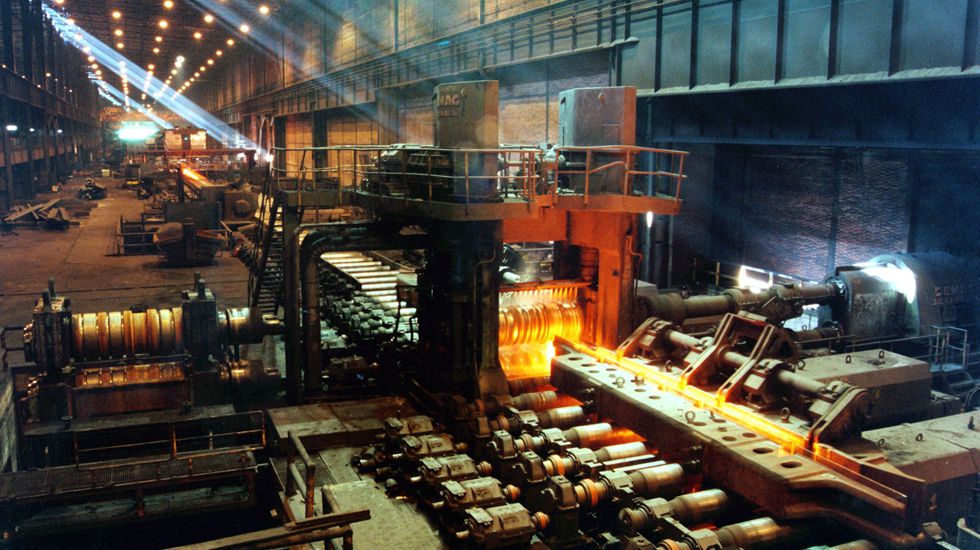
Sarralle commissions ArcelorMittal Belval upgrade
Spanish technology and engineering supplier Sarralle Group tells Kallanish it has completed the upgrade of ArcelorMittal’s Belval plant in Luxembourg. The facility has a capacity of 1.3 million tonnes/year of beam blanks and blooms.
The so-called Steel Up project enables ArcelorMittal to produce high-quality steel for the long products market, particularly for its Rodange rolling mills, independently. It will thereby reduce its dependence on semi-finished steel supplied by German blast furnace-based plants.
ArcelorMittal was said to be ready to hot commission the new electric arc furnace at Belval in December, with ramp-up scheduled for January.
The investment included the engineering and supply of a new 155-tonne Direct Current electric arc furnace and 145t vacuum degasser. Sarralle also upgraded the six-strand continuous casting machine, fumes exhaust and material handling systems, as well as the water treatment plant.
“The project aims to reinforce the long-term competitiveness of the Belval plant’s sustainable production, supporting ArcelorMittal’s strategy to modernise and prepare its European operations for the future,” Sarralle explains. The equipment is set to improve operational efficiency, reduce energy consumption and CO2 emissions, while minimising maintenance requirements.

Thyssenkrupp signs several green electricity contracts
Thyssenkrupp Steel has finalised four contracts securing supply of around 230 GWh of green electricity, furthering progress towards the decarbonisation of its steel production.
The power purchase agreements (PPAs) with the suppliers Quadra Energy, Statkraft, Centrica Energy, and Sunnic Lighthouse encompass a portfolio of wind and photovoltaic (PV) installations distributed across Germany, Kallanish learns.
The PPAs will procure green electricity supply for the subsidiaries thyssenkrupp Rasselstein, thyssenkrupp Precision Steel, and thyssenkrupp Electrical Steel.
The contract volume of around 230 GWh equates to the typical electricity consumption of around 70,000 households. The green power supplies originate from newly commissioned solar photovoltaic installations and from onshore wind farms in Germany that are no longer state-subsidised, helping them to continue operating on an economically viable basis, tk Steel notes.
The purchase of green electricity avoids over 70,000 tonnes/year of CO2 emissions.
The medium-wide strip making unit in Hagen-Hohenlimburg has been sourcing green electricity from a neighbouring wind farm in since the summer of 2024. The group claims that this is the first project nationwide involving power supplied directly from a wind farm to a German industrial company.
Author: Christian Koehl Germany

German rebar mills seeking higher prices in February
Rebar makers active on the German market have repeated their attempts to increase prices, as expected, but buyers are still cautious as to whether these will bring the market forward.
So far, buyers would still see the former base price of €350/tonne ($413/t) as the current level, translating to €615/t delivered, including €265/t for size extras and expect only small increases on deals going forward.
One international mill group was heard going for €20-30/t extra for its products. According to a central German manager, domestic mills confine themselves to €15-20/t for the moment, which is little above the increase of scrap prices in January.
“Mills have come out of hibernation with offer prices of €360-365/t, but this is only the first call. We still need to get a feel for how the economy does and for construction to come back,” he tells Kallanish.
He and others do not see the activity that would give grounds for an elevated price level. According to another source, new offers for wire mesh are correspondingly at €460/t base. “I think it will be late February before a new price structure emerges,” he says.
So far, cold weather and snow still prevent construction activity in various regions from picking up. This is the case in the east, but also in parts of central to northern Germany, where snow is rare. In the west, however, temperatures have been much friendlier lately.
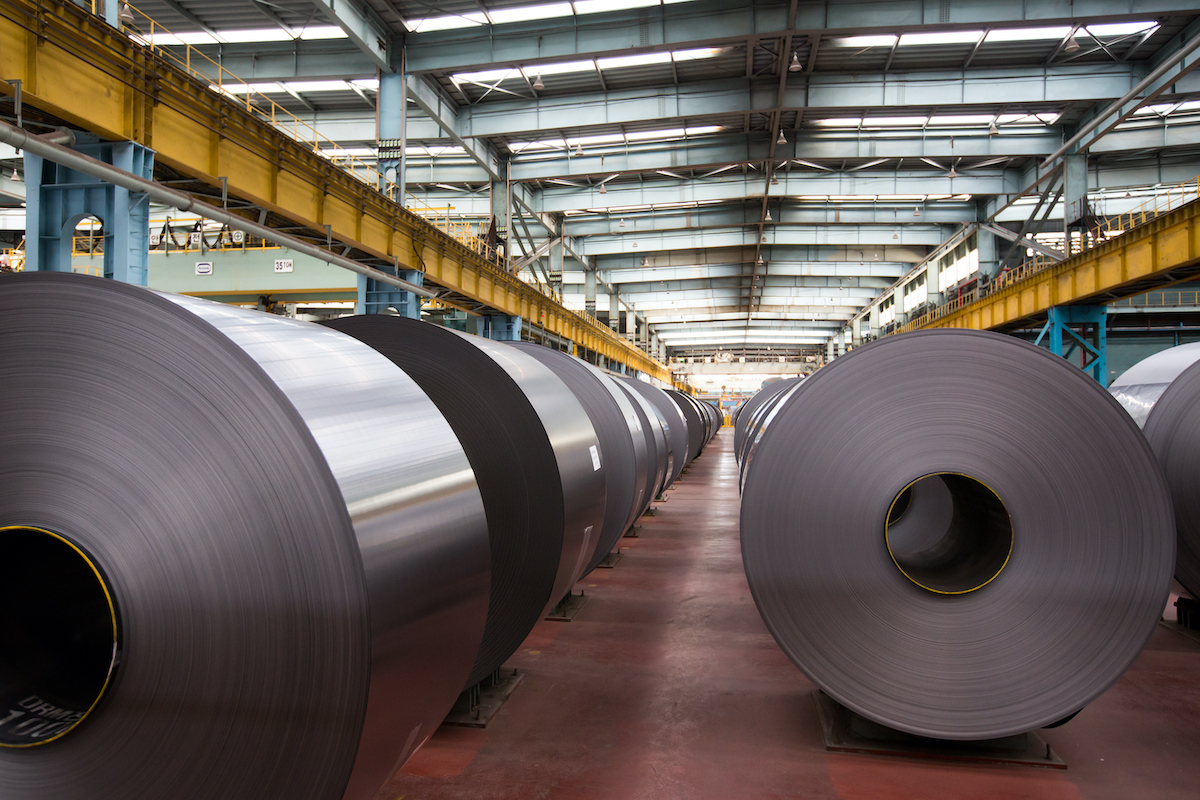
European HRC market firm; increase slows as buyers resist higher offers
European hot-rolled coil prices were broadly unchanged on Wednesday February 4, with buyers being resisting higher offers, which have been caused by the Carbon Border Adjustment Mechanism’s (CBAM) impact on imports rather than strong local demand, Fastmarkets heard.
In Northern Europe, HRC prices were holding firm, with no clear signs of a trend reversal. But new offers for April delivery met resistance, as buyers were reluctant to accept higher prices, leading to slower growth despite generally upbeat sentiment, driven by CBAM.
In Germany and the Benelux area, offers for second-quarter-delivery coil were reported at €670-675 ($792-798) per tonne from integrated mills.
Meanwhile, recent transactions were not exceeding €650 per tonne ex-works. Notably, a medium-sized deal was heard done in Germany at this level. A buyer, however, pointed out that it was done “for leftovers of March-delivery coil, while of April delivery the sellers were looking to achieve higher prices.”
Other stakeholders suggested that it might take suppliers “weeks, if not a month or two,” to seal higher offers in deals, mainly because of end-users’ resistance to accept increases.
“Real demand is not improving, and this is the main issue. The recent uptrend is artificially pushed by CBAM uncertainty and consequently limited imports,” a second buyer said.
A third buyer also agreed that the “price increase comes mainly from CBAM and the uncertainty related to it, which makes customers consider buying in the EU rather than going for imports.”
As a result, Fastmarkets’ daily steel hot-rolled coil index domestic, exw Northern Europe was €651 per tonne on Wednesday, down by €0.07 per tonne from €651.07 per tonne on Tuesday February 3.
The index was also down by €4 per tonne week on week but up by €23.50 per tonne month on month.
After the index was published, a source reported that one German mill had sold “leftover tonnages” of March-delivery coil at €620 per tonne ex-works. A fourth buyer source claimed that the transaction was done at €620 per tonne CPT (around €605-610 per tonne ex-works), but this was not widely confirmed by other sources.
The majority of sources that spoke to Fastmarkets on February 4 estimated achievable prices for HRC in the region at €650 per tonne ex-works.
Fastmarkets’ corresponding daily steel hot-rolled coil index domestic, exw Italy was calculated at €647.50 per tonne on Wednesday, up by €0.50 per tonne from €647 per tonne a day earlier.
But the index was up by €5 per tonne week on week and by €24.38 per tonne month on month.
Offers were heard at €650-660 per tonne EXW, with several sources saying that March delivery now “is almost gone,” with last batches of material being traded at €640 per tonne EXW.


CRC, HDG prices little changed in Northern Europe as buyers resist April offers; imports booked despite CBAM risks
Domestic prices for cold-rolled and hot-dip galvanized coil in Northern Europe were little changed in the week to Wednesday February 4; buyers were reluctant to accept new offers, with some opting for risky import bookings to diversify supply sources, Fastmrkets heard.
Domestic market
Integrated suppliers in Northern Europe were able to offer April delivery for both CRC and HDG, with first-quarter volumes said to be sold out.
Higher offer prices for CRC and HDG with April lead times, announced in late January by major suppliers across Europe, were not sealed in deals so far.
Notably, in Germany, Sweden and the Benelux area, offer prices for CRC varied in the range of €790-815 ($934-964) per tonne ex-works, depending on supplier.
For HDG, offers were slightly lower, at €790-805 per tonne ex-works.
While the price rise was still being absorbed by the market, buyer feedback across both Northern and Southern Europe continued to point to lower achievable transaction levels for cold-rolled and hot-dipped galvanized products.
Buyers in Germany, Sweden and the Benelux area estimated workable levels for CRC at no higher than €750-770 per tonne ex-works and for HDG at €760-770 per tonne ex-works — pretty much in line with the previous assessment period.
Suppliers agreed that it was hard to seal new offers in deals, with some mill`s indicating achievable levels for CRC around €770 per tonne ex-works and €770-780 per tonne ex-works for HDG.
Fastmarkets’ weekly price assessments for steel cold-rolled coil domestic, exw Northern Europe and for steel hot-dipped galvanized coil domestic, exw Northern Europe were €760-770 per tonne on Wednesday, both narrowing upward by €10 per tonne from €750-770 per tonne on January 28.
Imports
Sources in Germany reported transactions for overseas coil, despite ongoing uncertainty around Carbon Border Adjustment Mechanism (CBAM) costs for imports.
Europe’s cold-rolled coil market has historically relied heavily on imported material, particularly for standard commodity grades. But recent regulatory changes have significantly narrowed sourcing options. In particular, an ongoing anti-dumping probe covering CRC shipments from India, Japan, Taiwan, Turkey and Vietnam — which together account for roughly two-thirds of the EU’s total CRC import volume — has materially reduced the availability of foreign supply.
“We take the risk [of importing coil] to diversify supply sources. Plus, new safeguards will come into force in July — so it is best to import coil before that, because the new regime suggests a 50% imports cut,” a buyer in Germany said.
Last week the European Parliament voted in favor of a new trade regime for the steel sector, proposing lower import quotas and capping tariff-free steel imports at 18.3 million tonnes per year, down by 47% from 2024 quota levels. The new regime, still subject to European Council vote, is expected to come into effect as of July 1.
A transaction for China-origin CRC was reported at €770 per tonne DDP, inclusive of CBAM costs and an anti-dumping duty.
Brazilian CRC was heard booked in Benelux and Germany at €730-750 per tone DDP, inclusive of CBAM costs.
The weekly price assessment for steel cold-rolled coil import, ddp Northern Europe was €730-770 per tonne on February 4, up from €720-750 per tonne seven days prior.
Fastmarkets’ weekly price assessment for steel hot-dipped galvanized coil import, ddp Northern Europe was €740-770 per tonne on Wednesday, widening downward from €750-770 per tonne seven days before.
Several sources reported a deal for Taiwanese HDG, 1mm, z120 done at €740 per tonne DDP.
Offers for other Asian HDG were reported at €750-770 per tonne DDP, CBAM inclusive.
For HDG imports, tight quotas and CBAM also remained the major stumbling blocks, limiting interest for new bookings.
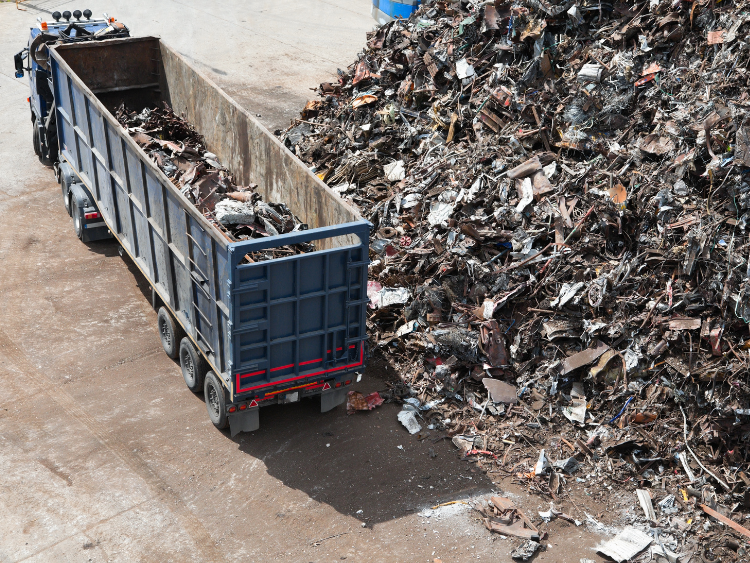
Poland has appealed to the European Commission over Ukraine’s scrap metal export ban
Measures that have effectively halted Ukraine’s steel scrap exports to the European Union have prompted Poland to call on the European Commission to intervene. The Warsaw government argues that these actions are negatively affecting the competitiveness of the country’s steel industry.
The dispute has emerged at a time when the European Union continues to provide political, financial, and military support to Kyiv following Russia’s attacks on Ukraine. While Poland has been one of Ukraine’s strongest supporters during the war, recent issues involving agricultural products, transit transportation, and scrap trade have strained relations between the two countries.
As of 1 January 2026, Ukraine began applying a zero export quota on ferrous scrap. This decision has largely halted shipments of a key raw material, particularly used in electric arc furnaces (EAFs). Poland’s Ministry of Economic Development and Technology stated that the restrictions are disrupting supply chains and risk increasing production costs.
The ministry noted that around half of Poland’s steel production is carried out in scrap-based electric arc furnaces, and emphasized that Ukraine has long been one of the country’s most important scrap suppliers. Officials warned that potential raw material shortages could lead to higher costs, weakened competitiveness, production disruptions, and job losses.
The Ukrainian side argues that the restrictions were introduced to protect the domestic steel industry under wartime conditions. Polish industry representatives, however, claim that the policy lowers costs for Ukrainian producers while driving prices higher for companies within the EU.
Poland’s Ministry of Economic Development and Technology also stated that it had contacted Ukrainian authorities before the ban entered into force. A letter sent to Kyiv in December 2025 requested that the planned restrictions not be implemented, but the initiative did not yield any results.
Following the lack of response, Poland escalated the issue to the European Commission. The Warsaw government argues that the zero export quota effectively constitutes a ban and has called on Brussels to intervene urgently. The ministry added that the matter will remain on the agenda in future bilateral talks with Ukrainian officials.
