IREPAS Short Range Outlook: February 2026
Buyers cautious in global long steel products market, supply pressure remains high
Demand remains weak in the global long steel products market, both structurally and seasonally. Buyers are cautious, operating on a hand-to-mouth basis and are still delaying medium- or long-term commitments. At the same time, supply pressure remains high. China has finally shown a significant production decline (with 2025 output down to 960 million mt, below one billion mt for the first time since 2019), but its exports surged to a record 119 million mt.
Geopolitics pull FX and commodity markets in different directions, causing uncertainty
Geopolitical tensions are clearly growing and are tearing the foreign exchange (FX) and commodity markets in different directions, increasing uncertainty for both mills and traders. This is feeding buyers’ wait-and-see stance on the demand side, while keeping input costs – especially scrap – more supported than finished steel products.
Demand still weak in EU, imports slowed down a lot by CBAM uncertainties
Demand in the EU market is still weak. Not only seasonal conditions but also uncertainties regarding political decisions are holding buyers back from making bigger commitments. Despite solid order books, construction companies are not flooding the market to avoid increases. The absolute uncertainty about quotas, CBAM, etc., has slowed down import volumes a lot. Only a few quotas were used up completely on January 1, which is proof of the fears of importers and traders.
US commercial construction expectations weaken for 2026
In the US, commercial construction expectations are down this year, with five of 17 market segments showing negative outlooks. Data centers (57 percent net positive) and power projects (34 percent net positive) remain strong. Although 63 percent of firms are planning new hires in 2026, over 80 percent are struggling to find qualified workers. Tariffs have affected 70 percent of contractors, and 63 percent report project delays or cancellations due to funding issues and rising costs. Top concerns for 2026 include the economic slowdown, workforce shortages, rising labor costs and material price volatility due to imports.
US residential construction segment also shows weakening, US mills in strong position
Residential construction in the US is not any better. Multi-family housing starts dropped 25.9 percent in October last year compared to September and were down 10.8 percent year on year, falling to their lowest level since 2020, according to the US Census Bureau and the Department of Housing and Urban Development. Overall, housing starts in the US in October fell 4.6 percent from September and 7.8 percent from October 2024. Developers face challenges ranging from high inventory to high interest rates. Imports face tough competition with domestic products having a 50 percent duty advantage and with antidumping and countervailing duties on most commodities. Domestic mills are in the best position with high prices and practically no competition.
Seasonal supply tightness boosts scrap market, thereby providing support for longs market
The ferrous scrap market is strong mainly due to the seasonal supply tightness and provides some support for the long steel products market.
Competition at high levels but is not on a level playing field due to trade protectionism
There is high competition in the market. That said, with all the trade measures and tariffs, there is no fair competition anymore. It is just about searching for opportunities.
Market outlook slightly better but remains tough, some cautious optimism for 2026
Under these circumstances, the current status of the market can be described as unstable. The outlook is slightly better due to seasonal reasons but remains tough. Despite all this and everchanging trade restrictions, we are still cautiously optimistic for 2026.


Jacques Delors Institute: Global implications of the EU’s steel strategy beyond CBAM
A new discussion paper published by the Europe Jacques Delors institute offers a comprehensive analysis of the external dimensions of the European Union’s Steel and Metals Action Plan (SMAP).
While much of the recent industry dialogue has focused on the Carbon Border Adjustment Mechanism (CBAM), this paper, titled “The Bigger Picture: Global implications of the EU’s steel strategy beyond CBAM,” argues that the EU is creating a complex web of cumulative regulations. The authors suggest that without careful alignment, these measures could inadvertently create a “green spaghetti bowl” of regulation that complicates international trade and potentially disincentivizes decarbonization efforts abroad.
The document analyzes four key pillars of the EU strategy and their potential cross-cutting impacts on the global steel market.
1. Preventing carbon leakage (CBAM)
The paper notes that as free allowances are phased out between 2026 and 2034, CBAM will pose significant challenges to trading partners. The authors highlight specific risks for Small and Medium Enterprises (SMEs). Due to a lack of capacity to monitor and verify emissions (MRV), SMEs may be forced to rely on “default values”. The paper warns that without support, these values could act as a structural penalty, increasing costs regardless of the firm’s actual carbon efficiency.
2. Creating lead markets (Low-Carbon Label)
The EU intends to introduce a voluntary “low-carbon steel” label to help justify green premiums. However, the analysis warns that this voluntary standard could become a de facto market access barrier if widely adopted. The authors point out potential conflicts in definitions; for example, if the EU definition differs from those of trading partners (such as relying on absolute emissions versus a scrap-based sliding scale), it could exclude foreign producers from the green segment of the EU market.
3. Promoting circularity (ESPR & Scrap Restrictions)
The paper examines the external impact of the Ecodesign for Sustainable Products Regulation (ESPR), which introduces mandatory requirements for durability, recycled content, and a Digital Product Passport (DPP).
Compliance Costs: These requirements create high compliance costs and require digital infrastructure that many exporters may lack.
Scrap Exports: The document also discusses the EU’s move to restrict scrap exports to non-OECD countries. The authors argue this could negatively impact trading partners like Turkey and India, who rely on imported EU scrap to lower their own emissions intensities.
4. Trade defense and the New Safeguard
With the current steel safeguard measure expiring in June 2026, the Commission has proposed a permanent safeguard measure.
The paper details the proposal’s significant features:
- A 47% reduction in import quotas.
- A 50% tariff on out-of-quota imports.
- “Melt and Pour” requirements to strictly trace the origin of steel and prevent circumvention.
The cumulative challenge: a “Green Spaghetti Bowl”
The authors emphasize that these measures create a “triple regulatory challenge” where steel products may face CBAM carbon costs, ESPR compliance costs, and safeguard tariffs simultaneously.
The paper warns of misaligned objectives: if a foreign producer invests in green steel but still faces a 50% safeguard tariff or cannot access necessary scrap from the EU, the economic incentive to decarbonize is diminished. The authors argue that the threat of high tariffs may eclipse the potential benefits of a “green premium”.
To mitigate negative spillovers, the Europe Jacques Delors paper recommends a “steel-centric” engagement approach rather than discussing regulations in isolation. The authors suggest establishing dedicated task forces to address the cumulative impact of these measures and ensuring that trade defense instruments do not inadvertently block the import of low-carbon steel.
Europe Jacques Delors implications of EU Steel strategy beyond CBAM

Steel safeguard replacement amended by EU Committee
The European Parliament’s Committee on International Trade (INTA) released a report illustrating its amendments to the EU’s long-term replacement to its steel safeguard protections last week, proposing various changes to the power and scope of the regulation.
Rapporteur Karin Karlsbro published the report on 3 February, detailing the amendments voted on by the committee in its latest session on 27 January, adopted by a majority of 36 to 2, with 5 abstentions. The report was also informed by submissions from the Committee of Industry, Research, and Energy.
The proposed amendments largely intensify Commission obligations to monitor and review the impacts of the regulation, particularly for downstream steel-consuming industries; as well as limiting Commission powers in tariff-compensation negotiations, and intensifying the scope of melt-and-pour requirements.
INTA’s amendments are not final, and must be approved or further amended by the European Commission, and Council, as the regulatory proposal moves through the EU’s Ordinary legislative procedure.
Downstream Industries
Downstream industries are suffering from many of the same issues as the EU’s primary steel sector – high production costs, and a lack of competition against substitutive imports – but remain relatively unshielded in terms of direct trade defenses. Both domestic distribution, and steel-consuming industries have warned that steel price inflation as a result of increased (or unbalanced) protectionism could turn these pressures existential, especially while demand for domestic downstream products is generally subdued.
As such, the Committee on International Trade has introduced a series of amendments to monitor these pressures – including explicit reference to domestic steel prices – on a more frequent, and expedited basis, requiring an initial review after 6 months, a regulatory proposal on possible scope extensions within a year, subsequent bi-annual reviews, and surveyance of the full steel value chain for stakeholder assessments.
Quota administration
Ultimately, INTA did not recommend the reinstatement of the quota carry-over mechanism, which rolls unused quota volumes into the next quarter, but amended the regulation’s recitals, or contextual clauses, with provisions targeting the “concentration of imports by a few operators and stockpiling practices” – defined by INTA as the delay of imports for release into free circulation to secure unfair access to relevant quotas.
This new requirement appears only in the draft recitals, and is limited to monitoring – presumably to be performed as part of the new review requirements – but illustrates a more proactive approach from European regulators and their increased sensitivity to trading realities.
WTO negotiations, and multilateralism
Overall, the draft report takes a measured approach to WTO compliance, as the European Commission is already on shaky ground in navigating the transformation of its existing temporary steel safeguard system (which reaches its maximum 8-year term in June) to a permanent framework.
The draft text presents this unilateral steel tariff increase by the EU as “restoring conditions for more open and rules-based trade in the future”, presenting overcapacity as a “global problem requiring a global solution […] most effectively addressed through coordinated multilateral action.”
INTA frames the overcapacity proposal as a temporary remedy to shield domestic competitiveness at the sensitive time of its decarbonisation, due to “the absence of meaningful progress at [the global] level”, seemingly recognising the need to regard WTO obligations flexibly, whilst still advocating overall WTO adherence.
The Commission originally proposed to negotiate with WTO trading partners under Article XXVIII of the General Agreement on Tariffs and Trade to secure necessary agreement to increasing the EU’s steel tariff barriers – generally requiring compensatory offsets by the EU in other areas – but INTA have moved to restrict the scope of the Commission’s authority, as well as introduce a new avenue for WTO compliance (or lack thereof).
Previously, the Commission would have been authorised to set country-specific quotas on the basis of these WTO negotiations with trading partners, “equivalent” to 2013 import market shares, but restricted to “equal” to 2013 import market share on INTA’s proposed amendments.
Crucially, on INTA’s proposal, the Commission would be limited in the granting of any tariff concessions to the products covered by the overcapacity regulation, restricting the scope of Article XXVIII negotiations to the rebalancing of tariffs within the iron and steel sector. The amended proposal also introduces new requirements for the Commission to inform and update on the progress of these negotiations – and to inform the WTO of the EU’s intention to regard the new framework as a “General Exception” under GATT Article XX, as it is “necessary to pursue the decarbonisation of the Union steel sector, and […] to preserve the Union public order.”
INTA also amends or introduces various provisions to ensure that subsequent implementing or delegated acts setting country-specific quotas, or varying overall quota levels adhere to certain considerations.
Article 4 – relating to country-specific quota design – generally mandates a degree of reciprocity between the EU’s and the relevant trading partner’s tariff rates; mutual compliance with bilateral or multilateral agreements; and preserves the possibility for quota exemptions (most likely for Ukrainian-origin goods).
Article 6 – on the power to vary overall quota levels – is amended to make “the decarbonisation path of the steel sector in the Union”; the “impact on downstream value chains”; and “security and defence policy,” direct considerations when varying quota volumes down the line.
Melt-and-pour
INTA’s amendments also extend to the new melt-and-pour provisions, which would oblige importers to prove the origin of their steel on the basis of the location of its primary steelmaking.
INTA introduce intensified requirements for the Commission to define the “detailed rules and modalities” determining the sufficiency of evidence for the melt-and-pour criteria, with direct reference to “mill certificates” and “where appropriate, the use of digital verification systems, unique identification numbers, or other control mechanisms to prevent falsification or misuse.” Provisions are also included to mitigate against “disproportionate administrative burdens,” but lack specific detail as to how this will be pursued.
Most importantly, INTA explicitly propose that the allocation of imported volumes to country-specific quotas should be conducted in reference to the “country of ‘melt and pour’” rather than the country of origin. In theory, this would allow the EU to administrate allocations to its steel tariff quotas in alignment with overcapacity factors – for example allocating re-rolled Turkish products to the quota of the country of the intermediate semi-finished goods – but has been criticised as legally dubious as regards existing origin rules.
Illustrating the legal ambiguity, this provision has a delayed application of two years following the entry into force of the wider proposed regulation, and is generally expected by market participants to face challenge as the proposed amendments move to readings of the Commission and Council as the next legislative stage.

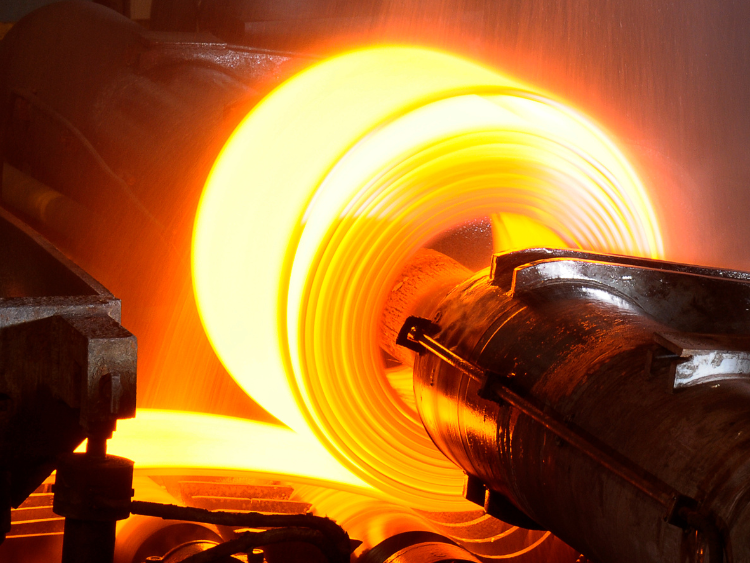
European HRC prices edge higher despite sluggish spot market; large Turkish HRC sales raise quota concerns for Q2
European integrated flat steel producers were seeking higher prices for April-delivery coil, with March volumes largely sold out. New offers were reported at €670-685 ($792-809) per tonne ex-works in Germany and the Benelux region.
Most buyers estimated tradeable values at €650 per tonne ex-works in the week to Friday.
Overall, activity in the region’s spot market was subdued.
“Inventories are high for HRC from previous import in stock,” one buyer in Germany told Fastmarkets, explaining that during the third and fourth quarters of 2025 many European buyers booked larger tonnages overseas and domestically, building up stocks ahead of the Carbon Border Adjustment Mechanism (CBAM) rollout on January 1, 2026.
But one buyer source reported some transactions at €665-670 per tonne in the week to Friday for limited tonnages of April-delivery coil, claiming that “€650 per tonne [ex-works] is already gone.”
This information was not widely confirmed before publication.
Market sentiment was cautiously optimistic, supported by CBAM and upcoming new safeguard measures which are expected to further curb import inflows into the EU. But the lack of a tangible demand recovery was viewed as a key obstacle to sustained price increases.
Fastmarkets’ daily steel HRC index domestic, ex-works Northern Europe was €656.25 per tonne on Friday, up by €5.00 per tonne from €651.25 per tonne on Thursday February 5.
The index was up by €6.25 per tonne week on week and by €26.25 per tonne month on month.
Fastmarkets’ corresponding daily steel HRC index domestic, ex-works Italy was calculated at €647.92 per tonne on Friday, up by 42 cents from €647.50 per tonne on Thursday.
The index was up by €9.92 per tonne week on week and by €24.80 per tonne month on month.
In the Italian market, domestic suppliers were largely sold out of March-delivery HRC, with April-delivery coil offers quoted at €660-685 per tonne ex-works.
Market participants indicated achievable April-delivery prices at lower levels, generally at €640-650 per tonne ex-works.
“Nobody is in a hurry to buy; inventory is not on the low side,” a buyer source told Fastmarkets.
During the week to Friday, transactions for cargoes below 1,000 tonnes were heard at €640-650 per tonne ex-works.
Meanwhile, sources reported several large cargoes of Turkish HRC sold to Europe in the week to Friday. The total volume of all sold cargoes was reported at more than 300,000 tonnes.
The average price was confirmed at about $540 per tonne FOB. Assuming a freight rate of $25-30 per tonne and including the anti-dumping duty of 4.8-7.3%, the price to Italy was around $606-612 (€513-518) per tonne CFR, sources said.
CBAM costs for Turkish mills were estimated at €40-50 per tonne by buyer sources.
Following the round of sales, Turkish mills increased export prices to $550-570 per tonne FOB, Fastmarkets heard.
As of Thursday February 5, Turkey had used 87%, or 342,975 tonnes, of its 393,978 tonne HRC quota allocation for January-March 2026, according to European Commission customs data.
Given reports of new sales, sources expect Turkish quotas for the second quarter, due to open on April 1, 2026 to be exhausted within days.
Vlada Novokreshchenova in Dnipro contributed to this report.

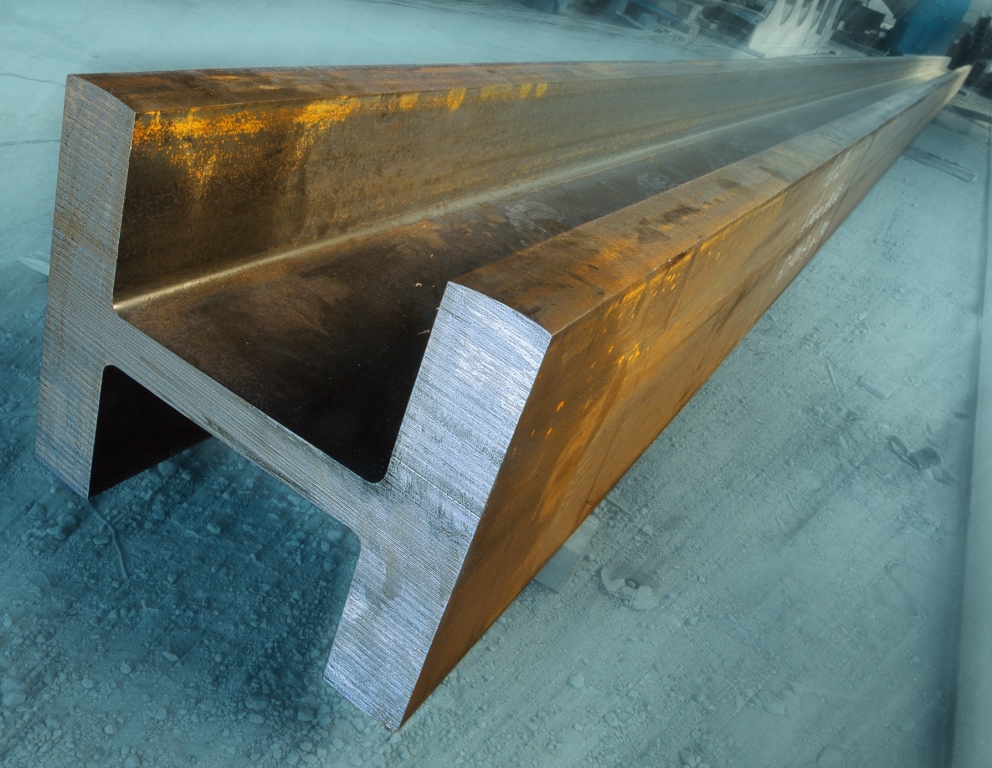
European distributors struggle to pass on sections hikes
Sections mills in northwestern Europe have seen some success with increase prices at the start of the year, however, buyers do not appear to be as successful at passing on these higher levels when selling to customers.
One market observer tells Kallanish that mills sought increases of €30/tonne ($35/t), but distributors cannot hand that down to their buyers.
Buyers confirm this, and see the increase implemented in transactions as €20/t. With previous levels around €730/t delivered for category 1 sections, buyers now pay around €750/t.
“Mills can exert their hikes better than we can,” one buyer says. “Currently, we must restock from December’s depletion of the warehouse, to be prepared for any enquiry,” he notes.
Mills are pretty much coordinated, according to a German manager who buys mostly domestic material for his company. “Prices would not differ much if ordering across borders; the mills are pretty unanimous this time,” he says.
According to the manager, the structural steel construction sector has big gaps in order books for the first half year. “They tell me very clearly that they are doing okay in Q1, but not beyond. They have enquiries in the longer run for the second half, but otherwise it looks a bit bleak until June,” he says.
Additionally, cold weather and snow is still putting a brake on construction activity in various regions, not only in the east, but also “in northern Hesse, where we are not used to this,” the manager says.