


Trump threatens new 10% global tariff under Section 122 after Supreme Court deems IEEPA tariffs illegal
The order would be issued under Section 122 of the Trade Act of 1974, Trump said, adding that the new duties could apply on top of existing tariffs.
The provision allows the president to impose tariffs as high as 15% for as long as 150 days on any country, in response to “large and serious” balance of payments problems. It does not require an investigation or other procedural steps.
Trump also noted on Friday that he will invoke separate authority under Section 301 to initiate investigations into unfair trade practices, a process that not only could take several months to complete, but could ultimately yield additional tariffs.
The announcement came just hours after the Supreme Court ruled that Trump has acted illegally in unilaterally imposing sweeping global tariffs under the supposed authority of the country’s International Emergency Economic Powers Act (IEEPA).
“There was always the notion that [implementing the IEEPA tariffs] was a risk, that the administration was taking a risk with expanding the mandate at a scale that’s never been done before,” Samir Kapadia, managing principal of the Vogel Group, told Fastmarkets in an interview on Friday.
The Supreme Court ruling held that only the US Congress, not the president, has the power to impose taxes, with trade sources saying that some market participants were caught off-guard by the decision.


EU softens ‘Buy European’ requirement: German sources
A new version of the European Union’s Industrial Accelerator Act (IAA) draft has German steel players agitated, because it suggests that green steel could be sourced outside the EU.
Reports by Handelsblatt and Spiegel say that they have received a draft that no longer includes steel in the annex of materials or services that must be sourced in the European Union for public tenders. The draft does include the requirement of “green/low-emission steel”, but not the obligation to buy it locally.
In a social media post, seen by Kallanish, thyssenkrupp Steel, head of European affairs Julian Schorpp expressed concern, asking “is the EU about to undermine its own Clean Industrial Deal?”.
The latest leak contradicts the core logic of the Clean Industrial Deal itself to accelerate decarbonisation in Europe by strengthening demand for clean products manufactured in the EU, Schorpp writes.
He points at the investments on the way by EU mills in the interest of a technical transition. “Lead markets that stimulate consumption without strengthening European production would weaken investment incentives, delay projects, and increase the risk that new low-carbon capacity is built outside the EU”.
The apparent new draft would agree with a requirement worded by German chancellor Friedrich Merz last week, which left Germany’s steel industry unamused.
Merz suggested that a rule like “Made in Europe” should be adjusted to “Made with Europe”, to allow international trade partners to supply green steel, too.
In a separate interview with Spiegel, Marie Jaroni, ceo of thyssenkrupp Steel, notes that such an adjustment would potentially invite 70 countries with which the EU holds trade partnerships.
Along the same lines, Schorpp also points at an effect an IAA draft without steel would have on importing. “CBAM, meanwhile, will incentivise foreign producers to channel their cleanest steel to the EU market,” he says.

Non-prime coil gaining favour in Europe
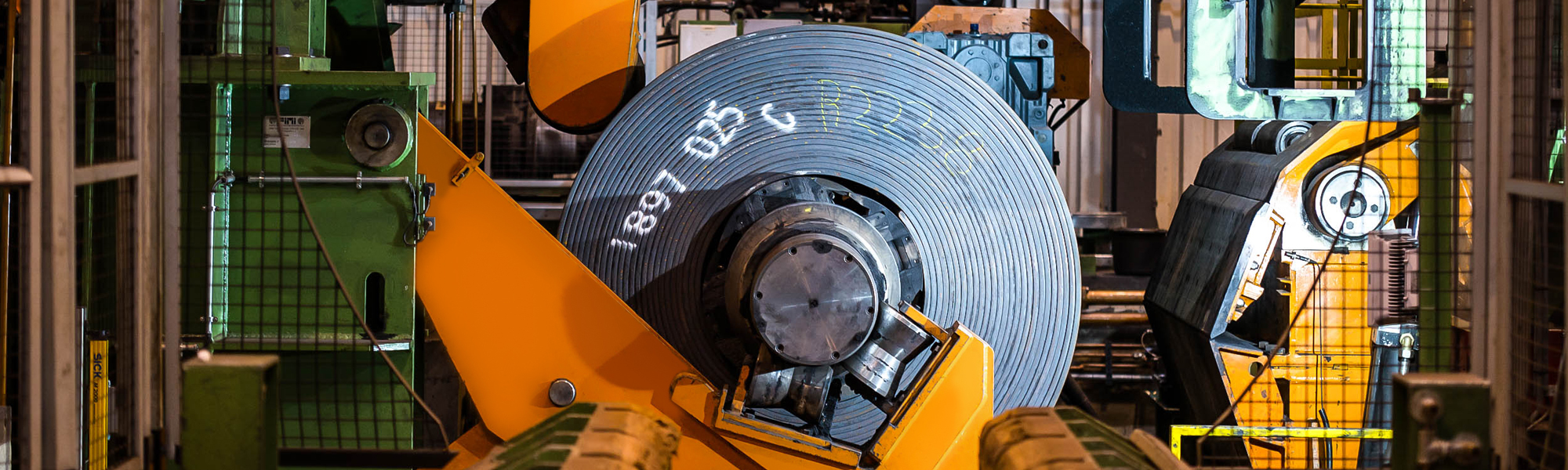
Non-prime coil is gaining traction in Europe, with recent announcements highlighting the growth of declassified strip products.
Swedish green steel venture Stegra agreed a multi-year deal with thyssenkrupp Materials Services for the supply of future coil volumes for the pan-European distribution group of non-prime material in January.
In times of an inert market and low price, as seen through most of 2025, non-prime material appears to be growing in attractiveness to buyers to minimise risk as high-standard customers remain reserved.
“The demand is too low, and I see more people asking for non-prime material,” one Benelux trader tells Kallanish. “Many try to get even cheaper than the low prices we have for prime material now,” he adds.
Regular prices are slowly but continuously recovering since then, and longer lead-times indicate more orders for prime coil. But then, the hurdles for imports imposed by the Carbon Border Adjustment Mechanism (CBAM) could mean an advantage for non-prime imported coil.
Another trader notes that the actual role of a trader as an intermediate is stronger when trading declassified material. If dealing with prime material, customers can gather an idea of a price/tonne on numerous channels, so the pricing in that segment is very transparent, he says. “This is not quite so in the non-prime segment, where good prices and offers depend very much on the trader’s network.”
To some extent, such preferences for non-prime are observed in the traditional fields of domestic prime material. According to a service centre manager, “it really depends on the purpose, [such as] if it’s a visible part or not. Customers are relatively flexible.” He notes that customers normally do not proactively “ask for 2A material, but they do accept it if offered.”
One typical mill strategy in times of low sales is the nominal declassification of 1A material to 2A, as a means of justification to offer at a discount. If the current recovery of prices becomes substantiated by a recovery of demand, such offers will likely disappear.