


Polish long steel prices remain flat on low demand, cautious buyers
Subdued market appetite during the winter months kept price levels for domestic rebar and wire rod in Poland unchanged during the week to Monday March 2, despite mills’ efforts to increase offers, sources told Fastmarkets.
Sources attributed the lack of price movement to low demand from key sectors including construction. Meanwhile, mills were heard to be trying to increase their offers because of higher scrap prices, sources said.
“Steel mills are trying to reach higher price levels, but it has not been very easy for them because buyers are being very cautious to accept higher prices. Many buyers are deciding to sit and wait,” one source told Fastmarkets.
Weather conditions in the country have been tough for business in recent weeks because of very low temperatures. Market participants expect an improvement in demand with the approach of warmer months.
Meanwhile, mills were heard to be holding “quite big stocks” while trading remains low in the country.
For rebar, carriage paid, mills were heard to be targeting higher offers around 2,650-2,700 zloty ($741-755) per tonne CPT. But no trading was reported at those levels in the week to Friday.
Deals for rebar were reported within the range of 2,570-2,600 zloty per tonne CPT. A buy deal for small quantities of material was reported at 2,550 per tonne CPT during the assessment period.
Market sources estimated workable levels around 2,550-2,600 zloty per tonne CPT.
Fastmarkets’ weekly price assessment for steel reinforcing bar (rebar), domestic, CPT Poland was 2,550-2,600 zloty per tonne on Friday, unchanged week on week.
Meanwhile, for drawing-quality wire rod, prices were also stable, with no new trading activity heard during the week.
Estimates of workable levels were heard at 2,700-2,780 zloty per tonne delivered.
Fastmarkets’ weekly price assessment for steel wire rod (drawing quality), domestic, delivered Poland was also 2,700-2,780 zloty per tonne, unchanged week on week.

European domestic HRC market strengthens as higher-priced deals come to light
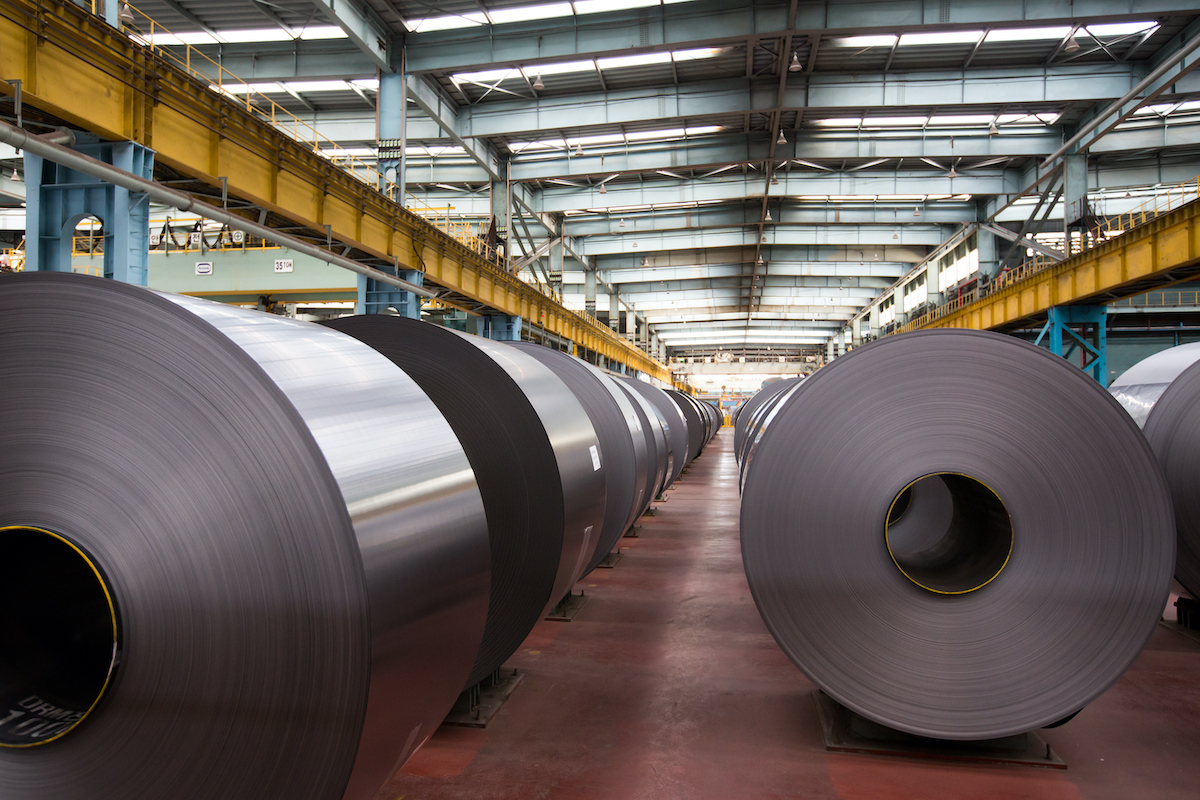
The European domestic hot-rolled coil market strengthened on Monday, March 2 as higher-priced transactions emerged, supporting mills’ upward price ambitions even as demand remains subdued.
Several sources reported the level of €700 ($827) per tonne delivered, equivalent to €685-690 per tonne ex-works, to have strengthened in deals versus €670-690 per tonne ex-works heard last week. Meanwhile, one source reported the level of €700-710 per tonne ex-works being achieved by one of the German producers.
Mills’ strong order books and longer than normal lead times supported by the slowdown of import activity caused by the introduction of the Carbon Border Adjustment Mechanism (CBAM) earlier this year were said to be the key reasons for the continuing upward price correction.
Fastmarkets’ daily steel hot-rolled coil index domestic, exw Northern Europe was €692.50 per tonne on Monday March 2, up by €6.43 per tonne from €686.07 on Friday February 27. The index was up by €10.21 per tonne week on week and by €41.67 per tonne month on month.
Fastmarkets’ corresponding daily steel hot-rolled coil index domestic, exw Italy was calculated at €676.25 per tonne on March 2, up by €5.62 per tonne from €670.63 per tonne on February 27. The index was up by €10.62 per tonne week on week and by €24.58 per tonne month on month.
In Italy, offer prices varied within €680-705 per tonne ex-works depending on the supplier.
Key tradeable levels were said to still vary within the range of €660-670 per tonne ex-works while small-tonnage cargoes were heard at €680-690 per tonne ex-works.
Some market participants voiced concerns that the US-Iran conflict may indirectly affect the market due to the rise in international oil and gas prices, which in turn could push electricity prices higher. Electricity costs had already been on the rise.
A large German HRC buyer said some tube and pipe mills in the region withdrew offers from the market while considering some corrections and added that the flat steel market may be more affected than the long steel market because of its exposure to energy-intensive sectors.
Additionally, sources from different parts of the world reported growing freight and insurance costs, which is putting import in an even less favorable position than now.

German Steel Federation calls for stronger Made in EU steel rules under Industrial Accelerator Act
The German Steel Federation (WV Stahl) has welcomed the European Parliament’s discussion on implementing the European Steel and Metals Action Plan (SMAP), stating that the debate comes at a critical moment for Europe’s steel sector.
According to the association, key commitments outlined in SMAP are not yet sufficiently reflected in the proposed Industrial Accelerator Act (IAA). WV Stahl argued that the legislation must establish a binding link between sustainability requirements and strict “Made in EU” criteria to ensure effective support for European steel producers.
Steel sector seen as strategic pillar of European industry
WV Stahl CEO Kerstin Maria Rippel stated that political commitments previously made by European Commission President Ursula von der Leyen and German Chancellor Friedrich Merz must now be translated into concrete legal measures.
She warned that the European steel industry faces existential challenges and emphasized that the Industrial Accelerator Act could play a decisive role by formally recognizing steel as a strategic sector while creating lead markets for low-emission steel produced within Europe.
Trade defense and origin rules serve different purposes
The federation also cautioned policymakers against conflating trade defense instruments with industrial policy measures during ongoing legislative discussions.
According to WV Stahl, post-safeguard trade measures address global overcapacity pressures, whereas origin-based industrial policies such as Made in EU requirements are necessary to safeguard investment certainty and maintain competitiveness within Europe.
Call for EU and EFTA-based origin definition
WV Stahl stated that the Industrial Accelerator Act should combine sustainability criteria with clearly defined European origin requirements limited to EU-27 and EFTA countries.
The association concluded that maintaining Europe’s industrial base requires steel to be formally recognized in legislation as a strategic backbone of European value creation, transforming the strategic vision of the Steel and Metals Action Plan into concrete industrial policy implementation.


French Senate rejects proposal to nationalize ArcelorMittal France
The French Senate has voted against a draft law that sought to nationalize steelmaker ArcelorMittal France, marking a significant political decision regarding the future of the country’s steel industry.
The draft law was examined by the Senate Finance Committee and proposed transferring ownership of ArcelorMittal’s French steel operations, including major northern facilities and associated jobs, to the French state. However, after review and debate, the Senate rejected the nationalization measure, concluding that it would not effectively address the fundamental challenges facing the steel sector.
The finance committee of France’s National Assembly had previously approved a bill introduced by the La France Insoumise party to nationalize the French assets of ArcelorMittal, as SteelOrbis previously reported.
Committee report emphasizes structural, not ownership, issues
In a report presented to the Senate, members of the Senate Finance Committee argued that the difficulties confronting the steel industry, such as declining demand, global overcapacity, high energy costs and competitiveness pressures, stem from broader economic and market forces rather than being solvable through ownership changes. Forced nationalization was seen by the committee as unlikely to reverse these trends or strengthen long-term viability.
The committee noted that, although nationalization powers are constitutionally available, previous interventions in other sectors were carried out through negotiated market mechanisms rather than expropriation. The analysis emphasized that preserving competitiveness and encouraging investment would be more impactful than a compulsory state takeover.
The rejection underscores wider debate in France and across Europe about how best to support strategic industries in the face of global pressures. Lawmakers and industry stakeholders have expressed concern over competitive disadvantages relative to producers outside the EU, driven by factors such as energy costs, regulatory burdens and market shifts.
While nationalization had garnered some support from unions and political groups arguing for strategic sovereignty, opponents warned of the financial and managerial risks associated with forced state ownership, and questioned its effectiveness in strengthening long-term industrial competitiveness.
Next steps for French steel policy
With the nationalization proposal rejected, attention is likely to shift toward alternative industrial policies aimed at revitalizing steel production through investment incentives, competitiveness measures, trade defense policies and structural reforms. The Senate report and debate may influence future legislative efforts to bolster France’s industrial base without altering ownership structures.

Escalation in Gulf disrupts shipping, steel may be impacted if war continues
The US-Israeli military strikes against Iran, which started on February 28, and Iran’s subsequent retaliation, have naturally created a tense situation in the Gulf, affecting operations in many industrial segments in the regions.
The impact has already been seen in the oil and gas sector and the disruptions of maritime activities in and around the region have already been reported.
In terms of steel and raw material shipments, there is a potential impact in terms of disruptions of deliveries from Iran itself, mainly to Asia, while the situation in the Strait of Hormuz is likely to result in delays of shipments destined for ports in the Gulf.
If the war continues, the situation may lead to higher steel prices in the region, especially for material ready on the ground since buyers may need to restock to replace the volumes for which they had previously placed import orders, the deliveries of which end up being delayed.
If the situation is not resolved in the near term, some cargoes may be redirected to alternative destinations, which will also affect steel market prices, at least temporarily.
Currently, passage through the Strait of Hormuz is blocked, though there has been no official closure. However, the number of vessels opting for this route has declined significantly. “Transportation is basically stopped today, but it looks like a short-term stoppage,” one international trader said. At present, there are vessels stuck on both sides of the straight as transportation is risky and several ships have already been attacked.
Major large Asian steel exporters polled by SteelOrbis state that they see major risks for the steel market from the rising tensions between Iran and Israel and the US in the region, in terms of increasing freight rates, a lower number of cargoes available for the Asia-Middle East route and possible transportation delays. “Due to increased regional risks, shipping costs have risen by 15 percent to 20 percent… Product prices in China remain stable. The current price adjustment is strictly related to transportation costs,” a representative of a major Chinese exporter said. Another large trader commented to SteelOrbis, “We have already seen freight increase, but most vessel owners will take one to two days to settle prices amid the current risks. Other impacts still need more time to be seen.”
Market sources said that, today, freight rate assessments for the China-Turkey route for a 40,000 mt vessel start from $40/mt, versus the previous $35/mt.
Another important issue resulting from the attacks on Iran is the expected deferring of shipments of steel, semis in particular, that have already been booking in the Middle East or in Asia. “I know that buyers are waiting for some large lots of Iranian billets. They may be cancelled, as no one knows about the consequences [of the escalation of the conflict]. But there is no news about this for now,” a Southeast Asian source commented. Shipments of materials destined for the region, especially to countries enclosed within the Gulf, are also likely to be jeopardized. Specifically, market players expect steel billet and flats shipments to be impacted as the region is a large importer of both.
As for the regular steel market activity, regional sources have not yet reported any major change, stating that construction projects are mainly being carried out as planned, but of course, if the situation worsens, things might change. “It is too early to tell. There could be a slight slowdown of activity, but it depends on how long this lasts. Today is the first day after the weekend, and 90 percent of project sites are working normally,” one source in the UAE told SteelOrbis.