


Mannesmann secures major order from Salzgitter Group for hydrogen
Germany’s Leipzig-based ONTRAS Gastransport GmbH has commissioned two pipeline companies within the Salzgitter Group with significant pipe supply contracts.
Accordingly, Mannesmann Grossrohr GmbH (MGR) will supply 70.6 km of pipes (approximately 18,000 tons), while Mannesmann Line Pipe GmbH (MLP) will provide 38.2 km of pipes (approximately 6,000 tons). These pipes will be used for the new FGL 702 hydrogen pipeline project, extending from Wefensleben to Salzgitter and from Angersdorf to Preußlitz. The project represents a key building block for the hydrogen backbone network and energy transition, forming the foundation for “green steel” production in Salzgitter.
The integrated steel plant in Salzgitter is gradually transitioning to low-CO2 steel production under the SALCOS® (Salzgitter Low CO2 Steelmaking) transformation program. Hydrogen is becoming an increasingly critical resource for producing “green steel.” Andreas Betzler, CEO of the Salzgitter Group’s pipeline companies, stated: “We are proud that hydrogen for SALCOS® will flow through our pipes and that we are part of this important project. Salzgitter is not only a major hydrogen consumer but also contributes to hydrogen production and delivery to customers with our steel products.”
The 813 mm-diameter pipes supplied by MGR will feature a three-layer polyethylene coating on the exterior and an epoxy Flowcoat lining on the interior. Approximately 4.5 km of the pipeline will receive additional GFRP (glass fiber reinforced plastic) coating applied by TDC specialists in Neubrandenburg. Each 18-meter-long pipe weighs around 4.5 tons and will be transported by truck from February 2027 to storage sites located an average of 37 km from the pipe plant.
The 610 mm-diameter pipes provided by MLP have been prepared at the Hamm facility with both three-layer polyethylene exterior coating and Flowcoat interior lining. These coatings are designed to reduce friction losses during gas flow. Approximately 6 km of the pipeline will also include a GFRP component applied by TDC, further enhancing pipeline durability.
The FGL 702 project, part of the IPCEI Green Octopus Central Germany (GO) initiative, aims to strengthen Germany’s hydrogen infrastructure and support the energy transition.

How is the Middle East tension affecting the steel industry?
The escalating military tensions between Iran, the United States, and Israel, along with the closure of the Strait of Hormuz, have begun to directly impact the iron and steel sector through rising energy and logistics costs.
The upward expectations in oil and natural gas prices pose a risk of increasing production costs, while disruptions in maritime transportation are pushing freight rates higher and extending delivery times. According to experts, if tensions persist, supply constraints in the sector, difficulties in sourcing raw materials, and increases in finished product prices could become inevitable.
The escalating military tensions between Iran, the United States, and Israel, along with the de facto transit restrictions in the Strait of Hormuz, have triggered a new fracture in global energy and logistics chains. Rising risks around the Strait of Hormuz, through which approximately 20% of global oil trade passes, have led to renewed upward pricing in energy markets and serious disruptions in maritime transport, bringing cost and supply pressures to the forefront of the iron and steel sector.
The Russia–Iran axis and the energy impact
According to market sources, Iran is one of Russia’s key trading partners, with bilateral trade volume of approximately $5 billion. Fertilizers, grain, industrial equipment, and steel pipes stand out among the main trade items between the two countries, while contacts in the energy field are also ongoing. It is noted that in the event of supply disruptions in oil exports from Iran, Qatar, and Kuwait, crude prices could rise to the $100 per barrel level. Such a scenario could accelerate the redirection of Russian oil toward markets such as China, India, and Türkiye. Any potential increase in energy prices is expected to directly affect iron and steel production costs through higher natural gas and electricity prices.
Experts emphasize that energy costs remain particularly decisive for facilities operating with electric arc furnaces (EAF). If tensions in the Strait of Hormuz persist, sustained high energy prices could push per-ton steel production costs higher.
Logistics tightening and freight pressure
On the maritime side, the situation appears even more complex. Due to security risks in and around the Strait of Hormuz, many shipowners have either suspended voyages or been forced to shift to longer and more costly routes. For steel, a high-tonnage product highly sensitive to freight costs, this development directly affects prices. Rapid increases in freight rates and extended delivery times are being observed, while both buyers and sellers are reportedly reluctant to enter into new contracts amid uncertainty, leading to a short-term contraction in transaction volumes.
Türkiye’s steel industry is known to focus on Europe, the Balkans, and neighboring markets in an effort to balance global volatility. However, disruptions in sea routes and rising insurance premiums may also increase the cost of accessing these markets.
The İskenderun corridor and geopolitical risk perception
Industry representatives note that the growing perception of geopolitical risk in the Eastern Mediterranean is being closely monitored, particularly for the Hatay–Osmaniye–İskenderun production corridor, which serves as Türkiye’s key iron and steel manufacturing hub. The İskenderun-centered production region accounts for a significant share of Türkiye’s steel exports thanks to its port infrastructure and integrated facilities. An increase in regional security risks may affect the sector not through direct physical threats, but via higher insurance costs, tighter financing conditions, and shifts in order behavior.
Risk of supply constraints and price increases
According to expert assessments, if current tensions do not ease in the near term, three main factors will come to the forefront in the iron and steel sector: rising energy costs, risks of disruptions in raw material and semi-finished product supply, and freight-driven price pressure. The combination of these three elements could create supply constraints, particularly for inputs such as scrap and slab, and lead to upward movement in finished product prices.
In the short term, contracting transaction volumes and cautious contract behavior are expected to dominate. In the medium to long term, the duration of the conflict will be decisive. If the closure of the Strait of Hormuz becomes prolonged, cost-based price increases in the iron and steel market are likely to become more pronounced. Conversely, under a diplomatic de-escalation scenario, normalization in freight and energy prices could allow the sector to seek a new equilibrium.


7 Steel calls for additional sector policy support
UK producer 7 Steel is calling for policy support for the sector, days after Eluned Morgan, First Minister of the Welsh Government, met with UK policymakers, Kallanish reports.
In a published statement, the company welcomes the Welsh government’s call for urgent action to support domestic steelmaking. It notes that domestic steelmakers “continue to face global overcapacity, volatile trading conditions, and significantly higher industrial electricity costs.”
“To secure long-term competitiveness, we need continued trade protection and greater stability in energy pricing, alongside clear commitments in the forthcoming UK Steel Strategy,” it adds. “That means prioritising trade protection beyond June of this year and providing stability in energy pricing to give domestic steelmakers the protection and support needed for long-term security. These are things we are hopeful of seeing in the highly anticipated UK Steel Strategy.”
Chief executive Carles Rovira says: “We’re pleased to see the First Minister of the Llywodraeth Cymru/Welsh Government championing our industry, particularly at such a critical time for all steelmakers. The call for greater certainty, support and clarity is precisely what we need, both to protect our industry as it stands today, but also to strengthen it for the future through continued investment in our processes and communities.”
Earlier last week, Morgan noted in a written statement that the UK Steel Strategy is now likely due to be published in March. “The Welsh Government is calling for the strategy to be afforded the absolute top priority that it deserves, and that publication is made as a matter of utmost urgency. Industry needs clarity, and our steel workforce needs transparency and confidence.”
She also called for the UK government to work with the EU and US to conclude trade agreements with “our major partners” to protect the domestic industry against “potential dumping”.
“EU trade measures have the potential to have drastic consequences for the Welsh steel sector at a time when it is already under immense trading pressure due to US tariffs and global overcapacity. The EU is our closest and strongest trading partner on steel, and we have been very clear with the UK Government that we urgently need to see it make a strong case for the EU to preserve our existing arrangements, especially at a time when our sector is transitioning to net zero,” she says.
“We need the UK government to agree and implement the tariff free quota for UK steel into the US as agreed under the UK-US economic prosperity deal, whilst considering the unique transitioning needs of the Welsh steel sector,” she adds.


Thyssenkrupp to supply reduced-emission steel to BMW
Thyssenkrupp Steel is to start supplying its bluemint CO2-reduced recycled steel to BMW Group during 2026 for use in series production, in particular for the outer panels, interior parts and battery housing of the BMW iX3, Kallanish hears.
The material has a high proportion of recycled material and achieves CO2 savings verified by TÜV Süd compared to conventional steel, the steelmaker says. This is a mass balanced recycled product, involving a mathematical allocation procedure using CO2 reductions from its production process which can be attributed to products on a pro rata basis, the company explains.
BMW Group will use the steel in series production without having to adapt existing processes, tk notes.
The German automotive industry uses almost exclusively primary steel extracted from iron ore for the outer body shell for the highest requirements in terms of surface quality, formability, and processing. This reduced emissions steel can meet these quality requirements and can be used for outer panels, the steelmaker adds.
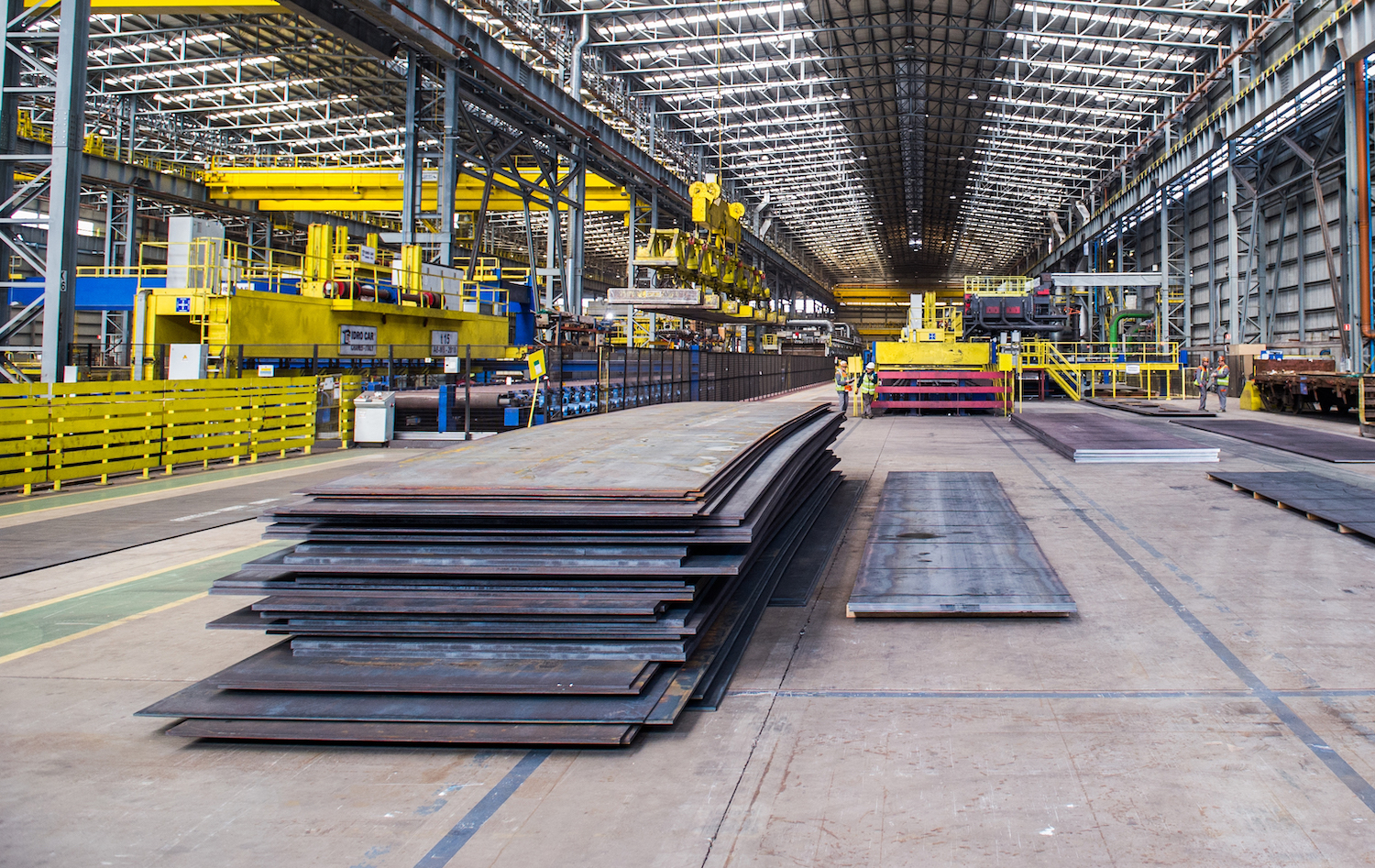
Italian plate prices flatten on quiet market
Italian heavy plate prices are steady compared to the beginning of February, following a further increase implemented by local producers due to higher imported slab costs linked to CBAM, Kallanish learns.
Market activity has become quiet over the past days as buyers are adopting a wait-and-see attitude. Mills lead times are extending to mid-March and April, depending on producer.
Italian mills are currently quoting at around €750/tonne ($884.10/t) for S235 plate, with premiums of €30-35/t for S355 and approximately €10/t for S275 material. Grades S235 and S275 usually tend to see similar pricing levels.
Current transaction values for S275 material remain at €720/t ex-works on average and €740-750/t ex-works for S355.
Sellers believe values will continue to increase due to the high CBAM charges for slabs and increasing international values. A producer says it continues to procure slabs from Asia, including China and South Korea, focusing on suppliers with lower carbon footprints.
For material sourced from the least CO2 intensive producers, CBAM costs are estimated at around €40-50/t, while shipments from higher-emission mills could face charges of at least €100/t. Slab values, excluding CBAM costs, are reported at $530/t cfr on average, southern European ports.
Plate prices are expected to rise sharply in the second half of the year, when the revised safeguard mechanism comes into effect and significantly reduces available quotas.
A separate source notes that, out of a total European first-quarter quota of 544,000 tonnes, some 162,000t of imported plate has been cleared through customs between 1 January and 20 February.

NW European plate market settles after price surge
Following a notable price surge successfully implemented by mills, the purchasing wave seen throughout February appears to have slowed somewhat.
Mills finally succeeded with an increase of up to €70/tonne ($83/t) to the value of €800/t for S355 delivered, which had previously been announced in January in vain. Meanwhile, the new price level has been accepted as imports are no longer seen as a realistic alternative, with incalculable CBAM fees likely absorbing the price advantage, German buyers note.
According to one buyer, plate distributors in Benelux are now bereft of their ideal supplier, given their proximity to the big ports, and have instead boosted their orders at European mills. This has helped to fill order books for delivery sooner than May. “The market has turned around quite a bit,” he says.
In fact, some mills are now eyeing €850/t as the next target. Another buyer sees the price accepted going forward amid a lack of alternative offers. “Imports are not an option, so we have fewer purchasing channels now,” he notes.
One mill source questions the possibility of achieving higher prices, and is sceptical if the recent rises are sustainable. He does confirm the price tag of €800/t, but also notes recent deals at €50/t less. He adds that the run on orders has already calmed down at the end of February.
He warns that the striving for another price step will be sure to have customers scared. “If I ask for €850/t, customers will hang up. That’s close to the distributors’ prices, so customers might as well buy there,” he tells Kallanish.

EUROMETAL hosts Kawasaki Heavy Industries in Luxembourg
Yesterday, EUROMETAL had the pleasure of hosting in Luxembourg a delegation from Kawasaki Heavy Industries (KHI), accompanied by representatives from Deloitte Belgium’s Global Trade Advisory practice.
The discussion focused on the evolving implications of the EU Carbon Border Adjustment Mechanism (CBAM) for steel trade and on the broader decarbonisation challenges facing the international steel value chain.
Kawasaki Heavy Industries is currently assessing the potential role of advanced carbon capture technologies in supporting steel producers exporting to the European Union. As part of their market research, they sought high-level insights from EUROMETAL on CBAM readiness, cost exposure, emerging procurement trends, and the growing market interest in lower-carbon steel solutions.
The exchange was constructive and forward-looking. It highlighted how CBAM is increasingly shaping sourcing strategies, supplier engagement, and investment decisions well beyond Europe’s borders. It also underlined the importance of transparency, credible emissions accounting, and regulatory clarity in enabling a competitive and workable transition.
We appreciated the opportunity to share aggregated market observations from the European steel distribution sector and to better understand decarbonisation initiatives being considered in Asia.
Constructive dialogue across regions and across the value chain remains essential as the steel industry navigates one of the most profound transformations in its history.
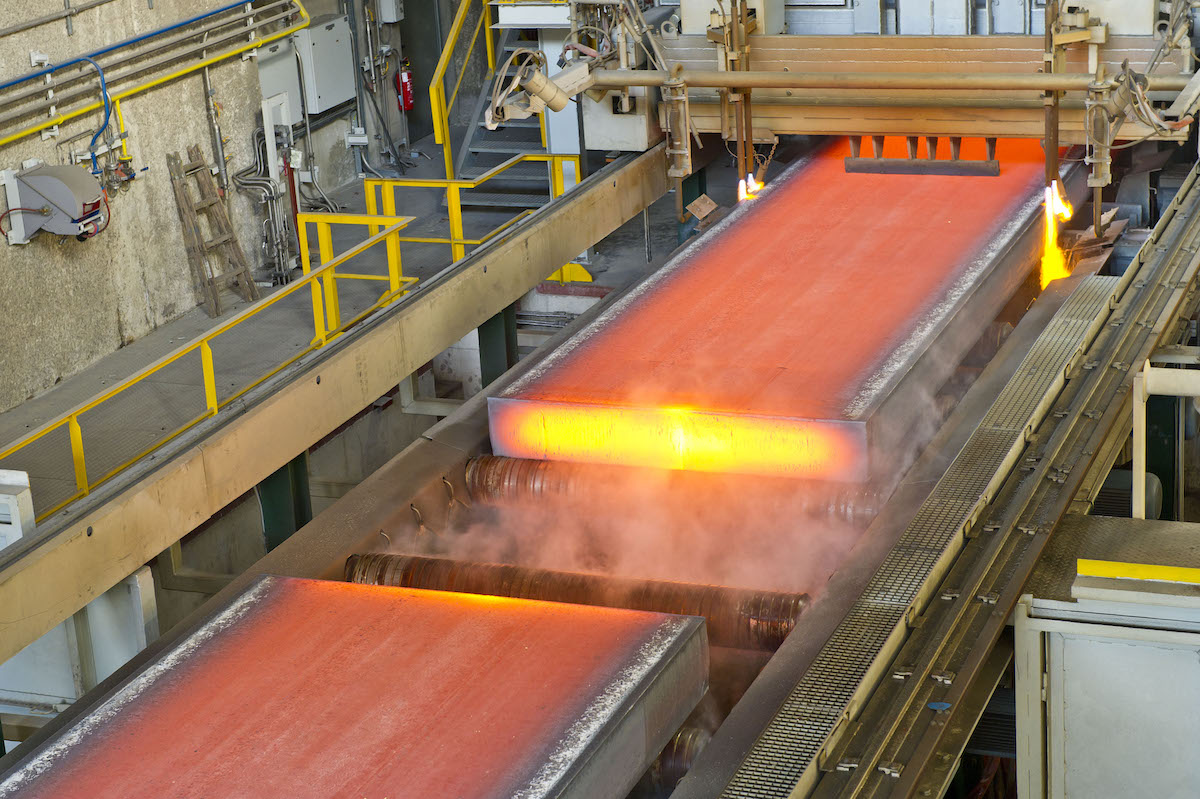
EU’s 2025 slab imports surge, Russia share slips
EU slab imports under HS code 720712 rose to 6,464,980 tonnes in 2025, up 30% year-on-year from 4,964,912t in 2024, according to Eurostat data monitored by Kallanish.
Some market participants link the rise in slab imports to tighter EU trade measures on finished steel.
While Russian volumes increased y-o-y, their share declined as overall imports grew at a faster pace, driven by China, Brazil and several Middle East and North Africa, and Asian origins.
Russia supplied 3,725,781t last year, up 18% y-o-y, but its share declined to 58% from 63% in 2024.
China strengthened its position with 745,898t, rising 61% y-o-y and lifting its share to 12% from 9%.
Brazil more than doubled shipments to 669,434t, up 114%, capturing a 10% share compared with 6% in 2024.
Vietnam supplied 598,564t, up 21%, though its share edged down to 9% from 10%.
Among emerging suppliers, Algeria entered the market with 208,287t, accounting for 3%. Saudi Arabia and South Korea recorded the sharpest percentage increases, surging 609% to 106,123t and 806% to 104,928t respectively, each taking a 2% share.
Türkiye delivered 110,605t, up 13% y-o-y, maintaining a 2% share. US volumes edged up 12% to 28,102t, though its share remained marginal.
By contrast, Indonesian volumes fell 54% to 66,469t, while India declined 78% to 23,240t and Ukraine dropped 65% to 21,028t.
South Africa recorded no shipments compared with 28,160t in 2024.
| Origin | 2025 | Share % | 2024 | Share % | y-o-y % |
| Russia | 3,725,781 | 58 | 3,152,317 | 63 | +18 |
| China | 745,898 | 12 | 463,922 | 9 | +61 |
| Brazil | 669,434 | 10 | 313,195 | 6 | +114 |
| Vietnam | 598,564 | 9 | 494,320 | 10 | +21 |
| Algeria | 208,287 | 3 | – | – | – |
| Türkiye | 110,605 | 2 | 97,652 | 2 | +13 |
| Saudi Arabia | 106,123 | 2 | 14,974 | 0 | +609 |
| South Korea | 104,928 | 2 | 11,581 | 0 | +806 |
| Indonesia | 66,469 | 1 | 143,398 | 3 | -54 |
| USA | 28,102 | 0 | 25,073 | 1 | +12 |
| India | 23,240 | 0 | 106,658 | 2 | -78 |
| Ukraine | 21,028 | 0 | 60,850 | 1 | -65 |
| Iran | 20,935 | 0 | 19,114 | 0 | +10 |
| Libya | 14,050 | 0 | 21,427 | 0 | -34 |
| UK | 14,002 | 0 | 87 | 0 | +15,948 |
| Japan | 4,621 | 0 | 4,472 | 0 | +3 |
| Taiwan | 2,871 | 0 | 7,709 | 0 | -63 |
| South Africa | – | – | 28,160 | 1 | -100 |
| Total | 6,464,980 | 100 | 4,964,912 | 100 | +30 |
Compiled by Kallanish based on Eurostat data for HS code 720712
From a consumption perspective, Russian slab remained central to EU demand in 2025, with flows heavily concentrated to Belgium, Czechia and Denmark, while Italy anchored more diversified inflows from both Russia and Asia.
Italy was the largest importer overall of slab, at 2,633,003t, accounting for about 41% of total EU inflows. Its sourcing was diversified, led by Russia at 836,717t, followed by China at 717,986t and Vietnam at 506,016t.
Belgium ranked second with 1,362,044t, relying overwhelmingly on Russia, which supplied 1,290,442t.
Czechia imported 911,107t, also largely dependent on Russia at 826,458t, while Denmark’s 540,190t came entirely from Russia.
Poland, France and Germany showed more diversified supply structures. Poland’s 444,842t were mainly sourced from Brazil, France’s 305,609t were largely split between Brazil and Russia, and Germany’s 150,324t came primarily from Brazil and Vietnam, with virtually no Russian material recorded.
| Importer > Exporter ↓ |
Italy | Belgium | Czechia | Denmark | Poland | France | Germany | Other | Total EU |
| China | 717,986 | 26,068 | – | 1,444 | – | 5 | – | 395 | 745,898 |
| Russia | 836,717 | 1,290,442 | 826,458 | 538,746 | 88,532 | 128,719 | – | 16,168 | 3,725,781 |
| Brazil | 91,058 | – | – | – | 286,740 | 172,282 | 89,185 | 30,168 | 669,434 |
| Vietnam | 506,016 | 11,497 | – | – | 19,923 | – | 61,128 | – | 598,564 |
| Türkiye | 85,474 | 21,957 | – | – | – | 38 | – | 3,135 | 110,605 |
| Saudi Arabia | – | – | 72,415 | – | – | – | – | 33,708 | 106,123 |
| USA | – | – | – | – | – | 10 | 28,092 | 28,102 | |
| Ukraine | 21,028 | – | – | – | – | – | – | – | 21,028 |
| South Korea | 104,928 | – | – | – | – | – | – | – | 104,928 |
| Indonesia | – | 9,191 | 12,234 | – | 45,044 | – | – | – | 66,469 |
| India | 20,590 | – | – | – | – | – | 2,650 | 23,240 | |
| Iran | 20,935 | – | – | – | – | – | – | – | 20,935 |
| Libya | 14,050 | – | – | – | – | – | – | – | 14,050 |
| Algeria | 204,801 | – | – | – | – | – | – | 3,486 | 208,287 |
| UK | 9,420 | – | – | – | – | 4,564 | – | 18 | 14,002 |
| Japan | – | 17 | – | – | 4,604 | – | – | – | 4,621 |
| Taiwan | – | 2,871 | – | – | – | – | – | – | 2,871 |
| Total | 2,633,003 | 1,362,044 | 911,107 | 540,190 | 444,842 | 305,609 | 150,324 | 117,820 | 6,464,939 |
Compiled by Kallanish based on Eurostat data for HS code 720712

Financing Steel Decarbonisation: What is “Green” – and who decides?
BankTrack has published a new report titled “Financing False Solutions in Steel Decarbonisation – How global banks define green steel and why it matters” (February 2026), analysing how major financial institutions classify steel decarbonisation technologies within their sustainable finance frameworks.
The report assesses 20 global banks and examines which steel production technologies are considered eligible for green or transition finance. It distinguishes between what it defines as “real solutions” — including renewable-powered Electric Arc Furnaces, green hydrogen-based Direct Reduced Iron, Molten Oxide Electrolysis and demand reduction measures — and “false solutions,” such as gas-based DRI, biomass substitution, hydrogen injection in blast furnaces, Carbon Capture, Utilisation and Storage (CCUS), and offsetting mechanisms.
According to the analysis, 18 of the 20 banks include Electric Arc Furnaces in their sustainable finance frameworks, while 14 include green hydrogen-based DRI. At the same time, 16 banks include CCUS as an eligible activity, despite the report’s concerns regarding its scalability and effectiveness in reducing emissions. Overall, 19 of the 20 banks examined are described as being exposed to companies pursuing what the report categorises as false solutions.
The study also highlights differences in transparency and disclosure. Only a limited number of banks have published sector-specific sustainable finance frameworks for steel, and the report calls for clearer criteria and greater public availability of definitions.
Steel production accounts for approximately 11% of global CO₂ emissions, and the report notes that transforming the sector is estimated to require between USD 235 and 335 billion in investment by 2050.
In this context, the classification of eligible technologies within sustainable finance frameworks is presented as a key factor influencing the direction of capital flows in the sector’s decarbonisation.

US assigns antidumping duty on HR steel from Netherlands
The US Department of Commerce has announced that a hot-rolled flat steel producer in the Netherlands has been assigned anti-dumping duties, according to a Federal Register notice published on Monday March 2.
Commerce found that Tata Steel IJmuiden BV made “sales of subject merchandise at less than normal value” during the period of review, October 1, 2023, to September 30, 2024.
As a result, Commerce determined that the company should receive a weighted-average dumping margin of 5.67%.
Tata Steel Netherlands is one of Europe’s largest steel manufacturers.
Imports into the US of carbon and alloy hot-rolled steel sheet and strip from the Netherlands came to 1,379 tonnes in February 2026, down by 288 tonnes, 17.28%, from 1,667 tonnes imported in January, data from the International Trade Administration showed.
In the second month of 2026, a ruling by the Supreme Court sparked tariff turbulence that could affect the steel market.
On February 20, the US Supreme Court ruled that President Donald Trump had exceeded his authority when he imposed sweeping tariffs under an economic emergency law. The tariffs were imposed under the International Emergency Economic Powers Act (IEEPA).
Hours after the Supreme Court’s decision, Trump imposed a 10% global tariff under Section 122 of the Trade Act of 1974. On February 21, there was a threat to raise that duty to 15%.
Notably, the Section 122 global tariffs do not affect the Section 232 tariffs on steel, which are currently established at 50% for most countries.
Fastmarkets’ fortnightly assessment of the price for steel hot-rolled coil, import, ddp Port of Houston, averaged $840-900 per short ton in February, up by 6.75% from $790-840 per ton in January.
